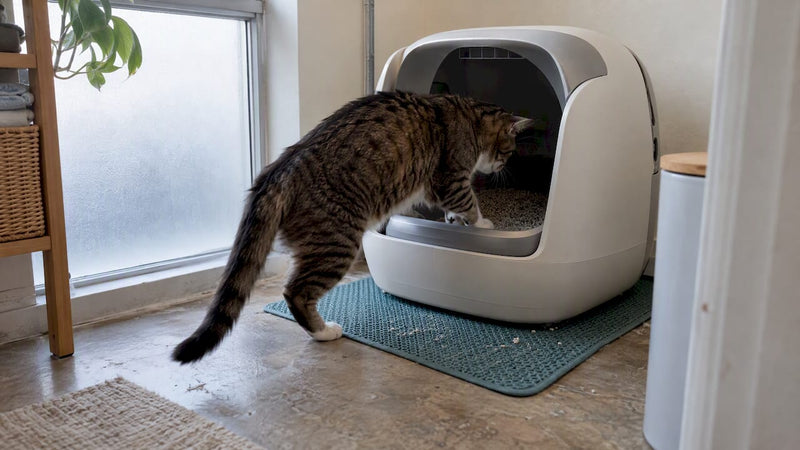
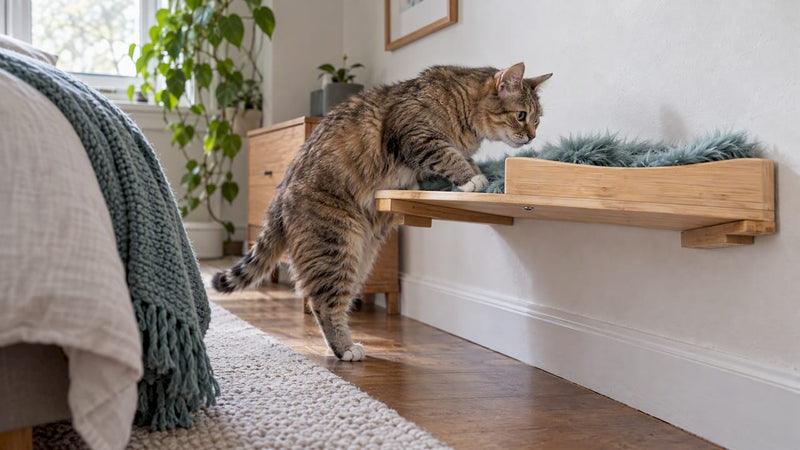
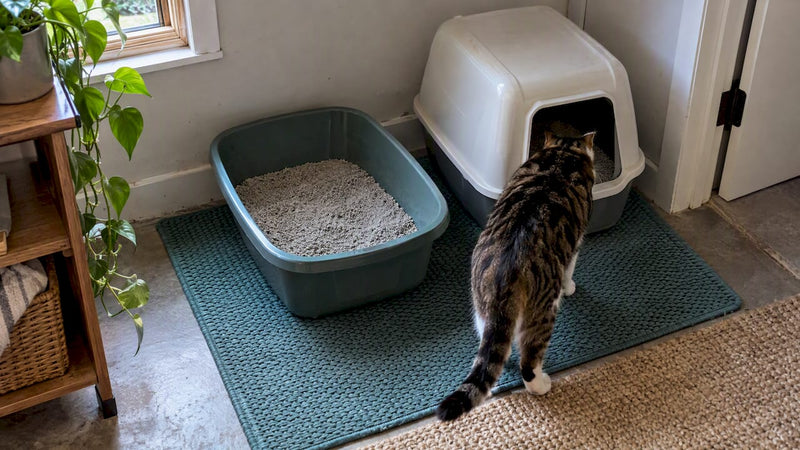
A smart cat home combines a handful of connected devices, smart litter boxes, feeders, fountains, trackers, and home automation, with a layout that respects how cats actually live. The best approach uses these tools to monitor patterns and lighten your workload, while still giving each cat separate resources and the freedom to choose where and when to eat, drink, and rest.
TL;DR:
- Smart litter boxes can monitor visit frequency, duration, and weight changes, but only prompt immediate veterinary checks for signs of urinary issues.
- ID-based smart feeders prevent food guarding and support special diets, but require proper setup and may need manual backup options for mechanical failures.
- Fountains with proven hydration benefits should have measurable results like reduced urine specific gravity, not just marketing claims.
- GPS collars, floor sensors, and cameras reliably track location and activity, but can give false alarms or raise privacy concerns if not properly managed.
- Proper placement of multiple resource zones and furniture like vertical routes and private retreats is essential for behavior-first, multi-cat smart home success.
Table of Contents
- Which smart cat devices fit your household
- Smart litter boxes and health monitoring: what they can and cannot do
- Smart feeders: preventing food fights and supporting special diets
- Smart fountains and hydration: reading the research and practical steps
- Trackers, collars, and presence sensors: what they reliably report
- Home integration and automations: Home Assistant, MQTT, and simple automations to try
- Behavior-first design for multi-cat smart homes: layout and furniture tips
- Security and data privacy considerations specific to smart cat devices
- TheMeowPicks perspective: curated, behavior-first choices
- Shop TheMeowPicks: curated furniture and cat-tech picks for a smart home
- Sources
- FAQ
Which smart cat devices fit your household
Not every gadget belongs in every home. A single cat in a studio apartment has different needs than four cats sharing a house, so matching the category to your situation saves money and frustration.
- Smart litter boxes track visits and waste patterns, helping you catch changes early, best for owners who want an early warning system rather than a full diagnosis.
- Smart feeders control portions and can recognize individual cats, useful for multi-cat homes managing different diets or a senior cat on a prescription food.
- Smart fountains encourage drinking through moving water, worth considering for cats prone to urinary issues or simply picky about stagnant water.
- Trackers and presence sensors report location or activity, handy for indoor-outdoor cats or households worried about a cat going missing.
- Home automation hubs tie everything together with alerts and schedules, appealing to owners who already use smart home systems for lighting or security.
Cost and upkeep vary widely. Litter boxes and feeders need regular supply refills and occasional part replacement, while fountains demand frequent cleaning to stay appealing. Budgeting for automatic litter box costs before buying helps you avoid an expensive surprise.
Smart litter boxes and health monitoring: what they can and cannot do
Smart litter boxes track how often a cat visits, how long they stay, and sometimes their weight during each visit. Over time, this builds a baseline that can flag a change, more frequent visits, longer time in the box, or a sudden drop in weight, before you might notice it yourself.
That data is a starting point, not a verdict. The Cornell Feline Health Center’s guidance on feline lower urinary tract disease lists straining, blood in the urine, and urinating outside the box as signs that call for a veterinary visit, not just a closer look at an app.
A urinary blockage can turn fatal in 24 to 48 hours, which is why a device alert should prompt a same-day check rather than a wait-and-see approach.
Setup matters as much as the technology. Cornell’s guidance recommends:
- Providing one more litter box than the number of cats in the home.
- Placing boxes in quiet, accessible spots away from noisy appliances.
- Removing waste twice daily, even with an automated system doing the scooping.
- Keeping fresh water near, but not directly next to, the litter area.
Automation can quietly mask problems if you let it. A self-cleaning box that runs on schedule still needs a human eye on the waste and the app logs, since a jammed rake or a skipped cycle can look identical to a healthy quiet week from the outside. Enclosed setups, like a plant-style litter cabinet, can help hide the box without trapping odor, but they add one more thing to check during your regular inspection routine.
Smart feeders: preventing food fights and supporting special diets
In a multi-cat household, mealtime can turn into a standoff. Smart feeders solve part of that problem by identifying which cat is approaching and releasing food only for the correct one.
Three identification methods are common. RFID tags on a collar are affordable and reliable but require the cat to wear something extra. Microchip-linked bowls use a chip your cat likely already has, avoiding a new collar tag but sometimes struggling if the chip’s position shifts. Camera or vision-based face identification skips collars and chips entirely but can be thrown off by lighting or by cats that look similar.
Pro Tip: Place feeders at a distance from each other, not side by side, so a confident cat can’t guard two bowls at once.
For special diets, whether it’s a senior cat on kidney support food or a cat managing weight, an identification-based feeder means you’re not standing guard at mealtime. Setup basics that help:
- Assign each cat’s tag or chip before the first automated meal.
- Test the feeder empty first to confirm it recognizes each cat correctly.
- Keep a manual backup bowl ready in case of a jam or dead battery.
Maintenance issues tend to be mechanical: stuck lids, drained batteries, or a chip reader that needs recalibrating. A feeder helps most when food guarding or diet mixing is the core problem. If the conflict is really about territory or stress, adding more resting and perching space often does more than any feeder alone.
Smart fountains and hydration: reading the research and practical steps
Cats descended from desert animals and many don’t drink enough on their own, so fountains aim to make water more appealing through movement and filtration.
A 2018 study in the American Journal of Veterinary Research found that nutrient-enriched water increased water intake and lowered urine specific gravity in the cats studied, a meaningful signal for hydration, though the results describe that specific intervention rather than every fountain on the market.
That distinction matters when you’re comparing marketing claims. A fountain that boasts about hydration benefits is not the same as one with data behind it, so look for actual measures like urine specific gravity changes reported by a veterinarian rather than a general promise on the packaging.
To keep a fountain worth using:
- Clean the reservoir and filter weekly, more often in hard water areas.
- Replace filters on the schedule the manufacturer states, not when they look dirty.
- Place the fountain away from the litter box and food, cats often avoid water near either.
- Watch for scale buildup, which can make the water taste different and discourage drinking.
If a cat’s water intake drops noticeably or you notice straining, blood in urine, or lethargy, a fountain isn’t the fix. That calls for a veterinary visit, not a new gadget.
Trackers, collars, and presence sensors: what they reliably report
GPS collars, floor mat sensors, and camera-based activity tracking each answer a different question. Collars are best at answering “where is my cat right now,” floor sensors are good for “did my cat use this spot today,” and camera analytics can flag general activity levels over time.
- GPS collars work well for indoor-outdoor cats and missing-cat alerts, though battery life and signal range vary.
- Presence and floor sensors confirm a cat visited a specific spot, useful for tracking a shy cat you rarely see.
- Camera-based activity tracking builds a rough activity baseline but can be thrown off by another pet, a moving curtain, or a charging cable in frame.
These tools are good at logging where and when, not why. A drop in activity might mean illness, but it might also mean the cat found a new favorite napping spot the camera doesn’t cover well. Treat any anomaly as a prompt to look closer, not a diagnosis.
Cameras and collars also raise privacy questions worth a moment’s thought: know who can access footage or location history, and choose devices with clear data controls before installing them in shared living spaces.
Home integration and automations: Home Assistant, MQTT, and simple automations to try
Most smart cat devices work fine through their own app. For owners who want more control, there are three general tiers: the vendor’s app alone, cloud-based integrations that connect a few brands together, and local integrations through Home Assistant or MQTT that keep data on your own network.
Open-source projects, including community-built litter box integrations and feeder integrations for Home Assistant, let ambitious owners pull litter box weight, feeding history, and water levels into one dashboard.
Three automations worth trying:
- Send a phone alert when a feeder misses a scheduled meal.
- Flag unusually frequent litter box visits within a short window.
- Turn on a hallway light when a presence sensor detects nighttime activity, useful for older cats navigating in the dark.
Pro Tip: If you have a deaf or senior cat, pair automations with a visual or vibration cue instead of a voice alert. Cornell research on cat vocalization suggests cats respond to visual and tactile signals more reliably than to voice commands.
Local integrations trade some convenience for privacy and reliability, since they keep working during a cloud outage, but they also require more setup time and community support rather than an official help line.
Behavior-first design for multi-cat smart homes: layout and furniture tips

Devices work best inside a layout that already respects how cats share space. Behavior guidance points to five separate resource types per cat: food, water, litter, resting spots, and scratching or perching areas, each placed where cats won’t compete for access.
Smart devices should support that spacing, not undercut it. A single high-tech feeder in the middle of a hallway becomes a bottleneck if it’s the only feeding station in a three-cat home. The fix is usually more physical space, not a fancier device.
- Add vertical routes so a less confident cat can avoid walking past a rival at floor level.
- Give each cat a private resting spot away from shared traffic paths.
- Space litter boxes, feeders, and water bowls at least a room apart when possible.
Furniture choices make this easier. A tall, multi-level piece like The Canyon gives several cats separate perches at once, while a wall-mounted maze adds new routes without eating up floor space. For a quiet retreat, a compact cat house offers a private spot away from foot traffic and sensor-heavy zones.
| Zone | Purpose | Example solution |
|---|---|---|
| Vertical routes | Avoid floor-level standoffs | Wall-mounted maze or multi-level tree |
| Private resting | Reduce stress in shared spaces | Enclosed cat house |
| Litter access | Prevent guarding of a single box | One extra box per cat, spaced apart |
More on the full five-zone layout approach and a room-by-room setup guide can help you plan before buying anything.
Security and data privacy considerations specific to smart cat devices
Every connected litter box, feeder, or camera collects some data, feeding times, visit logs, sometimes video, and sends it to a company’s servers. Before installing anything, check what the app actually stores and for how long.
Cameras carry the most weight here. A camera aimed at your living room to watch a cat also sees anyone else in that room, so look for local storage options or end-to-end encryption if that matters to your household. Devices that support local integrations through Home Assistant or MQTT often let you skip the cloud entirely, keeping video and sensor data on your own network.
Account security is easy to overlook. Use a unique password for each pet app rather than reusing one across accounts, and turn on two-factor authentication where it’s offered. A breached litter box account might not sound like much of a risk, but if it’s tied to your home address or payment details, it’s worth locking down like anything else connected to your home network.
Finally, read the data retention policy before you buy, not after. Some brands keep activity logs indefinitely, others let you delete history on request. Knowing that upfront avoids an unpleasant surprise if you ever decide to switch devices or brands.
TheMeowPicks perspective: curated, behavior-first choices
We think about smart devices the same way we think about furniture: does it respect how a cat actually behaves, or does it just look impressive in a photo. A feeder that solves food guarding matters more than one with the flashiest app, and a litter box alert only earns its keep if the layout around it already gives cats room to avoid each other.
Durable, well-placed furniture does the quiet work that no device can replace. Pair the two, and you get a home that supports routine instead of just monitoring for its breakdown.
— TheMeowPicks Team
Shop TheMeowPicks: curated furniture and cat-tech picks for a smart home
Once you know which device categories fit your home, the furniture around them is what makes the setup actually work day to day. Our technology and gadgets collection covers trackers and feeders alongside the furniture pieces that give cats room to use them without competing for space.
A few starting points worth pairing:
- A set of wall shelves in grey or black adds vertical routes near a tracker or camera zone.
- An enclosed ear-style cave gives a nervous cat a private retreat away from device noise.
- A GPS tracker pairs well with an outdoor-access cat who already has a defined indoor resting spot.
If you’re just getting started, pick one furniture piece and one device, set them up following the five-zone spacing above, and add more once that combination is working well. Browse the full lifestyle collection for accessories that round out the setup.
Sources
- Feline lower urinary tract disease, Cornell Feline Health Center
- American Journal of Veterinary Research 2018 study on nutrient-enriched water and urine measures in cats
- It’s the cat’s meow: Not language, strictly speaking, but close enough to skillfully manage humans, Cornell Chronicle
FAQ
What is the 3-3-3 rule for cats?
The 3-3-3 rule is a general guideline for helping a newly adopted cat adjust: roughly three days to decompress, three weeks to settle into a routine, and three months to feel fully at home. It’s a rule of thumb rather than a strict schedule, since every cat adjusts at a different pace.
What is the smartest house cat?
There’s no single scientifically ranked “smartest” breed, since intelligence in cats is hard to measure and varies by individual. Breeds like the Abyssinian, Bengal, and Siamese are often described as highly trainable and curious, but any cat can learn routines with consistent, reward-based training.
Do cats hear when you talk to them?
Cats can hear you and respond to tone and familiar sounds, but Cornell research suggests their vocalizations are more about influencing your behavior than genuine language exchange. For deaf or senior cats, visual or vibration cues work more reliably than voice commands.
How much is a smart cat home cost to set up?
Costs vary widely depending on which devices you choose, and specific pricing depends on the brand and model you select. Budgeting guidance on automatic litter box costs can help you plan before comparing options across feeders, fountains, and trackers.