A low profile, elevated feeding station with shallow ceramic or stainless bowls and a splash guard base is the right starting point for most homes. It keeps food off the floor, protects whiskers from bowl fatigue, and wipes clean in under a minute.
That said, one setup does not fit every household:
- Multi-cat homes usually need separate stations spaced apart, not one shared bowl.
- Senior cats often do better with a slightly lower platform and softer footing.
- Outdoor or colony feeding calls for a weatherproof shelter, not a countertop tray.
For dog-proofing and small apartments, a wall-mounted or elevated design solves two problems at once. Later sections walk through exactly how to pick between styles, and how The Meow Picks’ curated picks, like the Dog Proof Cat Feeder or the Desco Cat Feeder, Powder-Coated, Porcelain Bowls, match specific needs.
Key Takeaways
The right cat feeding station matches bowl height to your cat’s shoulder, uses a mess-proof or quick-dry base, and fits your home’s actual layout and decor.
| Point | Details |
|---|---|
| Match height to your cat | Measure shoulder height while your cat stands relaxed, then pick a stand close to that measurement. |
| Choose materials by cleaning habit | Ceramic and stainless steel handle dishwasher cycles better than most silicone inserts. |
| Split stations for multi-cat homes | Separate feeding spots reduce food guarding and give slower eaters a fair shot at their meal. |
| Weatherproof outdoor setups | Angled roofs and elevated bases keep rain from pooling in outdoor feeding shelters. |
| Shop curated, purpose-built designs | The Meow Picks’ Dog Proof Cat Feeder and Desco porcelain feeder pair function with a design that fits a modern home. |
Table of Contents
- What Are the Main Types of Cat Feeding Stations?
- How Do I Choose the Right Cat Feeding Station?
- Can You Build a DIY Cat Feeding Station at Home?
- How Often Should You Clean a Cat Feeding Station?
- The Meow Picks Curation: Matching Products to Real Needs
- Where Should Food and Accessory Storage Go?
- How Do You Match a Feeding Station to Your Home Decor?
- What Do Cat Feeding Stations Cost, and What Do You Get?
- Should You Set Up One Station or Multiple for a Multi-Cat Home?
- A Short Curator Note From TheMeowPicks Team
- Shop Our Picks: Where to Find the Right Feeding Setup
- Sources
- FAQ
What Are the Main Types of Cat Feeding Stations?
Every cat feeding station solves a slightly different problem, and knowing which one fixes yours saves you from buying twice. Here’s how the major styles break down.
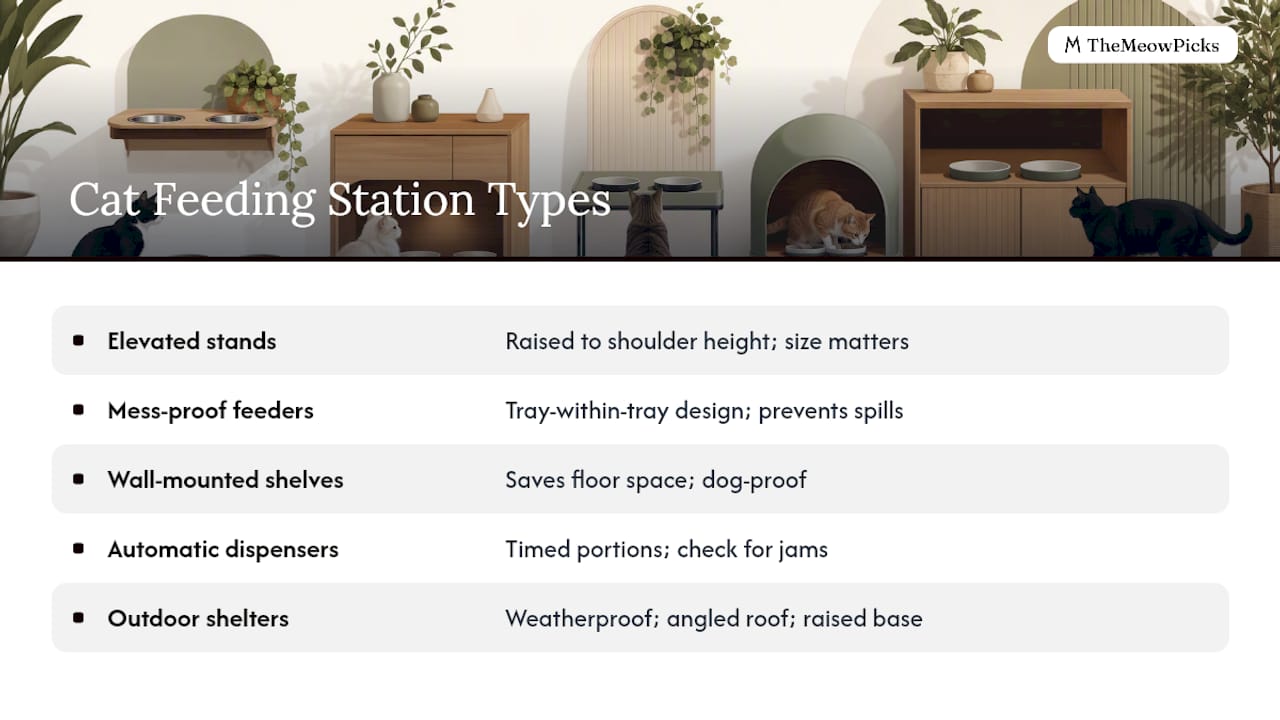
Elevated stands raise bowls to a height that matches your cat’s shoulder, not just any height that looks nice on a shelf. A feeder set too high forces your cat to crane upward and strain their neck, and one set too low defeats the purpose entirely. The Apartment Cat’s sizing guidance notes that matching height to your cat’s actual build matters more than picking a popular model, especially for senior cats managing arthritis or digestive discomfort.
Mess-proof feeders use raised lips, splash guards, or a built in reservoir to stop kibble and water from migrating across your kitchen floor. Neater Pets builds these around a tray-within-a-tray design and sizes models for small, medium, and large cats, which matters if you’ve got a cat who treats mealtime like a contact sport.
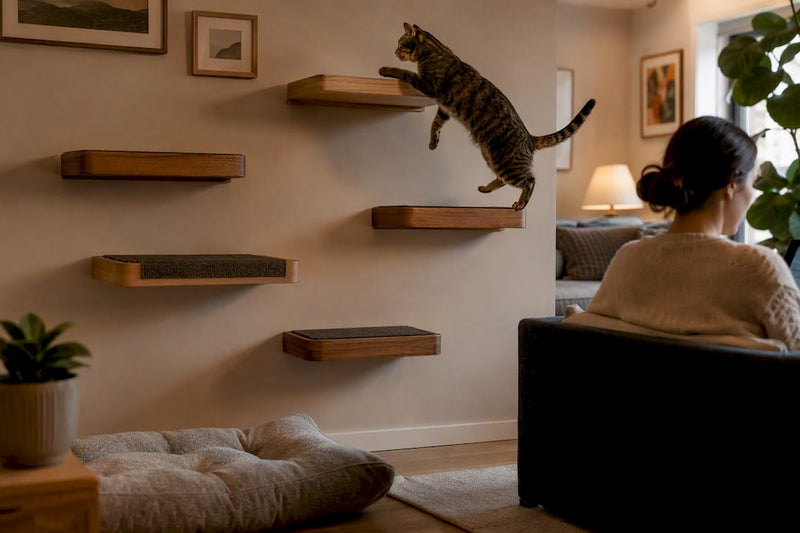
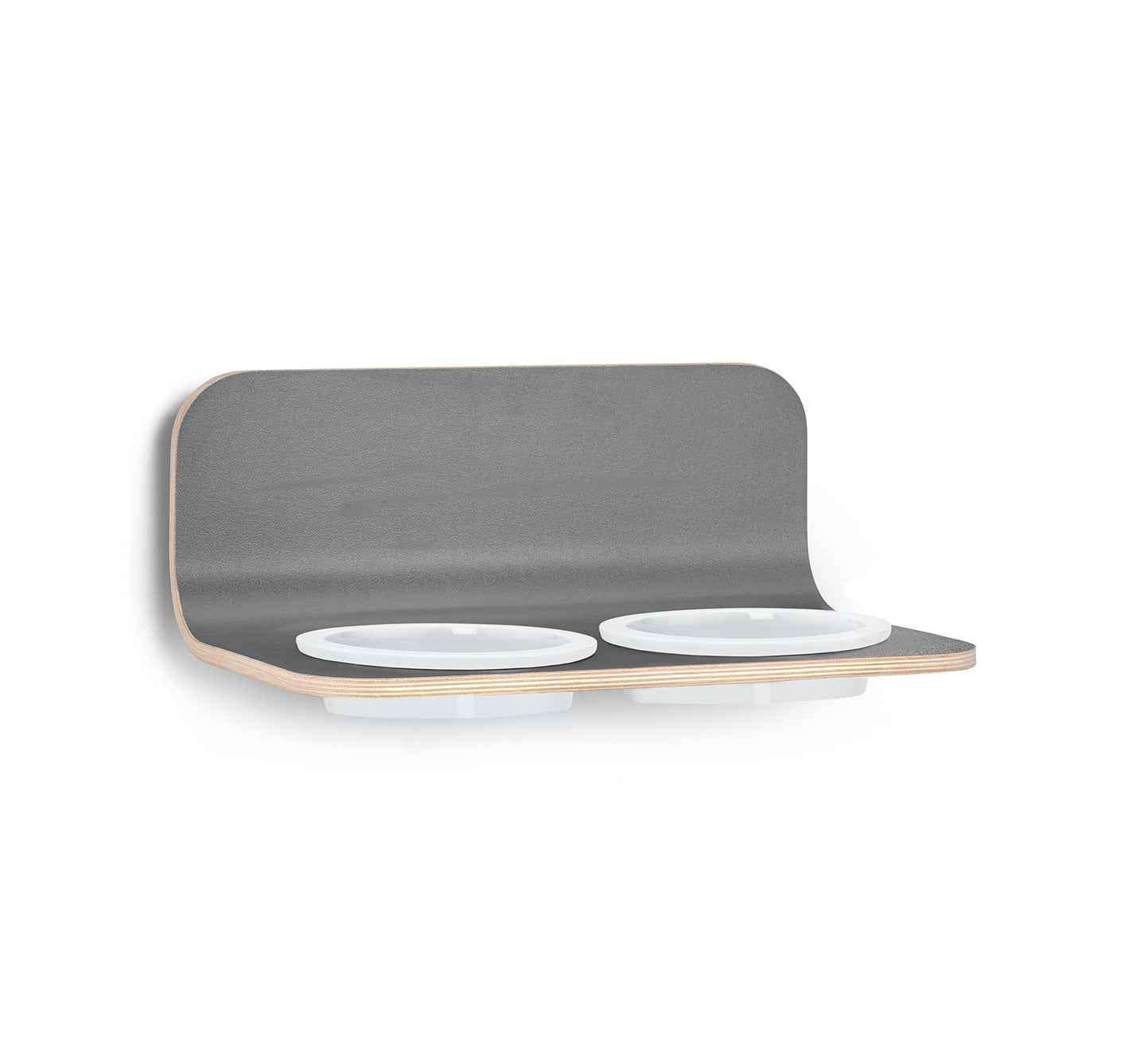
Wall-mounted shelves solve a different problem: floor space. A wall-mounted cat feeding shelf keeps bowls off the ground entirely, which also happens to dog-proof the setup in mixed-pet homes.
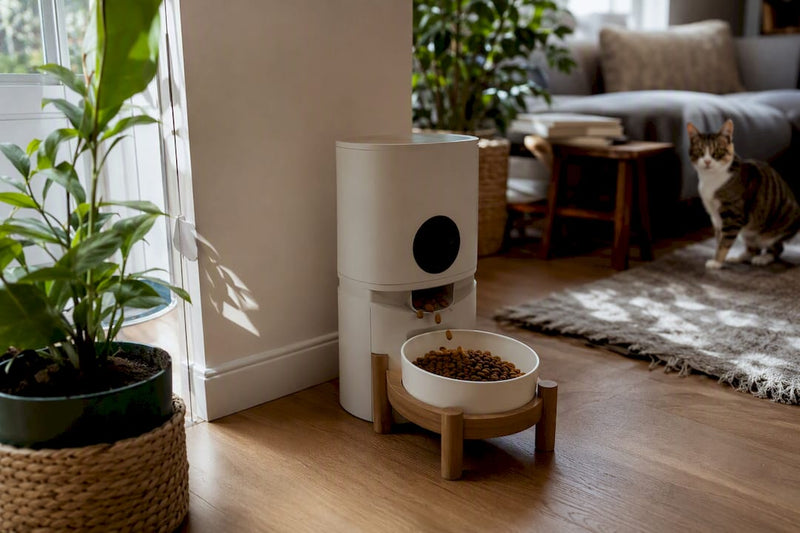
Automatic dispensers help with portion control and timed meals, and they’re genuinely useful for households with irregular schedules. They are not a substitute for someone checking on your cat during multi-day absences. A jammed hopper or dead battery can go unnoticed for a full day.
Outdoor feeding shelters need weatherproofing that indoor stations don’t. Alley Cat Allies recommends angled roofs and elevated bases so rain drains away from food, a detail that matters most for colony caretakers feeding outdoor or community cats.
How Do I Choose the Right Cat Feeding Station?
Picking the right setup takes five minutes if you work through it in order instead of shopping by looks first.
- Measure your cat’s shoulder height. Stand a ruler next to your cat while they’re standing normally, and aim for a bowl rim close to that height. This single step prevents most of the “my cat won’t use it” complaints you’ll see in reviews.
- Watch how your cat actually eats. A fast eater benefits from a slow-feed insert or a wider tray that spreads kibble out. A messy drinker needs a deeper splash guard. A cat sharing space with a dog needs height or wall-mounting to keep the food out of reach.
- Pick a bowl material based on cleaning habits, not looks alone. Ceramic resists scratching and holds up in the dishwasher, stainless steel is close to indestructible and won’t harbor bacteria in scratches, and silicone flexes for travel but shows wear faster with daily use.
- Decide on installation before you buy. Free-standing stations work anywhere but take up floor space. Wall-mounted shelves need a stud or solid anchor point and roughly 10 to 15 minutes to install. Outdoor stations need a dry, sheltered spot away from standing water.
- Factor in cleaning time and budget together. A dishwasher-safe bowl with a quick-dry base costs more upfront but saves you daily scrubbing.
Pro Tip: Bring a soft tape measure next time your cat is dozing on the couch. Measuring shoulder height while they’re relaxed and standing gives a far more accurate number than trying to coax them into a “sit” for a ruler.
Our guide to elevated cat bowls walks through the height math in more detail if you’re outfitting more than one cat with different body sizes.
Can You Build a DIY Cat Feeding Station at Home?
Building your own cat feeding tray is realistic if you’re comfortable with basic tools, and it costs a fraction of a designer setup.
- Raised tray with silicone risers. Take a shallow wood or melamine tray, attach four silicone furniture risers or rubber bumper feet to the underside, and set bowls inside. Keep the tray height under four inches for kittens or short cats, and test for wobble before letting your cat near it. A tray that tips mid-meal will scare a cat off the setup for good.
- Wall-mounted feeding shelf. Cut a piece of sealed plywood to roughly 12 by 8 inches, mount it into wall studs with L-brackets, and use shallow, non-slip bowls that won’t slide off the edge. This is the single best DIY fix for a dog that raids the cat’s food.
- Outdoor sheltered station. Use a weatherproof plastic tote turned on its side, cut an entry hole, and raise the whole thing on bricks or a wood pallet so rain drains underneath instead of pooling inside. Alley Cat Allies recommends angling the roof slightly and placing the opening away from prevailing wind and rain.
Skip anything with sharp edges, loose small parts, or unsealed wood that can splinter or mold outdoors.
How Often Should You Clean a Cat Feeding Station?
Bowls need a rinse or wipe daily, but the whole station deserves a deeper clean weekly, since kibble grease and saliva build up on trays and mats even when bowls look fine.
- Wipe bowls and trays daily with hot water and mild soap, or run dishwasher-safe pieces through a cycle.
- Deep clean the whole station weekly, including any splash guard or reservoir, since bacteria collects in seams a quick wipe misses.
- A quick-dry base made with diatomaceous earth absorbs spills fast, which cuts down on the standing moisture that attracts ants and mold indoors. Dorai Home builds its elevated station around this exact base material paired with shallow, whisker-friendly bowls.
- Store dry kibble in a sealed, airtight container rather than the bag it came in. Loose bags attract pantry moths and let food go stale faster.
Design choices like splash guards and filtration-style reservoirs exist specifically to keep floors dry and cut down on the time you spend cleaning, which matters more once you’re maintaining more than one station.
The Meow Picks Curation: Matching Products to Real Needs
The Meow Picks is a curated marketplace, not a big-box aisle, and a portion of every order supports cat rescue organizations. Every product in our feeding lineup gets picked for a specific problem, not just a specific look.
- Dog-proof, wall-mounted feeder: best for multi-pet homes where a dog raids the cat bowl.
- Desco Cat Feeder, Powder-Coated, Porcelain Bowls: best for owners who want dishwasher-safe bowls in a durable powder-coated stand.
- Apawtment Cat House: best for small apartments needing a sheltered feeding nook that doubles as a hideaway.
- The Grotto: best for pairing a compact feeding spot with a short cat tree in tight spaces.
Browse the full lineup on the Desco porcelain feeder page to compare bowl finishes side by side.
Where Should Food and Accessory Storage Go?
A feeding station works best when the food, scoop, and extra bowls live within arm’s reach, not scattered across three different cabinets, helping you establish feeding routines your dog can rely on that can be adapted for cats as well. Integrated storage solves the daily friction of digging through a pantry every mealtime.
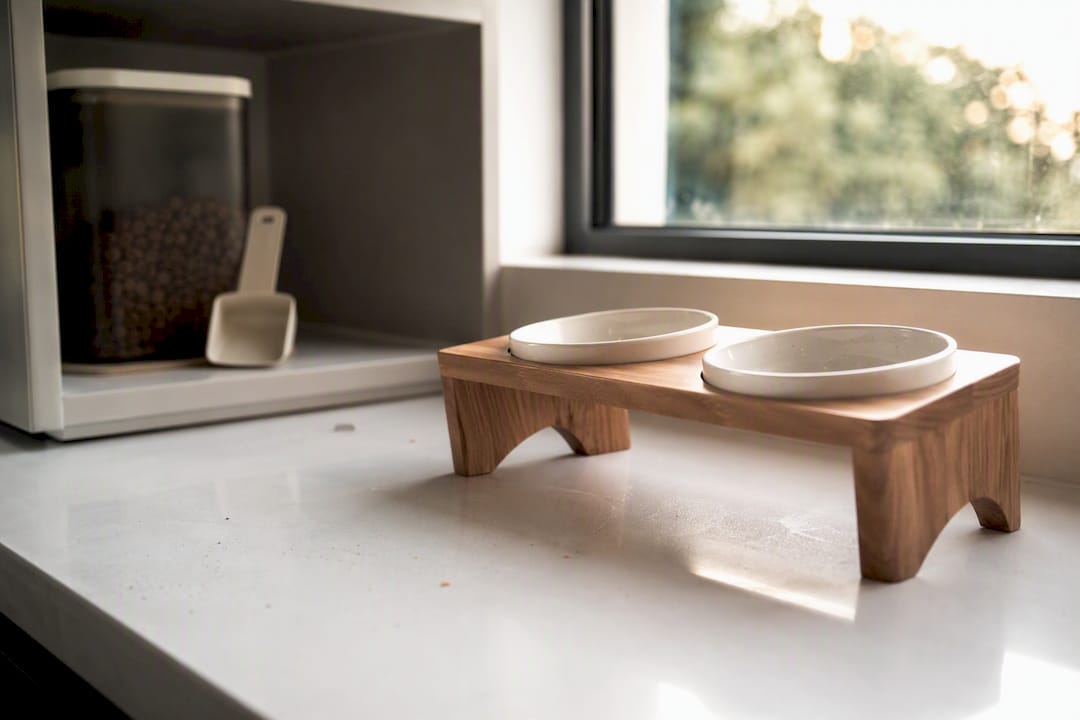
Some elevated stations include a small drawer or shelf built into the base, which holds a scoop or a spare bowl without adding clutter to your countertop. If your setup doesn’t have that built in, a simple airtight bin placed next to the station keeps kibble fresh and keeps the whole feeding routine in one spot.
For homes running an automatic dispenser alongside a manual bowl, a nearby shelf for backup food and cleaning supplies cuts down on the number of trips across the kitchen. Wall-mounted shelves pull double duty here too: a shelf below the feeding platform can hold a spray bottle and cloth for the quick daily wipe.
The goal isn’t to build a pantry around your cat’s bowl. It’s to remove the small daily hassle that makes people skip cleaning or skip refilling on time. A feeding station surrounded by scattered supplies gets neglected faster than one with everything in reach.
How Do You Match a Feeding Station to Your Home Decor?
A feeding station sits in your kitchen or living room every day, so it earns a spot in your decor plan the same way a coffee table does. Powder-coated steel stands read as modern and pair well with matte black or brushed metal kitchen fixtures. Natural wood stands, like Desco’s wood and steel option, warm up a farmhouse or Scandinavian-style room. Porcelain bowls add a softer, more polished look than stainless steel, which tends to look clinical outside of a strictly minimalist space.
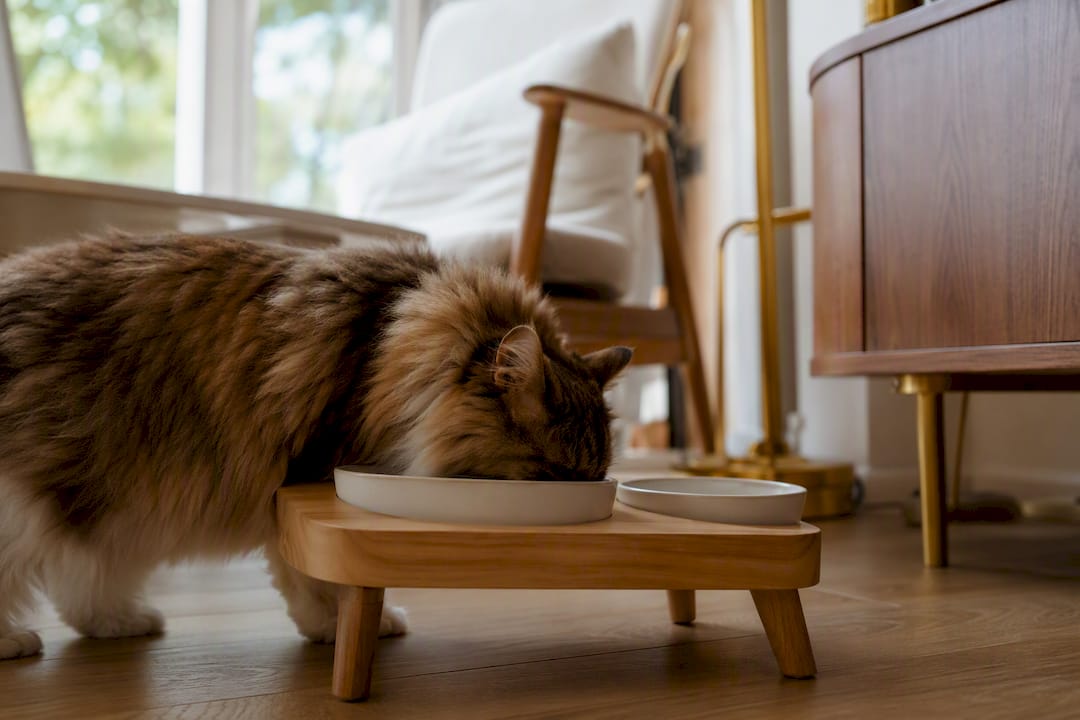
Color matters more than most buying guides admit. A bright white ceramic bowl on a dark wood floor draws the eye in a good way; the same bowl on white tile disappears, which is fine if you want it unnoticed but frustrating if you’re trying to make the station a design feature.
Height and footprint matter too. A tall elevated stand can visually compete with your other furniture, while a low wall-mounted shelf tucks into a corner without disrupting a room’s sightlines. If you’re outfitting a shared living space, a feeding station that matches your cat tree or scratcher finish, The Gardens, for instance, keeps the whole setup feeling intentional instead of like an afterthought bolted onto your kitchen.
What Do Cat Feeding Stations Cost, and What Do You Get?
Feeding station prices split roughly into three tiers, and the differences between them are real, not just marketing.
Budget plastic trays and basic elevated stands sit at the low end. They’re functional but often skip splash guards, quick-dry bases, or dishwasher-safe certification, so you’ll spend more time cleaning around them.
Mid-range designer stands, like the powder-coated steel and ceramic combinations in The Meow Picks’ catalog, add durable finishes and bowls built for daily dishwasher use. This tier is where most design-conscious households land, since the price gap over budget models buys real cleaning-time savings.
Premium stations add extras: built-in storage, matched furniture finishes, or specialty bases like diatomaceous earth quick-dry material. These cost more, but for a household running two or three cats, the reduced cleanup time and better bowl durability tend to pay for themselves over a year or two of daily use.
Automatic dispensers add their own price range on top of any physical stand, and that cost buys convenience for irregular schedules, not a replacement for a caretaker checking in.
Should You Set Up One Station or Multiple for a Multi-Cat Home?
A single shared feeding station works fine for cats that genuinely get along and eat at the same pace. It saves floor space and cuts down on cleaning to one spot instead of several.
The trouble starts when cats don’t share well. A faster eater will push a slower cat away from the bowl, which can lead to one cat under-eating without you noticing right away. Resource guarding around food is also one of the more common sources of tension between cats who otherwise get along fine everywhere else in the house.
Multiple stations, spaced in separate rooms or corners, remove that competition entirely. The tradeoff is more cleaning, more bowls to track, and more floor or wall space committed to feeding setups. For most multi-cat households, splitting into two stations rather than one large shared setup solves more problems than it creates, particularly once you’re managing three or more cats with different eating speeds.
A Short Curator Note From TheMeowPicks Team
We look at a lot of feeding stations, and the ones that last in someone’s home are almost never the flashiest ones. They’re the ones where the bowl height actually fit the cat, and the base didn’t turn into a daily cleanup chore.
Pro Tip: Place your feeding station away from the litter box, even if that means giving up a “perfect” corner. Cats are surprisingly particular about not eating near where they use the bathroom.
Every purchase through The Meow Picks also puts a portion of the order toward cat rescue groups, which means outfitting your own cat’s kitchen corner helps one waiting for a home too.
— TheMeowPicks Team
Shop Our Picks: Where to Find the Right Feeding Setup
Once you know your cat’s size, eating habits, and home layout, matching that to a real product is quick. Here’s where to start.
- Dog Proof Cat Feeder: wall-mounted and raised, best for multi-pet homes where a dog keeps stealing kibble.
- Desco Cat Feeder, Powder-Coated, Porcelain Bowls: dishwasher-safe porcelain bowls on a durable powder-coated stand, best for households that want easy daily cleanup.
- Apawtment Cat House: a sheltered nook that works as a feeding spot for shy or senior cats who prefer a semi-enclosed space.
- The Grotto: compact enough to sit near a feeding station in small apartments without crowding the room.
- Modern Cat Wall Shelves: a wall-mounted shelf that clears floor space and keeps bowls out of a dog’s reach.
Every order supports cat rescue organizations in addition to getting your cat set up properly. If you’re unsure which bowl size or mounting style fits your space, check the product specs listed on each page, or review our orders and shipping details before you check out.
Sources
FAQ
What Is the 3-3-3 Rule for Cats?
The 3-3-3 rule describes how a newly adopted cat typically adjusts: roughly three days to decompress, three weeks to settle into a routine, and three months to feel fully at home. It’s a general timeline for behavior, not a feeding schedule, though a consistent feeding station helps speed up that settling process.
Can I Leave My Cat Alone for Four Days With an Automatic Feeder?
An automatic feeder can handle multiple scheduled meals, but four days unattended is risky since a jam, dead battery, or empty hopper could go unnoticed. A trusted sitter or neighbor checking in daily is safer than relying on the dispenser alone for that long.
How Do You Make a Cat Feeding Station at Home?
A simple DIY station uses a shallow tray raised on silicone furniture risers, with shallow bowls set inside for whisker comfort. Wall-mounted shelves and weatherproof outdoor shelters are two other doable builds covered earlier in this guide.
What Is Considered a Silent Threat to Cat Health?
Chronic kidney disease is often called a silent threat because symptoms stay hidden until the disease has progressed significantly. A clean, well-placed feeding and water station supports early detection since owners who watch daily eating and drinking habits closely tend to notice changes sooner.