I notice the brief contains conflicting instructions: the OWNER INSTRUCTIONS section says “CATS ONLY… write for indoor cat owners choosing a scratcher” and focuses heavily on scratcher products (cardboard vs sisal vs wood, vertical vs horizontal), while the actual PLAN, SOURCES, OUTLINE, and FAQ are entirely about whisker-friendly cat fountains and hydration. These are two different articles.
Per my priority rules, OWNER INSTRUCTIONS rank highest, but an instruction that “contradicts the plan’s structure” is to be ignored silently where it conflicts with the STRUCTURE CONTRACT. Here, the scratcher-focused owner instructions appear to belong to a different article brief entirely (mismatched content), while the PLAN, OUTLINE, SOURCES, and MANDATORY COVERAGE are all built around fountains. I’ll follow the actual PLAN/OUTLINE/SOURCES (the fountain article), since that is what defines the structure, sourcing, and required coverage, and apply only the owner instructions that are compatible with it: the required product links (Horizontal Scratching Post, Gratta Scratch Board) as complementary items in the promo section, no em dashes, US spelling, and the universal banned phrases. The scratcher-comparison instructions (cardboard vs sisal, vertical vs horizontal, etc.) don’t fit a fountain article’s structure, so I’m applying them only insofar as mentioning the two named scratcher products as complementary gear, exactly as the OUTLINE’s promo section specifies.
Yes, whisker-friendly cat fountains exist, and the easiest way to choose one is to look for a wide, shallow design, roughly 6 inches of clear drinking area with a basin no deeper than about 1.5 inches. Pair that shape with a simple weekly cleaning routine and you will keep the water appealing and your cat’s whiskers out of the way. The sections below walk through the evidence, a shopping checklist, cleaning steps, and extra ways to keep your cat drinking well.
TL;DR:
- Aim for a drinking area 4 to 6 inches wide and basin depth no greater than 1.5 inches; check the water well’s dimensions.
- A controlled study found cats preferred wide, shallow dishes, but measured no difference in eating time or quantity and did not establish increased water intake.
- Clean a single cat fountain weekly, but households with multiple cats, hard water, or warm conditions should scrub it every three to four days.
- Place water stations away from food and litter, and offer wet food or a plain bowl alongside the fountain to provide other hydration options.
- Contact a veterinarian if your cat suddenly stops drinking, especially if lethargy or reduced appetite also appears.
Table of Contents
- Why whisker-friendly geometry matters
- How to evaluate a fountain for whisker comfort
- Design families that meet whisker-friendly rules
- Cleaning schedule and step-by-step maintenance
- Other ways to boost hydration beyond the fountain
- How we choose fountains and where to place them
- Material safety and durability considerations
- Comparing popular whisker-friendly fountain styles
- What actually matters most in this decision
- Finding whisker-friendly gear that fits your home
- FAQ
- Sources
Why whisker-friendly geometry matters
Cat whiskers are packed with nerve endings at the base, which makes them extremely sensitive to touch and pressure. When a bowl or fountain basin is narrow or deep, a cat’s whiskers brush against the sides every time they lower their head to drink, and some cats find that repeated contact unpleasant enough to hesitate at the water or avoid it altogether.
A controlled study published in the Journal of Feline Medicine and Surgery found that many cats preferred a wide, shallow dish over their usual narrow one when given a choice, which suggests a real behavioral preference tied to bowl shape. Interestingly, the same study recorded no measurable difference in how long the cats ate or how much food they consumed between the two dish types. That gap matters: preference and consumption are not the same thing, and the researchers themselves called for more work before drawing firm conclusions about feeding or drinking outcomes.
What this means in practice is less certain than the marketing around “whisker fatigue” sometimes suggests. There is limited clinical evidence that whisker contact causes measurable drops in food or water intake, but plenty of cats clearly favor a wider, shallower vessel when offered one. For an owner, that is reason enough to choose fountain designs that minimize whisker contact, even without a guarantee that it will change how much your cat drinks. Comfort and preference are worth designing for on their own, separate from whether they move a measurable health needle.
The practical takeaway is simple: width and shallow depth reduce the chance of repeated whisker contact, cats tend to show a preference for that shape, and preference can nudge a cat toward drinking more consistently even if the science on volume is still thin.
How to evaluate a fountain for whisker comfort
Shopping for a fountain with whisker comfort in mind comes down to a short list of measurements and features you can check on almost any product page. Veterinary guidance from Lone Tree Veterinary Hospital recommends a drinking area of roughly 4 to 6 inches wide and a maximum basin depth of 1 to 1.5 inches to minimize contact with a cat’s whiskers. Use that range as your baseline when comparing fountains.
Geometry comes first. Look for the listed “bowl diameter” or “water well diameter” rather than the fountain’s total footprint, since the outer dimensions often include the pump housing and base, not just the drinking surface. If a listing only gives overall size, check the product photos for a hand or a coin next to the basin to judge scale before you buy.
Flow style matters almost as much as shape. A fountain that pools water across a wide, flat surface lets a cat drink from several angles without tilting its head sharply or pressing its face into a narrow channel. A model with a single raised spout or a deep funnel often forces the same head angle every time, which can bring whiskers right back into contact with the sides.
Noise and vibration deserve a check too. Pumps mounted directly in the basin tend to transmit more buzz through the water and the housing, which some cats find off-putting enough to avoid the bowl. A pump that is isolated from the drinking surface, or a cordless design, usually runs quieter.
Cleaning access is easy to overlook until you own the thing. Before buying, confirm the basin, pump, and any filter cage come apart without tools, since a fountain that is awkward to disassemble gets cleaned less often than it should.
Corded versus cordless is mostly about placement and sound. A corded fountain runs continuously, which some cats like because the sound and motion of water draws them over, but it does need an outlet nearby. A cordless or battery model offers flexibility in where you put it, though you’ll want to track battery life so the water doesn’t sit still for days.
A quick checklist to run through on any product page:
- Confirm the stated drinking area width, aiming for roughly 4 to 6 inches of clear surface.
- Check the basin depth, looking for 1 to 1.5 inches or less at the deepest point.
- Favor a wide, flat flow surface over a narrow spout or funnel shape.
- Verify the pump and filter cage detach easily for weekly cleaning.
- Note whether it’s corded or cordless and plan placement accordingly.
Pro Tip: If a listing doesn’t state the basin depth directly, measure from product photos using a visible reference object like a coin, since depth matters more than overall size for whisker comfort.
Design families that meet whisker-friendly rules
Fountains tend to fall into a few recognizable shapes, and recognizing them makes label-reading much faster. Understanding which family a listing belongs to tells you most of what you need before checking individual specs.
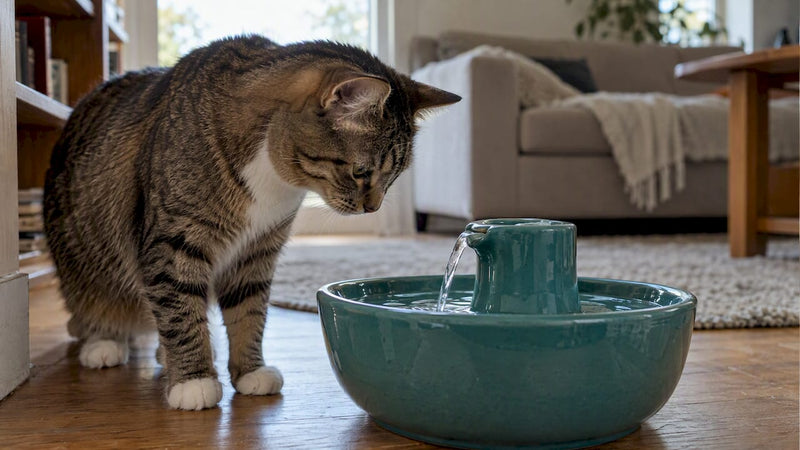
Wide, shallow bowl designs are the clearest match for whisker comfort. These fountains spread water across a broad, low basin so a cat can approach from almost any angle and lap without pressing its face into a tight space. They’re usually the easiest style to match against the 4 to 6 inch width and 1 to 1.5 inch depth guidance, since the whole basin is built around that shape rather than a narrow catch tray under a spout.
Surface-flow and gentle-ripple styles push water across a flat or gently sloped top layer rather than shooting it upward through a spout. Cats can drink directly from the moving film of water without tilting their heads into a funnel, which tends to keep whiskers clear of the sides. This differs from narrow spout designs, where water streams into a small catch area and a cat has to position its mouth precisely, often bringing its face closer to the basin walls.
Pumpless and mag-drive styles are worth knowing as a maintenance category more than a shape category. A mag-drive pump has fewer moving parts exposed to water buildup, which can mean less frequent deep cleaning of the motor housing, though the basin itself still needs regular attention regardless of pump type. Cordless versions in this category add placement flexibility since they don’t need an outlet, but they do require you to track battery charge so flow doesn’t quietly stop.
When you’re reading a product page, a few specs confirm whether a fountain fits the whisker-friendly category:
- Listed basin or water well diameter, not just overall product dimensions.
- Stated maximum water depth, ideally under 1.5 inches.
- Flow description, favoring “surface flow” or “waterfall” language over “spout” or “fountain jet” alone.
- Disassembly instructions or a note that parts are dishwasher-safe, which signals easier cleaning access.
If you want a starting point, our guide to the best cat water fountains walks through a set of curated picks organized by these same design families.
Cleaning schedule and step-by-step maintenance
A filter inside a fountain removes debris and particulates from the water, but it does not stop slime or biofilm from forming on the basin walls and pump housing. That film builds up from minerals, saliva, and airborne bacteria regardless of how new or expensive the filter is, which is why manual cleaning stays necessary even with a fresh cartridge in place.
How often you need to clean depends on your household more than on any single manufacturer schedule. Preventive Vet notes that fountains require more upkeep than static bowls and that relying only on filter changes lets biofilm reduce flow and discourage drinking over time. A single cat in a cool, low-mineral-water home can often get by with a weekly deep clean. Multi-cat households, homes with hard water, or warmer climates tend to need cleaning every three to four days to stay ahead of buildup.
A simple weekly routine covers most of what a fountain needs:
- Unplug the fountain and disassemble it fully, separating the basin, pump, impeller, and any filter cage.
- Rinse all parts under warm water to remove loose debris before scrubbing.
- Scrub the basin and pump housing with a soft brush or old toothbrush, paying attention to corners and the impeller seat where slime collects first.
- Soak stubborn mineral deposits in a diluted white vinegar solution for a few minutes, then rinse thoroughly so no residue remains.
- Replace the filter on the schedule the fountain’s listing recommends, adjusting more frequently if water looks cloudy or flow slows before that date.
- Reassemble, refill with fresh water, and check that flow is steady before leaving it running.
Pro Tip: Brief weekly disassembly to remove the impeller cover and scrub the rotor seat is the step most owners skip, and it’s usually the first thing that causes slow flow or new pump noise.
A few warning signs tell you it’s time for an off-schedule clean: visibly slower water flow, a new humming or grinding noise from the pump, cloudy water even right after a refill, or your cat suddenly showing less interest in drinking. Any of those point to buildup somewhere in the system, and a full disassembly and scrub almost always resolves it.

Other ways to boost hydration beyond the fountain
A fountain helps, but it’s one piece of a bigger hydration picture. If your cat still seems to drink less than you’d like, a few complementary tactics are worth layering in alongside better bowl geometry.
Hydration supplements are one option worth knowing about. Purina Pro Plan Veterinary Supplements Hydra Care is positioned to increase voluntary water intake, and the manufacturer reports cats drinking Hydra Care consumed on average 50% more liquid each day in company studies. That figure comes from Purina’s own trials rather than independent research, so treat it as one data point rather than a universal outcome, but it’s a reasonable option to discuss with a veterinarian if plain water intake seems low.
Multiple water sources matter more than most owners expect. Cats are naturally inclined to drink away from where they eat and sleep, a habit rooted in avoiding contamination of a food source. Placing a second or third water station, ideally mixing a fountain in one room with a wide, shallow bowl in another, often increases overall intake simply by meeting the cat where it already wants to drink.
A short list of complementary tactics:
- Add a second water station in a separate room from food and litter.
- Mix presentation styles, pairing a fountain with a plain wide bowl elsewhere in the home.
- Incorporate wet food where appropriate, since it naturally contributes more moisture than dry kibble alone.
- Ask a veterinarian about hydration supplements if intake still seems low despite these changes.
If a cat suddenly stops drinking altogether, or shows other signs like lethargy or reduced appetite alongside low water intake, that’s a reason to contact a veterinarian rather than rely on hardware or supplements to fix it.
How we choose fountains and where to place them
We select products designed for daily use that fit well in a home setting, including fountains. When we feature a fountain, we’re weighing the same geometry and maintenance factors covered above: wide drinking area, manageable depth, easy disassembly, and a shape that doesn’t force a narrow approach angle. Choosing a well-designed piece can have a positive impact beyond your own home.
Placement affects whether a fountain gets used at all, regardless of how well it’s designed. A few guidelines we come back to often:
- Keep the fountain away from the litter box, since cats avoid drinking near anything associated with waste.
- Set it a few feet from food, echoing the same instinct that favors separate water stations.
- Avoid high-traffic hallways where noise or foot traffic might make a cat hesitant to linger.
- Place it near a resting spot, but not directly beside the bed, so it’s convenient without being disruptive.
If you’re weighing whether a fountain makes sense for your home at all, our piece on whether your cat needs a water fountain walks through that decision in more depth, and our guide to setting up a feeding station covers how to organize food and water areas together without crowding either one.
Material safety and durability considerations
Fountain basins are typically made from ceramic, stainless steel, or BPA-free plastic, and each has different upkeep needs. Ceramic and stainless steel resist scratching better than plastic, which matters because scratched surfaces give bacteria more places to hide and are harder to scrub clean. Plastic basins can still work well, but they tend to show wear sooner, especially with frequent scrubbing or vinegar soaks.

Always check the product listing for the exact materials used rather than assuming, since fountains within the same general style can differ in what touches the water. Look specifically for whether the basin, not just the housing, is listed as BPA-free, and confirm whether parts are labeled dishwasher-safe, since hand-washing requirements affect how consistently you’ll actually clean it.
Durability also ties back to maintenance. A basin that chips or develops hairline cracks over time is harder to keep free of biofilm, since bacteria can settle into those small imperfections. Checking a listing for warranty information or replacement part availability, such as replacement filters or pump units sold separately, gives a sense of how long a given fountain is designed to last.
Comparing popular whisker-friendly fountain styles
Across the market, whisker-friendly fountains tend to cluster into a few recognizable approaches rather than one standard design. Wide ceramic or stainless basins with a gentle surface flow are the most consistent match for the 4 to 6 inch width and 1 to 1.5 inch depth guidance, since the entire basin is built around that shape. Plastic multi-tier fountains, where water cascades down several small steps, often look appealing but can concentrate the drinking area into a smaller spot at each tier, which sometimes brings whiskers back into contact with raised edges.
Cordless and mag-drive models add flexibility in placement and tend to run quieter, but they don’t automatically mean better geometry. It’s worth checking the basin dimensions on a cordless model just as carefully as on a corded one, since pump type and bowl shape are independent choices. Our curated roundup of fountains groups current picks by these design families if you want a faster way to compare options side by side.
What actually matters most in this decision
The research on whisker contact is thinner than a lot of product marketing implies, and it’s worth saying plainly: no study has shown that whisker-friendly geometry changes how much a cat drinks. What the evidence does show is a clear behavioral preference for wide, shallow shapes, and that preference alone is reason enough to choose accordingly.
Where conventional advice falls short is treating basin width as the whole story while glossing over depth and cleaning habits, both of which matter just as much. A wide fountain with a deep basin or a neglected filter can still turn a cat away just as easily as a narrow one. If you’re prioritizing one thing first, make it depth and a realistic cleaning routine you’ll actually keep up with, not just the widest bowl you can find.
— TheMeowPicks Team
Finding whisker-friendly gear that fits your home
We curate pieces that are built with both function and good design in mind, and a portion of every order goes toward supporting cat rescue organizations, so outfitting your home with better gear does some good beyond your own four walls.

A calm, well-equipped space for your cat goes beyond the water bowl. A few complementary pieces worth considering alongside a whisker-friendly fountain:
- Our Horizontal Scratching Post gives cats a low, stable spot to stretch and scratch near a resting or feeding area, without competing for floor space.
- The Gratta Scratch Board is a compact option for smaller rooms or spots near a water station where a full post wouldn’t fit.
Neither of these is a substitute for a fountain, but they round out a calm, functional corner of the home where your cat eats, drinks, and settles in. If you’re ready to browse fountains directly, our editorial picks for cat water fountains is a good next stop, and our full marketplace carries furniture, technology, and lifestyle pieces curated the same way.
FAQ
Are there cat water fountains that don’t need a filter?
Some fountains are designed without a replaceable filter and rely on the pump and basin shape alone to keep water circulating, though they still need the same manual scrubbing as filtered models. Filters mainly catch debris and don’t prevent biofilm, so a filter-free fountain isn’t necessarily harder to keep clean, just different in what you’re maintaining.
Do veterinarians recommend water fountains for cats?
Preventive Vet notes that fountains are often recommended because running water tends to be more appealing to cats and stays cooler than standing water in a bowl. That said, fountains require more cleaning than a plain bowl, and vets generally suggest keeping a backup water source available too.
What’s the best fountain style for a picky cat?
A wide, shallow basin with a gentle surface flow tends to suit picky cats best, since it avoids forcing a narrow head angle and keeps whisker contact to a minimum. Pairing that style with a very consistent cleaning schedule matters just as much as the shape, since picky cats often react to taste changes caused by buildup before anything else.
What’s the best water bowl for whisker fatigue?
Look for a bowl with a drinking area of roughly 4 to 6 inches wide and no more than 1 to 1.5 inches deep, since that range is the practical guidance most often cited for reducing whisker contact. A flat-bottomed ceramic or stainless bowl in that size range works well even without a pump if a fountain isn’t the right fit for your home.
Sources
- Evaluation of whisker stress in cats, Journal of Feline Medicine and Surgery
- Whisker fatigue in cats, Lone Tree Veterinary Hospital blog
- The Best Cat Bowls and Water Fountains, Preventive Vet
- Purina Pro Plan Veterinary Supplements Hydra Care