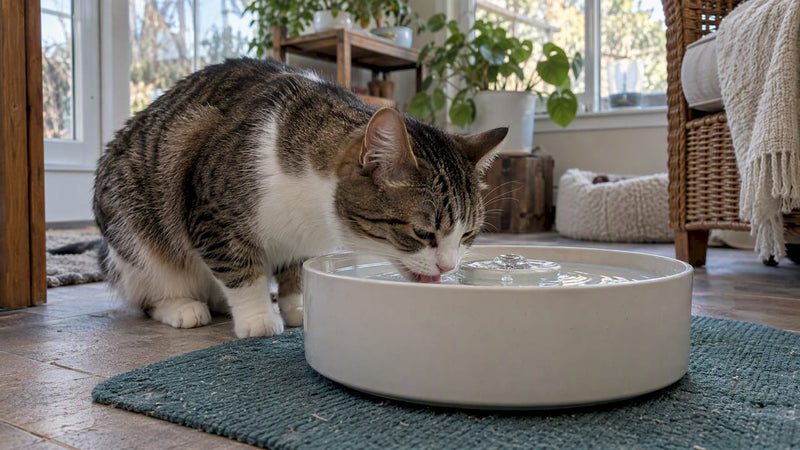
Ceramic cat fountains offer real, practical benefits for indoor cats: a glazed surface that resists scratches and bacterial buildup, better durability than plastic over time, and for many cats, encouragement to drink more water throughout the day. The catch is that these benefits only show up when you clean the fountain consistently and introduce it to your cat the right way.
TL;DR:
- Top up the fountain daily and wipe away debris; disassemble and scrub every part weekly, then replace filters on the manufacturer’s schedule.
- A 10 pound cat needs about 1 cup (240 mL) of water daily, including food moisture; track intake after setup, especially with dry food.
- Introduce the fountain gradually: let your cat inspect it dry and unplugged, add water when it seems comfortable, then switch on the motor.
- Choose a wide, shallow basin and quiet motor, and set the heavier ceramic unit on a stable, low surface away from busy paths.
- A fountain can support hydration but cannot treat illness; consult a veterinarian if your cat’s drinking changes noticeably, whether it increases or decreases.
Table of Contents
- What Ceramic Fountains Do Well for Indoor Cats
- How to Keep a Ceramic Fountain Sanitary, Step by Step
- Evidence and Tactics for Increasing Your Cat’s Water Intake
- Durability, Breakage Risk, and Practical Trade-Offs for Ceramic
- Checklist to Pick the Right Ceramic Fountain and Set It Up for Success
- The Meow Picks Approach to Curated Ceramic Options
- Health Benefits of Drinking More Water
- Ceramic Compared With Plastic and Stainless, Beyond Hygiene
- Sustainability: Ceramic Versus Plastic and Metal
- A Quick Take From Our Team
- Find Curated Ceramic Feeding and Fountain Options
- FAQ
- Sources
What Ceramic Fountains Do Well for Indoor Cats
A ceramic fountain earns its keep in a few specific ways, and it helps to know which ones matter most for your household before you buy.
The glazed finish is the biggest advantage. Unlike plastic, which scratches with normal scrubbing and gives bacteria tiny grooves to hide in, a smooth ceramic surface stays slicker for longer. That matters for cats prone to feline acne, since a cleaner chin-contact surface means fewer irritants.
Running water paired with a wide ceramic bowl also tends to draw more interest from cats who ignore still water in a bowl. And because ceramic is heavier than plastic, it sits more solidly on the floor, which matters in busy households.
- Glazed ceramic resists scratches and bacterial colonization better than worn plastic.
- A wide, flowing reservoir can encourage some cats to drink more often.
- The weight and finish fit naturally into home decor, unlike bulky plastic units.
How to Keep a Ceramic Fountain Sanitary, Step by Step
A fountain only delivers its hygiene advantage if you stay on top of cleaning. Here’s a simple routine that works for most ceramic models.
- Top up the water daily and wipe away any visible grime or hair around the basin.
- Once a week, disassemble the fountain fully, scrub every piece with mild dish soap, rinse thoroughly, and let it air dry before putting it back together.
- Replace the filter on the schedule your fountain’s manufacturer recommends, and keep a spare filter on hand so you’re never tempted to skip a swap.
Ceramic’s glazed surface genuinely helps here. Scratched plastic develops tiny grooves where bacteria and biofilm settle in, while a smooth glaze gives them far less to hold onto, as Cornell’s feline hydration guidance notes when comparing material surfaces for cats prone to acne.
Pro Tip: Set a weekly reminder on your phone for the deep clean. Fountains that get neglected for even two weeks start to lose their hygiene advantage entirely.
Evidence and Tactics for Increasing Your Cat’s Water Intake
An average 10-pound cat needs about 1 cup (240 mL) of water per day, including moisture from food. That baseline gives you something concrete to watch for when you introduce a fountain.
Many cats show a preference for ceramic or glass over plastic, along with wide, shallow bowls that keep their whiskers from brushing the sides, according to iCatCare’s caregiver guide. A fountain that combines both, movement and the right material, can nudge a hesitant drinker toward the bowl more often.
Introduce it in stages rather than all at once:
- Let your cat investigate the unplugged, dry fountain first.
- Add water once your cat seems comfortable approaching it.
- Turn on the motor last, placing the unit on a rubber or silicone mat to cut down on vibration noise.
After introduction, watch your cat’s habits for several days. Note bowl visits, how long your cat lingers at the fountain, and whether the water level drops faster than it did with a still bowl. That’s the simplest way to tell if the fountain is making a real difference for your cat specifically.
Durability, Breakage Risk, and Practical Trade-Offs for Ceramic
Ceramic’s weight is both its strength and its one real vulnerability. A heavier base means less tipping in homes with multiple cats or enthusiastic paws, but a dropped or knocked-over ceramic fountain can chip or crack in a way plastic simply bends away from.
Glazed ceramic also resists odor absorption and porosity better than plastic, which tends to retain smells over months of use even with regular washing.
A few practical steps keep ceramic fountains safer in busy households:
- Place the fountain on a stable, low surface rather than a narrow shelf or ledge.
- Use an anti-vibration mat underneath to reduce noise and add grip against sliding.
- In multi-cat homes, keep the fountain away from high-traffic paths where a bump is more likely.
- Handle the bowl with both hands during weekly cleaning instead of one-handed carrying.
Checklist to Pick the Right Ceramic Fountain and Set It Up for Success
Choosing well upfront saves you from returns and frustrated cats later. Walk through this short list before you buy or set up a new fountain.
- Check the bowl width and depth. A wider, shallower basin suits cats that dislike whisker contact.
- Confirm the fountain disassembles easily for weekly cleaning, with simple filter access.
- Look for a motor described as quiet in product details or reviews, since noise is the top reason cats reject fountains.
- Pick a stable base, and place the unit on a mat in a calm spot away from the litter box.
- Set a maintenance rhythm: daily top-ups, a full weekly scrub, and filter swaps on the manufacturer’s schedule.
The Meow Picks Approach to Curated Ceramic Options
We offer a focused selection of designer cat furniture, gadgets, and lifestyle pieces from independent makers, and a portion of every order supports cat rescue. We don’t claim to lab-test or vet-certify the pieces we carry. Instead, we choose items built with care, then let you decide what fits your cat and your home.
- Browse our best cat water fountain picks for quiet, hygienic models.
- Not sure a fountain is right for your cat yet? Start with whether your cat needs one.
- If you’re weighing bowl materials too, our ceramic versus stainless comparison covers the trade-offs.
Always check the product page for finish and care instructions before you buy, since glazing and dishwasher safety vary by maker.
Health Benefits of Drinking More Water
Cats evolved from desert ancestors and carry a naturally low thirst drive, which is part of why many drink less than they should from a standard bowl. Getting closer to that daily water target, roughly 1 cup per 10 pounds of body weight, supports healthy kidney and urinary tract function over the long run.
Indoor cats on dry food in particular benefit from any nudge toward drinking more, since kibble carries far less moisture than wet food. A fountain that gets your cat visiting the water bowl more often, even a little more, adds up over weeks and months.
This isn’t a cure for an underlying health issue, and a cat drinking noticeably more or less than usual should always see a veterinarian. But as a daily habit, steadier hydration is one of the simplest things you can support with the right setup. Pairing a fountain with wet food meals, rather than relying on dry food alone, compounds the benefit further.
Watching your cat’s intake after introducing any fountain, ceramic or otherwise, gives you a clear read on whether the change is actually helping, rather than guessing based on how full the reservoir looks at the end of the day.
Ceramic Compared With Plastic and Stainless, Beyond Hygiene
Hygiene and durability aren’t the only reasons owners gravitate toward ceramic. The material simply looks and feels different in a home.
Plastic fountains tend to read as utilitarian: molded curves, visible seams, and a limited range of finishes. Stainless steel fountains lean clinical, which some owners like for a modern kitchen but which can feel cold next to soft furnishings. Ceramic, by contrast, comes in a wider range of glazes, colors, and shapes, and many pieces are designed to sit comfortably on a counter or sideboard rather than look like pet equipment.
That aesthetic flexibility matters more than it might seem. A fountain that blends into your living space is one you’re less likely to tuck away in a corner, which in turn means your cat has easier, more consistent access to it. Weight plays into the experience too. Ceramic’s heft gives it a settled, substantial feel underfoot and on surfaces, while plastic can shift or rattle slightly during motor operation.
None of this changes how the water flows, but it does shape whether a fountain fits naturally into your daily routine or feels like one more plastic gadget competing for counter space. If you’re also rethinking feeding setups, our modern cat feeding station guide covers how to combine bowls, mats, and fountains into one tidy area, and our cat coffee table roundup shows how feline-friendly pieces can double as real furniture.
Sustainability: Ceramic Versus Plastic and Metal
Material choice has a footprint beyond your living room. Ceramic is made from natural clay fired at high temperatures, and a well-made piece can last for years with normal care, chips aside. Plastic fountains, by contrast, degrade faster under regular scrubbing and UV exposure near windows, and scratched units often get replaced sooner simply because they’re harder to keep clean.
Stainless steel holds up well over time too, resisting both scratching and odor absorption, though it carries its own manufacturing footprint tied to metal extraction and processing.
None of these materials is without trade-offs, but a ceramic fountain that stays in service for several years, rather than getting replaced after a season of visible wear, generally means fewer units heading to a landfill over your cat’s lifetime. Checking a product’s glaze and firing details before buying, which we cover in our lead-free ceramic guidance, also helps you choose a piece built to actually last rather than one that looks the part on a shelf.

A Quick Take From Our Team
Ceramic fountains suit owners who want a low-odor, break-resistant option that fits their home’s style, and cats who seem bothered by plastic’s texture or smell. If a household has rowdy multi-cat traffic or butterfingers nearby, pairing ceramic with a stable, low placement and an anti-vibration mat solves most of the risk.
— TheMeowPicks Team
Find Curated Ceramic Feeding and Fountain Options
If you’re ready to bring a ceramic piece into your cat’s routine, we keep a small, considered lineup rather than an overwhelming catalog. Our Furniture, Technology, Lifestyle collection is a good starting point for browsing feeding and watering pieces alongside everything else we carry for indoor cats.

For specific ceramic bowls, our Ceramic Cat Bowl offers a straightforward daily option, while the Gourmet Ceramic Cat Bowl suits owners who want a more refined finish on the counter. The Vuku Ceramic Cat Bowl rounds out the lineup with a distinct design for owners who care about how feeding pieces look in a shared space.
We also stock wall-mounted climbing pieces that pair well with a tidy feeding station nearby: the Cat Wall Maze, The Climb Condo, and The Catacombs give your cat somewhere to climb while staying close to fresh water below.
A portion of every order supports cat rescue, so choosing a piece from our lineup helps beyond your own household.
FAQ
Should a cat have a water fountain?
A fountain isn’t required, but it can help cats who drink too little from a still bowl, particularly those on dry food. Moving water and a wide, shallow basin, as recommended in iCatCare’s caregiver guide, often appeal to cats who otherwise ignore their water dish.
How to clean a ceramic cat water fountain?
Rinse the basin daily and top up with fresh water, then disassemble the whole unit weekly for a scrub with mild soap and a thorough rinse. Replace the filter on the schedule your fountain’s manufacturer recommends, and let every piece air dry fully before reassembling.
Do cats actually prefer running water?
Many cats respond more to moving water than to a still bowl, likely because flowing water reads as fresher and safer in instinct. Preferences vary by cat, so introducing a fountain gradually, as iCatCare recommends, gives you a clearer read on whether your own cat is one of them.
How much water does an indoor cat need each day?
An average 10-pound cat needs about 1 cup (240 mL) of water daily, including moisture from food. Watching intake against this baseline after introducing a fountain helps you tell if it’s actually making a difference.