Lead Free Ceramic Cat Bowls
Lead Free Ceramic Cat Bowls
Are lead-free ceramic cat bowls actually safe for your cat?
Lead-free ceramic cat bowls are genuinely safe for your cat when they carry verified third-party certifications and are made with high-fired, non-toxic glazes. The key phrase to watch is “verified.” A bowl that simply says “lead-free” on the packaging is not the same as one that has passed independent lab testing under California Proposition 65 or FDA guidelines. The difference between those two things is the difference between a marketing claim and a real safety guarantee.
When a ceramic bowl is fired at sufficiently high temperatures, the glaze fuses tightly to the clay body, making it far less likely to leach heavy metals into your cat’s food or water. Lower-fired ceramics, especially those with bright painted decorations, are the ones that raise legitimate concern. Certifications from recognized bodies like NSF, or test results showing a pass under Prop 65 and FDA standards, are the most reliable proof you can get.
What makes a ceramic cat bowl genuinely safe:
- Third-party lab testing for lead and cadmium leaching, rather than just a manufacturer’s claim
- High-firing temperature (around 1280°C) to ensure glaze stability
- Non-toxic, PFOA-free glaze with no heavy metal pigments
- A smooth, non-porous surface that resists bacterial buildup
- No chips, cracks, or crazing on the glaze surface
- Certifications such as California Proposition 65 pass results, FDA compliance, or NSF certification
Warning signs to avoid:
- “Lead-free” label with no third-party test documentation
- Brightly hand-painted decorations on the interior of the bowl
- Low price points from unknown overseas manufacturers with no certification info
- Visible crazing or micro-cracks in the glaze
Table of Contents
- What risks do uncertified ceramic bowls carry?
- What certifications actually prove a ceramic bowl is lead-free?
- How do stainless steel and other materials compare for safety?
- How to choose a safe cat bowl: practical shopping tips
- Designer lead-free ceramic cat bowls worth considering
- Why lead content in ceramic cat bowls is a real concern
- What lead exposure actually does to a cat’s health
- How to verify a lead-free claim beyond the label
- Key Takeaways
- Safe, beautiful cat bowls curated by The Meow Picks
What risks do uncertified ceramic bowls carry?
Not every ceramic bowl on the market is safe. Some ceramic glazes, particularly those used in lower-cost or decorative bowls not designed for food use, contain lead or cadmium compounds that can leach into food over time, especially when the glaze is damaged. Cats are small animals, and even low-level heavy metal exposure adds up with daily feeding.
Beyond lead, there is a hygiene concern that often gets overlooked. Ceramic bowls can harbor bacteria if chipped or cracked, increasing the risk of feline acne and digestive issues. Once a glaze develops micro-cracks or crazing, the porous surface underneath becomes a breeding ground for biofilm, the same kind of bacterial layer that makes old plastic bowls smell even after washing.
Symptoms that may indicate lead exposure in cats:
- Loss of appetite or sudden weight loss
- Vomiting or diarrhea without an obvious cause
- Lethargy or unusual weakness
- Neurological signs such as tremors or coordination problems
- Abdominal pain or sensitivity
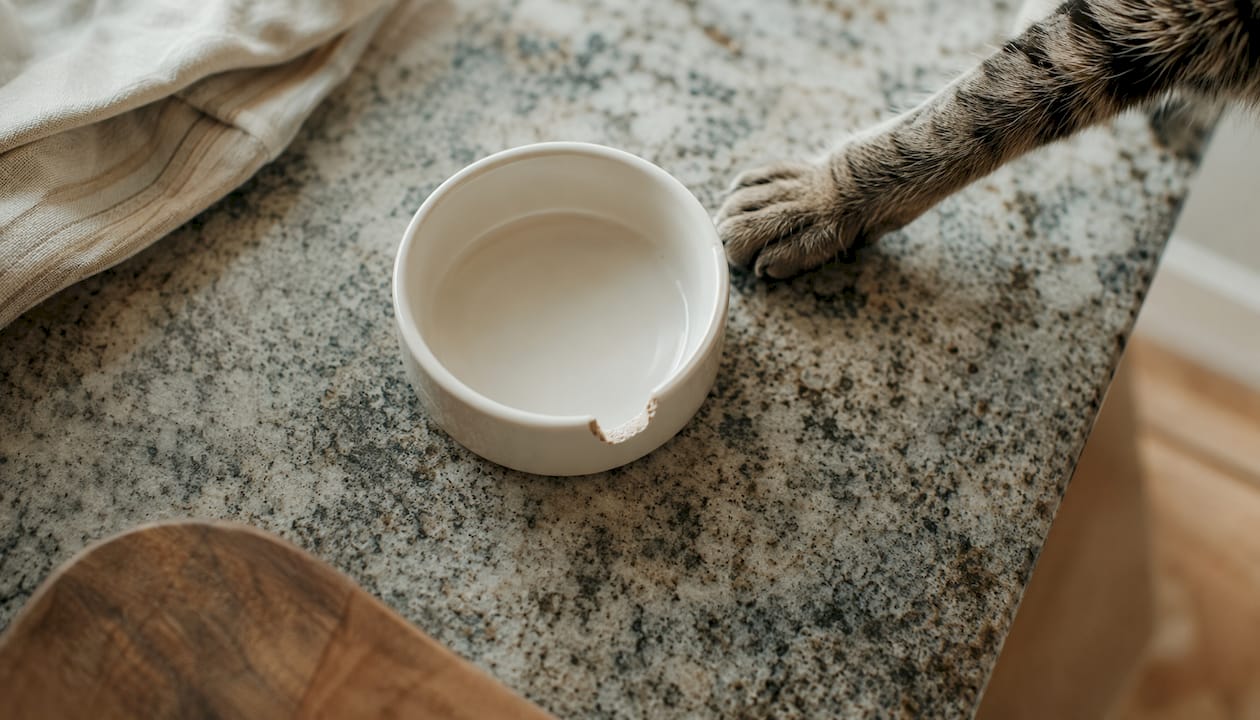
Durability is a third concern. Ceramic chips and cracks with regular use, and a chipped bowl is not just a hygiene risk. Sharp ceramic edges can injure your cat’s mouth or tongue. If you notice any damage to a ceramic bowl, replacing it immediately is the right call, regardless of how recently you bought it.
What certifications actually prove a ceramic bowl is lead-free?
Certifications are the most reliable way to tell whether a manufacturer’s lead-free claim holds up. Independent testing against recognized regulatory standards is the gold standard for pet bowl safety. Branding alone is not sufficient proof.
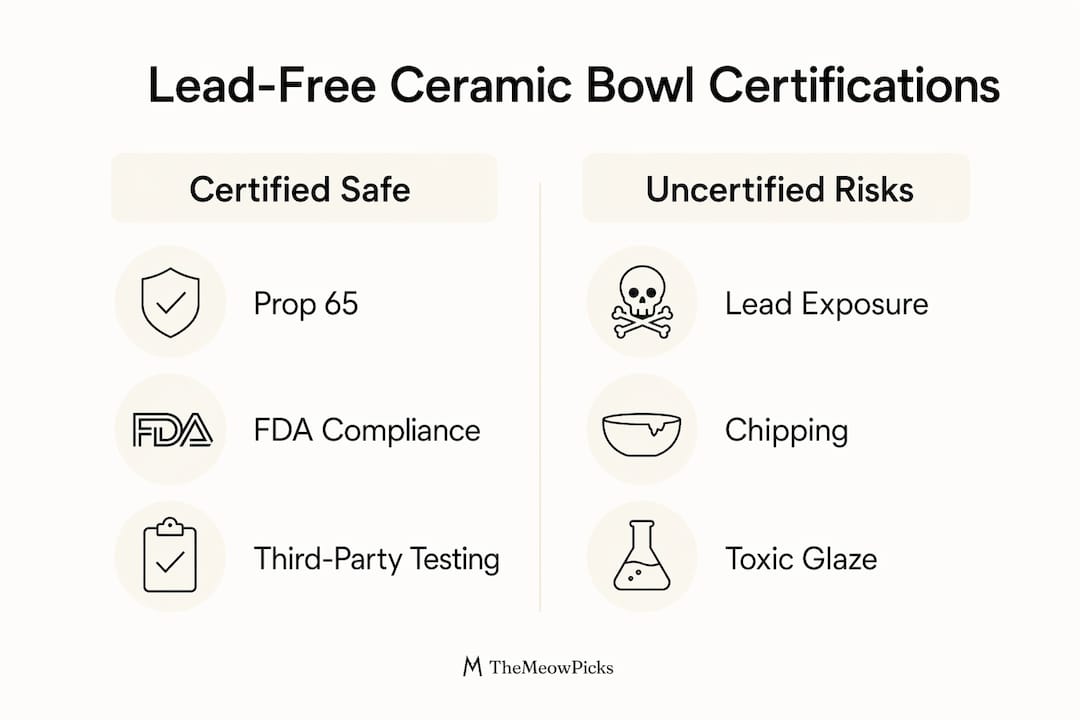
Mora Ceramics is a good example of what transparent certification looks like. Their pet food bowls carry Prop 65 and FDA pass results for lead and cadmium leaching, documented on their product pages. Each piece is hand-glazed with a lead-free, cadmium-free, and PFOA-free glaze, then fired slowly at 1280°C and cooled gradually to prevent stress fractures and ensure durability. That firing and cooling process is not just about aesthetics. It is what keeps the glaze stable over years of daily use.
PawsPik takes a similar approach. Their elevated ceramic cat bowl is crafted from high-fired ceramic with a non-toxic glaze confirmed safe for everyday feeding. The glazed surface is odor-resistant and dishwasher safe, which matters for long-term hygiene. KtKitty is another brand that markets its ceramics as lead and cadmium free with non-toxic glazes designed for daily use.
Certification markers worth looking for when you shop:
- California Proposition 65 pass results for lead and cadmium leaching
- FDA guidelines compliance for food-contact surfaces
- NSF certification (most common for stainless steel, but increasingly seen in ceramics)
- PFOA-free and cadmium-free glaze documentation
- Specific test reports, not just a “tested” badge, showing pass results under named protocols
Safety note: Look for actual test reports showing pass results for lead and cadmium leaching under recognized regulatory protocols, rather than just a “lead-free” label. A pass result under Prop 65 is a specific, documented outcome. A label is not.
How do stainless steel and other materials compare for safety?
Ceramic is not your only option, and for some cat owners, it may not be the best one. 304-grade (18/8) stainless steel is widely regarded as the safest and most hygienic material for cat bowls. It is non-porous, resistant to bacterial accumulation, and will not chip, crack, or shatter the way ceramic can.
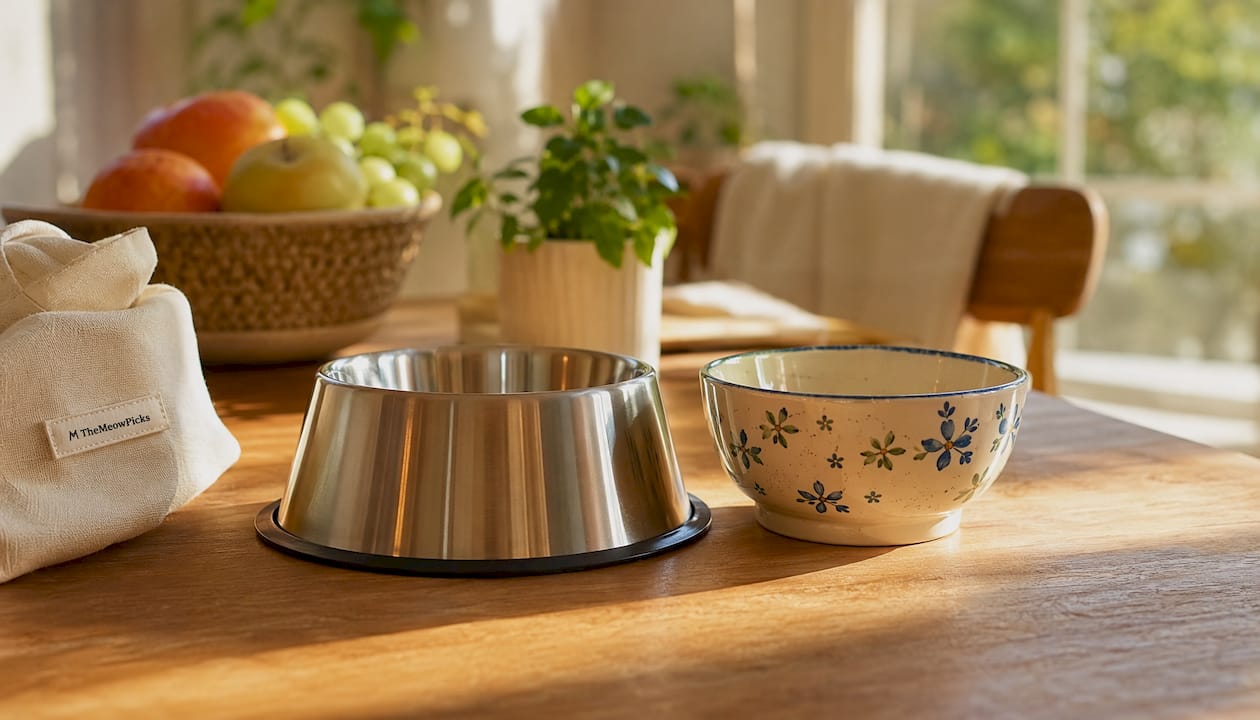
Basis Pet makes their cat bowls entirely from U.S.-sourced 304-series stainless steel, independently tested for lead, mercury, and cadmium, and screened for radioactivity. WeatherTech goes a step further: their pet bowls are NSF certified as free from lead, mercury, cadmium, radiation, and other toxins, and meet human food-grade standards. They are currently the only stainless steel or BPA-free plastic pet bowls to hold that NSF “Certified for Home Use” designation.
| Feature | High-fired certified ceramic | 304-grade stainless steel |
|---|---|---|
| Lead and cadmium risk | Low when certified; higher if uncertified | Negligible with independent testing |
| Bacterial resistance | Good when glaze is intact | Excellent; non-porous by nature |
| Durability | Moderate; chips and cracks over time | Very high; will not chip or shatter |
| Certifications available | Prop 65, FDA, PFOA-free | NSF, independent heavy metals testing |
| Price range | — | — |
| Design options | Wide variety of colors and styles | Limited; mostly polished or matte silver |
Food-safe engineered materials like Pino Sandstone offer a middle ground for cat owners who want something that looks more like ceramic but behaves more like a hard, non-porous surface. The tradeoff is that fewer of these materials carry the same depth of third-party certification documentation that the best ceramic and stainless steel options do.
How to choose a safe cat bowl: practical shopping tips
The most important thing you can do is look past the label. “Non-toxic” and “lead-free” printed on a box mean nothing without documentation to back them up. Here is how to shop with confidence.
Pro Tip: Ask the manufacturer directly for their test reports. A brand that has genuinely tested their products will share that documentation without hesitation. One that deflects or offers only vague reassurances is telling you something important.
Practical checklist for choosing a safe ceramic cat bowl:
- Verify that third-party lab test results are publicly available, not just claimed
- Choose high-fired ceramics with food-grade glazes
- Check for Prop 65 pass results, FDA compliance, or NSF certification on the product page
- Inspect the bowl before first use for chips, cracks, or crazing in the glaze
- Replace any bowl that develops visible damage, regardless of age
- Avoid bowls with hand-painted interior decorations unless the paint is confirmed food-safe
- Wash ceramic bowls daily with mild dish soap; avoid abrasive scrubbers that can damage the glaze
- Consider a stainless steel option if your cat is prone to knocking bowls off surfaces
Buying from brands that are transparent about their manufacturing process is one of the simplest ways to reduce risk. If a product page does not mention firing temperature, glaze composition, or testing standards, that absence is worth noting.
Designer lead-free ceramic cat bowls worth considering
The good news is that safe and beautiful are not mutually exclusive. Several independent makers produce genuinely certified, non-toxic cat bowls that also look great in modern homes.
The Vuku Ceramic Cat Bowl at The Meow Picks is a standout for cat owners who want something that feels artisan without sacrificing safety. It features a smooth, food-safe glaze and a wide, shallow profile that reduces whisker fatigue during meals.
The Desco Cat Feeder with Porcelain Bowls pairs a powder-coated steel frame with porcelain bowls, combining the aesthetic warmth of ceramic with a design built for daily durability. For a wall-mounted option, the Arco Wall Cat Feeder with Porcelain Bowls keeps feeding stations off the floor and out of the way, which many cats actually prefer.
- Vuku Ceramic Cat Bowl: Wide, shallow design with a food-safe glaze; ideal for cats sensitive to whisker fatigue
- Desco Cat Feeder, Porcelain: Porcelain bowls in a powder-coated steel frame; easy to lift out for cleaning
- Arco Wall Cat Feeder, Porcelain: Wall-mounted feeder with porcelain bowls; space-saving and hygienic
- Cena Cat Feeder, Porcelain: Clean-lined porcelain bowls in an elevated feeder; suits cats with neck or joint sensitivity
Every product at The Meow Picks is curated with both safety and design in mind, and a portion of every order supports cat rescue organizations.
Why lead content in ceramic cat bowls is a real concern
Lead has been used in ceramic glazes for centuries because it lowers the melting point of glaze and produces a smooth, glossy finish. The problem is that lead-containing glazes can leach into food and water, particularly when the glaze is acidic, damaged, or low-fired. Decorative ceramics made for display rather than food use are especially likely to contain lead-based pigments.
The concern is not limited to obviously cheap or decorative bowls. Some ceramics imported without proper certification have been found to contain lead even when they appear well-made. The U.S. Consumer Product Safety Commission has documented cases of lead contamination in consumer goods, including food-contact items, reinforcing why independent testing matters so much. Cats face a higher relative exposure risk than humans because they eat from the same bowl multiple times every day, often for years.
What lead exposure actually does to a cat’s health
Lead is a neurotoxin, and cats are more sensitive to it than many people realize. Chronic low-level exposure from a contaminated bowl can accumulate in a cat’s body over time, affecting the nervous system, kidneys, and gastrointestinal tract before any obvious symptoms appear. By the time a cat shows clear signs of lead poisoning, the exposure has typically been ongoing for a while.
Acute lead poisoning in cats can cause seizures, blindness, and severe neurological damage. Chronic exposure tends to show up more subtly: gradual weight loss, intermittent vomiting, behavioral changes, or a coat that looks dull and unhealthy. If you suspect your cat has been eating from a bowl that may not be certified lead-free, a veterinarian can run a blood lead level test to check. Switching to a certified safe bowl immediately is the right first step while you wait for results.
How to verify a lead-free claim beyond the label
A “lead-free” label on a cat bowl is a starting point, not a conclusion. Here is how to dig deeper and confirm that the claim is real.
Start by searching for the brand’s actual test documentation. Reputable manufacturers like Mora Ceramics publish their Prop 65 and FDA leach test results directly on their product pages. If a brand’s website has no mention of testing protocols, firing temperatures, or certification bodies, that is a gap worth questioning.
You can also use a home lead test kit, available at most hardware stores, to do a quick surface check on a bowl you already own. These kits are not as precise as lab testing, but a positive result is a clear signal to stop using the bowl. For a more thorough check, services like NonToxicLab conduct independent heavy metals testing on consumer products, including pet bowls, and publish their findings. Checking whether your bowl or brand has been independently reviewed by a third-party testing organization is one of the most reliable steps you can take beyond reading the label.
If you are buying from a new or unfamiliar brand, look for these specific signals: named certification bodies (not just “certified”), documented firing temperatures, and glaze composition details. A brand that has done the work will talk about it specifically. Vague language like “safe materials” or “non-toxic formula” without supporting detail should prompt more questions before you buy. For new cat owners still building their knowledge of safe pet products, resources like Maine Coon kitten guidance often include practical advice on choosing safe feeding equipment alongside other pet care basics.
Key Takeaways
Certified lead-free ceramic cat bowls are safe for daily use when they carry documented third-party test results for lead and cadmium leaching, are fired at high temperatures, and show no chips or cracks in the glaze.
| Point | Details |
|---|---|
| Certification beats labeling | Look for Prop 65 pass results or FDA compliance documentation, not just a “lead-free” label. |
| Firing temperature matters | Ceramics fired at around 1280°C produce a stable glaze that resists leaching over time. |
| Damage changes everything | A chipped or cracked ceramic bowl becomes both a bacterial risk and a potential source of chemical exposure. |
| Stainless steel is the safest alternative | 304-grade stainless steel with independent heavy metals testing offers the highest safety margin of any bowl material. |
| The Meow Picks curated options | The Meow Picks carries vetted ceramic and porcelain cat bowls from independent makers, with every order supporting cat rescue. |
Safe, beautiful cat bowls curated by The Meow Picks
If you have read this far, you already know what to look for. The Meow Picks takes that research off your plate by curating cat bowls and feeders from independent makers who prioritize both safety and design. Every ceramic and porcelain option in the collection is selected with food-safe materials and thoughtful construction in mind, so you are not left guessing about what is actually in the glaze.
Beyond bowls, The Meow Picks carries a full range of designer cat furniture, from modern wall shelves to cozy cat beds, all sourced from independent makers worldwide. A portion of every order goes directly to cat rescue organizations. Whether you are setting up a new feeding station or replacing a bowl you are no longer sure about, browsing the collection at The Meow Picks is a good place to start.