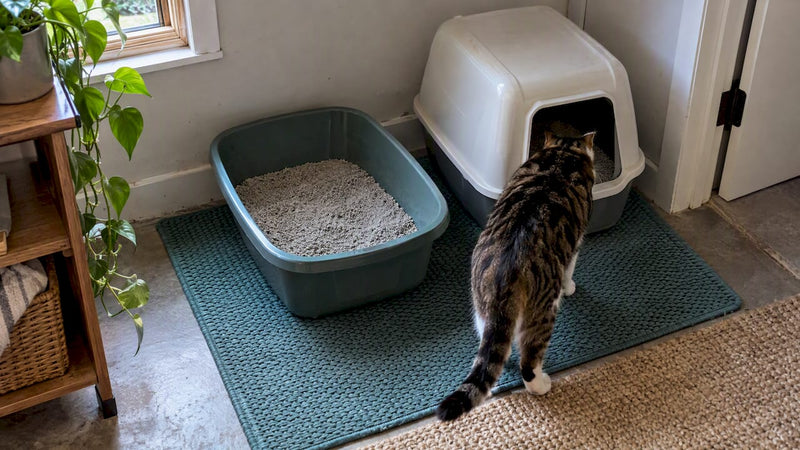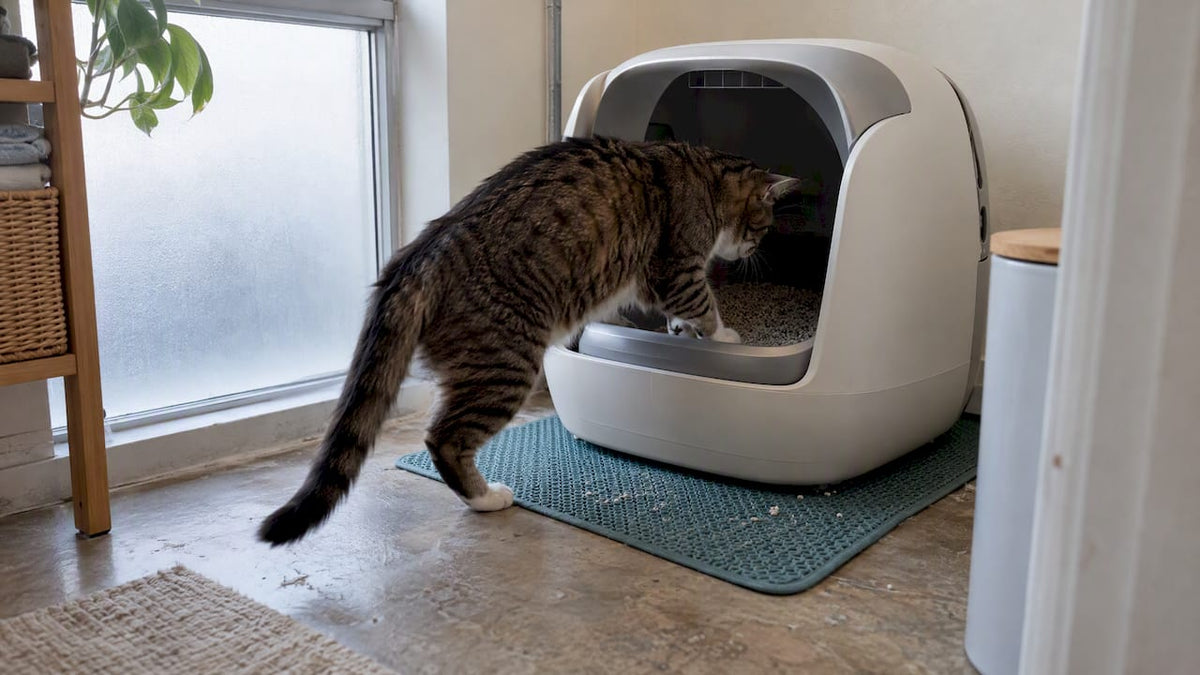
Smart litter boxes track visits, time spent in the box, weight, and waste timing, giving you a running picture of your cat’s bathroom habits over weeks and months. This data is most useful as an early-warning system: a trend worth mentioning to your veterinarian, not a diagnosis on its own. If your cat shows signs of straining, crying, blood in the litter, or sudden distress, skip the app and call your vet right away.
TL;DR:
- Weight-based identification issues mean that even nearby cats of similar size can have their visits misattributed, especially in multi-cat households.
- Regular litter changes, scooping, or uneven floors can produce noisy data and false alerts, necessitating careful interpretation before reacting.
- Trend changes over one to two weeks, like increased visit frequency or gradual weight loss, are more meaningful signals than individual data points.
- Placing monitors on stable, level surfaces and logging litter or scooping routine changes improve data accuracy and reduce false positives.
- A smart litter box provides useful early warning signs but should always be used alongside veterinary advice when signs of health issues appear.
Table of Contents
- What data do smart litter boxes and monitors record?
- How smart litter boxes collect data: sensors, sampling, and analytics
- Accuracy, limitations, and multi-cat challenges
- How to interpret smart-litter data and when to call your vet
- How to improve data quality: placement, maintenance, and app setup
- Choosing a litter box that works well with monitors
- Shop litter boxes and litter built for reliable data
- FAQ
- Sources
What data do smart litter boxes and monitors record?
Most monitors build their picture of your cat’s health from a handful of core metrics. Each one tells a different part of the story, and together they create a baseline you can compare against over time.
- Visits per day and timestamps: a shift in when or how often your cat uses the box can be an early flag worth watching.
- Visit duration: longer time in the box may point to straining or discomfort.
- Weight and weight trends: recorded by scales under the box or estimated by the app, useful for spotting gradual loss or gain.
- Waste timing and type: some systems use WasteID-style sensing to separate urine events from stool events.
- Derived trends: moving averages and variance that smooth out single-day noise so a pattern stands out from normal fluctuation.
A single short visit means little. A two-week pattern of shorter, more frequent visits is the kind of change worth flagging to your vet.
How smart litter boxes collect data: sensors, sampling, and analytics
The numbers you see in an app start as raw signals from hardware built into or under the box. Understanding the pipeline helps explain why readings sometimes look noisy.
- Corner or under-box scales measure weight changes as your cat enters, settles, and leaves, which is also how many systems estimate body weight over time.
- Motion and presence sensors (infrared or proximity) record when a cat is physically in the box and for how long.
- Cameras and visual recognition, where included, add behavior detail and help with identifying individual cats in multi-cat homes, though they come with privacy trade-offs and sometimes a subscription fee.
- Pattern-recognition software translates raw sensor traces into labeled events, a process researchers have described using an ethogram, a structured catalog of behaviors used to train machine learning models on litter-box activity, as reported by Scientific American.
- Cloud or on-device processing decides whether you see raw event logs or smoothed trend lines in your dashboard.
Purina’s Petivity team built its model from more than 300,000 recordings, using weight, movement, time of day, and identifying “paw prints” to distinguish behaviors and individual cats, according to Purina’s own materials.
Accuracy, limitations, and multi-cat challenges
Smart litter data is genuinely useful, but it has real limits worth knowing before you trust every alert.
- Weight-based identification struggles with similar-weight cats. If two cats in your home are close in size, the system may mix up their events.
- One monitor per box gives you cleaner household-level data when precise per-cat tracking matters, since shared boxes blur individual patterns.
- Litter changes, scooping, and uneven floors add noise to scale readings, sometimes triggering a false weight alert that has nothing to do with your cat’s health.
- Cameras can improve identification but add cost and privacy considerations, and most systems need a learning period before results stabilize.
- False positives and negatives happen. Check the event history before reacting. A one-off odd reading surrounded by otherwise normal entries is usually noise, not a signal.
Multi-cat households that rely on weight-based ID should expect occasional misattributed visits, which is why reviewers recommend manual correction features and, where possible, one monitor per box, per Cats.
Pro Tip: Review a week of event history before assuming a single flagged visit means something is wrong.
How to interpret smart-litter data and when to call your vet
The real value of this data shows up over time, not in any one reading. A sustained rise in visit frequency, a slow weight decline, or a new pattern of short, frequent visits all deserve a closer look.
- Watch for trend changes, not single data points: a gradual shift over one to two weeks matters more than one odd day.
- Pair app data with what you see at home: vocalizing in the box, straining, blood, excessive genital licking, accidents outside the box, or changes in appetite and water intake.
- Build a simple summary for your vet visit: trend charts, timestamps, any recent litter changes, and symptoms you’ve noticed alongside the data.
- Treat alerts as a prompt, never a diagnosis. Cornell’s feline health guidance lists increased urination frequency, straining, crying while urinating, blood in urine, and genital licking as signs of lower urinary tract disease that call for veterinary evaluation, and warns that urinary obstruction is a serious emergency.
For meaningful vet conversations, capture baseline data over a week or more before treating a single alert as urgent, and note any concurrent changes in diet, medication, or litter, a practice supported by research into litter-box behavior tracking from Scientific American. Long-running trend data, not isolated events, is what clinicians find most useful when evaluating conditions like early kidney disease.
How to improve data quality: placement, maintenance, and app setup
A few habits make the difference between a dashboard full of noise and one you can actually trust.
- Place the monitor on a stable, level surface and avoid rugs or mats that can shift underneath it.
- Keep one monitor per box when you need accurate per-cat tracking in a multi-cat home.
- Stick to a consistent litter type and scooping routine, and log any changes in the app so a shift in readings has an explanation.
- Update firmware and the app regularly, and calibrate the device if that feature is supported.
- Check event history before reacting to an alert. A reading that looks alarming at first glance is often explained by a litter change or a scooping event logged the same day.
- Set alert thresholds conservatively. Overly sensitive settings lead to alert fatigue, which makes it easier to miss the pattern that actually matters.
Pro Tip: Log litter changes and scooping dates in the app every time, since that single habit explains most of the odd readings you’ll ever see.
Litter-box placement matters here too. Cornell’s shelter medicine guidance recommends one box per cat plus one, kept clean and in a quiet location, as part of good litter-box hygiene that also happens to support more reliable monitor readings, per Cornell’s house soiling guidance. If you’re placing a monitored box in an enclosed cabinet or an unconventional spot like a bathroom, our guides on litter box cabinet safety and setting up a litter box in a bathroom cover placement details that affect both hygiene and sensor accuracy.
Choosing a litter box that works well with monitors
We focus on litter boxes and accessories that hold up to daily use while looking good in a home. A stable, well-designed box is the foundation good data sits on top of.

For pairing with an under-box monitor, we look for a low profile, a solid and level base, and consistent compatibility with common litter types, since any wobble or uneven surface shows up as noise in your readings. We carry litter boxes and related accessories built with that stability in mind.
Shop litter boxes and litter built for reliable data

If you’re setting up a monitor at home, the box and litter underneath it matter as much as the sensor itself. A stable base keeps weight readings accurate, and a predictable litter texture helps waste-timing features do their job.
- The Sito Cat Litter Box offers a stable, level design that suits placement under or alongside a monitoring device.
- The Sito Insert Refill Pack keeps litter depth consistent between changes, which helps avoid the readings that come from uneven fill.
- Cassava and Corn Clumping Cat Litter clumps predictably, which supports waste-timing features that rely on consistent material behavior.
Browse our full litter boxes collection to find a setup that fits your home, and check our guide to automatic litter box costs if you’re weighing a monitored system against your budget. If odor control is part of your decision, our odor control litter box guide covers maintenance habits that pair naturally with the consistency monitors need.
This article is general information, not a substitute for advice from a qualified doctor. Consult a qualified healthcare professional about your own circumstances before acting on anything here.
FAQ
Are smart litter boxes worth it for indoor cats?
They’re worth considering if you want an ongoing record of your cat’s bathroom habits, since trends in visits, weight, and duration can flag changes worth discussing with your vet, and becoming a cat sitter can help you learn more about cat care. They work best as an early-warning tool alongside, not instead of, regular vet checkups and attentive daily observation.
How does a smart litter box work?
Sensors such as under-box scales and motion detectors record each visit, its duration, and weight changes, and software turns those raw signals into event logs and trend lines. Some systems add cameras or waste-timing features to estimate whether a visit involved urination or defecation.
Where are the sensors located on a smart cat litter box?
Most systems place scales directly under or built into the base of the box, since that’s where weight and entry or exit movements are easiest to capture. Motion or infrared sensors are typically positioned at box level or on a mounted unit nearby to detect presence and timing.
Is a smart litter box connected to wifi?
Many smart litter monitors connect to a home wifi network so data can sync to a smartphone app in near real time. Connectivity requirements and setup steps vary by device, so check the specific product’s instructions for your home network.
Can smart litter box data replace a vet visit?
No. Manufacturers and veterinary sources are clear that monitor data is meant to surface meaningful changes, not to diagnose or treat any condition, as Purina’s own materials state. Signs like straining, blood, or crying while urinating call for prompt veterinary evaluation regardless of what the app shows.
Sources
- Feline lower urinary tract disease | Cornell University College of Veterinary Medicine
- AI can predict cat health from litter box visits | Scientific American
- AI-powered litterbox system offers new standard of care for cat owners (Purina PR)
- Solving house soiling problems (Cornell shelter medicine)