Litter Box in Bathroom
Litter Box in Bathroom
Yes, a bathroom can be a perfectly suitable place for a litter box, as long as you meet a few non-negotiable conditions. Access has to be reliable, ventilation has to work, and cleaning has to happen on schedule.
- Your cat needs the door open or propped at all times, day and night.
- The room needs airflow (a fan, a cracked window, or an exhaust vent) to keep odor from building up.
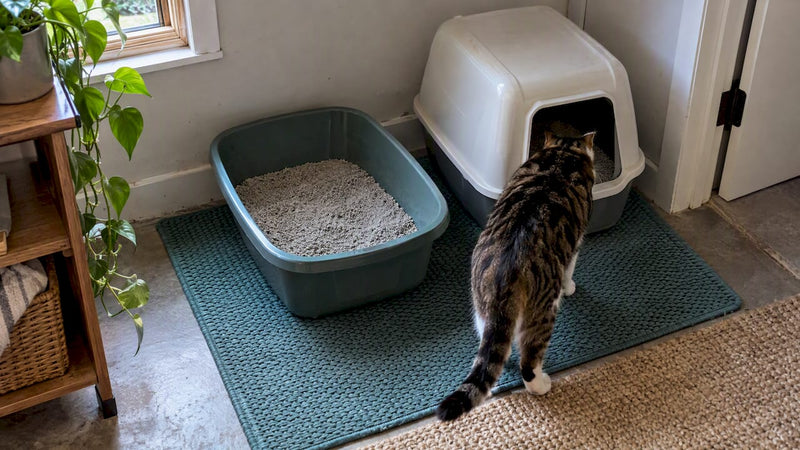
Vets recommend the n + 1 rule, meaning one more litter box than the number of cats in your home, plus daily scooping and a full weekly clean.
A bathroom litter box only works if the door never becomes a barrier. Cats that get shut out even once or twice can start avoiding the box entirely.
Key Takeaways
A bathroom litter box succeeds when door access stays constant, ventilation controls odor, and cleaning follows a daily scoop plus weekly full reset.
| Point | Details |
|---|---|
| Confirm access first | Prop the door open or add a pet door so the box is never blocked, day or night. |
| Follow the n + 1 rule | Provide one more box than the number of cats, spread across different floors if possible. |
| Scoop daily, clean weekly | Daily scooping plus a full weekly clean keeps odor and bacteria from building up. |
| Match the box to the space | Pick a right-sized, low-entry box and pair it with a mat to cut down on tracking. |
| Shop bathroom-friendly furniture | The Meow Picks offers compact boxes and enclosed litter furniture like the Apawtment Cat House suited to small, shared rooms. |
Table of Contents
- Why Owners Choose Bathrooms for a Litter Box
- How to Set Up a Litter Box in the Bathroom Step by Step
- Choosing the Right Box and Litter for a Bathroom
- Fixing the Most Common Bathroom Litter Box Problems
- How Many Boxes You Actually Need
- When a Bathroom Is the Wrong Choice
- Bathroom-Friendly Litter Box Options From The Meow Picks
- Finding the Right Setup Without the Guesswork
- Sources
- FAQ
Why Owners Choose Bathrooms for a Litter Box
Bathrooms make sense for a lot of practical reasons. Tile or vinyl flooring wipes clean in seconds, plumbing is already nearby for rinsing mats or trays, and most bathrooms see less foot traffic than a living room or hallway.
The upside:
- Easy-clean, water-resistant flooring
- Close to a sink for quick cleanup
- Usually quiet and low-traffic during the day
The downside:
- Doors get closed, sometimes for hours, blocking access completely
- Humidity from showers can make litter clump early and hold odor
- Fans, vents, and flushing sounds can startle a nervous cat
- Under-sink cabinets are often too cramped for a full-size box
Before committing, run through this quick checklist:
- Can the door stay open or propped 24/7?
- Does the room have a working fan or window?
- Is there enough floor space for the cat to turn around fully?
- Can you store cleaning chemicals somewhere the cat can’t reach?
If you answered “no” to any of these, PetMD’s placement guidance suggests looking at another room before forcing the bathroom to work.
How to Set Up a Litter Box in the Bathroom Step by Step
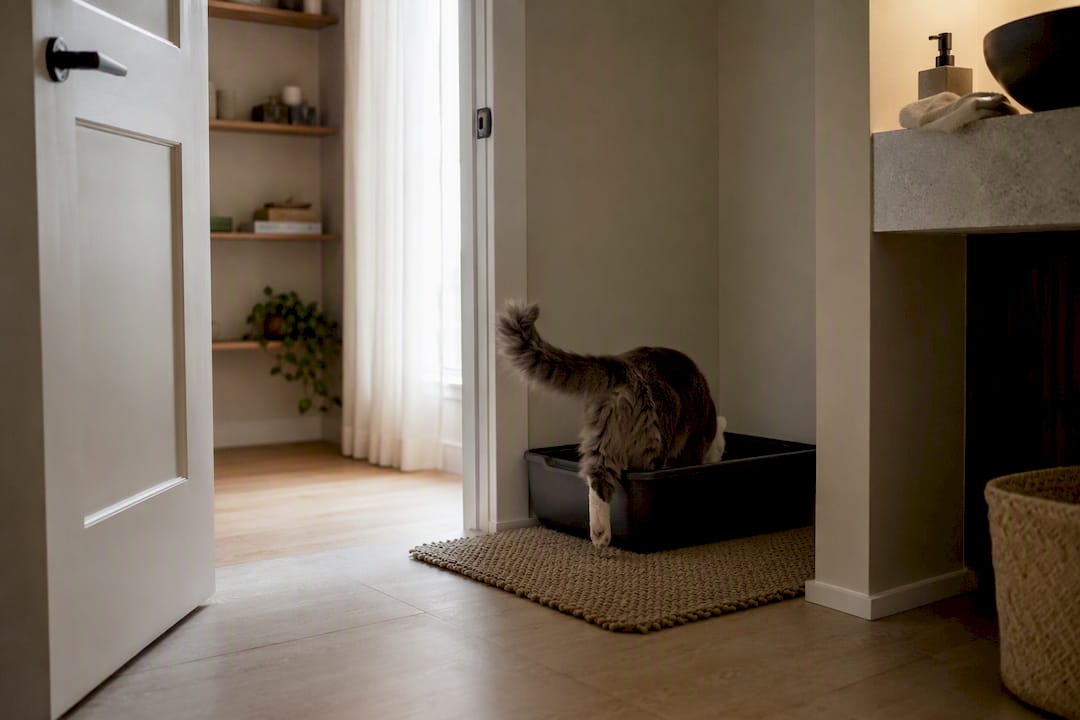
Pick a low-traffic corner first. A cat wants privacy while eliminating, but it also wants an easy exit if something startles it, so a corner with an open sightline to the door works better than a dead-end nook.
Secure consistent access before anything else. Prop the door open with a rubber wedge, install a small pet door, or remove the door altogether if the household allows it. Good Housekeeping’s litter box research points to blocked access as one of the most common causes of inappropriate elimination outside the box.
Keep the box away from the toilet and any cleaning products. Bleach, drain cleaner, and toilet bowl tablets are toxic if a cat brushes against them or knocks them over, and the Cornell Feline Health Center recommends storing chemicals well out of paw’s reach in any room a cat uses.
Place the box on a waterproof, non-slip surface, then add a litter mat in front of it to catch stray granules before they hit the hallway.
Here’s the setup checklist in order:
- Choose a low-traffic corner with a clear path to the door.
- Prop the door or install a pet door for round-the-clock access.
- Position the box at least a few feet from the toilet and chemical storage.
- Confirm the surface underneath is waterproof and slip-resistant.
- Lay a litter mat directly in front of the entry point.
Common bathroom layouts that work well include under-sink space with front-facing access, the area behind a door that stays open against the wall, or a recessed nook with a curtain instead of a solid door. Whatever spot you pick, leave enough clearance for the cat to turn around fully inside the box, not just squeeze in.
Pro Tip: Angle the box so the entrance faces away from the shower or tub. Cats startle at sudden water sounds, and an entrance facing the wet zone means they hear the pipes rumble the second someone turns on the water.
Choosing the Right Box and Litter for a Bathroom
Size matters more than most owners expect. A box should be long enough for your cat to turn around comfortably, with a low entry point if you have an older or arthritic cat, and sides tall enough to catch scatter without blocking easy entry. This lines up with sizing guidance from the Merck Veterinary Manual, which treats generous size as a baseline requirement, not a luxury upgrade.
Covered boxes trap odor inside a small bathroom instead of venting it, which can actually make the smell worse when someone opens the door. Open boxes rely more on the room’s own airflow, so they tend to work better in bathrooms unless you have strong exhaust ventilation.
For litter itself, look for:
- Unscented clumping litter (scented varieties can overwhelm a small room)
- Low-tracking blends to cut down on stray granules on tile
- Moisture-resistant formulas that hold up against bathroom humidity
A rubber-backed mat under the box and a waterproof liner underneath both protect the floor from splashes and litter drift.
Fixing the Most Common Bathroom Litter Box Problems
- Cat avoids the box. Check access first. A door that’s been closed even once can trigger avoidance, so switch to a permanent prop or pet door.
- Odor builds up fast. Run a fan or crack a window, and scoop daily rather than every other day. The chemistry behind litter odor shows that bacteria break down urine compounds quickly, so removing waste promptly is the single biggest factor in odor control.
- Litter tracks everywhere. Switch to a box with higher sides and add a textured mat that grabs granules off paws.
- Floors stay damp or humid. Use an absorbent mat and avoid tucking the box into an enclosed cabinet where moisture has nowhere to go.
If your cat strains, cries out, or visits the box frequently without producing much urine, stop troubleshooting placement and call your veterinarian. These can be signs of a urinary blockage, which is a medical emergency in cats.
How Many Boxes You Actually Need
The standard rule is one box per cat, plus one extra. Two cats means three boxes. Preventive Vet’s setup guidance also recommends spreading boxes across different floors if your home has more than one level, rather than clustering them all in a single bathroom.
If the bathroom is your main location, good spots for the extras include:
- A hallway nook near the bedrooms
- A laundry room corner away from the washer’s vibration
- A hidden cabinet with the door removed for airflow
- A quiet spot near the top of the stairs
Keep every box in an open, visible location. A cat that can see its surroundings while it eliminates feels safer than one tucked into a dark, closed-off space.
When a Bathroom Is the Wrong Choice
Some bathrooms simply aren’t built for it. Skip the bathroom if:
- The door gets closed often and there’s no reliable way to prop it open
- Cleaning chemicals sit on low shelves or under the sink where a cat can reach them
- The room stays humid most of the day, which speeds up odor and makes litter clump before it should
- Loud exhaust fans or frequent flushing startle your cat every time it tries to use the box
If two or more of these apply, a hallway closet or a quiet corner of a spare room will likely serve your cat better.
Bathroom-Friendly Litter Box Options From The Meow Picks
Once you’ve confirmed your bathroom checks the right boxes, matching the furniture to the space makes daily maintenance a lot easier. The Meow Picks carries a few pieces built with small, shared rooms in mind, including compact low-entry litter boxes, enclosed litter furniture that doubles as a side table, and mats designed to catch tracked litter before it reaches the hallway.
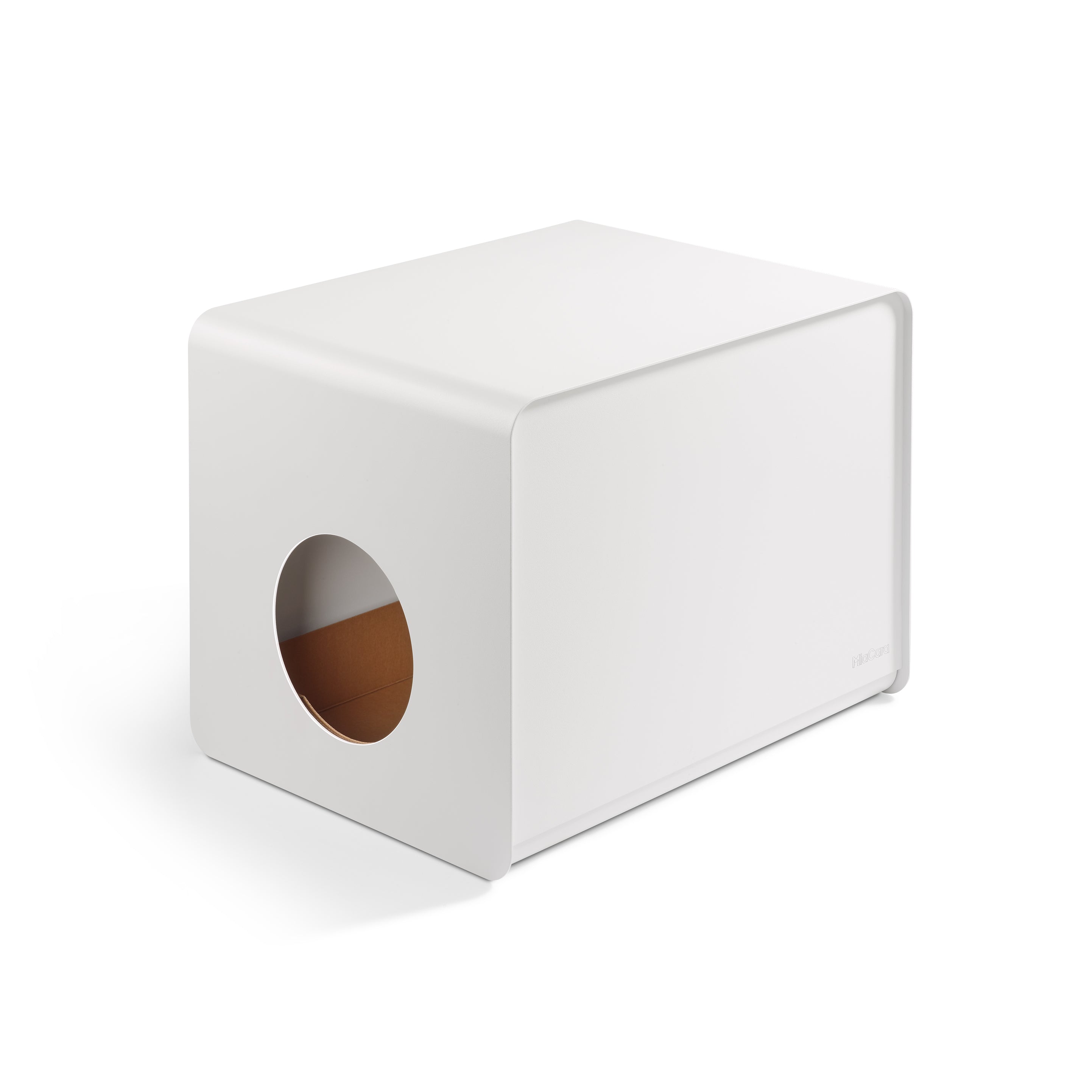
When you’re browsing litter box options, check three things on the product page: interior dimensions (to confirm your cat can turn around), entry height (lower is better for kittens and senior cats), and whether the tray lifts out for easy cleaning. A portion of every order also goes toward supporting cat rescue organizations.
For readers who want litter furniture that blends into a bathroom or hallway, The Meow Picks’ catalog includes pieces like the Apawtment Cat House, the Torre Cat Tower, and the Perla Cat Cave, each offering a different take on privacy and concealment.
Pro Tip: If your bathroom is on the small side, measure the footprint of the box against the doorway swing before you buy. A box that’s a perfect fit for the corner can still block the door from opening fully.
A quick note from TheMeowPicks Team
We stand by the conditional yes: bathrooms work when access, airflow, and cleaning stay consistent. Our team curates litter box collections with exactly that in mind, and a share of every order helps support cat rescue groups doing the harder work.
Finding the Right Setup Without the Guesswork
If you’ve decided a bathroom works for your household, the next step is picking furniture that actually fits a small, shared space instead of forcing a bulky box into a corner it doesn’t belong in. That’s the specific problem The Meow Picks solves: a curated catalog of litter boxes, litter blends, and enclosed cat furniture chosen for exactly this kind of setup, rather than a generic pet store aisle where you’re left guessing which box will actually work in a tight bathroom footprint.
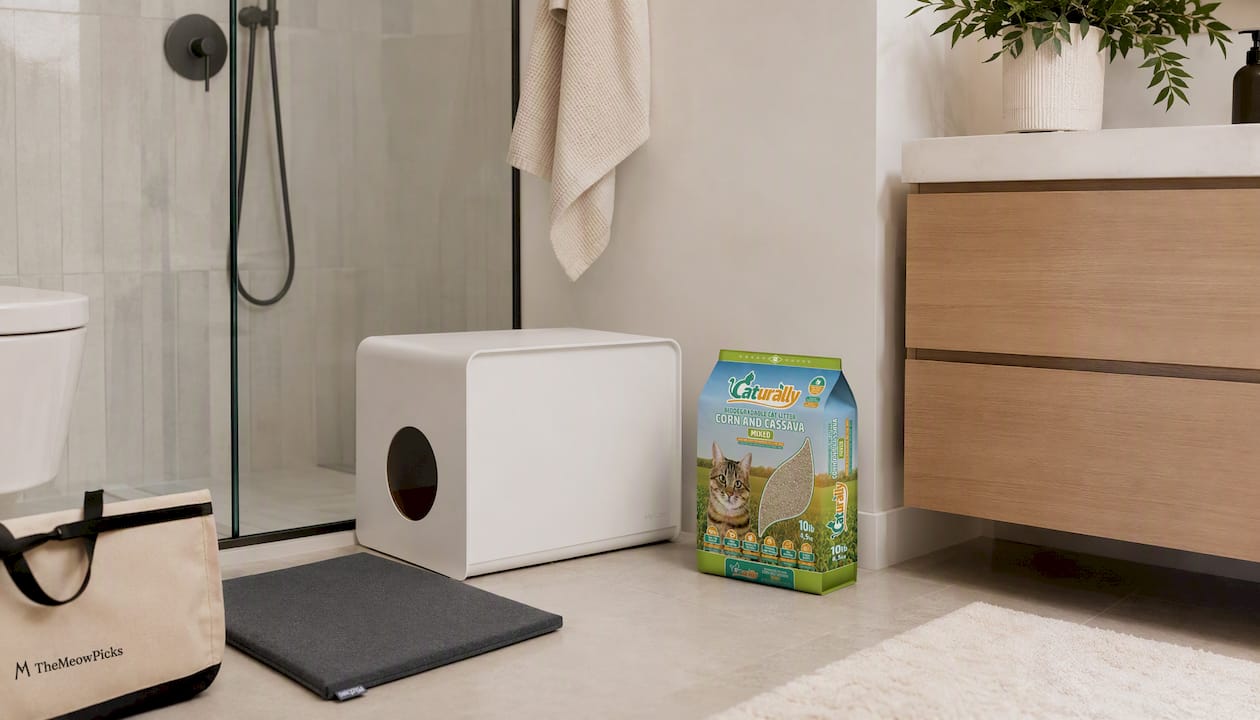
Browse the litter box collection for compact and low-entry models, or check out the Apawtment Cat House if you want litter furniture that doubles as a private hideaway near the bathroom door. Every order supports independent makers and puts a portion of proceeds toward cat rescue organizations. Start with the collection page, compare dimensions against your bathroom’s footprint, and place your order once you find the fit.
Sources
- Providing a Litter Box for a Cat - Cat Owners - Merck Veterinary Manual
- How to Set Up Your Cat’s Litter Boxes | Preventive Vet
- Where To Put Your Litter Box | Good Housekeeping
- Best and worst spots for your cat’s litter box | PetMD
- Zoonotic disease information | Cornell Feline Health Center
- NCBI PMC article on feline urine/odor chemistry
FAQ
Is It Okay to Have a Litter Box in the Bathroom?
Yes, as long as the door stays accessible at all times, the room has ventilation, and you scoop daily with a full weekly clean, according to Merck Veterinary Manual hygiene standards.
Where Should You Not Put a Litter Box?
Avoid small bathrooms with unreliable door access, spots near stored cleaning chemicals, and areas with loud fans or frequent flushing, since these conditions raise the chance your cat avoids the box, per PetMD’s placement guidance.
Where Is the Most Sanitary Place to Put a Litter Box?
A room with easy-to-clean, water-resistant flooring and good airflow, such as a bathroom or laundry room, tends to be the most sanitary choice because spills and litter scatter wipe up quickly.
Why Does My Cat Use the Litter Box When I Use the Bathroom?
Cats often treat their owner’s bathroom visit as a cue that the room is safe and occupied, and some simply prefer company or feel more secure eliminating when a trusted person is nearby.