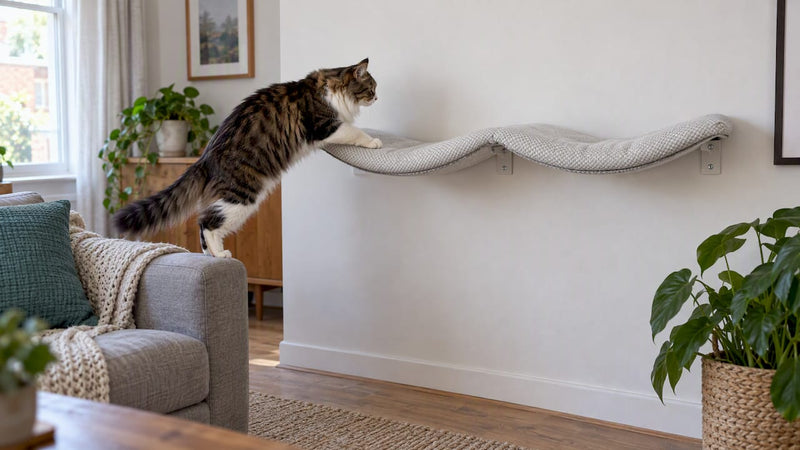
Yes, raised cat beds help many cats by giving them a safe, elevated resting place that reduces stress and improves comfort when chosen and placed correctly. International Cat Care and the Cornell Feline Health Center both point to vertical space, warmth, and easy access as key parts of a cat-friendly home. The catch: older or mobility-limited cats need ramps or low-rise options rather than a high perch, which we cover below.
TL;DR:
- Older or mobility-limited cats benefit more from low-rise beds, ramps, or steps rather than high perches to prevent strain and encourage use.
- Placing raised beds near windows or in quiet, draft-free locations increases their comfort, warmth, and likelihood of consistent use.
- Open mesh or hammock-style beds help keep cats cool, while enclosed or faux-fur beds provide warmth during colder weather.
- Stability, fabric choice, and ease of cleaning are essential factors to ensure a raised bed remains safe and hygienic for daily use.
- Offering multiple height options and gradually introducing new beds encourages cats of all ages and abilities to enjoy vertical space safely.
Table of Contents
- Core benefits: vertical territory, comfort, and cleaner resting spots
- Which cats benefit most from going up
- Placement and accessibility: ramps, steps, and safe spots
- How to choose a raised cat bed that fits your cat
- Keeping a raised bed safe and clean over time
- How we curate raised cat bed picks at The Meow Picks
- Our take: accessibility should come before aesthetics
- Ready to find the right raised bed for your cat
- FAQ
- Sources
Core benefits: vertical territory, comfort, and cleaner resting spots
A cat on a shelf or perch is a cat in control. International Cat Care lists vertical territory among the core environmental needs of indoor cats, since height gives them a lookout point, an escape route from other pets, and a sense of ownership over their space. The AAFP feline behavior guidelines echo this, noting that climbing, perching, and bedding areas support better behavior and a stronger bond between cats and their owners.
Temperature plays a role too. An open, breathable raised bed near a window lets warm air circulate underneath a cat on a hot afternoon, while an enclosed or faux-fur raised bed traps body heat for a cat who wants to burrow in on a cold night. Raised placement also keeps a cat off a drafty or dusty floor, which can mean a cleaner coat and fewer floor-level irritants tracked in from outside.
- Vertical perches give cats a vantage point and a sense of control over their surroundings.
- Open mesh or hammock-style raised beds help cats stay cool in warm rooms.
- Enclosed or padded raised beds hold in warmth during colder months.
- Beds kept off the floor collect less dust and pet hair than floor-level bedding.
Behavior problems are a leading reason cats are given up by their owners, and the AAFP’s behavior guidance points to climbing and perching spaces as part of the fix. A resting spot that meets a cat’s instinct to perch is a small change with a real payoff.
Pro Tip: Place a raised bed near, not directly in, a sunny window so your cat gets warmth without overheating on hot days.
Which cats benefit most from going up
Not every cat needs the same setup. A kitten climbing onto a perch is building coordination and confidence, and a tall, open shelf suits that stage well. A healthy adult cat often uses height to self-regulate stress, choosing a perch when the household gets loud or a new visitor arrives, a common behavior in Maine Coon cats known for their calm temperament and love of elevated spaces.
Senior cats and those with joint pain are a different story. A bed that requires a big jump can become a spot they simply stop using, and Cornell’s feline health guidance recommends small steps or ramps so these cats can keep resting at a comfortable height without straining a sore joint.
- Kittens do well with taller, open perches that encourage climbing and play.
- Adult cats benefit from a mix of heights so they can choose based on mood.
- Senior or arthritic cats need low-rise beds, ramps, or steps rather than a high jump.
- In multi-cat homes, offer more than one raised bed with separate entry points so no single cat blocks access.
Placement and accessibility: ramps, steps, and safe spots
Where you put a raised bed matters as much as the bed itself. A quiet corner near a window, away from heavy foot traffic or a drafty hallway, tends to get the most use.
- Choose a sunlit window seat or a quiet high shelf away from busy walkways.
- Add a cat ramp bed or small steps with a non-slip surface, sizing the rise to your cat’s current mobility.
- Check that any mounted shelf or stand has a wide, stable base before your cat relies on it daily.
- Introduce a new bed gradually: place a familiar blanket or worn shirt inside it, and let your cat explore on their own schedule rather than lifting them onto it.
Cornell’s guidance on introducing new resting spots backs up that last point: familiar scent cues help a wary cat accept a new piece of furniture faster than forcing the issue.
Pro Tip: If your cat hesitates at the base of a ramp, try draping their usual blanket over the first step to make the climb feel familiar.
How to choose a raised cat bed that fits your cat
Material, height, and cleaning ease all affect whether a raised bed actually gets used. A breathable mesh or hammock-style bed suits a cat who runs warm or lives somewhere hot, while a padded or faux-fur raised bed suits a cat who likes to burrow, something International Cat Care notes older cats often appreciate, especially near a safely placed heat source.
Height should match ability, not ambition. A low-rise raised bed or one reached by a short ramp works for most households, while a tall perch suits an agile adult or kitten. Stability matters just as much: a broad base and secure mounting hardware keep a shelf from wobbling under a jumping cat, the same principle that applies when checking a cat tree’s base before it tips.
- Pick breathable fabric for warm climates and insulated or faux-fur fabric for cold ones.
- Match bed height to your cat’s current jumping ability, not just the room’s layout.
- Look for a wide base and secure attachments on any mounted or stand-style bed.
- Favor a removable, washable cover so you can clean it without losing the bed’s shape.
For cats who already show signs of joint stiffness, our guide to orthopedic beds for senior and arthritic cats walks through low-rise options built around that need.
Keeping a raised bed safe and clean over time
A raised bed is only as good as its upkeep. Check fasteners, seams, and any stand or mount every few weeks for wear, loose screws, or fraying fabric. International Cat Care’s guidance on home comfort for cats also recommends washable covers so the bed stays clean without losing the scent cues that make a cat feel at home, since over-washing can strip away the familiar smell a cat relies on.
- Give the bed a light clean weekly and follow the product’s washing instructions for a deeper clean.
- Watch for a cat avoiding the bed, slipping on the surface, or struggling to climb in.
- Replace a bed once padding flattens, fabric tears, or a stand becomes wobbly.
International Cat Care’s guidance highlights washable, well-maintained bedding as part of a cat-friendly home. A bed that no longer smells or feels familiar to your cat may need replacing even before it looks worn.
How we curate raised cat bed picks at The Meow Picks
We built The Meow Picks around a simple idea: carry only cat furniture that holds up to daily use and still looks good in a living room, with part of every order going to cat rescue. Among our raised options, The Cat Nest Bed suits cats who want a cozy, enclosed perch, while the Puffball Cat Bed offers a softer, open design for cats who prefer to stretch out in view. Both reflect the comfort and stability criteria above.

If you’re building out a full vertical setup, our wall-mounted climbing steps pair well with a raised bed for cats who like options at multiple heights.
Our take: accessibility should come before aesthetics
The most common mistake we see is picking a raised bed for its looks rather than for whether a specific cat can actually reach it. A beautifully designed perch that sits unused because it is too tall or too slippery delivers none of the stress-reduction or comfort benefits we’ve described. We think height should always follow function: start with your cat’s current mobility and age, then choose the style and fabric that fit your home.
Conventional advice often treats “elevated” as automatically better, but a high perch that goes unused is worse than no perch at all, since it takes up space and risks a fall if an aging cat decides to try it anyway. For most households, a low-rise bed paired with a short ramp does more for welfare than a single tall tower in the corner. Start there, then build up only once you see your cat using what you already have.
— TheMeowPicks Team
Ready to find the right raised bed for your cat
Browse The Cat Nest Bed and the Puffball Cat Bed, or see our full range of cat furniture, tech, and lifestyle finds curated for comfort and everyday use.

Every purchase also supports cat rescue work, so choosing a bed for your own cat helps others waiting for a home too.
FAQ
What is the 3-3-3 rule for cats?
The 3-3-3 rule is a general guideline some owners use for newly adopted cats, involving a few days to decompress, several weeks to settle into routines, and a few months to feel fully at home. It’s a loose framework rather than a fixed timeline, and a raised, enclosed bed can give a new cat a safe retreat during that early adjustment period.
What is the highest form of affection from a cat?
Definitions vary, but behaviors like slow blinking, kneading, and choosing to sleep near or on you are widely seen as signs of trust and affection. A cat resting on an elevated perch within sight of you can reflect that same comfort, since it allows closeness while still giving them a sense of control over their space.
Are cats happier if they sleep with you?
Some cats seek out their owner’s bed for warmth and security, while others prefer a separate, quiet spot of their own. Offering a raised bed nearby lets a cat choose closeness on their own terms, which fits the broader idea from International Cat Care that choice and control matter to feline well-being.
Do cats like being elevated?
Many cats do, since height offers a vantage point, a sense of safety, and distance from household noise or other pets. International Cat Care lists vertical space as a core environmental need, though older or less mobile cats may prefer a low-rise option or a ramp instead of a tall perch.
Sources
- Making your home cat friendly - International Cat Care
- Loving care for older cats - Cornell Feline Health Center
- Feline behavior guidelines - American Association of Feline Practitioners