Orthopedic Cat Bed
For most senior and arthritic cats, the best choice is a low-entry orthopedic memory-foam bed with a washable cover and soft bolsters. Here are The Meow Picks’ top three curated picks, at a glance:
- Apawtment Cat House — a structured, house-style enclosure with orthopedic foam base; ideal for cats who love a sheltered, secure sleeping spot
- Perla Cat Cave — a cozy cave-shaped bed that wraps around your cat for warmth and joint pressure relief; best for small to medium seniors who curl up to sleep
- Torre Cat Tower — a multi-level tower with integrated resting platforms; suited for cats who still like to perch but need cushioned, low-effort access
Price range: budget beds start at lower prices with thin padding and basic covers; mid-range orthopedic options offer molded foam and washable covers; premium or designer models often include built-in heating or luxury covers and come at higher prices.
Table of Contents
- Which orthopedic cat beds does The Meow Picks recommend?
- How to choose the right orthopedic cat bed
- What do memory foam, high-density foam, and heated pads actually do?
- How to pick the right size and where to place the bed
- Care, cleaning, and how long an orthopedic bed lasts
- When does your cat need a vet, not just a new bed?
- What should you expect to pay, and what does the price actually buy?
- Our final recommendation for senior and arthritic cats
- Key Takeaways
- Why The Meow Picks curates these models
- The Meow Picks’ curated orthopedic collection
- Useful sources
Which orthopedic cat beds does The Meow Picks recommend?
These three models cover the most common senior-cat sleep profiles. Each one is curated for comfort, durability, and design quality.
Apawtment Cat House uses a dense orthopedic foam base inside a house-shaped structure, giving your cat a defined, enclosed sleeping zone. The low doorway entry makes it accessible for cats with stiff hips or sore shoulders. The removable inner cushion is machine-washable, and the structured exterior holds its shape over years of daily use. Best for: arthritic cats who feel safer in an enclosed space and heavier cats who need a firm, non-compressing base.
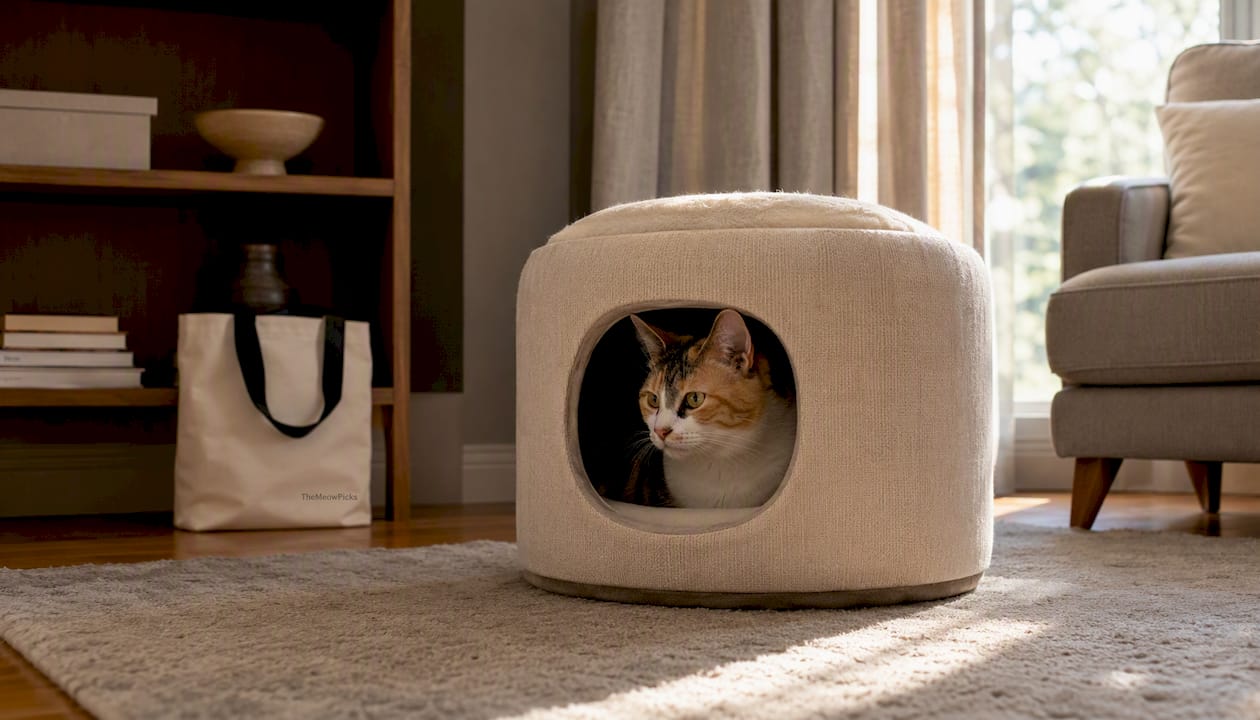
Perla Cat Cave wraps your cat in a soft, rounded enclosure that retains body heat naturally, which helps ease joint stiffness without a powered heating pad. The cave shape suits cats who curl into a tight circle when they sleep, and the low, open entry requires almost no effort to step through. Best for: small to medium senior cats, shy rescues, or any cat that gravitates toward hidden, quiet spots.
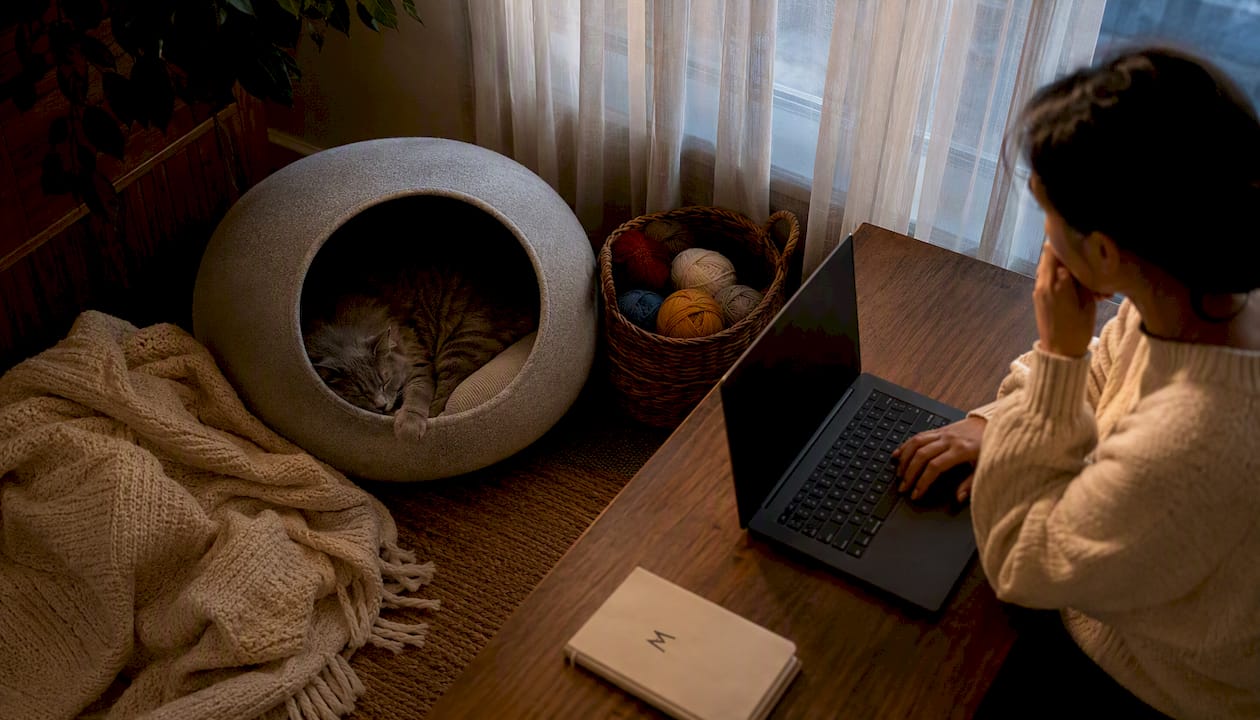
Torre Cat Tower offers integrated cushioned platforms at multiple heights, so a cat that still enjoys a bit of elevation can rest comfortably without jumping far. The padded sleeping surfaces are removable for washing. Best for: active seniors who haven’t fully given up on climbing but need softer landings and shorter distances between levels.
Which model fits your cat’s situation?
- Stiff joints or arthritis: Apawtment Cat House or Perla Cat Cave, both with low entry and dense cushioning
- Small senior cat: Perla Cat Cave for its snug, heat-retaining shape
- Heavier or larger cat: Apawtment Cat House for its firm base; see also furniture sized for larger cats for additional guidance
How to choose the right orthopedic cat bed
Not every bed labeled “orthopedic” delivers real joint support. These are the criteria that actually separate a therapeutic bed from a marketing claim.
- Foam density and support. Dense foam that resists compression is what veterinary guidance identifies as effective for reducing joint pressure. Look for spec language like “high-density molded foam” or a density rating such as 45D. Avoid beds described only as “plush” or “ultra-soft” — softness without density means the foam bottoms out under your cat’s weight.
- Entry height and bolster design. A low entry point is as important as padding quality for cats with limited mobility. Soft, pliable bolsters let a cat lean against the side without climbing over a rigid wall.
- Size and sleeping posture. Measure your cat from the base of the neck to the base of the tail, then add 2–4 inches. A cat that sprawls needs a flat, open pad; a curler fits a donut or cave; a cat that likes to feel enclosed does best in a house or cave shape.
- Cover and washability. A removable, machine-washable cover is non-negotiable for senior cats, who are more prone to accidents. A waterproof inner liner protects the foam from moisture and extends the bed’s life considerably.
- Extra features. A non-slip base keeps the bed from sliding on hardwood or tile. Hidden zippers on removable covers prevent your cat from catching a claw. Self-warming fabrics add gentle heat without cords; plug-in heated pads offer more consistent warmth but require monitoring.
- Price and trade-offs. Budget beds ($25–$40) usually offer thin padding and basic covers. Mid-range ($50–$100) gives you molded orthopedic foam and washable covers. Premium ($100+) adds designer materials, built-in heating, or luxury cover fabrics.
Pro Tip: Measure your cat while it’s sleeping in its favorite position. If it curls, measure the curled diameter and match it to the bed’s inner diameter. If it sprawls, use the nose-to-tail length plus 3 inches as your minimum bed length.
What do memory foam, high-density foam, and heated pads actually do?
Understanding the materials helps you read product specs honestly rather than taking marketing language at face value.
| Feature | What it does | Best for | Watch out for |
|---|---|---|---|
| Memory foam (standard) | Conforms to body shape, distributes weight | Cats with pressure-point sensitivity | Low-density versions compress quickly |
| High-density molded foam (e.g., 45D) | Resists sagging, holds shape long-term | Heavier cats, long-term arthritis support | Firmer feel; some cats prefer softer |
| Egg-crate foam | Improves airflow while offering support | Cats prone to overheating | Less durable than solid molded foam |
| Self-warming fabric | Reflects body heat back to the cat | Mild climates, cats who dislike cords | Less effective in cold rooms |
| Plug-in heated pad | Consistent, adjustable warmth | Cats with severe joint stiffness in winter | Requires low-wattage, thermostat-controlled unit; always follow manufacturer instructions |
| Waterproof inner liner | Protects foam from moisture and odor | Senior cats with incontinence | Check that liner doesn’t crinkle loudly |
| Non-slip base | Keeps bed stable on smooth floors | Any indoor cat, especially those with mobility issues | Rubber bases can discolor some flooring |
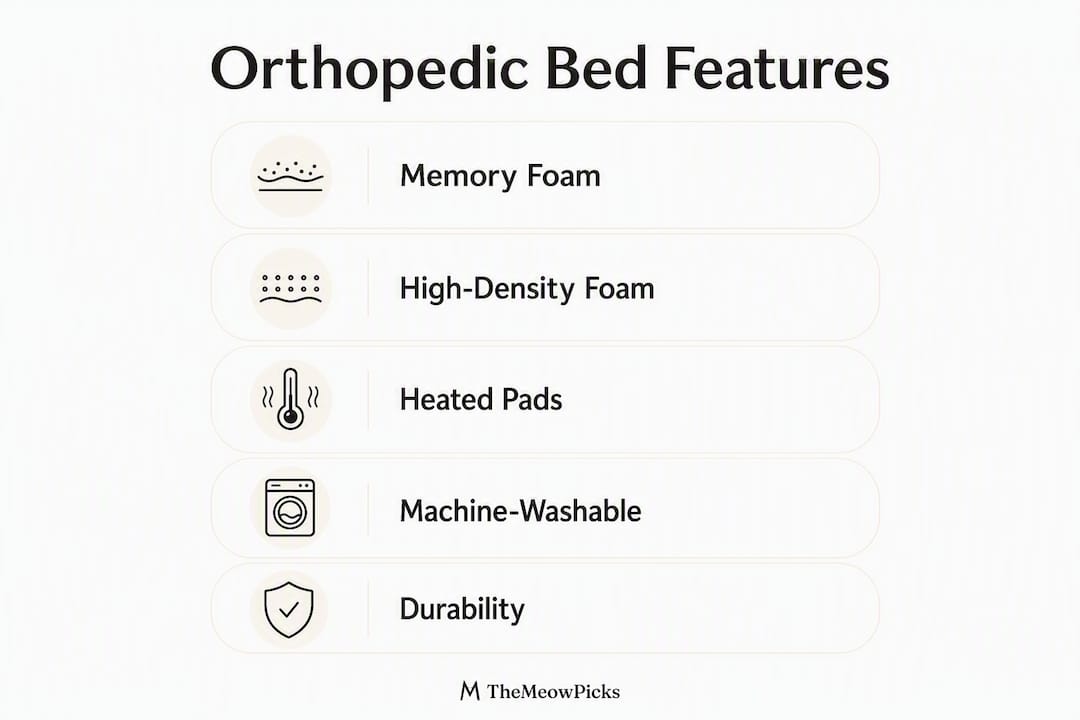
Memory foam vs. high-density molded foam is the most common spec confusion. Memory foam conforms and cradles; high-density molded foam supports and resists compression. The best orthopedic beds often combine both: a molded base layer for long-term shape retention and a memory-foam top layer for comfort. A 45D density rating signals a firmer, more durable foam that holds up under daily use without sagging.
On heated options: Chewy’s veterinary guidance notes that adding a heating source to a non-self-warming bed is a practical step, since cool temperatures can aggravate arthritis symptoms. If you go the plug-in route, choose a low-wattage pad with a built-in thermostat and always follow the manufacturer’s safety instructions. Ask your vet before using a heated pad for a cat with circulatory issues or diabetes.
How to pick the right size and where to place the bed
Getting the size right takes about two minutes. Placement takes a bit of observation.
- Measure your cat’s length from the base of the neck to the base of the tail while it’s relaxed or sleeping.
- Note the sleeping posture. A curled sleeper needs a bed whose inner diameter matches the curled measurement. A sprawler needs a flat pad at least as long as the full body length plus 3 inches.
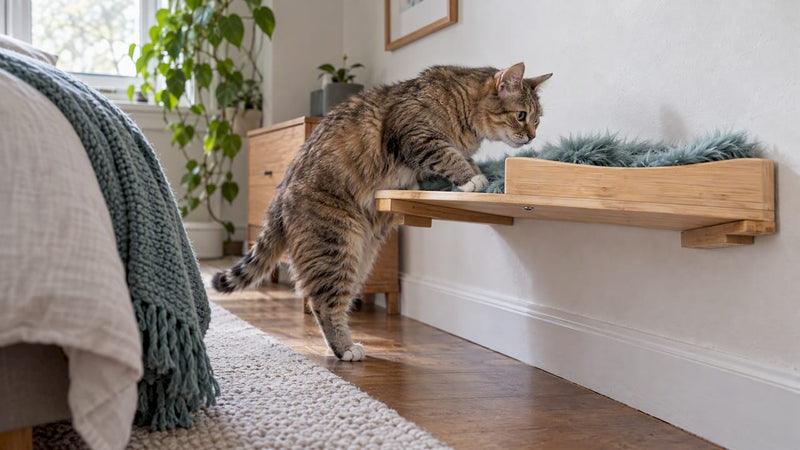
- Check entry height. For cats with stiff hips or shoulder pain, the entry point should be no higher than 3–4 inches off the floor. If your cat already struggles with low furniture, a cat ramp or low-entry aid can help.
- Choose the shape. Donut or nest shapes suit curled sleepers and add a sense of security. Flat pads work for sprawlers. Cave or house shapes suit shy cats or those who feel anxious in open spaces — the raised-edge nesting design also helps reduce stress in rescue cats.
- Place the bed on a warm surface. Cold tile draws heat away from the foam and from your cat. A rug, a carpeted corner, or a spot near a sunny window all work well. Avoid drafty areas near exterior doors.
- Try two locations. Put one bed in a sunny daytime spot and one in a quieter, darker evening spot. Watch which one your cat chooses first — that tells you a lot about what it actually wants.
Pro Tip: If your cat ignores a new bed, place a worn T-shirt or a familiar blanket inside it for a few days. Familiar scent is often the only barrier between a cat and a bed it would otherwise love.
Care, cleaning, and how long an orthopedic bed lasts
A well-maintained orthopedic bed stays effective for 2–5 years, depending on foam quality and how often it’s used. A neglected one can lose its support in under a year.
The cleaning routine is straightforward when the bed is designed well. Remove the cover and machine-wash it on a gentle cycle with unscented detergent — fragrance residue can put cats off a bed they previously liked. Spot-clean the foam insert with a damp cloth and mild soap; never submerge foam in water, since it takes a very long time to dry fully and mildew can form inside before the surface feels dry. A waterproof inner liner, which many orthopedic beds include, makes this step much easier by keeping the foam dry in the first place.
Air-dry the foam completely before replacing the cover. Squeezing or wringing foam damages its internal structure and shortens its life. If you’re in a hurry, a fan speeds drying without the heat damage a dryer would cause.
Signs the bed needs replacing: visible sagging in the center, foam that springs back slowly or not at all, or a persistent odor that washing doesn’t remove. These are the signals that the foam has lost its structural integrity and is no longer providing real joint support. Keep your purchase receipt and register the product if the brand requires it — most warranty claims need proof of purchase and evidence that care instructions were followed.
When does your cat need a vet, not just a new bed?
A supportive bed reduces pressure on aching joints and improves sleep quality. It won’t reverse joint degeneration or treat an underlying condition.
Watch for these signs that a vet visit is needed before or alongside any bed upgrade:
- Persistent limping or favoring one limb
- Sudden changes in appetite or litter-box habits
- Worsening mobility over days or weeks
- Painful reaction when touched along the spine or hips
- Rapid or unexplained weight loss
A good orthopedic bed helps a cat with diagnosed arthritis sleep more comfortably between vet visits. For cats with severe joint disease, your vet may recommend a combination approach: pain management, low-impact movement, and a warm sleeping surface working together. The bed is one part of that picture, not the whole solution.
When introducing a new bed, go slowly. Place it in the cat’s current favorite napping spot, add a familiar-smelling item inside, and let the cat sniff and explore without pressure. Supervised short naps in the new bed over a few days usually do the trick.
Pro Tip: For cats with severe arthritis, ask your vet about combining a warm orthopedic surface with gentle range-of-motion exercises and any prescribed pain management. Warmth alone helps, but it works best as part of a broader care plan.
What should you expect to pay, and what does the price actually buy?
Price bands for orthopedic cat beds in the US break down fairly predictably.
Budget beds often have thin padding, sometimes polyester fill marketed as “orthopedic.” Covers may be removable but not always machine-washable. Foam may compress quickly with daily use. These beds can work for younger cats or as temporary solutions but tend not to last well for senior cats over extended periods.
Mid-range beds usually include molded orthopedic foam. Covers are generally removable and machine-washable, and some include a waterproof liner. Non-slip bases and hidden zippers are common features. These beds suit many cats with mild to moderate joint issues.
Premium beds often feature designer cover fabrics, built-in low-wattage heating, higher-density foam, and longer warranties. These options may be appealing for cats with advanced arthritis or owners seeking a stylish yet functional piece for their home.
Before buying, check the return window — ideally 30 days or more, since some cats take two weeks to accept a new bed. Confirm what the warranty covers (foam sagging, cover defects, zipper failure) and whether it requires product registration. For shipping, look for free returns when buying for a senior cat; if the cat rejects the bed, you want an easy path back. Review The Meow Picks’ orders and shipping details before checkout.
Returns and warranty checklist:
- Keep proof of purchase
- Follow all care label instructions from day one
- Photograph any defects before contacting support
- Register the product if the brand requires it for warranty coverage
Our final recommendation for senior and arthritic cats
For most senior or arthritic cats, the Apawtment Cat House is the strongest all-around pick: low entry, dense orthopedic foam base, enclosed structure for security, and a washable inner cushion. Cats with a strong preference for curling up in a tight, warm space will be equally happy in the Perla Cat Cave. If your cat still moves between levels and you want an integrated furniture solution, the Torre Cat Tower covers both rest and activity in one piece.
For cats with severe or rapidly worsening joint symptoms, please consult your veterinarian before relying on a bed change alone.
Key Takeaways
The most effective orthopedic cat bed for a senior or arthritic cat combines dense, non-compressing foam with a low entry point, a washable cover, and placement in a warm, familiar spot.
| Point | Details |
|---|---|
| What makes a bed orthopedic | Dense foam (look for 45D or “high-density molded”) that resists compression and eliminates pressure points under joints. |
| Top two selection rules | Low entry height (under 4 inches) and dense foam are the two features that matter most for cats with limited mobility. |
| Care and replacement timeline | Wash covers regularly, air-dry foam fully, and replace the bed when sagging or odor persists — typically every 2–5 years. |
| When to see a vet | Persistent limping, sudden appetite changes, or worsening mobility need veterinary assessment, not just a new bed. |
| The Meow Picks’ top pick | The Apawtment Cat House offers low entry, orthopedic foam, and an enclosed design suited to most senior and arthritic cats. |
Why The Meow Picks curates these models
Every product in The Meow Picks’ collection is chosen with three priorities in mind: genuine comfort backed by design intent, durability that holds up to daily use, and aesthetics that fit a real home. For orthopedic beds specifically, that means we look for verifiable foam specs, low-entry designs that vets endorse for mobility-limited cats, and covers that owners can actually keep clean.
The Apawtment Cat House, Perla Cat Cave, and Torre Cat Tower each passed that filter. They come from independent makers who are transparent about materials, and each one reflects the kind of thoughtful design that makes a difference for a cat spending most of its day resting. A portion of every order placed through The Meow Picks supports cat rescue organizations, so your purchase does something beyond your own home.
We reference veterinary guidance throughout this article because product specs alone don’t tell the whole story. Foam density ratings, entry heights, and cover washability all matter more when you understand why a vet would recommend them for an arthritic cat. Our goal is to give you that context alongside the product recommendation, so you can make a confident choice rather than a hopeful one.
The Meow Picks’ curated orthopedic collection
The Meow Picks brings together orthopedic and supportive cat beds from independent, design-led makers — pieces that look good in your home and actually work for your cat’s joints. Every item ships with clear return and warranty information, and our team is available if you have questions before or after purchase.
Start with the three featured models:
- Apawtment Cat House — best overall for senior and arthritic cats
- Perla Cat Cave — best for small seniors and curled sleepers
- Torre Cat Tower — best for active seniors who still want to perch
Browse the full cat lifestyle collection for additional orthopedic options, warming accessories, and ramps. Every purchase supports cat rescue. Check our orders and shipping page for return windows and warranty details before you buy.
Useful sources
- 5 Orthopedic Pet Beds to Help Ease Arthritis In Cats | Chewy — veterinary guidance on foam density, entry height, and heated bed recommendations for arthritic cats
- PawsPik Perfect Comfort Orthopedic Memory Foam Cat Bed — product page illustrating 45D high-density molded foam specs and non-slip base design
- Memory Foam Cat Bed | DeoPaws — example of removable machine-washable covers and waterproof inner liners in orthopedic bed design
- DreamNest Orthopedic Anti-Stress Cat Bed | ForFluffy — raised-edge nesting design for anxiety reduction combined with orthopedic foam support
- PaWz Memory Foam Cat Bed | PetPawz — egg-crate foam construction for airflow and orthopedic support (Australian market; cited for foam construction detail only)