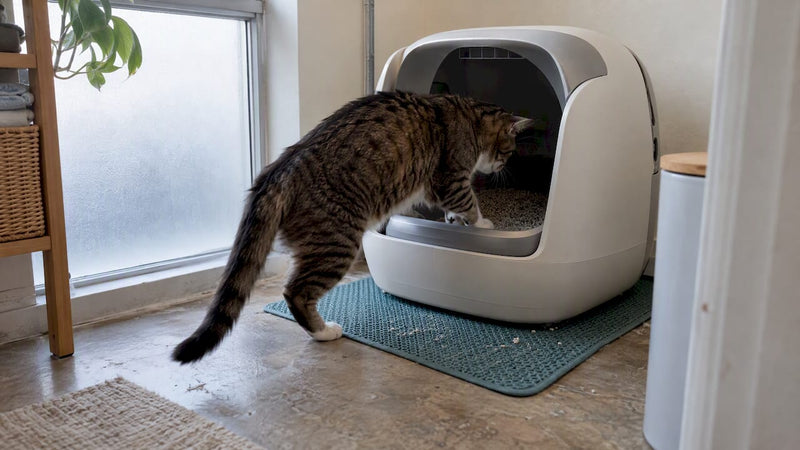
Most cats show no strong preference between a covered and an uncovered litter box when the box is roomy and scooped daily. The real decision point is not the lid. It comes down to size, cleaning frequency, and how many cats share your home. Choose covered if you want help with odor and scatter, and uncovered if you want easier monitoring and access, then build your choice around those two non-negotiables.
TL;DR:
- Most cats show no strong preference between covered and uncovered boxes if they are large enough and scooped daily, regardless of cover style.
- A study found no significant overall preference for cover type, with individual cats choosing either option or moving freely between both.
- The size and cleanliness of the litter box, along with proper cleaning, influence use more than the presence of a cover or not.
- Multi-cat households require multiple large, accessible boxes with options for escape routes to reduce tension around covered litter boxes.
- Testing your own cat with side-by-side covered and uncovered boxes over a week provides the clearest insight into their preference.
Table of Contents
- What the Grigg et al. study found about box covers
- The real pros and cons of covered and uncovered boxes
- Why box size and cleaning schedule matter more than the lid
- How multi-cat households change the covered vs uncovered calculus
- Test your own cat with a simple “cafeteria” setup
- How we think about litter box furniture and cat trees at The Meow Picks
- Our honest take on the covered vs uncovered debate
- Find litter box and cat furniture that fits your space
- FAQ
- Sources
What the Grigg et al. study found about box covers
A study on litter box preference gave 28 cats a paired choice between covered and uncovered boxes, both large, filled with fine clumping litter, and scooped daily. The researchers wanted to isolate the cover itself as a variable, so they controlled for the factors that usually confound these comparisons: size, litter type, and cleanliness.

The pooled result showed no significant overall preference. Most cats used both boxes without favoring either style. Within that group, individual differences still showed up: Some cats preferred the covered box and some preferred the uncovered one, while the rest moved between both without a clear pattern.
A few caveats matter here:
- The study boxes were oversized storage bins, larger than most commercial “large” covered boxes sold in stores.
- Only a small number of cats (8 total) showed any individual preference at all, so broad claims about what “most cats want” go beyond what the data supports.
- Results may not generalize cleanly to large cats or busy multi-cat households, where space and competition change the picture.
The AAFP and ISFM environmental needs guidelines back up why size and setup carry more weight than cover style. Litter box access sits inside the broader “Five Pillars” framework these guidelines use to describe what cats need to stay physically and emotionally well.
The real pros and cons of covered and uncovered boxes
Covered boxes trap odor and contain litter scatter, which matters most to the people living in the house. Uncovered boxes make it easier for you to monitor waste, catch early signs of illness, and scoop quickly without digging around a hood.
Covered box trade-offs:
- Contains odor and scatter, which helps in small apartments or shared living spaces.
- Can trap odor longer if not scooped daily, since airflow is limited.
- Most commercial covered models are smaller inside than they look from outside, which can cramp a large cat.
Uncovered box trade-offs:
- Easier airflow and faster scooping, since there is no hood to lift or remove.
- Easier to spot thinning litter, waste consistency changes, or other health cues.
- No scatter or odor control, so litter tracking and smell are more visible.
Some factors mostly affect your cat (stress from a tight space, limited sightlines, escape routes), while others mostly affect you (smell, mess, how the box looks in your living room). Separating those two categories helps you weigh the decision honestly instead of picking based on appearance alone.
Pro Tip: If you go covered, pick a model with a removable top or large entry panel so scooping never becomes a chore you put off.
Why box size and cleaning schedule matter more than the lid
Litter boxes should measure at least 1.5 times a cat’s length from nose to base of tail, according to AAFP and ISFM feline environmental guidelines, which also cite example minimum dimensions around 34 by 15 inches in recent updates. Many standard commercial boxes, especially covered ones, fall short of that mark.

A too-small box is aversive regardless of cover style, but the effect shows up more often in covered models because manufacturers tend to shrink the usable interior to keep the hood compact. Large cats feel this first, since they have the least room to turn and dig comfortably.
Cleaning frequency compounds the problem. Guidance from veterinary extension sources recommends scooping at least once daily for a single cat, and more often in multi-cat homes. Covered boxes get skipped more easily in practice, since the mess is hidden from view, which raises avoidance risk over time.
- Scoop at least once daily, twice daily if you have more than one cat.
- Keep litter filled to roughly 3 to 4 inches and replace it on a regular schedule, as recent odor-control guidance recommends.
- Follow the one-box-per-cat-plus-one rule for box count, separate from size.
How multi-cat households change the covered vs uncovered calculus
More cats means more competition for the same resource, and a covered box can quietly raise tension by blocking sightlines and escape routes. A cat trapped inside a hooded box with another cat waiting outside has fewer options if something feels threatening.
- Provide one litter box per cat, plus one extra, spread across different areas of the home rather than lined up together.
- Skip high-traffic hallways or corners near loud appliances, since cats avoid boxes that feel exposed or hard to retreat from.
- Give each box at least two open sides of approach, so no cat gets cornered mid-use.
- If you use covered boxes in a multi-cat home, choose models with two openings or a wide front panel to preserve an escape route.
Our guide to multi-cat furniture layout covers how to split living space into zones that reduce this kind of friction beyond just litter boxes.
Test your own cat with a simple “cafeteria” setup
Rather than guessing, you can run a short experiment at home.
- Set up two boxes side by side, identical in size and litter type and depth, differing only in cover style.
- Scoop both on the same schedule and keep both in the same general area so location is not a variable.
- Track which box gets used first each day, how often your cat avoids one, and whether litter kicking or hesitation shows up at either box.
- Run the test for 1 to 2 weeks before drawing conclusions, since a single day can be misleading.
If your cat clearly favors one style, keep that box and retire the other. If use stays roughly even, pick based on your own needs for odor and scatter control.
Pro Tip: A small pet camera pointed at the test area makes it easy to catch hesitation or avoidance you might miss in person.
How we think about litter box furniture and cat trees at The Meow Picks
We focus on pieces that respect what a large cat actually needs from furniture: a stable base that will not tip during a jump, wide sturdy perches that give a full-size cat real room to stretch out, and solid posts that hold up to daily scratching and climbing. The same logic that applies to litter boxes (space and access first, looks second) guides how we curate cat trees too.
Our Solid Wood Multi-Level Cat Tree and Grand Driftwood Cat Tree both prioritize wide perch surfaces over narrow decorative ones. The Walnut Tower Cat Tree and Walnut Modern Cat Tree use heavier bases designed for stability when a large cat leaps up rather than climbs gradually.
- If your cat needs a stable, roomy perch, look for a wide base and thick posts, not just tall overall height.
- A Three-Trunk Driftwood Cat Tree spreads weight across multiple solid trunks, which helps with stability for bigger cats.
- A Wall-Mounted Cat Tree 3 Posts setup works well when floor space is tight but you still want solid, secure perches.
For litter furniture specifically, our litter box in closet ventilation guide and litter box cabinet safety checks walk through how to keep a concealed box breathable and easy to scoop daily.
Our honest take on the covered vs uncovered debate
The lid gets all the attention, but the evidence points elsewhere. Size and cleaning frequency decide whether a box gets used, not whether it has a roof. We would rather see owners run a quick two-week test with their own cat than follow a blanket rule borrowed from someone else’s household.
If there is one habit worth building, it is choosing furniture that makes scooping easy enough to do every single day without a reminder. A beautiful box that collects dust because it is a hassle to open does more harm than a plain one that gets cleaned on schedule.
— TheMeowPicks Team
Find litter box and cat furniture that fits your space
We curate furniture built around real use, not just looks, which matters for a chore you need to do daily without friction. Our collection includes climbing furniture designed with the stable bases and wide perches large cats actually need, alongside pieces meant to make daily litter maintenance less of a hassle.

A few places to start:
- Browse the Willow Nook Oak Cat Tree for a roomy, stable multi-level option.
- Check the Torre Cat Tower if you want a compact footprint with solid perches.
- Look at the Solid Oak Cat Tree with Sheepskin Bed for a cozy, sturdy resting spot.
- Visit our full furniture, technology, and lifestyle collection to compare options by size and material.
Check each product page for exact dimensions before you buy, and pair your new furniture with our odor control litter box guide for setup tips that keep daily cleaning simple.
FAQ
Do vets recommend covered litter boxes?
Veterinary guidance does not favor one cover style over another as a blanket rule. AAFP and ISFM guidelines focus on box size, cleanliness, and count instead, and recommend letting individual cats show their own preference when possible.
Do cats prefer covered or uncovered litter boxes?
Most cats show no clear preference, according to a paired-choice study that controlled for size and cleanliness. Within that study, 15% preferred covered and 15% preferred uncovered, while most cats used both equally.
Should I use a covered litter box?
A covered box works well if you need odor and scatter control, provided it is roomy enough and scooped daily. If your cat shows any hesitation or avoidance around a covered box, switching to uncovered or testing both side by side can help confirm the cause.
Is it better to have a litter box with or without a lid?
Neither option is inherently better across the board. The factors that matter most are box size relative to your cat, as outlined in AAFP/ISFM guidance, and how consistently the box gets scooped.
Sources
- Litter box preference in domestic cats: covered versus uncovered
- Litter box etiquette (VetMed Tamu)
- How to eliminate litter box odor, Purina (2026)