Odor Control Litter Boxes
Odor Control Litter Boxes
The fastest way to stop litter-box smell is to scoop daily, switch to a clumping odor-control litter, and add a carbon filter or enclosed box near the box area. No single product does it alone, but those three steps together handle the majority of household odor within 24 hours.
Start right now:
- Scoop the box completely (takes 2 minutes)
- Add a thin layer of baking soda under fresh litter
- Move the box to a spot with airflow, away from vents that push air into living areas
Pro Tip: The single biggest odor reduction per dollar comes from a well-ventilated enclosed box paired with a carbon filter litter box insert. Replace the carbon filter every 2–3 months or when odor returns for best results.
Key Takeaways
A multi-pronged approach combining daily scooping, the right litter, carbon filtration, and a well-placed box is the most reliable way to keep litter-box odor from taking over your home.
| Point | Details |
|---|---|
| Scoop daily | At least once a day, twice in multi-cat homes, prevents ammonia buildup faster than any other single step. |
| Follow the cats + 1 rule | One litter box per cat plus one extra reduces concentrated odor and litter-box avoidance. |
| Use carbon filters | Replace carbon filter inserts every 2–3 months, or sooner if odor returns, for effective odor control. |
| Deep-clean monthly | Scrub, rinse, and dry the full pan monthly; replace plastic pans every 1–2 years when odors persist after cleaning. |
| The Meow Picks picks | The Petkit Purobot Max Pro 2 and Sito Cat Litter Box are the top curated options for low-effort, odor-controlled setups. |
Table of Contents
- What’s your 10-point odor control action plan?
- How do you choose the right litter box for your home?
- What does a good litter box cleaning routine look like?
- Which deodorizers and litter additives actually work?
- Where should you put the litter box to reduce odor spread?
- When does litter box odor signal a health problem?
- Curated product picks from The Meow Picks for odor control
- Why the “just buy a better box” advice misses the point
- Fresh home, happy cat: shop The Meow Picks odor-control picks
- Useful sources and further reading
What’s your 10-point odor control action plan?
Follow this list today and this week. Tick off each item and you will notice a real difference by tomorrow morning.
- Count your boxes. Follow the cats + 1 rule: one box per cat, plus one extra.
Pro Tip: Daily scooping is the single habit that prevents the most odor. Purina recommends scooping at least once a day and twice daily in multi-cat homes. Everything else is a supplement to that one routine.
How do you choose the right litter box for your home?
Start with one question: what matters most to you right now? Odor control, low maintenance, or cat comfort? Your answer narrows the field immediately.
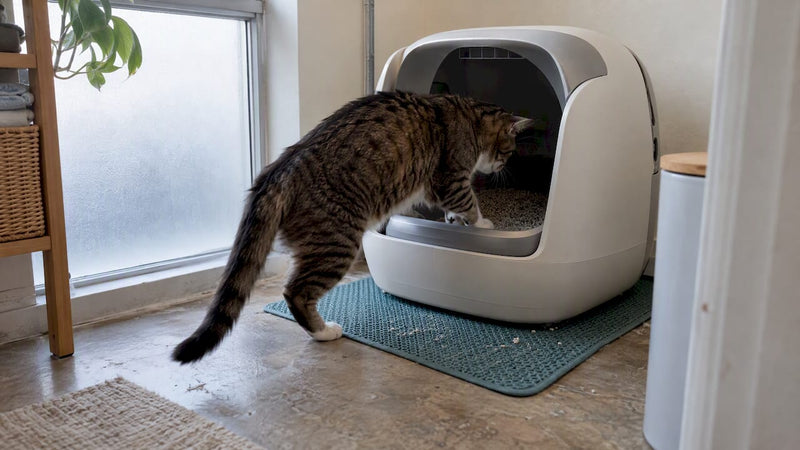
For odor control above all else, look for an enclosed design with a working carbon filter, a sealed-waste drawer, or an automatic self-cleaning mechanism that removes waste within minutes of use. The Petkit PuraMax 2 and similar automated models do exactly that.
For low maintenance, a self-cleaning box with a compatible clumping litter reduces your daily effort to a quick check rather than a full scoop. These boxes pair best with low-dust, fine-grain clumping litters.
For cat comfort, some cats refuse enclosed boxes. Consumer Reports points out that cats often prefer visibility to feel secure, so an enclosed box needs good ventilation or a filter to avoid trapping ammonia that could cause avoidance.
Before you buy, ask yourself:
- How many cats do you have? (Multi-cat homes need larger boxes or more of them.)
- How often will you realistically scoop? (Honest answer shapes which box type fits.)
- How much space do you have, and is it ventilated?
- Does your cat startle easily? (Motorized self-cleaning boxes make noise.)
- What is your budget for ongoing consumables like litter and filters?
Trade-offs worth knowing:
- Covered boxes contain smell well but trap ammonia without a filter, which can deter cats from using them.
- Self-cleaning boxes cut odor by removing waste fast, but they require specific litter types and regular mechanical maintenance.
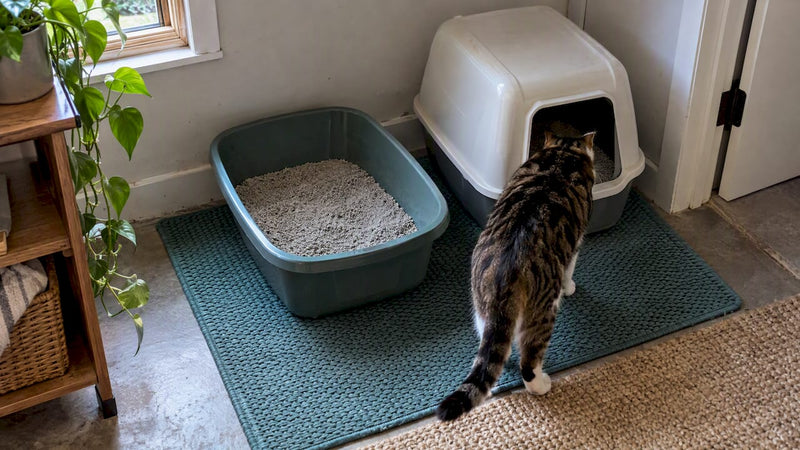
- Open boxes are easy to clean and cats accept them readily, but odor spreads more freely into the room.
Pro Tip: When trying a new enclosed box, place it next to the old one for two weeks. Let your cat choose. If they avoid the new one, check the filter and ventilation before assuming they dislike the design.
What does a good litter box cleaning routine look like?
Daily scooping combined with a scheduled deep clean prevents the vast majority of odor problems. Here is the full routine.
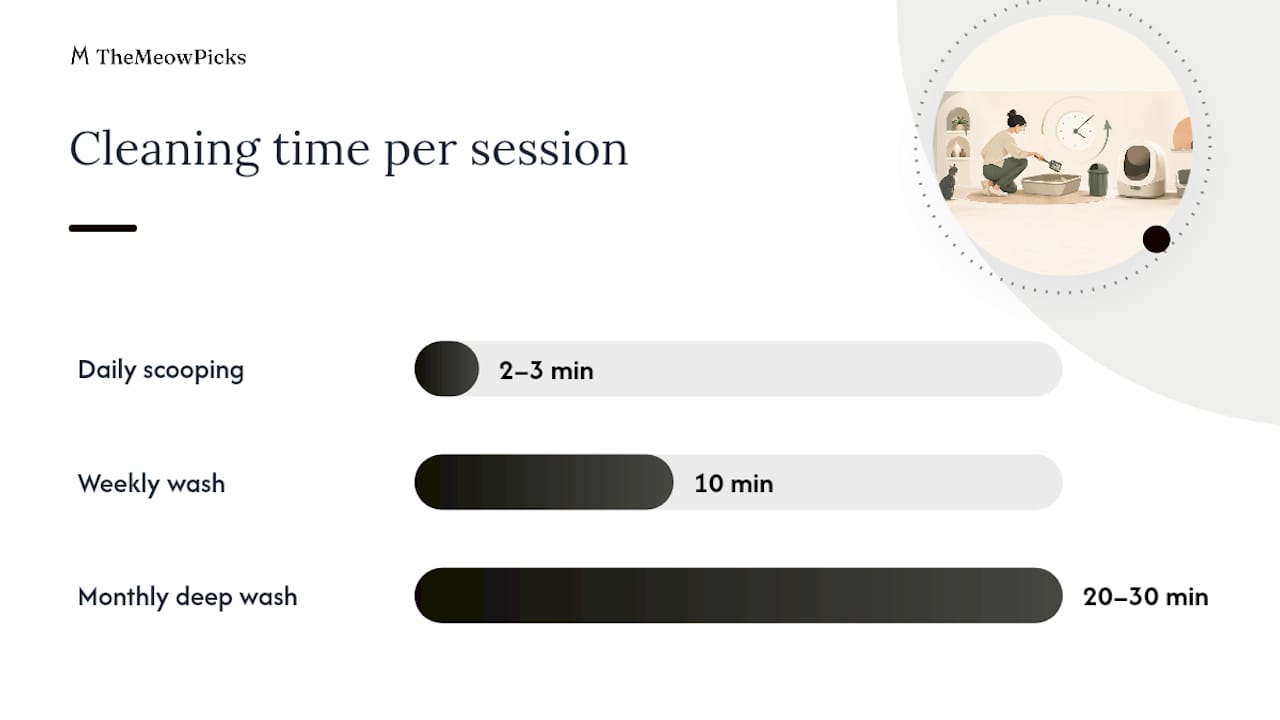
Daily (2–3 minutes):
- Scoop all clumps and solid waste into a sealed bag.
- Top off litter to maintain 3–4 inches of depth.
- Wipe the rim and hood with an unscented damp cloth.
Weekly (10 minutes):
- Remove all litter into a trash bag.
- Rinse the pan with warm water.
- Wash with a small amount of unscented dish soap or a diluted white-vinegar solution (1 part vinegar to 3 parts water).
- Rinse thoroughly and dry completely before refilling. Wet litter clumps immediately and smells worse.
- Refill with fresh litter and add a thin baking-soda layer underneath.
Monthly (20–30 minutes):
- Repeat the weekly wash with extra attention to corners and the lid hinge.
- Inspect the plastic for deep scratches. Grooved surfaces trap bacteria that cleaning cannot fully remove.
- Replace the carbon filter if you have a hooded box.
- Consider replacing the entire pan if it is more than 1–2 years old and odors persist after cleaning.
Safety notes:
- Avoid scented cleaners, pine-based products, and citrus sprays. Cats’ noses are sensitive, and strong scents can cause them to avoid the box entirely.
- If you use diluted bleach (1 part bleach to 30 parts water) for a deep sanitize, rinse the pan at least three times and let it air-dry fully before adding litter.
- Ventilate the room during deep cleaning.
Pro Tip: Never use ammonia-based cleaners on a litter box. Ammonia mimics the smell of urine and can actually encourage marking outside the box.
Which deodorizers and litter additives actually work?
The safest and most effective options are activated charcoal, enzymatic neutralizers, and baking soda used correctly. Heavily perfumed sprays and essential-oil blends mask odor briefly but can irritate a cat’s respiratory system and drive them away from the box.
What works:
- Activated charcoal cartridges and carbon filters. These trap VOC molecules rather than covering them. PETLIBRO’s carbon deodorizer cartridges and hooded-box carbon filter inserts both last around 2–3 months depending on use and cat count—replace at this interval or when odor returns.
- Baking soda under the litter. A thin layer on the pan floor absorbs ammonia before it off-gasses. Do not mix it into the litter itself; it can interfere with clumping.
- Enzymatic litter treatments. These break down the organic compounds in urine and feces at a molecular level rather than just absorbing them. Add a small amount to the litter between full changes.
What to avoid:
- Scented litter deodorizer sprays with artificial fragrance
- Essential oils (lavender, tea tree, eucalyptus) near or in the box area
- Plug-in air fresheners directly above the box
- Ammonia-based cleaning products
Pro Tip: Carbon filters work best when the box has a tight-fitting hood that channels air through the filter. A loose lid lets odor escape around the edges before it ever reaches the carbon.
Where should you put the litter box to reduce odor spread?
Place litter boxes in ventilated, low-traffic areas where your cat can access them easily and feel safe. Avoid sealed closets, tight corners with no airflow, and spots near food or water bowls.
Placement dos:
- Near a window that can be cracked open, or in a bathroom with a working exhaust fan
- In a laundry room with a floor-level vent (cats can use the box while the fan runs)
- Along a wall with at least 6 inches of clearance on two sides so the cat can turn around
Placement don’ts:
- Next to the food and water station (cats avoid eating near their toilet)
- Inside a sealed cabinet without ventilation
- In a high-traffic hallway where the cat feels exposed
- Near the Perla Cat Cave or any sleeping area, which cats instinctively keep separate from their bathroom
Multi-cat homes:
The cats + 1 rule applies to placement too: spread boxes across different rooms or floors rather than clustering them. One cat can guard a cluster and block others, which leads to accidents and concentrated odor in one spot. Spacing boxes also means no single area takes the full odor load.
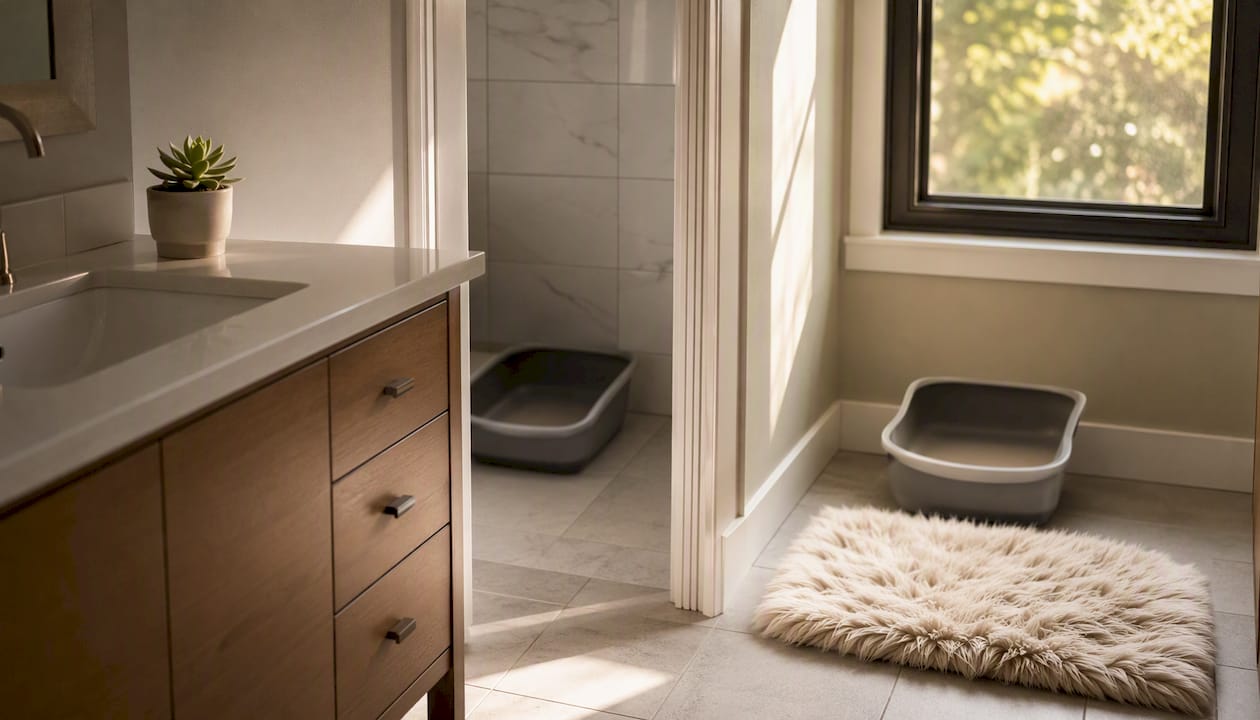
Pro Tip: In a two-story home, put at least one box on each floor. Cats, especially older ones, may not make it downstairs in time, and the resulting accidents smell far worse than a well-placed box.
When does litter box odor signal a health problem?
A sudden change in odor, especially a sharp spike in ammonia or an unusually foul fecal smell, can mean your cat needs a vet visit, not just a cleaning session.
Watch for these signs:
- Strong, persistent ammonia smell despite daily scooping (possible urinary tract infection or kidney disease)
- Unusually foul or watery stool odor (possible digestive issue, parasites, or dietary intolerance)
- Blood in urine or stool visible in the litter
- Your cat visiting the box more or less frequently than usual
- Straining, crying, or spending a long time in the box without producing much
- Avoiding the box entirely after previously using it consistently
What to tell your vet:
- When the odor change started
- Any change in litter habits (frequency, duration, output)
- Recent diet changes or new foods
- Whether the cat is drinking more or less water than usual
A sudden ammonia spike with increased urination frequency is a common early sign of kidney disease in older cats. Catching it early makes a real difference in outcomes.
Pro Tip: Keep a simple log on your phone: a quick note when you scoop, flagging anything unusual. A week of observations gives your vet far more to work with than “it started smelling weird recently.”
Curated product picks from The Meow Picks for odor control
For most households, the biggest gains come from a carbon-filtered or sealed-waste box paired with a low-dust, odor-absorbing litter. Here are the picks from The Meow Picks litter box collection worth considering.
Litter boxes and accessories:
- Sito Cat Litter Box: A clean, enclosed design with easy-access cleaning. Good for single-cat homes where aesthetics matter as much as function.
- Petkit Purobot Max Pro 2: Automated self-cleaning with a deodorization module. Removes waste within minutes of use, cutting ammonia buildup significantly. Best for busy owners or multi-cat homes. Requires compatible clumping litter.
- Petkit PuraMax 2: Another automated option with filter compatibility. Quieter operation makes it a good fit for noise-sensitive cats.
- Petkit Purobot Crystal Duo: Uses crystal litter, which absorbs urine odor for longer between changes. Lower ongoing litter cost for single-cat homes.
Litter options:
- Really Great Cat Litter: Low-dust clumping formula. Pairs well with enclosed boxes and carbon filters.
- Purrfriendlylitter Cassava Corn Cat Litter: Natural, eco-friendly clumping litter with low dust. Good for cats with respiratory sensitivities.
- Mixed Cat Litter: A blended formula for owners who want a versatile, everyday option.
Lifestyle and comfort picks that support a well-organized cat space:
- Apawtment Cat House: A stylish enclosed cat house that keeps your cat’s space defined and separate from the litter area.
- Torre Cat Tower: Ideal for multi-cat homes; gives cats vertical territory so they spend less time competing near the litter area.
- Playtime Cat Playmat: Protects floors around the box from tracked litter and moisture.
- Hidey Cat Tunnel: Keeps cats active and engaged away from the litter zone, reducing stress-related over-marking.
- Pesce Activity Toy: Enrichment that keeps cats mentally occupied, which supports regular, predictable litter habits.
Who should buy what: Single-cat owners who want low effort should start with the Sito box and a quality clumping litter. Multi-cat households get the most from an automated box like the Purobot Max Pro 2. Design-first buyers will appreciate how the Apawtment Cat House and Torre Cat Tower keep the whole cat space looking intentional.
Why the “just buy a better box” advice misses the point
Most odor-control advice circles back to product recommendations, and while the right box genuinely helps, the honest truth is that no box compensates for an inconsistent cleaning routine. We have seen beautifully designed enclosed boxes with carbon filters still smell terrible because the owner scooped every three days and never replaced the filter. The box was doing its job; the routine was not.
What actually works is the combination: a box designed to contain odor, a litter that clumps tightly and absorbs ammonia, and a daily habit that takes less than three minutes. The product makes the habit easier to keep. That is the real value of a well-designed litter box, not that it eliminates the need for routine.
At The Meow Picks, we lean toward solutions that make the routine feel less like a chore. An automated self-cleaning box does not replace scooping entirely, but it does mean you are checking rather than digging, which is a meaningful difference on a busy morning. Pair that with a litter that controls odor between cleans, and most households can get to a point where the box is simply not something guests notice.
Fresh home, happy cat: shop The Meow Picks odor-control picks
The Meow Picks brings together designer litter boxes, automated cleaning systems, and odor-absorbing litters from independent makers, all vetted for both function and home aesthetics. Unlike browsing a big-box store where you are choosing between dozens of nearly identical plastic pans, every item here is selected because it solves a real odor-control problem without looking out of place in a modern home.
A portion of every order supports cat rescue organizations, so your purchase goes further than your living room. Whether you want the low-effort automation of the Petkit Purobot Max Pro 2, the clean lines of the Apawtment Cat House, or simply a better litter to pair with what you already own, the full collection is ready to browse. Head to The Meow Picks litter box collection and find the setup that fits your home and your cat.
Useful sources and further reading
These are the sources behind the guidance in this article, each worth a direct read if you want to go deeper.
- Top 10 Ways to Control Cat Litter Box Odor | Purina US
- Best Cat Litter Boxes - Consumer Reports
- Luma Carbon Deodorizer for Self-Cleaning Litter Box | PETLIBRO
- Catit Clean Replacement Carbon Filters For Hooded Litter Box
- Cat Litter Boxes: Keep Your Home Clean and Fresh · The Meow Picks