Cat furniture placement comes down to three things: put tall trees and perches in the room your cat already spends time in, give them a window view, and anchor the piece against a wall so it never wobbles. Spread retreats and vertical space across the home, aim for one hideaway per cat plus one spare, and make sure landing routes stay clear of cords, blinds, and foot traffic before you call the spot final.
TL;DR:
- Proper placement involves anchoring tall trees against walls and ensuring landing routes are free from cords and foot traffic, especially in busy rooms.
- Cats prefer high vantage points and window views, with seniors and shy cats benefiting from intermediate or tucked-away retreats to suit their needs.
- When sharing space with multiple cats, spread vertical resources across rooms, creating separate circuits at different heights for conflict reduction.
- Check furniture stability by testing for wobbling and reinforce with wall straps, while ensuring a clear, safe descent route and avoiding overheating spots.
- Introduce new furniture gradually, using familiar scents to speed acceptance, and observe your cat’s behavior during the first week to make adjustments accordingly.
Table of Contents
- What Cats Actually Want From Their Furniture
- Core Rules For Placing Any Cat Furniture
- Room-By-Room Placement Ideas
- Placing Furniture When You Have More Than One Cat
- Safety And Stability Checklist Before You Finalize A Spot
- Testing And Adjusting Placement In The First Week
- Using Scent To Help A New Spot Feel Like Home
- Our Take On Design, Function, and Where They Meet
- Products Built For Where They’ll Actually Sit
- Sources
- FAQ
What Cats Actually Want From Their Furniture
A cat tree isn’t decoration to your cat. It’s a watchtower, an escape route, and a nap spot rolled into one, and where you put it decides whether it gets used at all.
Height matters because it changes what a cat can see and control. A cat perched three feet up can watch a doorway, a window, and you, all without leaving safety. That’s not a preference, it’s wired into the species: vertical space lets multiple cats spread out and avoid confrontation, which is why enrichment guides list vertical territory as one of the core pillars of a healthy indoor environment.
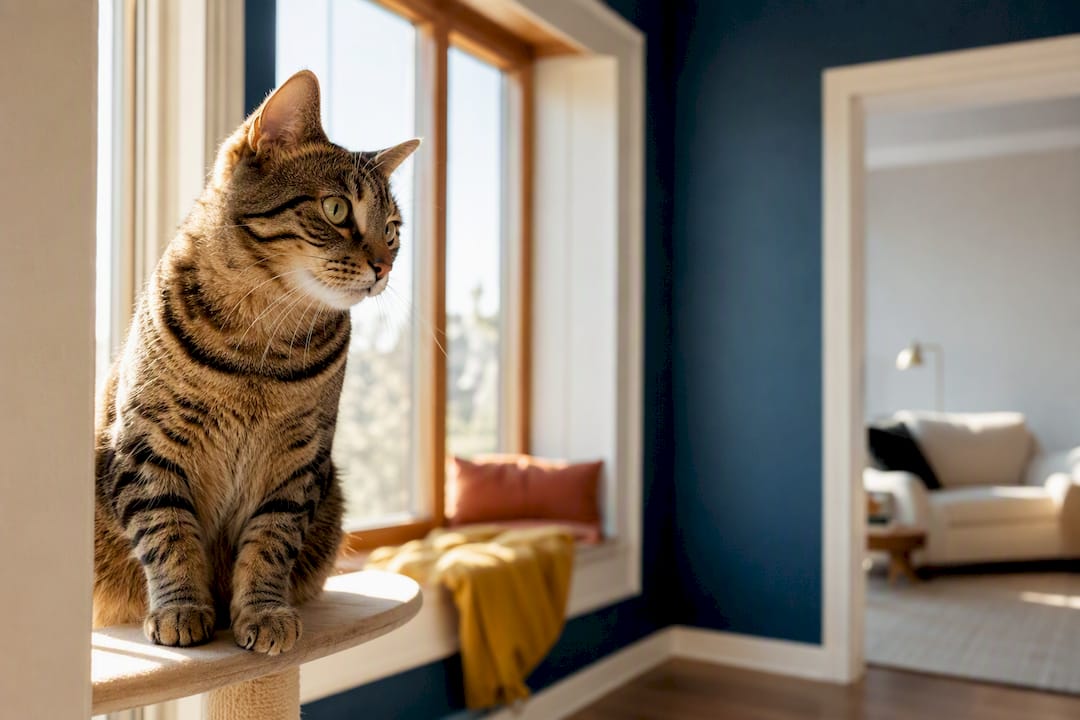
Window access ranks just as high. Indoor cats get most of their outdoor stimulation secondhand, through glass, and a stable perch near a window turns birds, traffic, and weather into hours of entertainment. Several cat-care resources agree that window views and socially active rooms are the two highest-value spots for a tree or condo.
There’s a real tension, though. Cats want to be near you, but they also need somewhere to retreat when the room gets loud or a toddler comes through. Good placement solves both problems at once instead of picking a side.
- Kittens: favor lower platforms and shorter jumps until coordination catches up.
- Seniors: need intermediate steps; a 3-foot leap that was easy at age two can be painful at age twelve.
- Shy cats: do better with a retreat tucked in a quiet corner, still within sight of household activity.
- Bold cats: thrive on the tallest, most exposed perch in the busiest room.
Pro Tip: Watch where your cat already naps for a week before buying anything. Positioning new furniture near an established favorite spot, a sunny windowsill or the back of a couch, dramatically increases the odds it gets adopted instead of ignored, according to placement guidance from BetterWithCats.
Core Rules For Placing Any Cat Furniture
Before you decide on a room, run every option through the same short list of physical rules. These apply whether you’re placing a $60 window perch or a six-foot tower.
- Check the base first. A tall tree with a narrow footprint is a tipping hazard waiting to happen. Wide, heavy bases sit flatter and resist rocking when a cat leaps onto an upper platform.
- Use wall support when the piece calls for it. Many tall units either come with anti-tip brackets or list wall-strap options; use them rather than trusting the base alone, especially on hardwood or tile.
- Map the landing route. A cat needs a clear line to jump down, one that doesn’t end at a door swing, a narrow hallway, or a breakable lamp.
- Keep it out of the traffic lane, not out of sight. A perch positioned along the wall of a busy room lets a cat watch everything without getting stepped over.
- Think about temperature. Direct afternoon sun through south-facing glass can turn a perch into a hot box by 3 p.m.; a few feet to the side often fixes it without losing the view.
- Leave clearance for cleaning. Six inches of gap around the base makes vacuuming and fur removal realistic instead of a wrestling match with furniture.
Pro Tip: Simulate the climb yourself before you commit to a spot. Crouch down at cat height and trace the path from floor to top platform. If your knee bangs a coffee table or your shoulder skims a curtain rod, your cat will hit the same obstacles.
Room-By-Room Placement Ideas
Placement rules only help once you translate them into your actual floor plan. Here’s how they play out room by room.
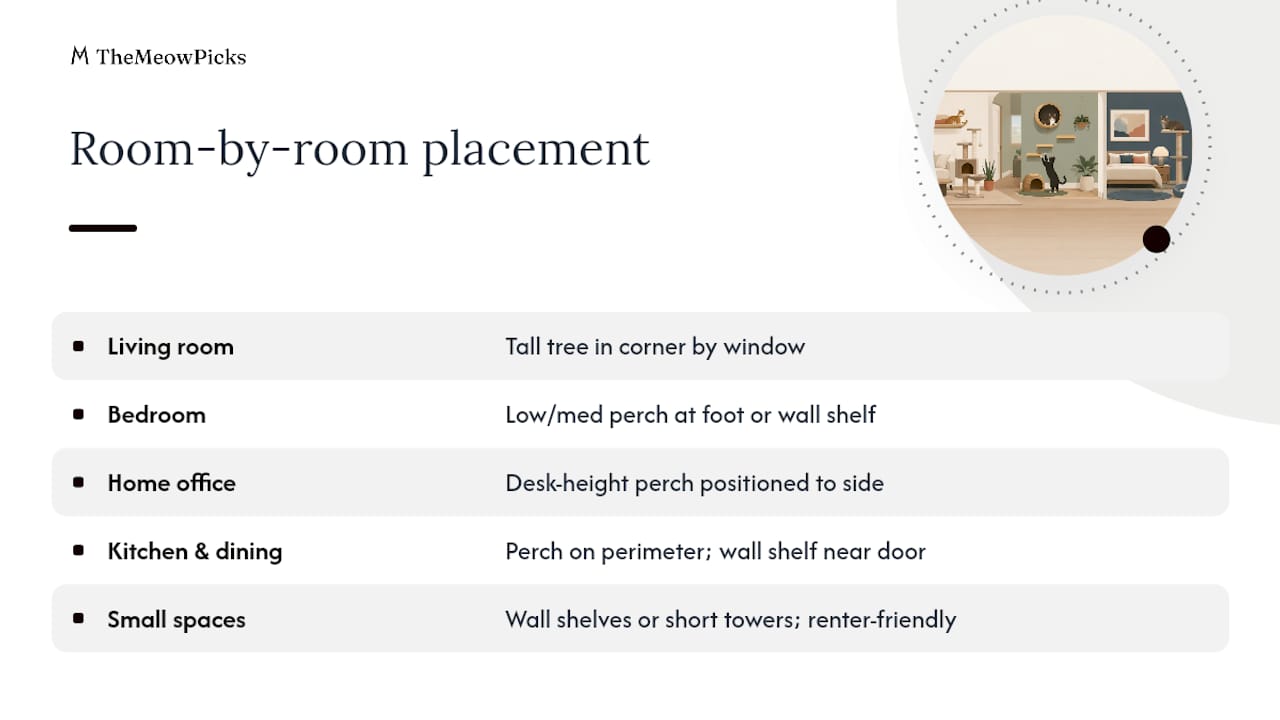
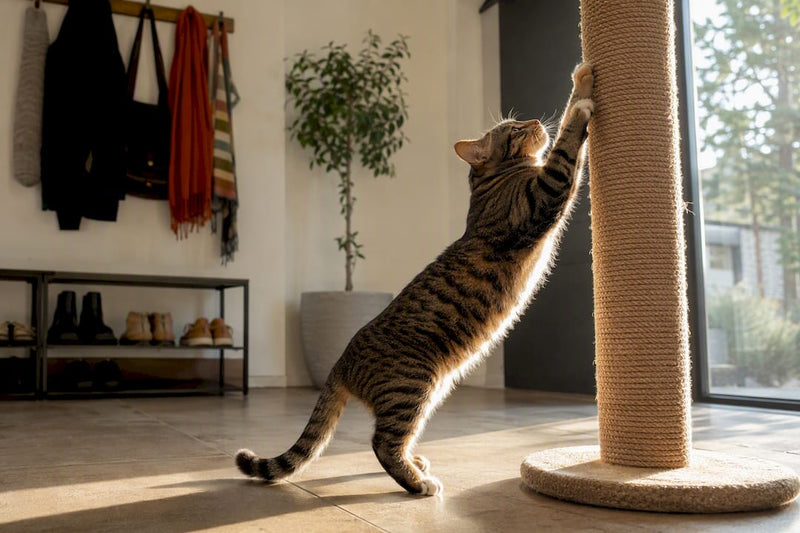
Living room. This is usually the highest-traffic, highest-social-value room in the house, which makes it the natural home for your tallest tree or tower. Put it in a corner near a window, angled so a cat on the top platform can see both the glass and the doorway. If the couch is getting scratched, place a scratching post directly beside it. Guides on redirecting scratching behavior consistently recommend positioning the new surface right next to the target rather than across the room.
Bedroom. Cats often want to be close at night without being on the pillow. A low-to-medium perch near the foot of the bed, or a wall shelf a few feet up, gives that proximity without the 2 a.m. face-walking. For senior cats, add an intermediate step or a small ottoman so the jump to the bed isn’t a single risky leap.
Home office. A perch at roughly desk height, positioned to the side rather than directly on the desk, satisfies a cat’s urge to supervise your work while keeping paws off the keyboard and cables away from curious teeth.
Kitchen and dining area. Perches belong on the perimeter, not over prep counters. Cats climbing near food surfaces is a contamination risk, and most kitchens don’t have room to spare anyway. A wall shelf near the doorway lets a cat watch meal prep from a safe distance.
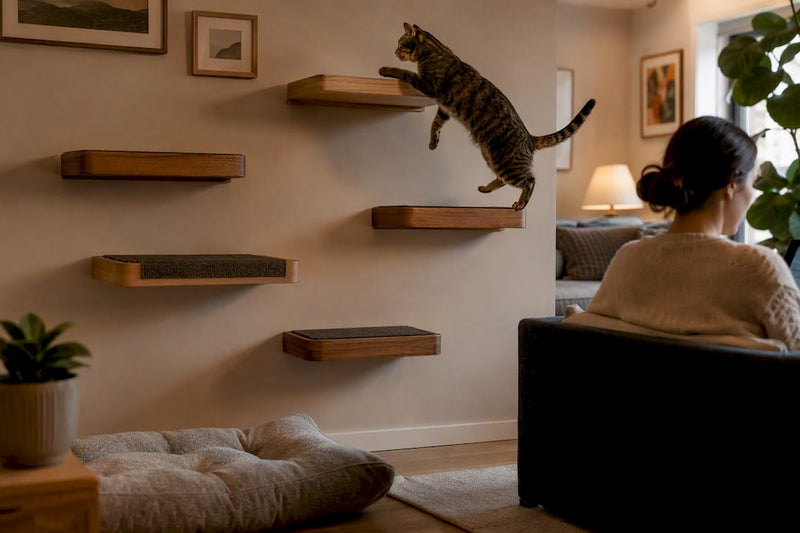
Small spaces and rentals. Renter-friendly options like wall-mounted shelves, short towers, and modular pieces let you build vertical space without giving up floor square footage. Check decor strategies for tight rooms if you’re trying to fit furniture into a studio without it dominating the room, and confirm mounting hardware works with your walls before drilling.
Placing Furniture When You Have More Than One Cat
Multiple cats change the math entirely. A single tall tower in one corner creates a bottleneck, and cats that don’t get along will avoid a shared resource rather than fight over it.
- Spread perches, feeding stations, and litter areas across different rooms instead of clustering them in one spot.
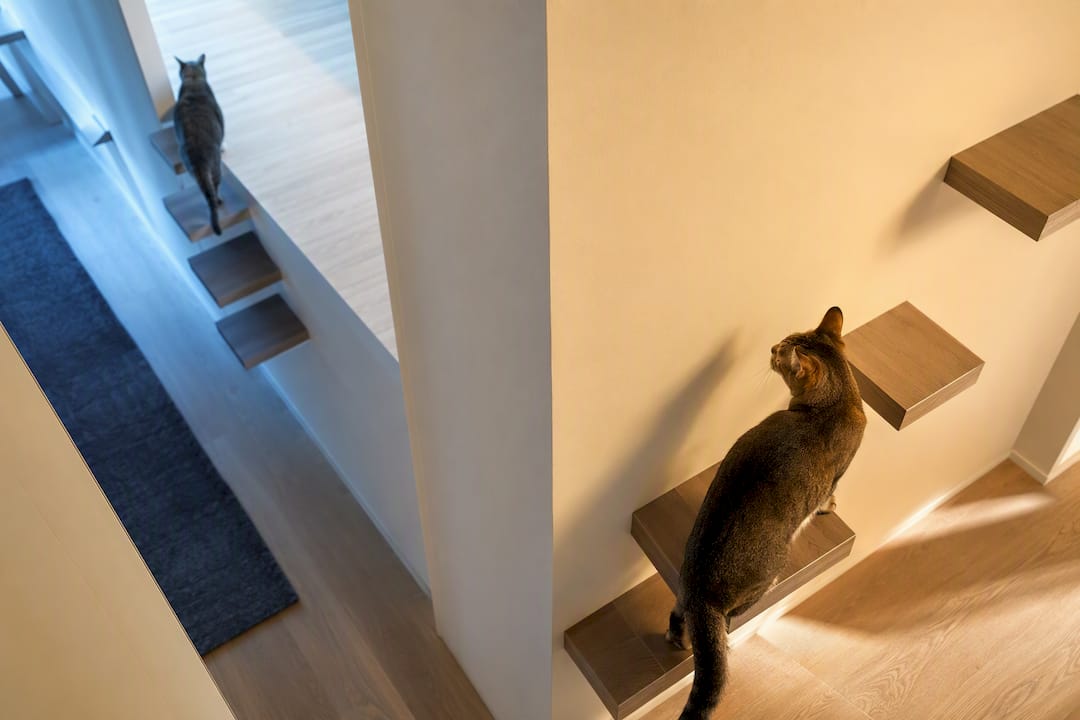
- Build separate vertical circuits at different heights, one cat’s route along a window shelf, another’s along a bookcase, so paths rarely force a face-off.
- Aim for one retreat per cat plus one extra, and at least two scratching surfaces in different rooms.
- Design routes with more than one way in and out; a dead-end shelf is a trap point, not a resource.
Separate vertical circuits at different heights reduce confrontations far more reliably than adding height to a single existing tower. If two cats are guarding one perch, the fix usually isn’t a bigger tree, it’s a second, smaller one somewhere else entirely.
Pro Tip: If one cat consistently blocks another from a favorite perch, don’t remove the perch. Add a second climbing route to a different but equally good spot, and the standoff usually resolves itself within a week or two.
Safety And Stability Checklist Before You Finalize A Spot
Run through this list before you decide a placement is permanent, not just after something goes wrong.
- Push down on the top platform with your hand. Any wobble at the base means the unit needs a wall strap or a different, sturdier location.
- Follow the manufacturer’s anti-tip instructions exactly; if wall anchoring is listed as an option for a tall piece, treat it as a requirement rather than a suggestion.
- Clear blind cords, charging cables, and space heaters from anywhere along the climbing or landing path.
- Confirm no window near the perch opens wide enough for an escape, and that screens are secure.
- Re-check fasteners, wall straps, and base bolts every three to six months, since normal jumping loosens hardware over time.
Cats that lack adequate vertical and retreat options are more likely to develop scratching, litter avoidance, and other stress-related behaviors, which makes a stable, well-placed piece cheap insurance against much bigger problems later.
Testing And Adjusting Placement In The First Week
Placement is a hypothesis until your cat proves it right or wrong. Give any new piece a real trial before assuming it failed.
- Add familiar bedding or a favorite toy to the top platform on day one to draw initial interest.
- Watch for seven days: note how your cat approaches the piece, which level they favor, and how they get down.
- Check for guarding behavior, a cat hovering nearby but never fully settling in, which usually signals the spot feels exposed rather than secure.
- If it’s ignored, move it one to two feet closer to a window or a favorite resting spot, or add an intermediate step to ease the climb.
- If two cats are competing for it, add a second station in a different room rather than fighting over the first one.
Testing the floor footprint and observing landing routes for a few days before committing to a permanent spot saves you from moving heavy furniture twice.
Using Scent To Help A New Spot Feel Like Home
Cats read the world through scent glands on their cheeks, paws, and flanks, and a brand-new piece of furniture smells like nothing to them, which is part of why it sometimes gets ignored at first. You can speed up adoption by helping the new spot pick up a familiar scent profile before you expect your cat to use it.
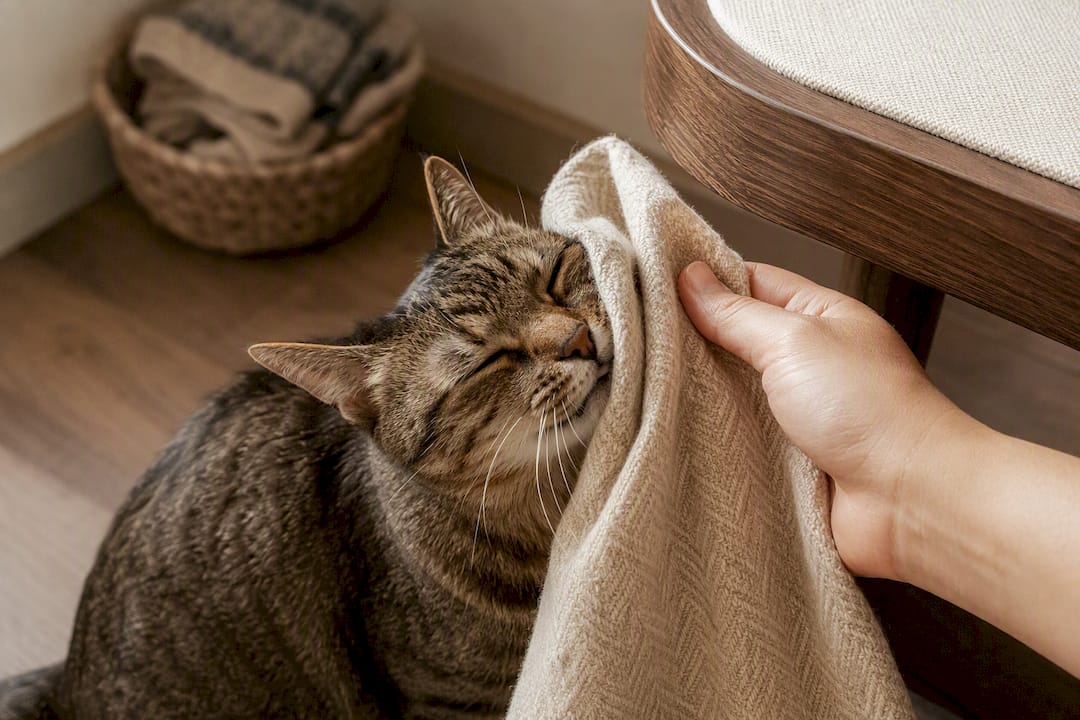
Rub a soft cloth along your cat’s cheeks and chin, then wipe it across the platforms and entry points of the new tree or condo. This transfers the same facial pheromones a cat deposits naturally when they rub against furniture or doorways, signaling that the spot already belongs to their territory rather than reading as foreign. Placing a worn blanket or an unwashed piece of your cat’s existing bedding on a new platform works the same way, and it’s often faster than waiting for natural scent-marking to happen on its own.
Avoid cleaning a brand-new perch too aggressively in the first week or two. Scented cleaners strip away the faint marks a cat leaves during exploration, which can reset progress and make a spot feel unfamiliar again. Plain water or a pet-safe wipe is usually enough for surface dust; save deeper cleaning for once the piece is clearly part of the regular rotation. Combined with the physical placement rules already covered, scent continuity is often the difference between a tree that gets used daily and one that becomes an expensive shelf for laundry.
Our Take On Design, Function, and Where They Meet
We look at furniture placement as half science, half honesty about how your home actually gets used. A tree can be beautiful and still fail your cat if the base wobbles or the top platform faces a wall instead of a window. When we curate pieces for the catalog, stability, modularity, and how easily a piece wipes clean matter as much as how it looks in a photo. The best placement advice in the world doesn’t help if the furniture itself can’t support it. You’ll find pieces built around that balance in the picks below.
— TheMeowPicks Team
Products Built For Where They’ll Actually Sit
Once you know the rules, matching furniture to the job gets a lot simpler. Some spots call for a tall, open perch. Others call for a hideaway your cat can vanish into. Here’s how a few pieces from The Meow Picks map onto the placement logic covered above.

For a small bedroom or a studio apartment, the Apawtment Cat House works as a compact enclosed retreat, the kind of low-footprint hideaway that solves the “needs a quiet spot” problem without eating up floor space. If your living room needs a tall observation post near the window, the Torre Cat Tower is built as the main social-room perch, tall enough to give a real vantage point while staying anchored. For multi-cat households trying to build separate vertical circuits, the Cat Wall Maze mounts in sections, letting you route a climbing path along a wall instead of stacking everyone onto one tower.
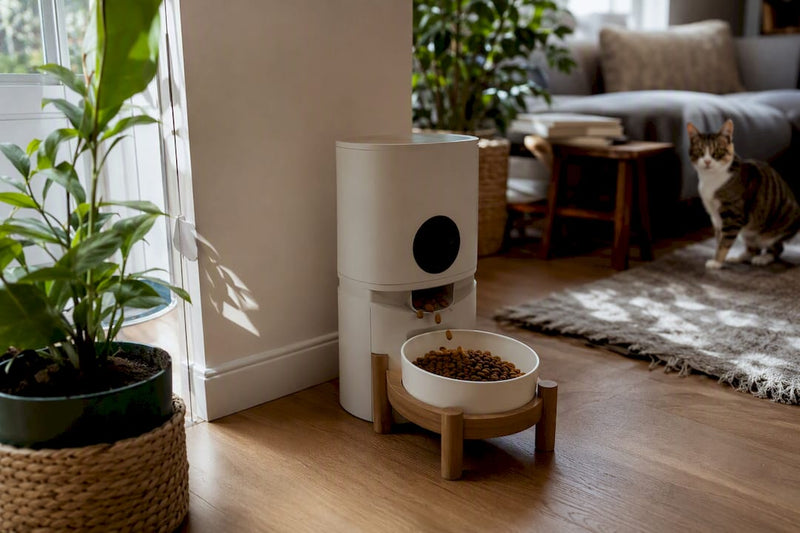
A few more pieces round out common placement jobs. The Perla Cat Cave gives shy cats an enclosed retreat that still fits into a shared room. The Grotto is a shorter tree suited to bedrooms or apartments where a full-height tower doesn’t fit. The Gardens works for owners who want a tree that reads as furniture, not equipment. And if you’re separating feeding stations from resting areas in a multi-pet home, the Dog Proof Cat Feeder keeps meals up and out of reach.
Every listing on the site includes the exact dimensions and base footprint, so check them against your room’s clearance before you buy. If you’re outfitting a small apartment specifically, our guide to apartment-friendly cat trees walks through footprint math in more detail. Browse the full collection at The Meow Picks and find the piece that fits the spot you already picked out.
Sources
- Cat tree placement for indoor cats: height, base, landing route, and room fit | Cat & Meow
- Where should I put my cat tree? — BetterWithCats
- Indoor environment design and enrichment — Communikitty
- Cat Superhighway Ideas: 7 Safe Apartment Routes
FAQ
What Is The 3-3-3 Rule For Cats?
The 3-3-3 rule is commonly used for newly adopted cats: expect roughly 3 days to decompress, 3 weeks to learn the household routine, and 3 months to feel fully settled. It’s a helpful timeline to keep in mind when judging whether new furniture placement is failing versus simply not yet trusted.
Do Cats Like It When You Rearrange Furniture?
Most cats prefer stability and are wary of sudden changes to their territory, including furniture placement. If you need to move a tree or condo, do it gradually over a few days rather than all at once, and reintroduce it near a familiar scent spot.
Are Cats Happier Indoors Or Outside?
Indoor cats face fewer risks from traffic, predators, and disease, but they depend entirely on their owners for stimulation. Well-placed vertical furniture, window access, and retreats are how you replace the enrichment an outdoor cat would find on its own.
What Is The Highest Form Of Affection From A Cat?
Slow blinking, sleeping near you, and choosing to rest on furniture you’ve placed close to shared spaces are widely considered strong signs of trust and affection. A cat that picks a perch within sight of you, rather than hiding in another room, is voting with its paws.