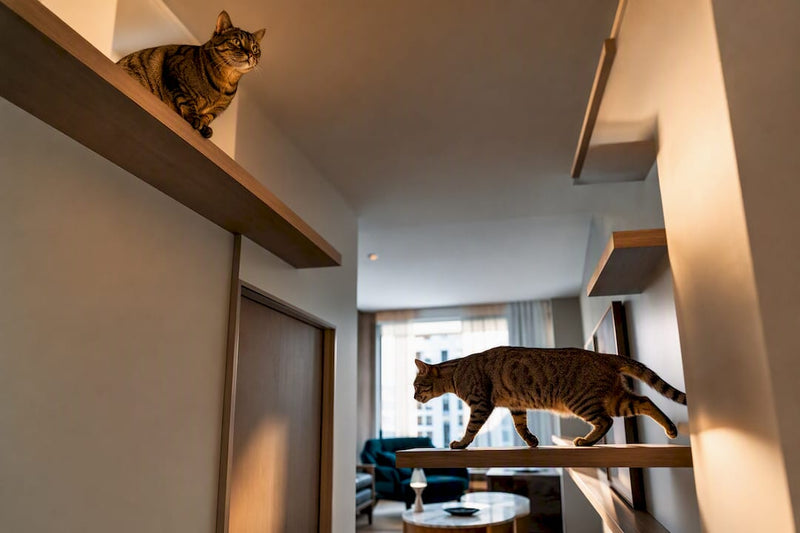
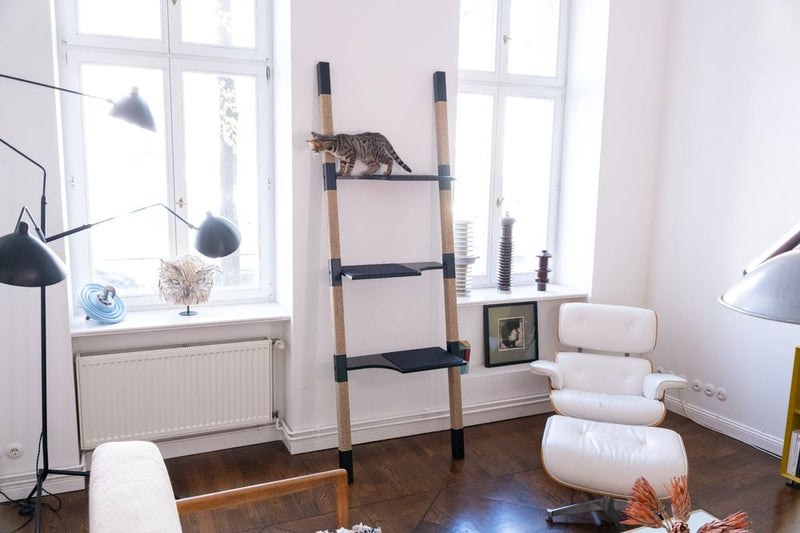
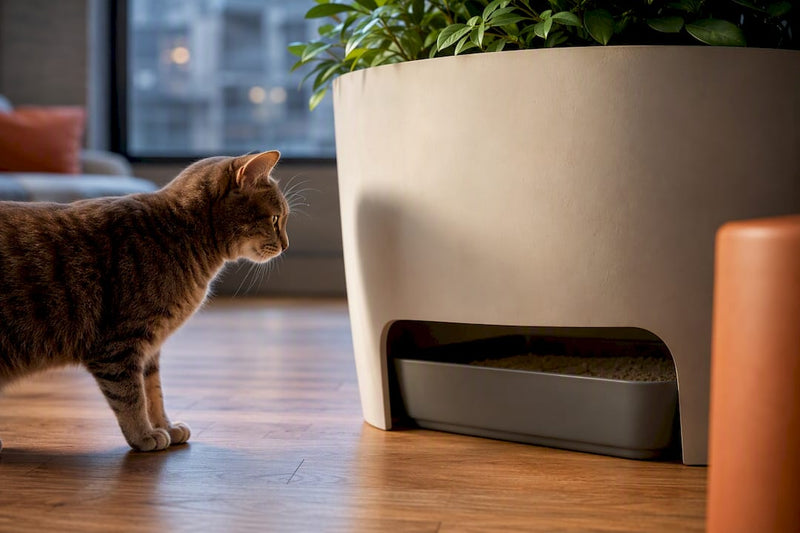
A working cat room setup needs five zones: sleeping, scratching and climbing, play, eating and drinking, and litter, each kept separate from the others. Litter goes far from food, vertical routes go along the walls, and the whole room sits in a quiet, naturally lit spot where your cat won’t have to compete. Start with one piece in each zone, then watch how your cat actually uses the space before adding more.
TL;DR:
- Each cat needs its own litter box plus an extra one to prevent avoidance, especially in multi-cat households where spacing also matters.
- Vertical space like shelves, trees, and window perches is essential to reduce stress, promote exercise, and provide viewing vantage points for cats.
- Food and water stations should be placed away from litter boxes and foot traffic, with options like microchip feeders to reduce tension during feeding.
- Proper room temperature, ventilation, and natural light are crucial for comfort, with an emphasis on avoiding drafts, humidity buildup, or excessive heat.
- Use durable, easy-to-clean flooring materials like tile or vinyl, and incorporate hiding spots and multiple resting zones to create a calming, functional environment.
Table of Contents
- Choosing the Right Room or Nook for a Cat Room Setup
- Mapping Out the Five Functional Zones
- Create Vertical Space With Shelves, Trees, and Perches
- Feeding and Water Station Setup
- Litter Setup, Concealment, and Maintenance
- Flooring, Wall Finishes, and Material Choices
- Furnishing the Room: Placement Rules and Product Picks
- Temperature and Ventilation Control for the Cat Room
- Incorporating Calming Elements Like Diffusers and Sound
- Lighting Considerations for Cat Wellbeing
- Managing Multiple Cats in a Shared Room
- The MeowPicks Team’s Take on Building a Cat Room
- Shop the Pieces That Fit Your Cat Room Setup
- Sources
- FAQ
Choosing the Right Room or Nook for a Cat Room Setup
The best cat room is one that’s already boring to the rest of the household. A spare bedroom, home office, walk-in closet, or enclosed porch all work, and each fits a different kind of home:
- Spare bedroom: Best if you want room for a full cat tree, multiple perches, and a window seat.
- Home office: Works if you’re around most of the day and want to keep an eye on a shy or recovering cat.
- Walk-in closet: A smart pick for small apartments; add a shelf or ladder to use the vertical space.
- Enclosed porch: Great when it gets steady natural light, though it needs secure screening so nothing pushes through.
Natural light matters more than most owners expect. A window with a secure screen gives your cat something to watch for hours, which counts as real enrichment, not decoration. Pick a space you can close off with a door or a pet gate, so the room stays a dedicated zone rather than a pass-through, and leave enough floor space for a storage bin and a chair. You’ll be in there daily to scoop, refill, and just sit with your cat, according to Extra Space Storage’s guide to organizing a cat room.
Mapping Out the Five Functional Zones
Every cat room setup breaks down into five jobs the space has to do at once, and none of them should overlap. A cat room organized this way, according to ASPCA’s feline enrichment guidance, keeps stress low and litter-box avoidance rare.
- Sleeping: At least one covered hideaway plus a soft open bed, placed away from drafts and foot traffic.
- Scratching and climbing: A vertical post or tree near a window or doorway, where cats naturally want to stretch and mark.
- Play and enrichment: An open floor patch for wand toys, puzzle feeders, or a rotating toy basket.
- Eating and drinking: A raised or wall-mounted station, positioned as far from the litter zone as the room allows.
- Litter: The rule of thumb is to have more than one litter box, spaced apart in multi-cat homes.
For a single cat, a suitably sized room fits all five zones comfortably. For three or more cats, sketch the floor plan first. Stack vertical zones along one wall and keep litter boxes in separate corners so no cat has to cross another’s path to use one.
Create Vertical Space With Shelves, Trees, and Perches
Cats read a room from above. Wall shelves, cat trees, and window perches give them that vantage point, and vertical territory also doubles as exercise, since climbing works muscles that flat floor space never touches, per ASPCA Pet Insurance’s cat enrichment resource.
- Wall-mounted shelf runs: Best for connecting a climbing route to a window perch; check our DIY climbing wall plans for layout ideas.
- Modular step systems: A climbing shelf or wall climbing steps let you build a route gradually instead of committing to one big install.
- Freestanding trees: No drilling required, and easy to move if you’re renting.
Anchor every shelf into a stud, not just drywall. A shelf that wobbles once will get avoided permanently.
Pro Tip: For senior cats or anyone recovering from surgery, add a set of pet stairs or a ramp next to the tallest perch. Cats don’t stop wanting the view just because jumping gets harder.
Feeding and Water Station Setup
Food and water belong nowhere near the litter zone, and they belong out of the main foot-traffic path too. Cats are surprisingly particular about eating somewhere they feel safe, not just fed.
- Place the feeding station on a low shelf or raised platform, away from the room’s entrance.
- In multi-cat rooms, give each cat its own bowl station, or use a microchip feeder so one cat can’t guard or steal another’s food, a fix recommended in Three Chatty Cats’ cat room design guide.
- Add a water fountain near a quiet wall, away from food and litter. Moving water tends to draw cats who otherwise barely visit the bowl.
- Clean the fountain weekly, and rinse the bowl daily if you’re not running one.
Our guide on cat feeding station setup covers placement and storage in more detail, and if you’re on the fence about a fountain, our fountain buying guide walks through the tradeoffs.
Litter Setup, Concealment, and Maintenance
Litter placement causes more behavior problems than almost any other part of a cat room setup. Get it wrong and you’ll find out fast.
- Put the box in a ventilated, low-traffic corner, as far from food and water as the room allows.
- Choose the enclosure style based on your cat’s personality: open pans suit skittish cats, covered boxes cut down on tracked litter, and a ventilated closet or cabinet hides the box entirely while venting odor outward.
- Scoop daily, do a full litter change weekly, and slide a mat under the box to catch stray granules before they hit the floor.
The math that matters: one litter box per cat plus one extra is the standard formula, so two cats need three boxes, not two. Skipping the “plus one” is the single most common reason cats start avoiding the box, according to ASPCA’s enrichment guidance.
If you’re converting a closet into the litter zone, our litter box in closet guide covers venting it properly so odor doesn’t build up, a concealment approach also recommended by Saving Nine Lives’ cat room setup guide.
Flooring, Wall Finishes, and Material Choices
Skip deep-pile carpet. It traps litter, hair, and odor in ways that turn a five-minute cleanup into a weekend project. Large-format tile, sealed wood, and luxury vinyl all sanitize faster and hold up better under daily scooping and spills, according to GoFlooring’s material guide for cat rooms.
- Lay a washable rug or low-profile mat under the litter box and feeding station to catch spills without adding a shag texture cats will track everywhere.
- Stick to non-toxic, cat-safe plants if you’re decorating, since curious cats chew leaves within reach.
- Choose scratch-resistant finishes on any furniture that isn’t meant to be a scratcher, or expect it to become one anyway.
Durable flooring also saves money over time, since it cuts down on deep cleaning and early replacement in a room that sees daily traffic.
Furnishing the Room: Placement Rules and Product Picks
Furniture placement follows the same logic as the zones themselves. Give each cat their own hideaway plus a spare, spread perches across a few different heights, and put scratch posts near doors and windows where cats naturally pause to stretch, a pattern echoed in Cat and Dog House’s spare room design guide.
- Sleeping zone: The Apawtment Cat House works as a designer hideaway that still gives a cat the enclosed, private feel they look for.
- Vertical zone: The Cat Wall Maze builds a modular climbing route straight up the wall.
- Multi-cat households: The Canyon covers scratching, climbing, and resting in one piece, which cuts down on how much floor space multiple separate items would take.
| Zone | Function | Suggested product |
|---|---|---|
| Sleeping | Private hideaway | Apawtment Cat House |
| Vertical/climbing | Wall-mounted routes | Cat Wall Maze |
| Multi-cat resting/scratching | Shared tree structure | The Canyon |
Mix a few designer pieces like these with durable basics, a plain scratch pad, a budget bed, and the room still looks pulled together without every item needing to be a statement piece. For more on placement specifics, see our guide on furniture placement that actually gets used.
Temperature and Ventilation Control for the Cat Room
Cats run warmer than people expect comfort to feel, and a room that’s fine for you can run stuffy or stale for a cat spending hours in it. Aim to keep the space within the same comfortable range you’d want for yourself, roughly 65 to 75 degrees Fahrenheit, and avoid placing beds or hideaways directly under vents or in front of drafty windows.
Ventilation matters even more than temperature in a room that holds a litter box. Stale air holds odor, and odor buildup is one of the quieter reasons cats start avoiding a room altogether. If the room has its own window, crack it when weather allows, or run a small fan on low to keep air moving without creating a direct draft on any resting spot. Closets or enclosed litter cabinets need their own airflow, whether that’s a vent cut into the door or a small computer fan wired to pull air out.
A portable air purifier near the litter zone helps more than most owners realize, since it pulls dust and dander out of the air a cat is breathing at close range for hours. Keep it a few feet from the box itself so the noise doesn’t discourage use.
In summer, avoid letting an enclosed porch or closet-style room bake in direct sun for hours; that kind of heat buildup is uncomfortable for a cat and can turn a favorite window perch into a spot they abandon by afternoon. A simple window shade or reflective film solves it without blocking the light your cat actually wants.
Incorporating Calming Elements Like Diffusers and Sound
A cat room setup benefits from a few sensory details most guides skip. Pheromone diffusers, the kind that mimic a cat’s natural facial pheromones, are commonly used to ease tension in a new or shared space, and plugging one in near the resting zone (not directly next to the litter box) is a low-effort way to make the room feel more settled from day one.
Sound matters too. A cat room near a laundry room, stairwell, or front door picks up noise that undercuts the whole point of a quiet retreat. If you can’t move the room, a white noise machine or a low fan hum can mask sudden sounds that might otherwise send a cat bolting for a hiding spot. Some owners play soft, cat-directed audio or ambient nature sounds at low volume, though the honest answer is that most cats respond more to consistent quiet than to any specific soundtrack.
Avoid stacking too many calming tools at once. A diffuser plus a sound machine plus a weighted blanket in a resting spot can be more than most cats need, and it can also mask genuine distress signals if something’s actually wrong. Start with one element, give it a couple of weeks, and add a second only if you notice your cat still seems tense: crouched low, ears back, or avoiding the room’s open areas. The goal is a room that feels calm by default, not one engineered to override a stressed cat’s instincts.
Lighting Considerations for Cat Wellbeing
Natural light does more for a cat room setup than any lamp ever will. A window perch positioned in a patch of morning sun gives a cat both warmth and something to watch, and that combination of comfort and mental stimulation is hard to replicate artificially. If the room you’ve chosen has decent window access, build the resting zone around it rather than tucking the bed in a dark corner across the room.
Artificial lighting still matters for the hours natural light isn’t available. Avoid harsh overhead fluorescents if you can; they’re jarring for a species with much more light-sensitive eyes than ours. A soft lamp or dimmable fixture works better for evening hours, especially if the room doubles as a spot where a nervous cat retreats to decompress.
Total darkness isn’t ideal either. Cats see well in low light but not in pitch black, and a completely dark room can make a shy cat more hesitant to move around at night. A small night-light near the doorway, not aimed at the sleeping area, helps a cat navigate to food, water, or litter after dark without stumbling into furniture.
If the room has no window at all, a full-spectrum lamp on a timer can partially substitute for natural light, particularly in winter months when daylight hours shrink. It’s not a perfect swap, but it beats leaving the room lit only by whatever spills in from the hallway.
Managing Multiple Cats in a Shared Room
A cat room setup for more than one cat lives or dies on territory management, not floor space. Two cats can share a large room badly, or two cats can share a small one well; the difference comes down to whether each cat has its own resources within reach.
Every resource type needs to exist in multiples: beds, perches, scratch posts, and litter boxes, following the one-per-cat-plus-one rule already covered for litter. Design guidance consistently points to spreading beds and perches across different heights, so no cat has to negotiate for the one good spot, a detail Cat and Dog House’s cat room guide calls out as one of the more overlooked stress reducers in multi-cat homes.
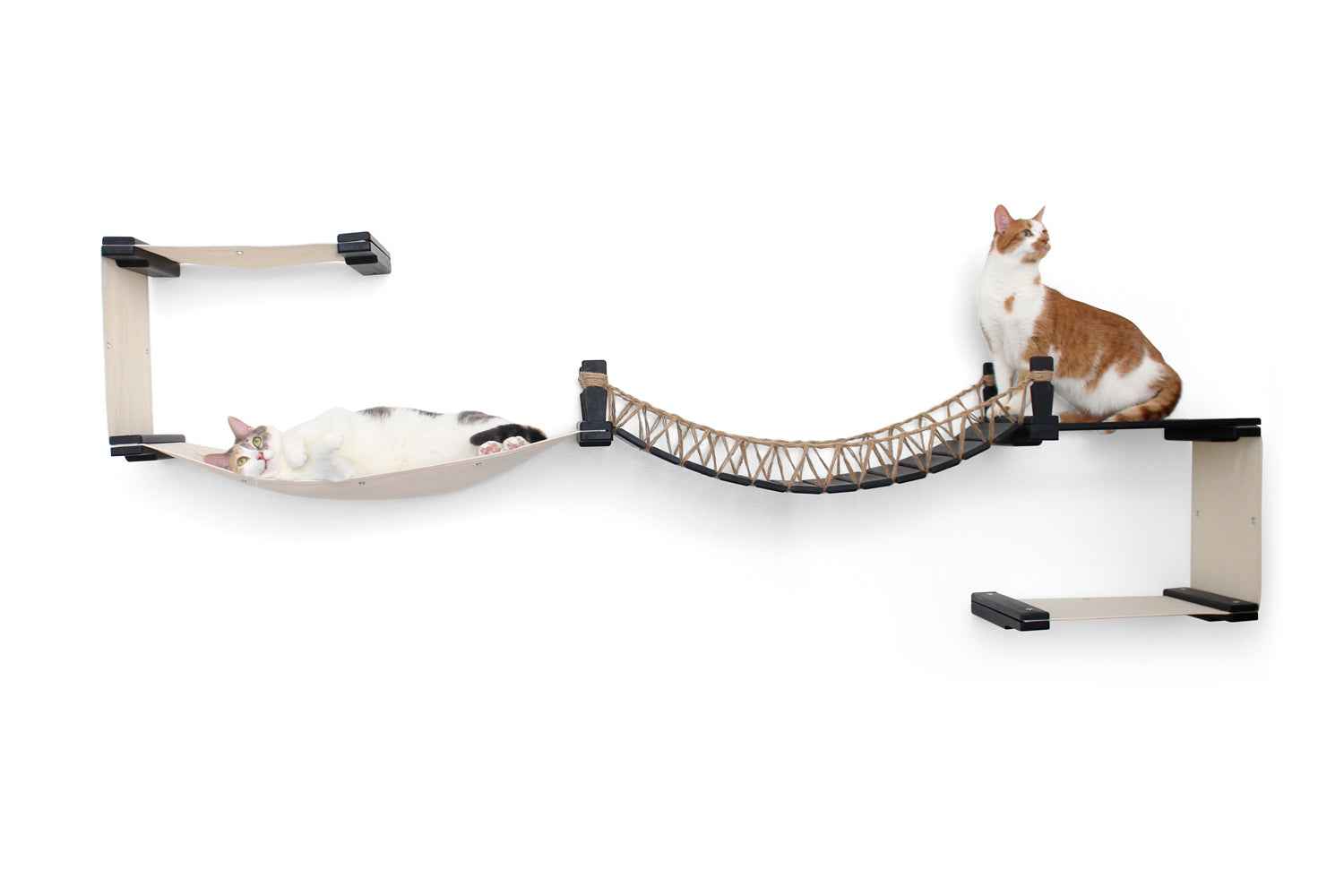
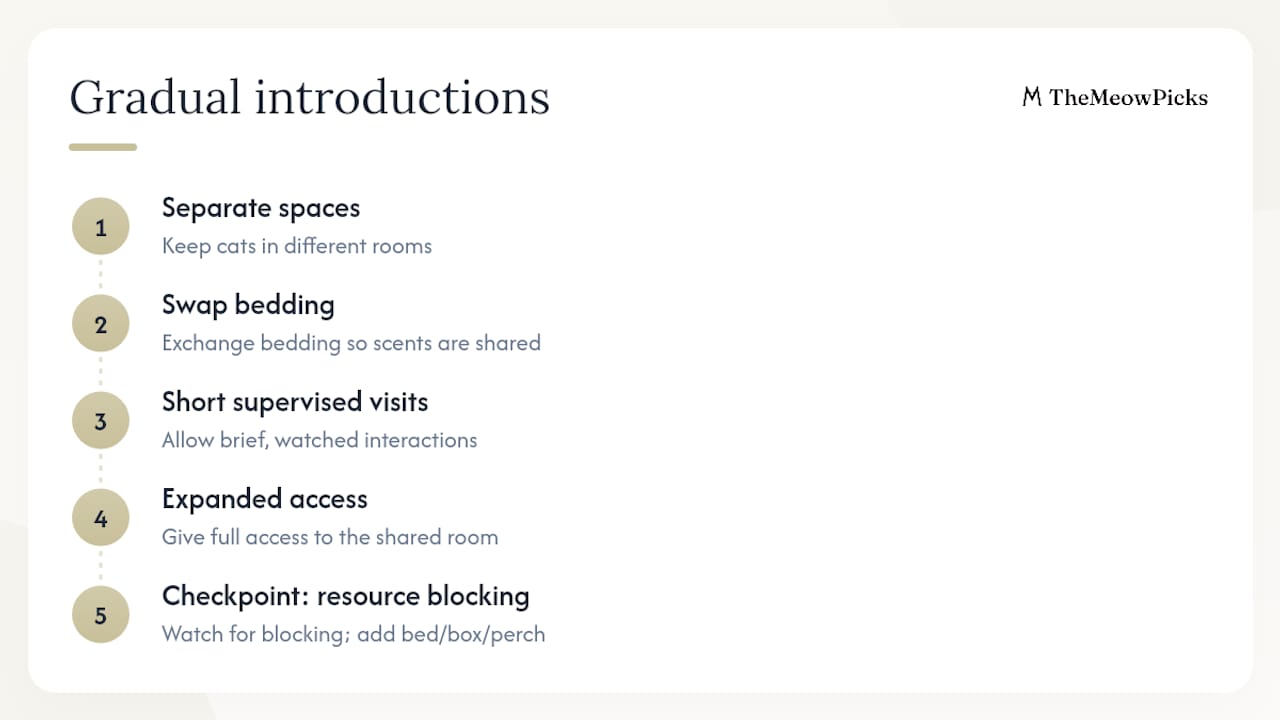
Introductions matter just as much as the furniture. If the cat room is meant for cats who don’t already live together full time, introduce them gradually rather than shutting them in together on day one. Swap bedding between their separate spaces first so each cat gets used to the other’s scent, then allow short supervised visits before giving them full access to the shared room. Watch for one cat consistently blocking access to a resource, a doorway, a favorite perch, a litter box, since that’s a sign the territory split isn’t working yet and needs another box, bed, or perch added to break the standoff.
Feeding is often where multi-cat tension shows up first. Separate feeding stations, or a microchip feeder for cats who steal from each other, keep mealtime from becoming the flashpoint that undoes an otherwise well-planned room.
The MeowPicks Team’s Take on Building a Cat Room
The best cat rooms treat design and behavior as the same decision, not two separate ones. A gorgeous piece that sits in the wrong spot gets ignored, and a perfectly placed piece that’s ugly still works fine, but why choose. Start with one hideaway, one perch, and watch where your cat actually goes before buying more. Building this room also does a little good beyond your own four walls.
— TheMeowPicks Team
Shop the Pieces That Fit Your Cat Room Setup
Once the zones are mapped out, furnishing the room comes down to picking pieces that match what you’ve already planned, not starting over. You can fill each zone with designer cat furniture built for the job and still have a room that looks intentional rather than assembled from whatever was on sale.
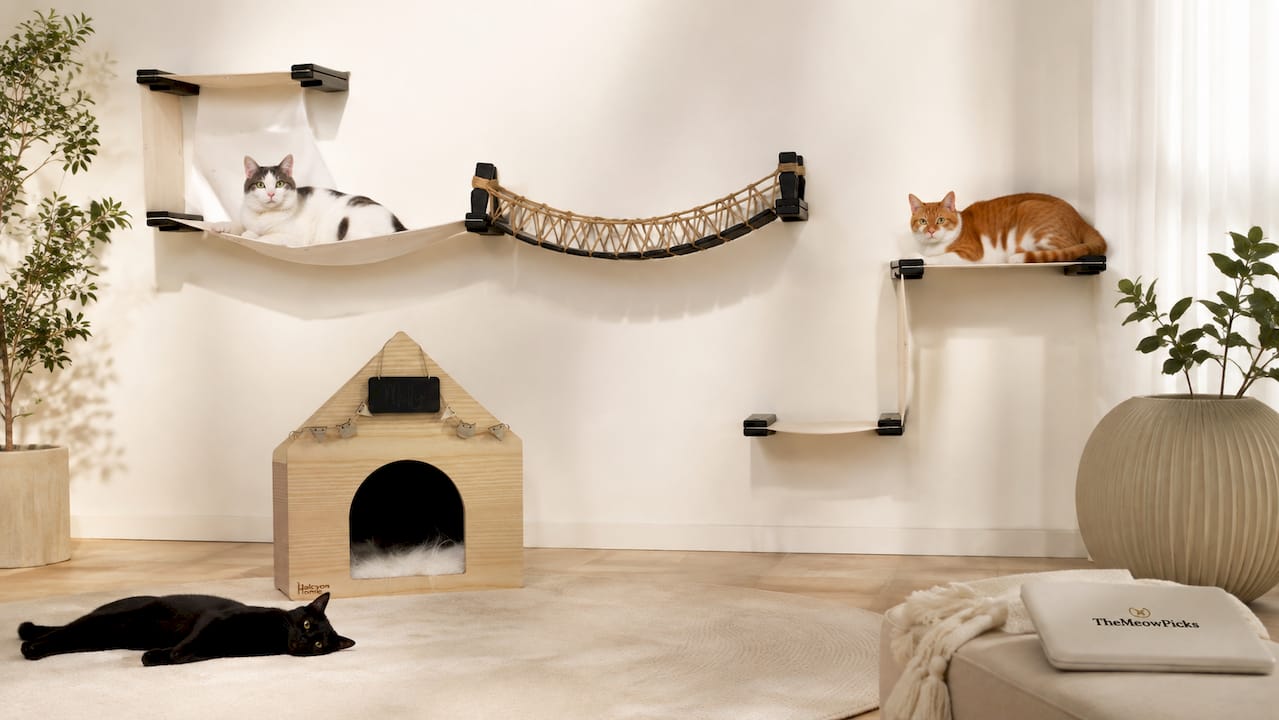
For the sleeping zone, the Apawtment Cat House gives a cat a private hideaway without looking like a plastic box shoved in the corner. For vertical routes, the Cat Wall Maze turns one wall into a climbing path a cat will actually use daily. And if you’re setting up a room for two or three cats, The Canyon covers scratching, climbing, and resting in a single structure, cutting down on how many separate pieces the room needs. Browse the full collection at The Meow Picks to find the pieces that match the zones you’ve already sketched out, and start with just one before building out the rest of the room.
Sources
- ASPCA, Feline DIY enrichment
- Extra Space Storage, How to design and organize a cat room
- ASPCA Pet Insurance, cat enrichment
- GoFlooring, Best flooring for cats
FAQ
What Is the 3-3-3 Rule for Cats?
The 3-3-3 rule describes a general adjustment timeline for a new cat: roughly 3 days to start decompressing, 3 weeks to settle into a routine, and 3 months to feel fully at home. It’s a helpful pace guide when introducing a cat to a new room or a new household.
Is It Cheaper to Build or Buy a Cat Tower?
A basic DIY tower can cost less in raw materials, but building one that’s sturdy, well-anchored, and finished nicely often closes the price gap once you factor in tools and time. A ready-made piece like The Canyon skips that tradeoff entirely with a structure already built for multi-cat use.
What Does Cat Splooting Mean?
Splooting is when a cat lies flat on its belly with its back legs stretched out behind it, often to cool down or simply relax on a comfortable surface. It’s a normal, contented posture and a good sign your cat feels safe wherever they’re doing it.
Are Cats Happier Indoors or Outdoors?
Indoor cats face far fewer risks from traffic, predators, and disease, and a well-designed indoor cat room setup with vertical space, play zones, and window access can meet most of the enrichment needs an outdoor environment would otherwise provide. The key is building in enough climbing, scratching, and observation opportunities so an indoor cat isn’t just contained, but genuinely occupied.
How Many Litter Boxes Does a Multi-Cat Room Need?
Follow the one-box-per-cat-plus-one rule, so a room with two cats needs three boxes, spaced apart in low-traffic corners. Skipping the extra box is one of the most common causes of litter-box avoidance in shared spaces.