The Sito Cat Litter Box and Cat Plant Stand are the two planter-style picks The Meow Picks recommends most often, and for the same reason: they hide the tray behind a real decor piece instead of a plastic dome. Sito suits owners who want a floor-standing planter cabinet with room for a standard litter pan. The Cat Plant Stand suits smaller spaces where a wall-mounted, greenery-topped design saves floor space. Check the exact interior dimensions on each product page against your cat’s size before you buy, then head to the shop links below.
TL;DR:
- The Sito Cat Litter Box can accommodate a standard tray in a full-height cabinet ideal for shared living spaces, but interior dimensions must match your cat’s size.
- The Cat Plant Stand offers a space-saving, wall-mounted option suitable for small apartments, with hardware requirements to verify before installation.
- The Bunker provides a vertical perch nearby the litter box, recommended for multi-cat households needing territory and space efficiency.
- Proper ventilation, tray accessibility, and interior size are critical factors to prevent odor buildup and ensure cats are comfortable using planter-style furniture.
- DIY options exist but may pose ventilation and fitting challenges, especially for multiple cats or enclosed spaces with poor airflow.
Table of Contents
- What Is Plant Litter Box Furniture?
- How Do You Choose the Right Planter-Style Litter Box?
- Maintenance and Safety: What Vets Actually Worry About
- Can You DIY a Planter-Style Litter Box?
- Why The Meow Picks Curates This Category
- An Editorial Note on Design Versus Comfort
- Ready to Shop Planter-Style Litter Furniture?
- Sources
- FAQ
What Is Plant Litter Box Furniture?
Plant litter box furniture is a cabinet, planter, or stand built around a hidden litter tray, designed to look like a houseplant or piece of decor rather than a pet product. The litter box disappears inside a faux-planter shell, a woven cabinet base, or a stand with a botanical top, while the functional tray sits inside on a removable base.
The category exploded because it solves a real decorating problem. A roundup of hidden litter box enclosures lists dozens of planter-style options, which tells you how many cat owners are actively searching for something that does not look like a litter box parked in the living room. You’ll also hear this furniture called a hidden litter box plant, a litter box enclosure plant, or a decorative litter box cabinet. They all describe the same idea: conceal the tray, keep the plant look, make cleaning still possible.
The trade-off is real too. Enclosing a box changes airflow and access, which is exactly what the buying checklist below is built to help you manage.
Sito Cat Litter Box
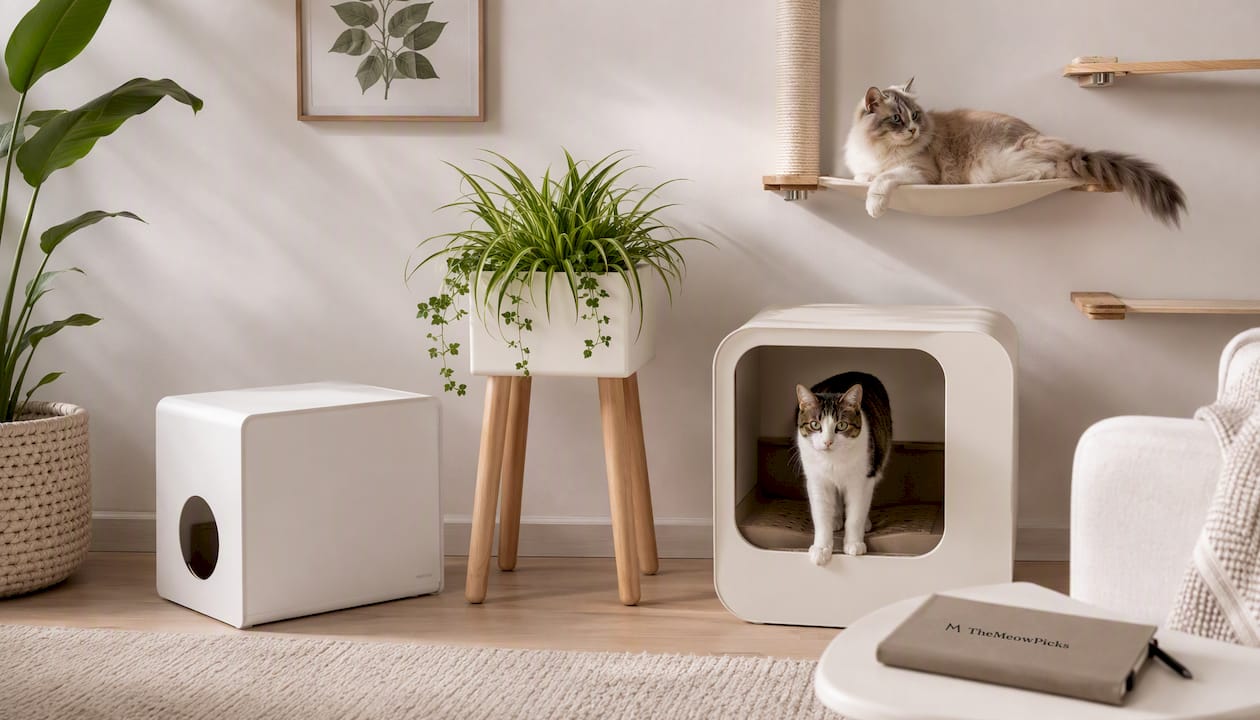
The Sito Cat Litter Box is a floor-standing cabinet styled to look like a planter piece, built to hold a standard litter tray out of sight. It works best in a living room, hallway, or bedroom corner where you want a furniture piece that reads as decor first.
- Best for: apartments or homes where the litter box needs to sit in a shared living space.
- Standout spec to check: confirm the interior tray dimensions on the product page against your cat’s length, since planter-style cabinets vary more in interior footprint than open trays do.
- Who should pick this: owners with one cat who want the box fully out of view without sacrificing a full-size tray.
Cat Plant Stand
The Cat Plant Stand takes a different approach: a wall-mounted, botanical-topped stand that pairs a smaller footprint with a green, leafy top that reads as a plant shelf.
- Best for: small apartments, studios, or bathrooms where floor space is tight.
- Standout spec to check: verify wall-mount hardware and clearance requirements on the product page before installing, since wall units depend on stud placement.
- Who should pick this: renters or small-space owners who want a botanical accent piece more than a full cabinet.
The Bunker
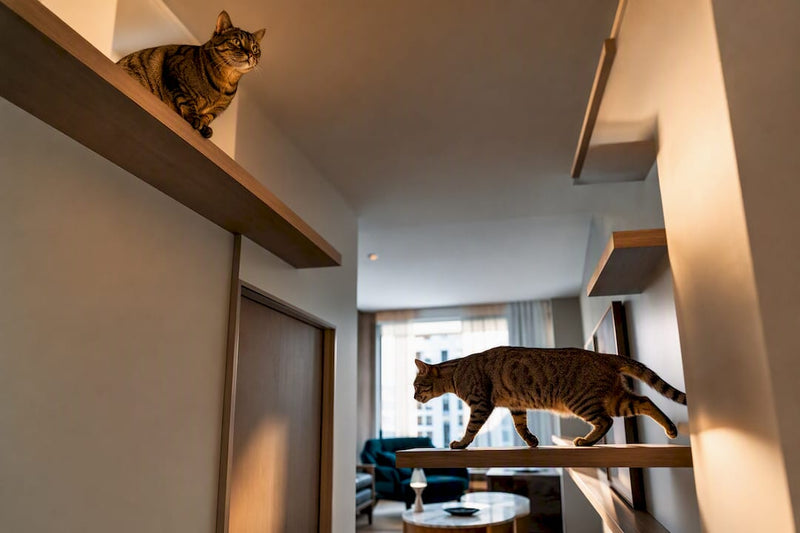
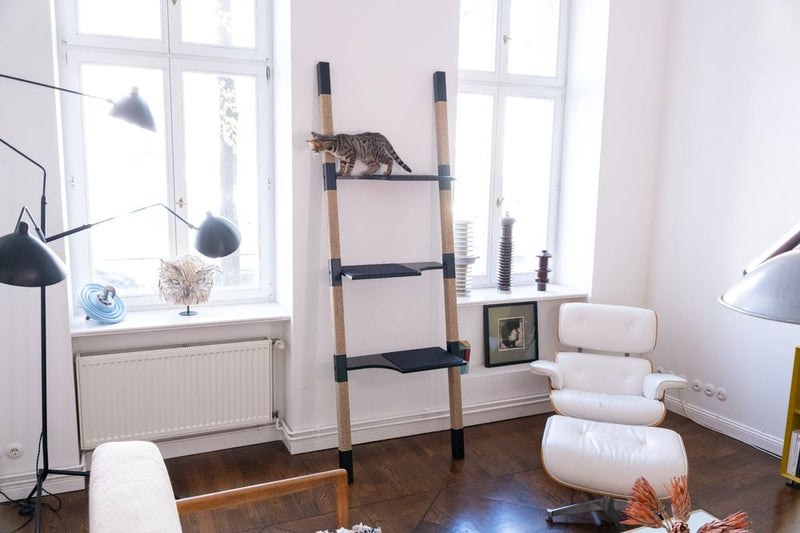
The Bunker is a multi-level cat tree with a perch, not a planter litter box, but it earns a spot on this shortlist because it solves the space problem from the other direction. Instead of hiding the box in greenery, it gives your cat a vertical retreat nearby, which can help nervous cats settle into a new hidden-box setup.
- Best for: multi-cat homes that need vertical territory near the litter area.
- Standout spec to check: review the listed perch height and base footprint against your ceiling clearance and room layout.
- Who should pick this: owners pairing a planter litter box with a climbing structure so the litter area doubles as a cat-friendly corner instead of a single-purpose box.
Before you commit to any of these, grab a tape measure. Measure your cat nose to tail, then compare that number against the interior dimensions listed on the product page, not the exterior cabinet size. A planter shell can look roomy from outside and still cramp a large cat inside.
How Do You Choose the Right Planter-Style Litter Box?
Pick by function first, then by look. A planter litter box that hides the tray beautifully but traps odor and blocks cleaning access will get abandoned by your cat within weeks. Here’s the order that actually matters.
- Odor control method. Passive vents rely on airflow through slats or gaps and cost the least, but they do the least work in a small room. Carbon filters trap odor molecules chemically and need replacing every one to three months depending on use. Active electronic deodonization systems run continuously and cost more up front but handle multi-cat households better. Market listings for planter-style boxes commonly mix these three approaches, so read the odor-control section on the product page closely rather than assuming a plant top means better smell control.
- Fit and interior dimensions. Measure your cat’s length and height, then check the tray’s interior length, width, and door or opening height against those numbers. A cat that has to duck or twist to enter will start avoiding the box.
- Materials and durability. Some planter-style furniture uses handwoven rattan-style panels over a metal frame, which looks natural but scratches more easily than molded ABS plastic. ABS plastic planter shells resist scratching and moisture better but read as more obviously “plastic” up close. Neither is wrong. Pick based on whether your cat scratches at furniture edges.
- Cleaning access. Look for a removable tray or liner, plus an access panel that doesn’t require lifting the whole cabinet top off. If the listing mentions removing a faux plant or filter panel before you can scoop, that’s an extra step every single day, not a one-time hassle.
- Placement. Leave clear entry space in front of the opening, keep the piece out of high foot traffic, and add one extra box per cat if you have more than one, positioned in separate rooms when possible.
Pro Tip: Before buying, search the seller’s name on Trustpilot. Review pages for sellers in this category often surface recurring complaints like flimsy tops or hard-to-remove trays, the kind of detail that never shows up in a product photo.
Maintenance and Safety: What Vets Actually Worry About
Vets don’t dislike enclosed litter boxes because of the concept. They worry about two specific failures: trapped odor that discourages use, and poor visibility that makes a cat feel cornered while eliminating. Both are fixable with the right habits, not reasons to avoid planter-style furniture altogether.
Daily to monthly checklist:
- Scoop solid waste once or twice daily, same as any open box.
- Wipe down the interior tray weekly with a pet-safe cleaner.
- Check and replace carbon filters every one to three months, depending on your product’s listed schedule.
- Deep clean the full cabinet, including any faux-plant top or access panel, once a month.
Test airflow by holding your hand near the vents or door opening after your cat uses the box. If odor lingers for more than a minute or two after scooping, the ventilation isn’t keeping up, and you may need to prop the access panel slightly open or add a small clip-on fan near the vent.
One safety note that gets overlooked in the plant-themed version of this furniture: real houseplants near or on top of a litter cabinet can be a hazard if your cat noses around them. Lilies, pothos, and philodendron are toxic to cats if chewed. Faux greenery removes that risk entirely, which is exactly why most designer planter litter boxes use artificial plants on top rather than live ones.
If your cat starts avoiding the box, check three things in order: cleanliness (scoop more often), size (measure again, cats grow and preferences change), and location (move it away from noisy appliances or high-traffic hallways).
Can You DIY a Planter-Style Litter Box?
Yes, and Pinterest has no shortage of ideas. A board of DIY hidden litter box projects shows owners repurposing cabinets, planters, and side tables into concealed litter stations, usually by cutting an entry hole and dropping a standard tray inside.
- Repurposed planter cabinet. Buy a large decorative planter box with an open bottom, cut a cat-size entry hole in one side, and set a standard litter tray inside on a mat. Drill a few extra vent holes near the top if the original design doesn’t include any.
- Modified side table. Remove the bottom shelf of a closed side table, cut an entry hole, and slide a low-sided tray inside. Add a small battery vent fan if the enclosed space traps odor.
DIY saves money but costs you ventilation planning and tray-removal convenience, since most furniture pieces weren’t built with a pet product in mind. Skip DIY if you have more than one cat, since airflow problems multiply fast in enclosed spaces, or if you can’t easily fit a removable tray. A cramped, poorly vented DIY box often ends up worse than an open tray with no cover at all.
Why The Meow Picks Curates This Category
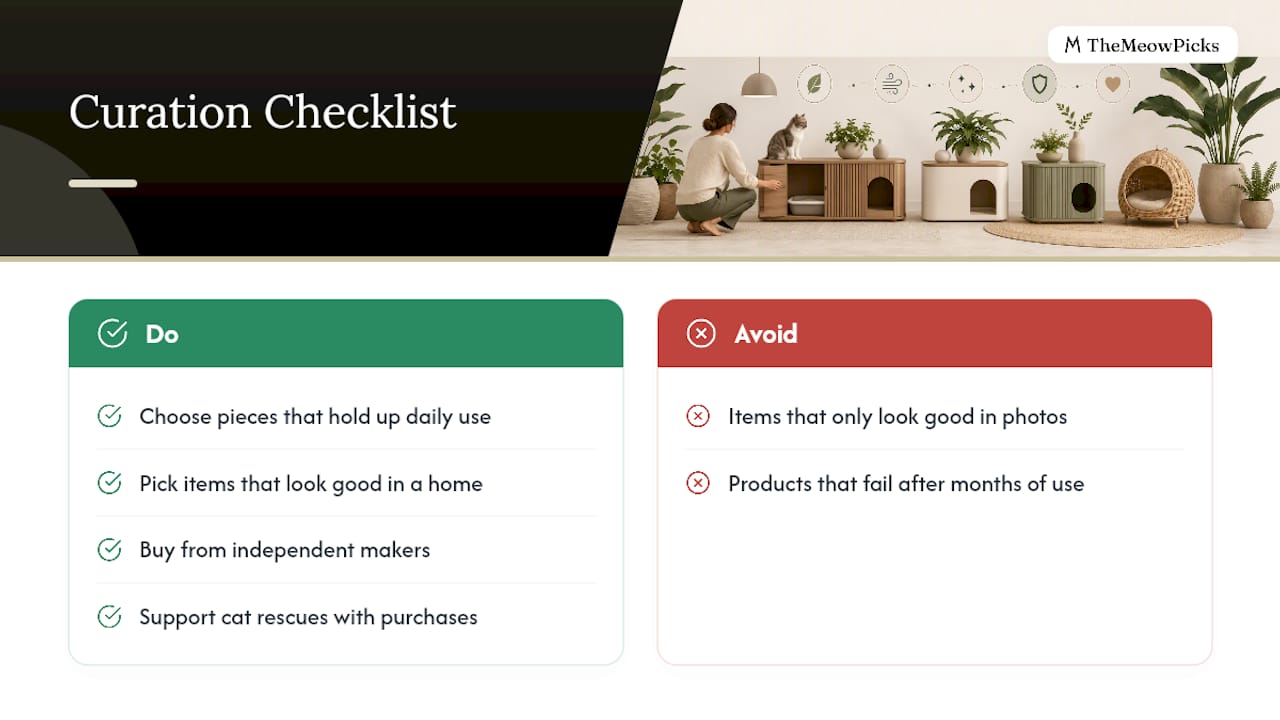
This marketplace is built around one filter: whether this piece holds up to daily use and still looks good in a home. That standard applies directly to litter box furniture, where “looks nice in photos” and “works after three months of daily use” are often two different products.
Every listing in the furniture, technology, and lifestyle catalog comes from independent makers, and a portion of every order supports cat rescue groups. The model involves curated pieces and real makers, with purchases that do double duty. For the litter box category specifically, the checklist above is used to evaluate removable-tray design and material choice before pieces get listed for sale.
An Editorial Note on Design Versus Comfort
The temptation with plant litter box furniture is to buy for the photo and hope the cat adjusts. Comfort has to come first, or the beautiful cabinet becomes an expensive plant stand your cat refuses to use. Ventilation, tray access, and interior size deserve more attention than the faux-leaf finish, every time. Read the product page’s exact dimensions before you buy, and check the seller’s return policy in case your cat has other plans.
— TheMeowPicks Team
Ready to Shop Planter-Style Litter Furniture?
This site offers a curated shortlist instead of an endless scroll through unvetted listings, with a portion of every purchase supporting cat rescue groups. That’s the practical difference here: less time sorting through look-alike planter boxes with vague specs, more confidence that the piece you pick has clear dimensions and real maker information behind it.
Start with the Sito Cat Litter Box if you need a full floor cabinet, or the Cat Plant Stand if wall space is your best option. Pair either with The Bunker if your cat needs a vertical retreat nearby. If you’re weighing broader ownership costs alongside a new furniture purchase, pet insurance resources are worth a look too. Browse the full furniture, technology, and lifestyle catalog to compare options side by side, then check sizing on the product page before you check out.
Sources
- 38 Best Hidden Litter Box Enclosures For Cats
- Trustpilot reviews for Costway (market sentiment example)
FAQ
Is Litter Box Furniture Worth It?
Yes, for most homes, as long as you check ventilation and interior size before buying. A well-vented planter-style cabinet, like the Sito Cat Litter Box, hides the tray without trapping odor if you keep up with the cleaning schedule.
What Is the Best Hidden Litter Box Furniture?
The best pick depends on your space: a floor-standing planter cabinet like the Sito Cat Litter Box suits shared living rooms, while a wall-mounted option like the Cat Plant Stand suits tight apartments.
Why Do Vets Not Recommend Closed Litter Boxes?
Some vets raise concerns about closed boxes trapping odor and limiting a cat’s visibility while inside, which can make nervous cats avoid the box. Good ventilation, a properly sized opening, and regular scooping address both issues.
Which Plants Can Absorb Odor From a Litter Box?
No houseplant reliably absorbs litter box odor, and several common ones, including lilies, pothos, and philodendron, are toxic to cats. That’s why most designer planter litter boxes use faux greenery on top instead of live plants.