Automatic Litter Box Cost
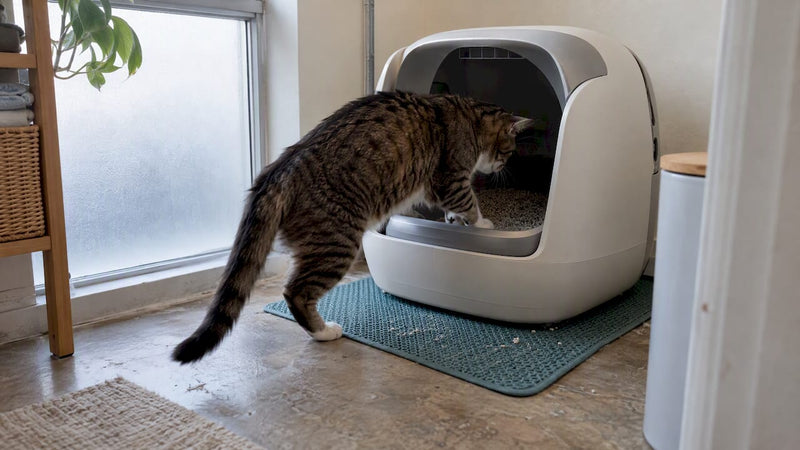
Most automatic litter boxes cost between $150 and $700 upfront, and owners typically spend an additional $20–$50 per month on consumables like proprietary litter, sealed waste bags, carbon filters, and replacement parts, according to U.S. market data from IndexBox. That monthly figure adds up fast. A mid-range unit with moderate consumable costs totals several hundred dollars more over three years. A premium connected model with higher consumable costs results in an even larger total cost over the same period.
The cost drivers worth watching from the start:
- Proprietary litter or crystal litter required by some models (often $25–$40/bag)
- Sealed waste drawer liners or bags that need replacing every 1–3 weeks
- Carbon or HEPA filters for odor control, typically replaced monthly or quarterly
- Replacement sensors, motors, or rake modules as the unit ages
- Optional app subscription plans offered by some manufacturers
The hardware price is just the entry fee. The consumables are where the real automatic litter box cost lives over time.
Key Takeaways
Calculating the three-year total cost of ownership, not just the upfront price, is the single most important step any cat owner can take before buying an automatic litter box.
PointDetailsUpfront price rangeAutomatic litter boxes typically cost $150–$700, split across budget, mid-range, and premium tiers.Monthly consumable costBudget $20–$50/month for litter, bags, filters, and parts, depending on cat count and model type.Three-year math mattersUse: Initial price + (36 × monthly consumables) + $90 in parts to compare models honestly.Proprietary litter adds upModels requiring proprietary litter can cost $150–$300 more per year than compatible-litter units.The Meow Picks curated optionsBrowse the litter box collection at The Meow Picks for vetted mid-range and premium options with transparent consumable pricing.
Table of Contents
- How much does an automatic litter box cost by price tier?
- What are the ongoing costs of owning an automatic litter box?
- Three-year cost scenarios: what does ownership actually look like?
- What features and household factors push the price higher?
- Are automatic litter boxes worth the cost?
- How can you save money on an automatic litter box?
- How to choose and budget for an automatic litter box
- Our honest take on automatic litter box value
- The Meow Picks curated litter boxes and designer cat goods
- Sources
How much does an automatic litter box cost by price tier?
Self-cleaning litter boxes fall into three clear price bands, each with a distinct set of features and trade-offs. CNN Underscored’s 2026 testing roundup found retail prices ranging from $199 to $799 across major outlets, with significant variation in what you actually get at each level.
Budget tier: lower-priced units
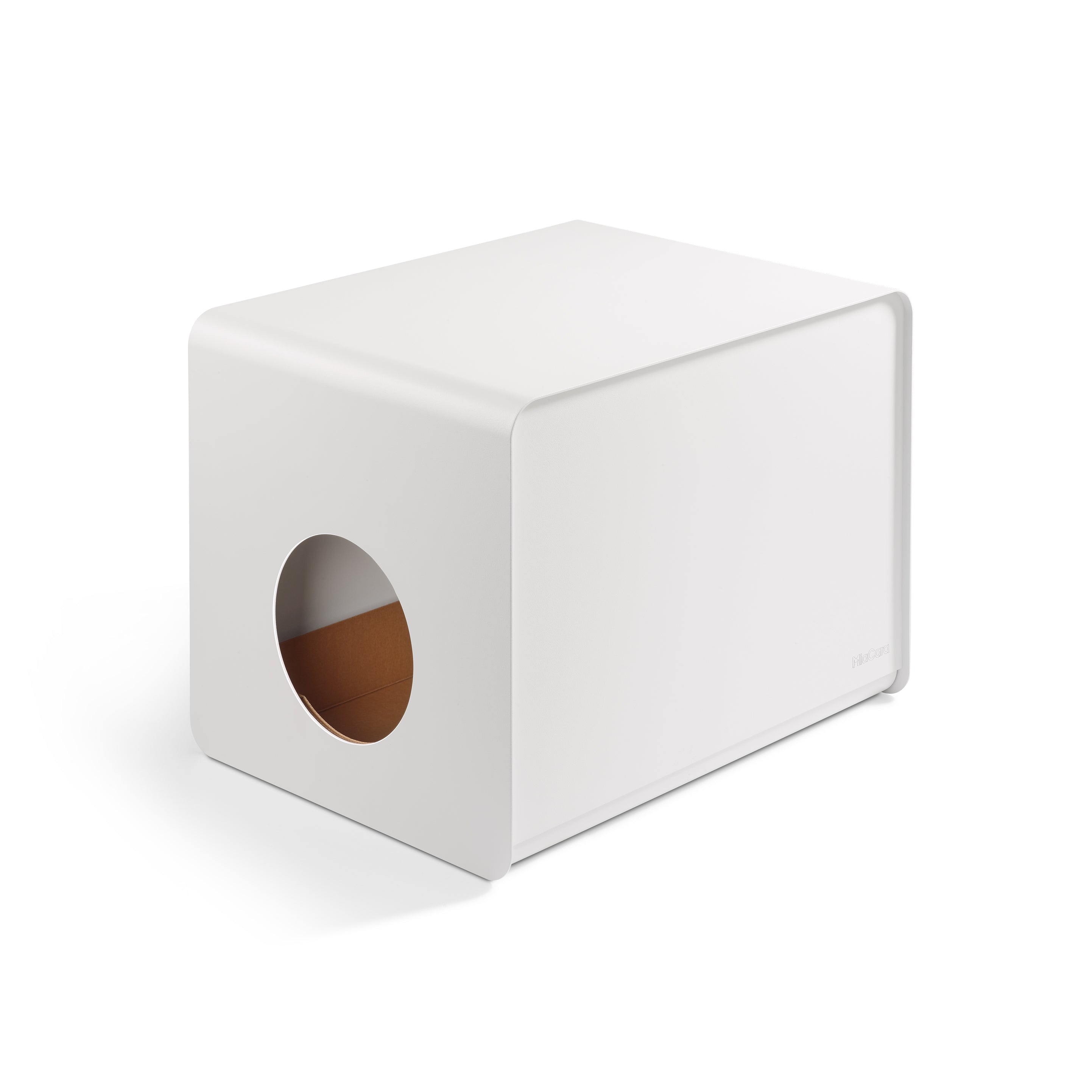
Units in this range typically use a simple rotating drum or raking mechanism to separate waste from clean litter. You get basic automation, no app connectivity, and usually no health monitoring. The litter area tends to be smaller, and many of these models work with standard clumping litter, which keeps ongoing costs lower. Build quality is functional rather than refined.
- A basic rake-style unit priced around $180 handles one cat reliably and accepts most clumping litters.
- A rotating globe model at roughly $220 offers a more enclosed design and better odor containment than an open rake.
- Some entry-level models around $200 include a simple waste drawer but no sealed bags, which cuts consumable costs noticeably.
The trade-off at this tier is reliability. Cheaper or poorly designed automatic boxes can require more maintenance and may not deliver a truly scoop-free experience, according to hands-on testing at Pet-Happy.
Mid-range tier: $250–$500
This is where you start seeing app connectivity, weight sensors, and more durable materials. Litter areas are generally larger, which matters for cat acceptance. Some models in this band use proprietary crystal litter or sealed waste bags, so check consumable costs before committing.
- A connected globe-style unit around $300 offers app-based cycle tracking and works with standard clumping litter.
- A multi-cat capable model priced near $400 includes a larger chamber, odor-sealing drawer, and basic health monitoring.
- A design-forward enclosed unit at roughly $450 balances aesthetics with function, often using compatible non-proprietary litter.
Premium tier: higher-priced units
Consumer Reports testing found that premium automatic boxes delivering strong convenience often had significant footprint and litter-compatibility limits. At this level, you get full app control, weight and health monitoring, multi-cat profiles, and premium materials. A premium connected model priced around $700 is the ceiling for most buyers.
Pro Tip: Before buying any unit, search the manufacturer’s website for the consumable store. Add up 12 months of bags, litter, and filters. That number tells you more about the true self-cleaning litter box price than the hardware tag does.
What are the ongoing costs of owning an automatic litter box?
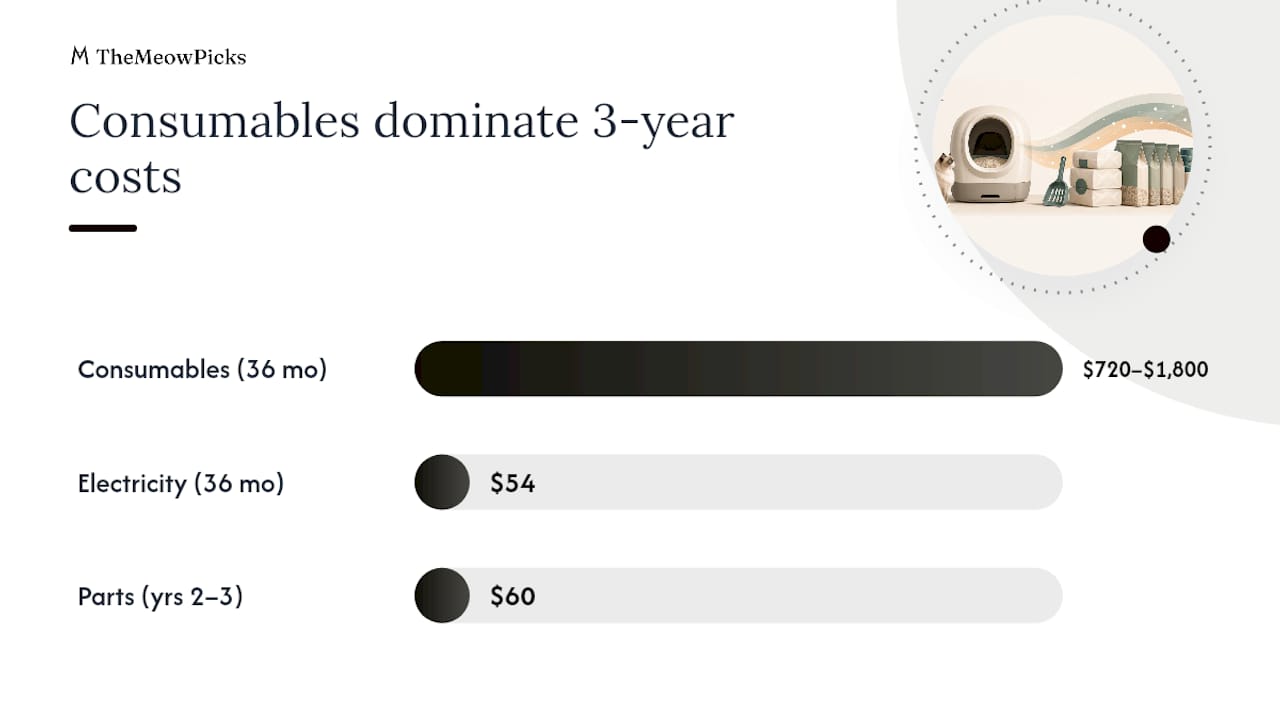
The recurring expenses are what most buyers underestimate. U.S. market analysis shows that consumables typically run $20–$50 per month and often exceed the hardware margin over a three-year ownership cycle. For a multi-cat household using proprietary supplies, that upper end is easy to hit.
Monthly costs typically include:
- Litter: Standard clumping litter costs $15–$25/month for one cat. Proprietary crystal or silica litter required by some models runs $25–$40/month or more.
- Sealed waste bags or liners: Models with odor-sealing drawers use proprietary bags, typically $10–$20/month depending on how often the drawer fills.
- Carbon or odor filters: Usually $5–$15/month when averaged across a quarterly replacement schedule.
- Electricity: Minimal for most units, generally under $2/month at average U.S. rates.
- Replacement parts: Sensors, rakes, and motors occasionally fail. Budget $20–$50/year for parts on older units.
- Optional subscription plans: Some manufacturers offer consumable subscriptions at $20–$40/month, which can save 10–15% versus buying individually.
Manufacturer-supplied consumable subscriptions are a common revenue model in this category. Checking subscription pricing when evaluating affordability is worth doing before you buy, not after.
Pro Tip: If a model requires proprietary litter, calculate the annual litter cost alone before comparing it to a model that accepts standard clumping litter. The litter savings over three years can easily offset a $100–$150 higher upfront price on a compatible unit.
Three-year cost scenarios: what does ownership actually look like?
Industry experts note that ignoring three-year consumable costs can distort perceived value between units with different upfront costs. The three scenarios below show how the numbers play out across different household types.
Assumptions used:
- Electricity estimated at $1.50/month per unit.
- Replacement parts estimated conservatively at $30/year after year one.
- Litter costs reflect one cat for Scenario A, two cats for Scenarios B and C.
- Consumable costs are mid-range estimates within the $20–$50/month band.
A few things stand out when you look at these numbers side by side. The budget unit looks affordable but its total cost over three years comes closer to mid-range options that offer better features. The premium unit’s consumable costs over three years can significantly exceed the initial hardware price.
To adapt these numbers for your household: multiply your estimated monthly consumable cost by 36, add the hardware price, and add $30/year for parts. That formula gives you a working three-year estimate you can compare across any models you are considering.
What features and household factors push the price higher?
Several specific factors move a unit from one price band to the next, and knowing them helps you avoid paying for features you do not need.
Feature-driven price drivers:
- Sifting mechanism type: Rotating globe and conveyor-belt designs cost more to manufacture than simple rake systems, and that cost passes to you.
- App connectivity and health sensors: Hands-on reviewers note that app-connected features and health-monitoring sensors increase price but may offer marginal value for many owners. Weight tracking and usage logs are genuinely useful for multi-cat households; for a single healthy cat, they are optional.
- Build materials and enclosure quality: Odor-sealing enclosures with carbon-lined chambers and ABS plastic construction cost more than open-top designs.
- Size and multi-cat capacity: Larger chambers that comfortably fit cats over 15 lbs or handle two cats simultaneously carry a price premium of $100–$200 over single-cat models.
- Warranty and service plans: Units with two-year warranties and responsive customer support tend to sit at the mid-range and premium tiers.
Household needs that increase cost:
- More cats mean more frequent waste cycles, faster filter and bag consumption, and a need for larger litter areas.
- Larger cats need bigger chambers, which narrows your options and raises the price floor.
- Tight spaces or odor-sensitive homes may require premium enclosure designs that cost more upfront but reduce ongoing odor management.
Supply-chain factors also play a role. Import tariffs and international shipping costs have kept prices on some models higher than their feature sets alone would justify, particularly for units manufactured overseas and sold through U.S. retailers.
Are automatic litter boxes worth the cost?
For the right household, yes. For others, the math does not work out. The honest answer depends on your specific situation.
They tend to be worth it when:
- You have two or more cats and scooping twice daily is genuinely disruptive to your routine.
- Someone in the household has mobility limitations that make bending and scooping difficult.
- You travel regularly and want to extend the time between sitter visits.
- Odor control is a priority and your current setup is not managing it well.
They may not be worth it when:
- You have one cat and a consistent scooping routine already in place.
- Your cat is finicky about new equipment. Cat acceptance varies widely, and a technically advanced unit is useless if your cat refuses to use it.
- Your budget is tight and the consumable costs would strain monthly expenses.
Wirecutter’s testing is direct on this: if you are willing to pay hundreds, an automatic litter box can keep litter fresher and reduce daily scooping, but these units cost more, are harder to deep-clean, and often have smaller usable litter areas than a standard tray. That smaller litter area is a real concern for larger cats or cats that like to dig.
Review platforms also surface recurring complaints about noisy operation, litter scattering, and unclear return policies. Checking independent user reviews and verifying a seller’s return policy before buying an expensive unit is a practical step, not an optional one.
How can you save money on an automatic litter box?
There are real ways to reduce the cost of self-cleaning litter box ownership without giving up the convenience entirely.
Lower-cost alternatives worth considering:
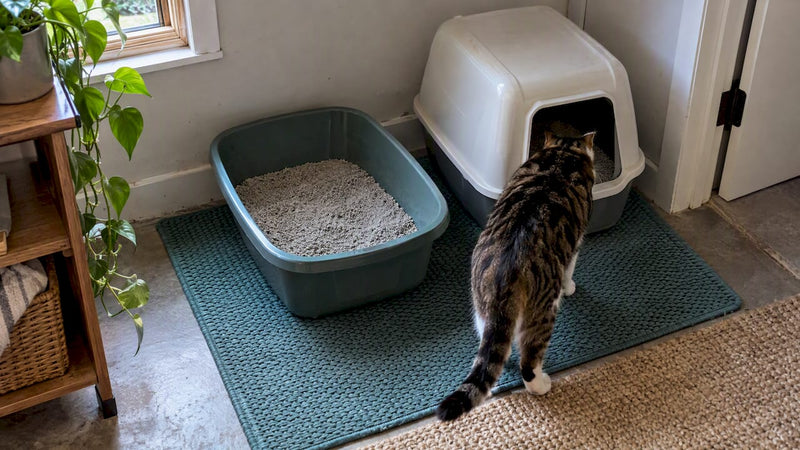
- A high-quality sifting litter pan ($20–$40) cuts scooping time significantly with no ongoing consumable cost beyond litter.
- A covered high-sided box with a good carbon filter ($30–$60) handles odor well for single-cat households.
- These options trade automation for simplicity, but they are genuinely effective for owners who do not need full hands-off operation.
Savings tactics for automatic box buyers:
- Watch for seasonal sales around Black Friday and Prime Day, when prices on mid-range and premium units often drop $50–$150.
- Consider refurbished or open-box units from manufacturer-certified programs. Wirecutter recommends refurbished and lower-consumable models as budget-friendly alternatives worth prioritizing.
- Choose models that accept standard clumping litter over proprietary crystal or silica litter wherever possible. The annual savings can reach $150–$300.
- Buy filters and bags in bulk packs rather than single-unit replacements. Most manufacturers offer 3-month or 6-month supply bundles at a lower per-unit cost.
- Treat a manufacturer subscription as part of the product price and compare the three-year subscription cost to the hardware price difference between models.
Pro Tip: Check the return policy and trial period before purchasing any unit over $300. Some manufacturers offer 30-day or even 90-day home trials. A generous trial period signals confidence in the product and protects you if your cat refuses to use it.
How to choose and budget for an automatic litter box
Working through a short checklist before you buy saves you from expensive surprises later.
- Define your household needs. How many cats? What size? Do any have mobility or health issues that make litter box monitoring valuable?
- Set a firm upfront budget. Decide the maximum you will spend on hardware before you start browsing. This prevents feature creep from pulling you into a higher tier than you need.
- Estimate your monthly consumable cost. Find the manufacturer’s consumable store and price out 12 months of litter, bags, and filters for your cat count.
- Measure your space and check outlet access. Automatic units need a nearby outlet and more floor space than a standard tray. Size and footprint considerations matter especially for larger cats.
- Check warranty length and parts availability. A one-year warranty on a $600 unit is a red flag. Look for two years minimum and confirm replacement parts are available to purchase separately.
- Calculate your three-year total. Use this formula: Initial price + (36 × monthly consumables) + $90 in parts = three-year cost. Compare that number across the models you are considering, not just the sticker price.
Red flags to watch for:
- Proprietary consumables with no third-party alternatives and high monthly costs
- No stated return policy or a restocking fee above 15%
- Customer support that is only available by email with no phone or chat option
- Subscription plans that auto-renew with no easy cancellation
Pro Tip: If two models are within $100 of each other on hardware price but one uses proprietary litter and the other accepts standard clumping litter, the compatible model is almost always cheaper over three years. Run the math before deciding.
Our honest take on automatic litter box value
At The Meow Picks, we spend a lot of time thinking about which products genuinely improve life for cats and their owners, and which ones just look good in a product photo. Automatic litter boxes sit in an interesting middle ground. The convenience is real, especially for multi-cat households or owners with physical limitations. But the category also has more than its share of units that promise hands-free operation and deliver something closer to “hands-less-often” operation.
What we look for when curating litter boxes for our marketplace is straightforward: does it work reliably with litter types most owners already use, is the footprint realistic for a home (not just a showroom), and are the consumable costs transparent and reasonable? A beautifully designed unit that locks you into $50/month in proprietary supplies is not a good deal, no matter how elegant it looks. We also think the three-year cost calculation is the single most useful thing a buyer can do before purchasing, and we wish more product pages made that math easy to find.
Every purchase at The Meow Picks supports cat rescue organizations, which means your decision to invest in a better litter setup does a little good beyond your own home.
The Meow Picks curated litter boxes and designer cat goods
If you have done the math and you are ready to shop, The Meow Picks makes it easier to find litter boxes and accessories that are both functional and genuinely well-designed. Our curated litter box collection includes options across the mid-range and premium tiers, with consumable pricing and compatibility details on each product page so you can run your own three-year estimate before buying.
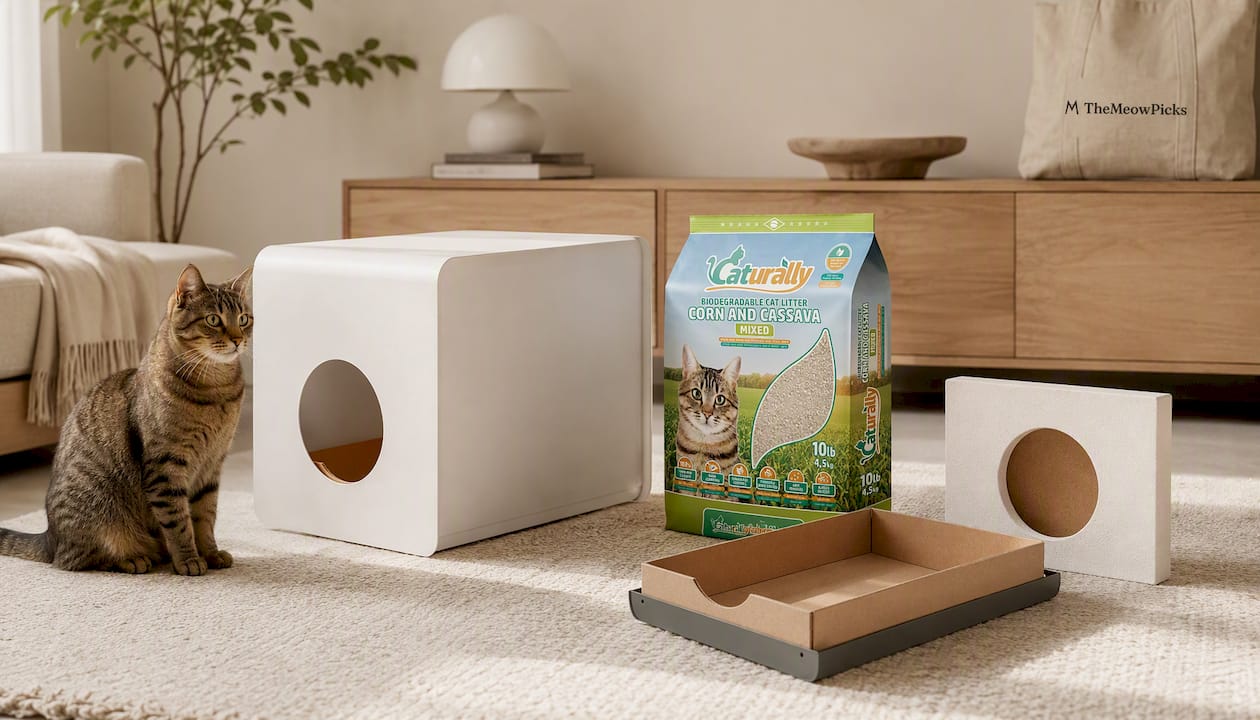
Beyond litter boxes, we carry designer cat goods from independent makers that complement a modern home. The Apawtment Cat House is a favorite for owners who want a stylish, enclosed resting space that fits naturally alongside a litter setup. The Torre Cat Tower offers a design-forward climbing and perching option that does not look like standard pet store equipment. For cats who love a cozy retreat, the Perla Cat Cave is a beautifully crafted hideaway from independent makers. A portion of every order supports cat rescue, so shopping here means something beyond the purchase itself. Browse the litter box collection and check the product pages for consumable details before you decide.
Sources
- Automatic Cat Litter Box Market in the United States | Report - IndexBox - Prices, Size, Forecast, and Insights
- The 4 Best Automatic Cat Litter Boxes of 2026 | Reviews by Wirecutter
- Best cat litter boxes of 2026, according to Consumer Reports
- Cats
- Are Automatic Cat Litter Boxes Any Good? — Pet-Happy
- The best self-cleaning litter boxes in 2026: Tested and reviewed | CNN Underscored