Cat Scratching Walls
Cat Scratching Walls
Cat scratching walls is normal behavior, not a sign something is wrong with your cat. The fastest fix is a two-part move: clean the scratched spot to remove built-up scent, then set up an attractive vertical scratching surface in that exact spot. Cats scratch to mark territory, shed dead nail sheaths, stretch, or burn off stress, and once you know which reason fits your cat, the steps below get specific fast.
TL;DR:
- Cats scratch walls primarily for territory marking, shedding dead nails, stretching, or as a response to boredom and stress, especially near litter boxes or windows.
- To stop wall scratching, thoroughly clean the area, place a matching vertical scratcher at that exact spot, and temporarily deter the behavior with tape or foil.
- Using a wall-mounted scratcher that matches your cat’s scratching preference and placing it at the same height and location increases adoption and redirects behavior effectively.
- Short-term wall protection options include double-sided tape, aluminum foil, or motion deterrents, while repairs involve simple sanding and painting for surface scratches.
- Consistent play before bedtime and feeding a small meal afterward can help reduce nighttime wall scratching caused by cats’ crepuscular activity.
Table of Contents
- Why Do Cats Scratch Walls?
- Why Do Cats Scratch Walls at Night?
- How to Stop Cats Scratching Walls: A Step-By-Step Plan
- Choosing and Placing a Wall-Friendly Scratcher
- Protecting and Repairing Walls While You Retrain Your Cat
- How The Meow Picks’ Wall-Mounted Scratchers Fit This Plan
- Common Owner Mistakes and Quick Wins
- Stop the Scratching, Save the Wall
- Sources
- FAQ
Why Do Cats Scratch Walls?
A cat clawing at drywall usually falls into one of four categories, and figuring out which one applies changes how you fix it.
Scratching deposits scent from glands in your cat’s paws, a behavior rooted in territory marking that also leaves visible claw marks as a signal to other animals. That’s why cats often return to the exact same spot on a wall or corner. Cats also scratch to shed the dead outer layers of their claw sheaths, the same reason a scratching post looks shredded after a few months. Scratching also happens mid-stretch, especially after a nap, when a cat wants a tall, stable surface to pull its whole body against. Walls, corners, and doorframes qualify because they don’t wobble the way a flimsy post might.
Boredom and stress round out the list. A cat with pent-up energy or anxiety, particularly one confined to a small apartment or facing changes like a new pet, may scratch walls as an outlet.
Common triggers to watch for:
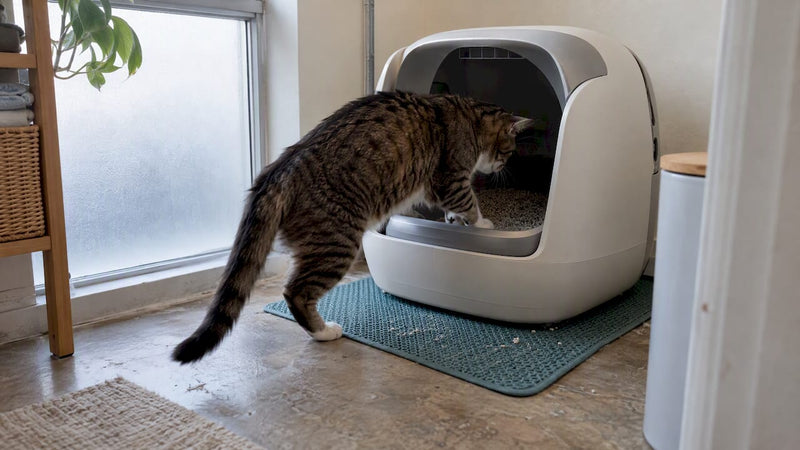
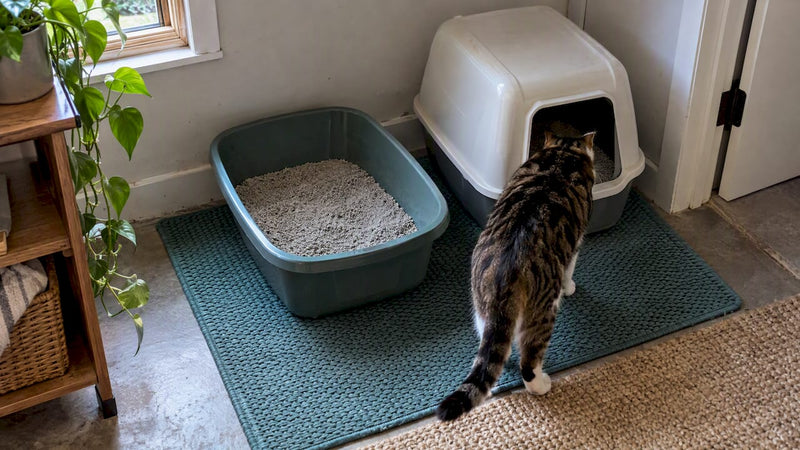
- Scratching near litter box entrances or exits (territory anxiety)
- Repeated marks in room corners (visual and scent marking overlap)
- Scratching right after waking up (post-stretch behavior)
- Increased scratching during a move, new pet, or schedule change (stress)
- Scratching near windows facing outdoor cats (perceived territorial threat)
Corners get hit often because they offer two flat surfaces at once, letting a cat stretch and mark in one motion. Litter box proximity matters too. If the scratching happens near the box, your cat may be expressing stress about that space rather than the wall itself.
Why Do Cats Scratch Walls at Night?
Cats are crepuscular, meaning their energy peaks at dawn and dusk rather than deep in the night or the middle of the day. That biological clock explains why your cat seems to save its wall-scratching sessions for right as you’re falling asleep or right before your alarm goes off.
Two things reliably shift that pattern:
- A 10 to 15 minute high-energy play session right before your own bedtime, using a wand toy or laser pointer, burns off the energy that would otherwise go into the wall.
- Feeding a small meal after that play session mimics a natural hunt-eat-sleep cycle, which tends to settle cats down faster than feeding earlier in the evening.
If nighttime scratching continues despite consistent play and feeding changes, or shows up alongside yowling, pacing, or appetite shifts, treat it as a signal to loop in your vet rather than a training problem.
How to Stop Cats Scratching Walls: A Step-By-Step Plan
Random fixes rarely work because they skip steps. Follow this order and you’re addressing the scent, the redirection, and the deterrent all at once instead of fighting the behavior on just one front.
- Clean the scratched area thoroughly. Wash the wall with soap and water first, then follow with an enzymatic odor neutralizer. Regular cleaners won’t fully break down the scent your cat’s interdigital glands left behind, and pheromones can soak into porous paint and wallpaper, which is why cats keep returning to the same six inches of wall. A synthetic pheromone spray or diffuser applied afterward helps break the cycle further.
- Place a matching scratcher in that exact spot. This is the step people skip, and it’s the one that actually works. Cornell’s feline behavior researchers note that redirecting to a surface matching the cat’s texture and orientation preference beats punishment every time. If your cat scratches vertically, give it a vertical surface, not a flat mat on the floor.
- Make the wall temporarily unappealing. Double-sided tape, aluminum foil, or a battery-powered motion deterrent placed directly on the damaged area gives the cat a reason to avoid it while the new scratcher earns its trust. None of these cause pain. They just feel or sound odd enough that most cats stop trying.
- Sweeten the redirection. Rub catnip into the new scratcher, toss a few treats at its base, or dangle a toy near it so your cat associates the new surface with something good, not just an obstacle.
- Keep up with nail maintenance. Trimming your cat’s nails every two to three weeks reduces the damage even when scratching happens, and nail caps are a reasonable option for cats who tolerate them.
- Leave the worn scratcher alone. Once your cat adopts the new surface, resist the urge to replace it the moment it looks shredded. A well-used post carries familiar scent that reinforces the habit; swapping it too soon can send your cat right back to the wall.
Pro Tip: Skip the spray bottle. Squirting water or yelling at your cat when it scratches doesn’t teach it to stop, it just teaches it to scratch when you’re not in the room, which makes the behavior harder to catch and correct.
For more on redirecting scratching away from furniture using the same core logic, The Meow Picks has a detailed breakdown worth reading alongside this plan. And if your cat’s damage extends beyond walls, the same humane deterrent tactics work on upholstered furniture too.
Choosing and Placing a Wall-Friendly Scratcher
Watching your cat scratch, even for a day or two, tells you almost everything you need to know before buying anything. Note whether it drags its claws up and down (vertical preference) or side to side (horizontal), and whether it favors rough texture or something softer.
Material matters more than most owners expect:
- Sisal rope or fabric holds up best for heavy scratchers and gives claws something to hook into and pull against, which satisfies the marking instinct more fully than smoother materials.
- Cardboard is affordable and often preferred by cats who like a shredding sensation, though it wears out faster and needs replacing more often.
- Carpet feels familiar to cats already scratching carpeted stairs or baseboards, but it can be harder to tell apart from your actual carpet, which sometimes confuses the message.
- Wood offers a firm, textured surface some cats prefer, particularly for wall-mounted setups where stability matters most.
Height and stability decide whether a scratcher gets used at all. A post or panel needs to be tall enough for your cat to fully extend its body while standing on hind legs, and it needs to be anchored well enough that it doesn’t wobble or tip during an aggressive scratch session. A loose, shaky scratcher fails the exact test a wall passes: it doesn’t move.
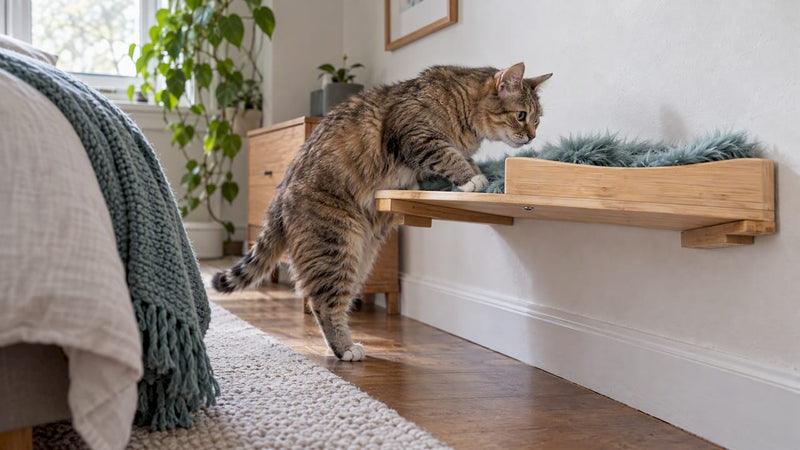
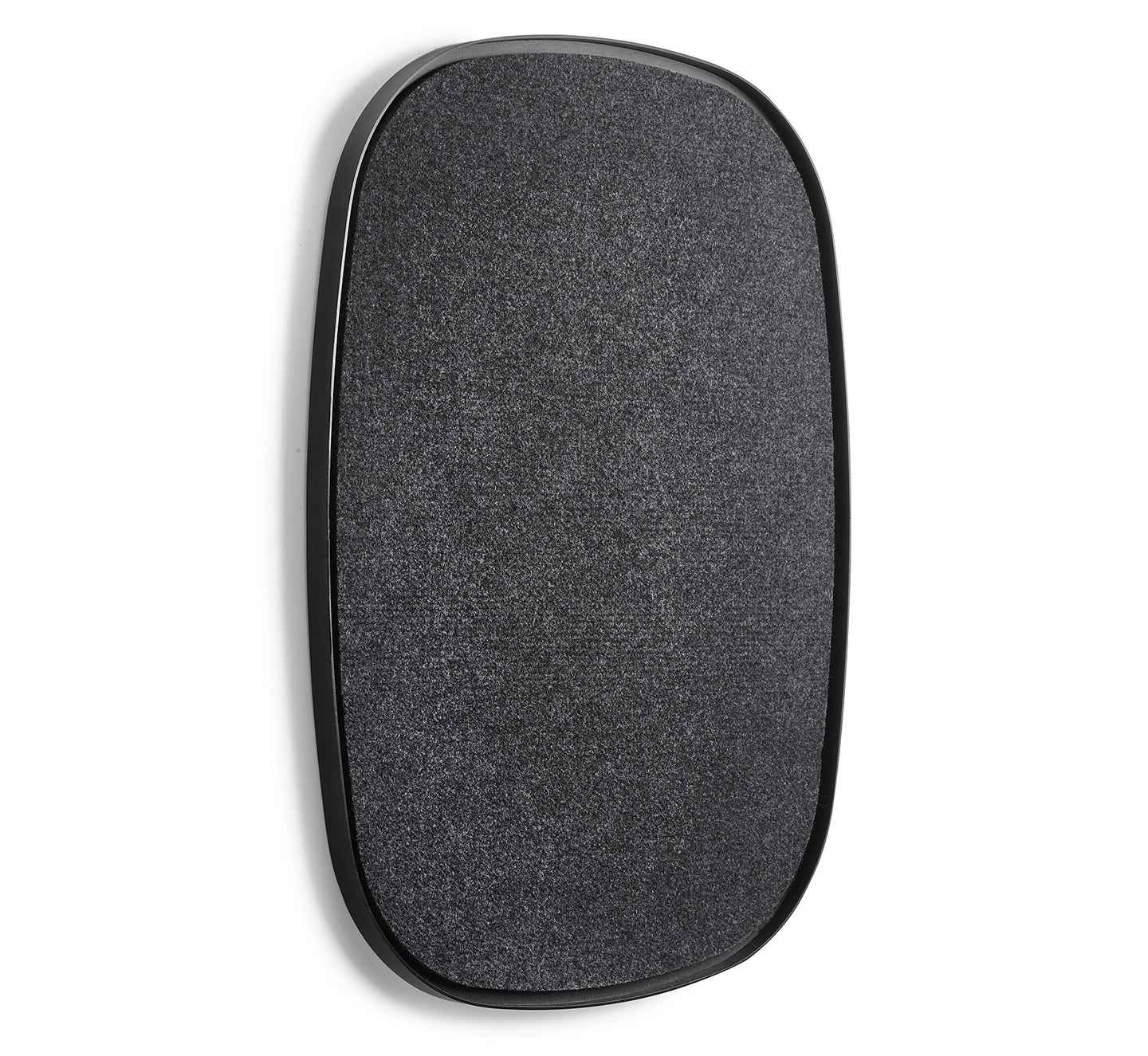
Wall-mounted panels solve the stability problem by design, since they’re secured directly into a stud or anchor rather than relying on a heavy base. Matching the grain orientation of the new scratcher to how your cat naturally scratches is the single biggest factor in getting it adopted quickly. Place it at the same height and, ideally, the same wall your cat already targets. Keeping at least one scratcher near sleeping areas also helps intercept the post-nap stretch-and-scratch routine before it hits your drywall. For more on how post height affects adoption, The Meow Picks covers the specifics here, and if your cat prefers an angled surface over straight vertical, these designer angled scratchers are worth a look too.
Protecting and Repairing Walls While You Retrain Your Cat
Retraining takes days to a few weeks depending on the cat, so you need a way to stop the damage from spreading in the meantime.
Short-term coverings buy you that time:
- Double-sided tape or peel-and-stick clear shields over the damaged area
- Aluminum foil taped loosely over the spot
- Corner guards for cats who target room corners specifically
- Motion-activated air sprays or small alarms placed near the wall, which startle without touching the cat
Once the new scratcher has taken over and the wall damage has stopped growing, repair is usually simple. Shallow surface scratches often just need a light sanding and a dab of matching touch-up paint. Deeper gouges into drywall may need spackling compound, a light sand once dry, and a fresh coat of paint over the patch. If the damage runs through several layers of drywall or affects a rental property, it’s worth checking your lease terms or renter’s insurance policy before doing repairs yourself, since some landlords require professional patching for anything beyond cosmetic marks.
How The Meow Picks’ Wall-Mounted Scratchers Fit This Plan
Once you know your cat’s texture and height preferences, the actual product choice gets easy. The Meow Picks carries three wall-mounted options built specifically for the redirection strategy covered above.
- The Wall Mounted Cat Climbing Pole gives cats a tall, sisal-wrapped vertical surface, ideal for cats who need a full-body stretch and prefer climbing along with scratching.
- The Parete Scratching Panel mounts flat against the wall at your cat’s preferred scratching height, a strong fit for cats who scratch a specific flat section of drywall.
- The Pannello Scratch Panel works well for corner-focused scratchers or as a second panel in a multi-cat household.
Mount any of these at the same height and location where your cat already scratches, following the placement guidance covered earlier. Rub in a little catnip, add the pheromone spray step from the cleaning process, and reward early use with treats. Check the product page for exact mounting hardware and weight specs before installing, since anchoring requirements vary by wall type. If you’d rather compare a rope-based option from a different maker, Litter Room also carries sisal scratchers worth a look.
Common Owner Mistakes and Quick Wins
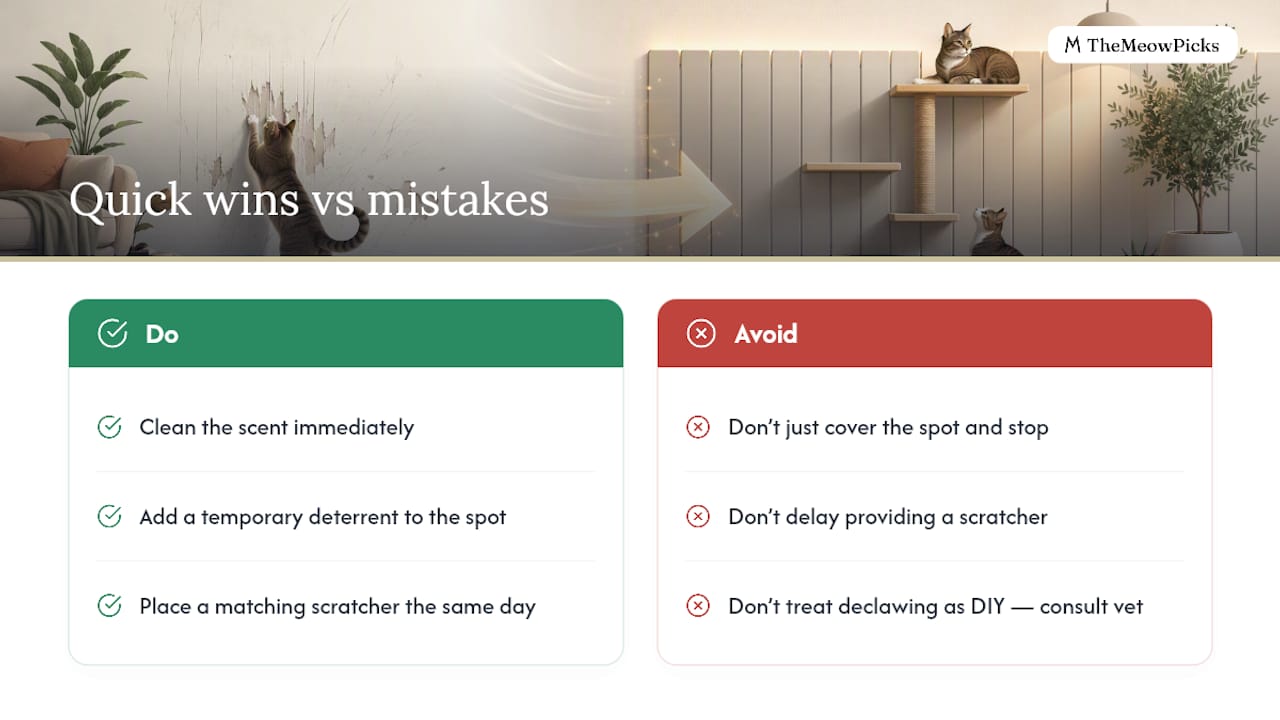
Most owners stop at step one: they cover the scratched wall and call it done. That fails almost every time, because covering the spot without giving your cat somewhere else to scratch just relocates the problem to the next patch of open wall.
Three quick wins fix that. Clean the scent immediately, add a temporary deterrent to the exact spot, and place a matching scratcher there within the same day, not a week later. On declawing: don’t treat it as a DIY decision. It’s a surgical procedure that removes part of the toe bone, and it doesn’t eliminate the instinct to scratch. Talk to your vet before considering it, and treat it strictly as a last resort.
— TheMeowPicks Team
Stop the Scratching, Save the Wall
Wall-mounted scratchers designed for cats who prefer drywall as a scratching surface offer an alternative to generic posts that might not match your cat’s habits.
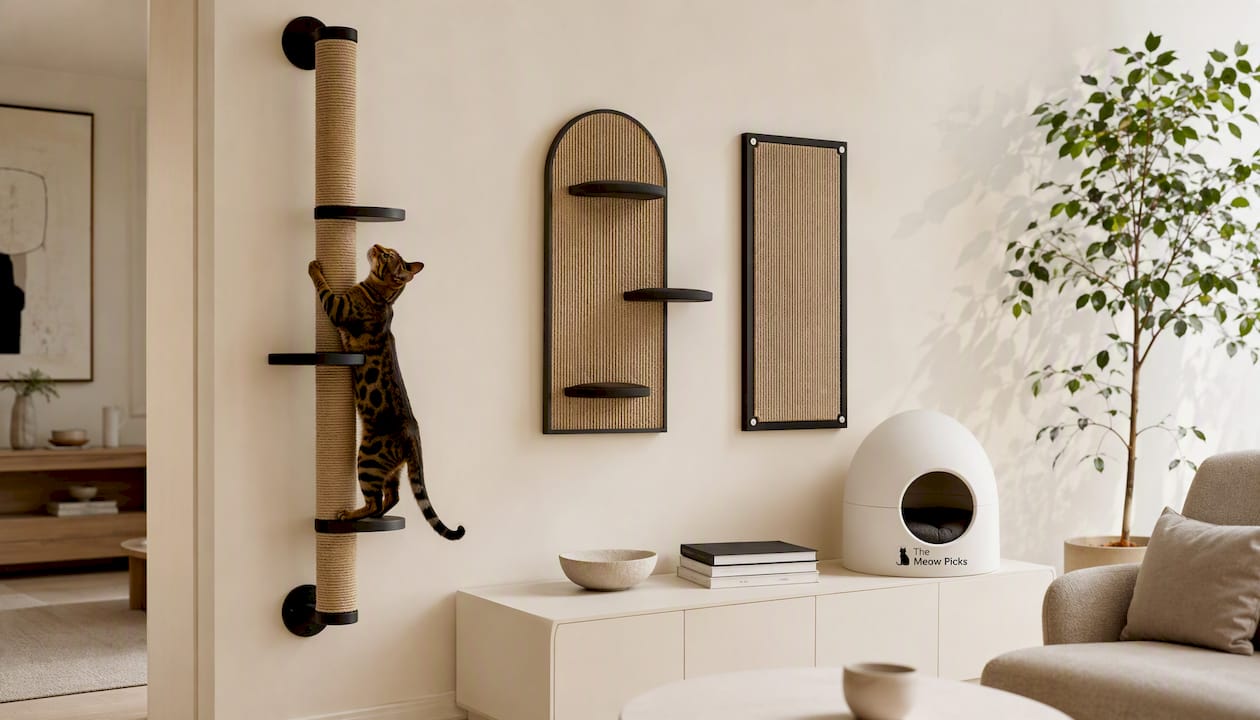
If your cat stretches tall and climbs, the Wall Mounted Cat Climbing Pole gives it height and sisal texture in one mount. If it scratches a flat section of wall at a specific height, the Parete Scratching Panel drops right into that spot. If corners are the target, the Pannello Scratch Panel handles that angle without the bulk of a full cat tree. Check each product page for mounting hardware and dimensions before you install, then pair it with the cleaning and pheromone steps from earlier in this guide. Browse the full lineup at The Meow Picks and pick the panel that matches how your cat already scratches.
Sources
- Destructive Scratching | ASPCA
- Scratching behavior in cats: Various approaches | VCA Animal Hospitals
- Feline behavior problems: Destructive behavior | Cornell Feline Health Center
- Why Is My Cat Scratching the Walls? 6 Likely Reasons - Catster
FAQ
How Do I Get My Cat to Stop Clawing Walls?
Clean the scratched area to remove built-up scent, place a matching vertical scratcher in that exact spot, and add a temporary deterrent like tape or foil while your cat adjusts.
Is My Cat Bored If It Scratches Walls?
Boredom is one common cause, especially if the scratching increases during long stretches alone; regular play sessions and enrichment toys often reduce it within a couple weeks.
How Can I Fix Cat Scratches on My Walls?
Light surface scratches usually need only sanding and touch-up paint, while deeper gouges require spackling compound, sanding once dry, and a fresh paint coat over the patch.
Why Does My Cat Scratch the Corners of the Walls?
Corners offer two flat surfaces at once, letting a cat mark and stretch in a single motion, which makes them a common target compared to a flat wall section.
What’s the Fastest Way to Protect a Wall From Scratching?
A wall-mounted panel like the Parete Scratching Panel placed directly over the damaged spot gives your cat an appealing alternative while protecting the wall underneath.