The fastest way to redirect cat scratching is to give your cat a matching surface where the damage is already happening, then guide unwanted scratching toward it with a neutral interruption and an immediate reward. Scratching itself is a normal, healthy behavior cats need for stretching and claw care, according to International Cat Care, so the goal is never to stop it. The goal is to move it somewhere you don’t mind.
TL;DR:
- Matching the scratcher’s orientation and material to your cat’s scratching style increases the likelihood of long-term success.
- Using neutral sounds to interrupt scratching and immediately rewarding interactions with the new scratcher strengthens the habit faster.
- Covering damaged areas with tape or fabric and placing effective scratchers nearby helps protect furniture during training.
- Nail caps and trimming manage damage temporarily but do not address the underlying scratching behavior, which requires consistent training.
- Full behavioral redirection typically takes a few weeks to months, especially if stress or inappropriate materials delay the habit change.
Table of Contents
- Quick Action Steps to Redirect Cat Scratching Right Now
- Choosing a Scratcher Your Cat Will Actually Use
- Training Your Cat With Neutral Interruption and Rewards
- Protecting Furniture While Retraining Happens
- Nail Caps, Trimming, and Pheromones: What They Actually Fix
- How Long Redirection Actually Takes
- Why We Design Around the Scratch, Not Against It
- Shop Scratchers Built for the Way Your Cat Actually Scratches
- Sources
- FAQ
Quick Action Steps to Redirect Cat Scratching Right Now
If your couch already has a shredded corner, you need a plan for the next 72 hours, not next month. Work through these steps in order.
- Cover the damaged spot with a folded blanket, a towel, or cat-safe double-sided tape so the surface stops feeling satisfying to claw.
- Place a scratcher directly in front of that same spot. Orientation matters here, so match it to what your cat already prefers.
- When you catch your cat mid-scratch on furniture, interrupt with a neutral sound (a clap, a “hey”) rather than yelling, then guide them to the new scratcher.
- Reward any contact with the scratcher immediately with a treat or a few seconds of play.
- Consider soft nail caps or a fresh trim in the short term to limit damage while the new habit forms.
This sequence buys you time. It won’t fix the behavior permanently on its own, but it stops the bleeding while you set up the real training routine below.
Choosing a Scratcher Your Cat Will Actually Use
Watch your cat for a day or two before you buy anything. Does she stretch tall and rake downward on the sofa arm, or does she dig low and horizontal on the rug? Ohio State University’s Indoor Pet Initiative recommends matching the replacement surface to that observed preference, both in orientation and material.
Material matters as much as shape:
- Sisal rope or woven sisal holds up to heavy use and gives cats the resistance they seem to crave, which is why it shows up on most vertical posts.
- Corrugated cardboard is cheap, replaceable, and great for cats who scratch low and horizontal.
- Natural wood offers a middle ground, durable and often better looking in a living room than rope or cardboard alone.
Skip carpet-covered posts if the problem is your carpet or upholstery. Cats often can’t tell the difference between the “approved” carpeted post and the actual carpet, so you’re working against yourself from the start.
Height and stability decide whether a post gets used at all. A wobbly, undersized post fails because your cat can’t get a full-body stretch or enough resistance to satisfy the urge, a point PreventiveVet makes repeatedly in its guidance on furniture protection. For a cat that scratches vertically near a doorway or sofa arm, a tall, weighted post like the Torre Cat Tower gives the height and base weight that flimsy posts lack. For horizontal scratchers, a flat option like the wooden cat scratcher set sits low to the ground where cats already prefer to dig.
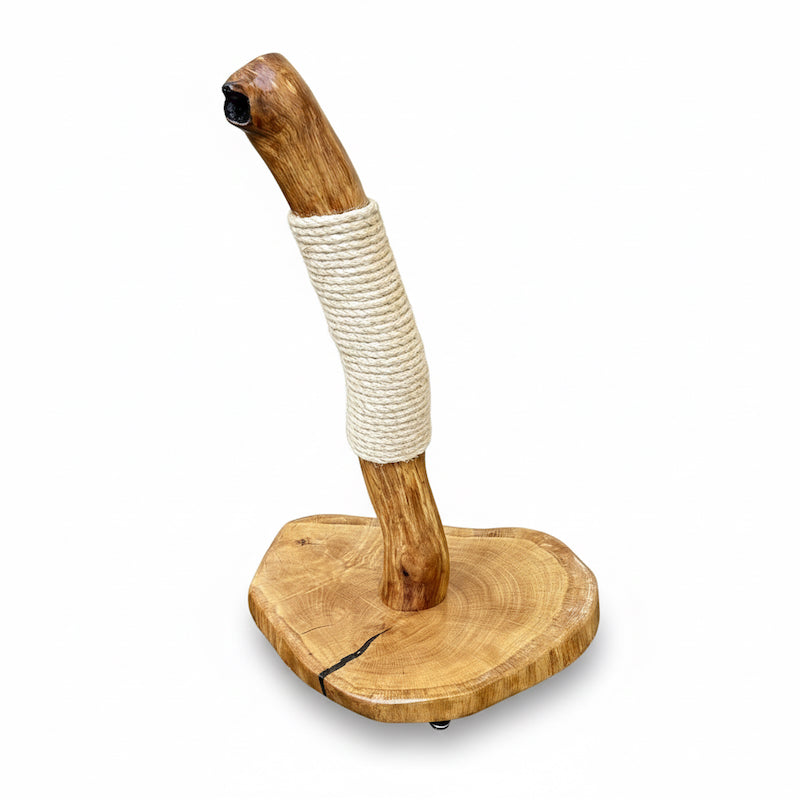
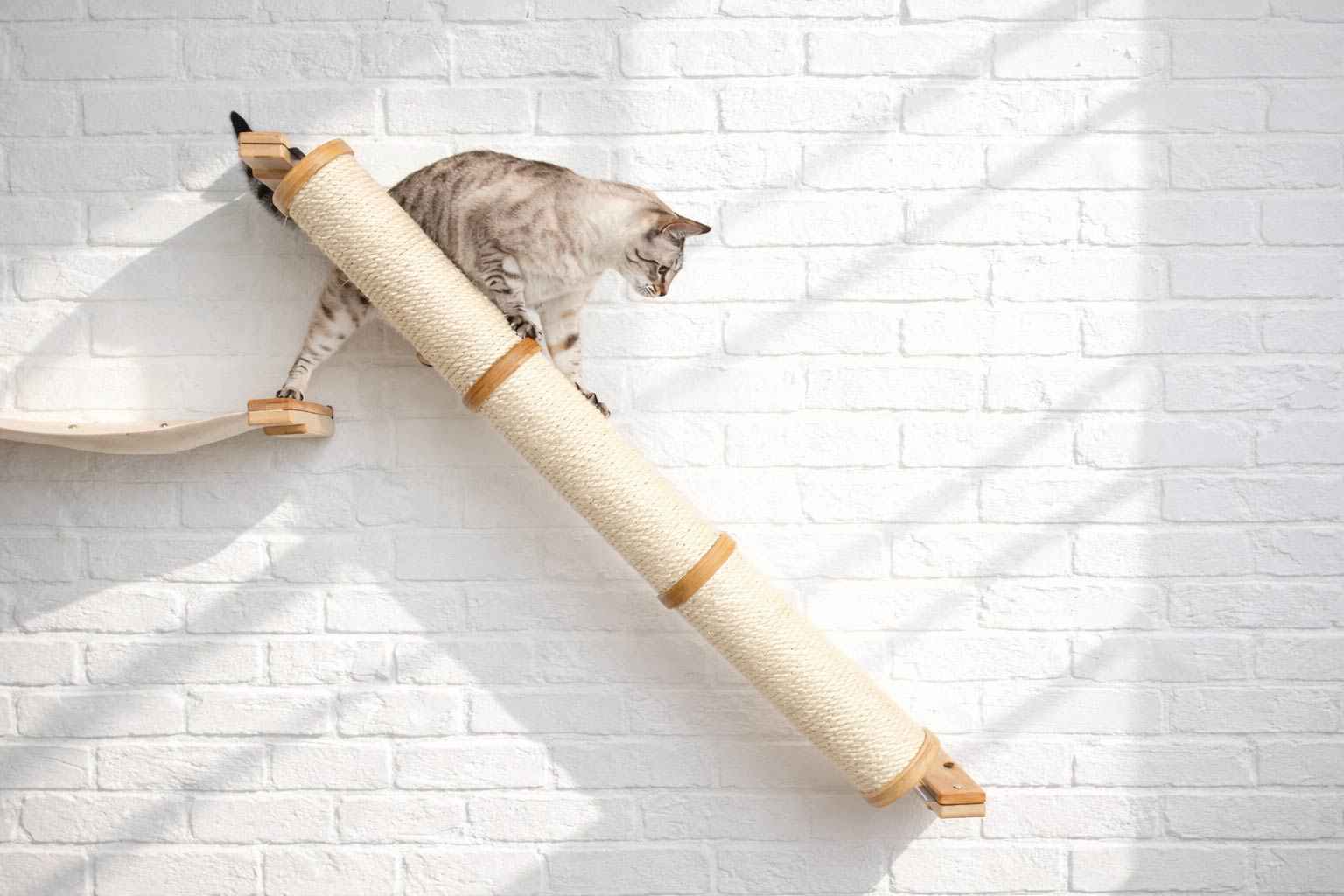
Wall-mounted or angled setups work well in small apartments where floor space is tight. An angled cat scratcher can catch a cat who scratches at a diagonal, something straight vertical posts often miss entirely.
Pro Tip: Put the new scratcher within arm’s reach of your cat’s favorite nap spot. Cats tend to scratch right after waking up, so a post near the bed gets discovered faster than one tucked in a hallway.
Training Your Cat With Neutral Interruption and Rewards
Yelling at a cat mid-scratch rarely works, and it can backfire. VCA Animal Hospitals notes that punishment can increase fear or, in some cats, reinforce attention-seeking scratching since even negative attention is still attention. A neutral interruption avoids that trap entirely.
Here’s the sequence that works:
- Interrupt with something non-threatening, a clap or a short “hey,” nothing aimed at the cat directly.
- Calmly guide or carry your cat to the approved scratcher the moment the interruption lands.
- Reward instantly with a treat, a favorite toy, or genuine praise the second a paw touches the new surface.
- Repeat consistently every single time, since inconsistency is what makes this training drag on.
Attractants speed things up. Catnip or silvervine rubbed into a new post, or a pheromone spray applied nearby, can pull a cat toward the scratcher faster, though PreventiveVet is clear that these work best as a support tool rather than a fix on their own. Once your cat is scratching the post reliably for a week or two, start fading the treats down to occasional praise. The habit should hold on its own by then.
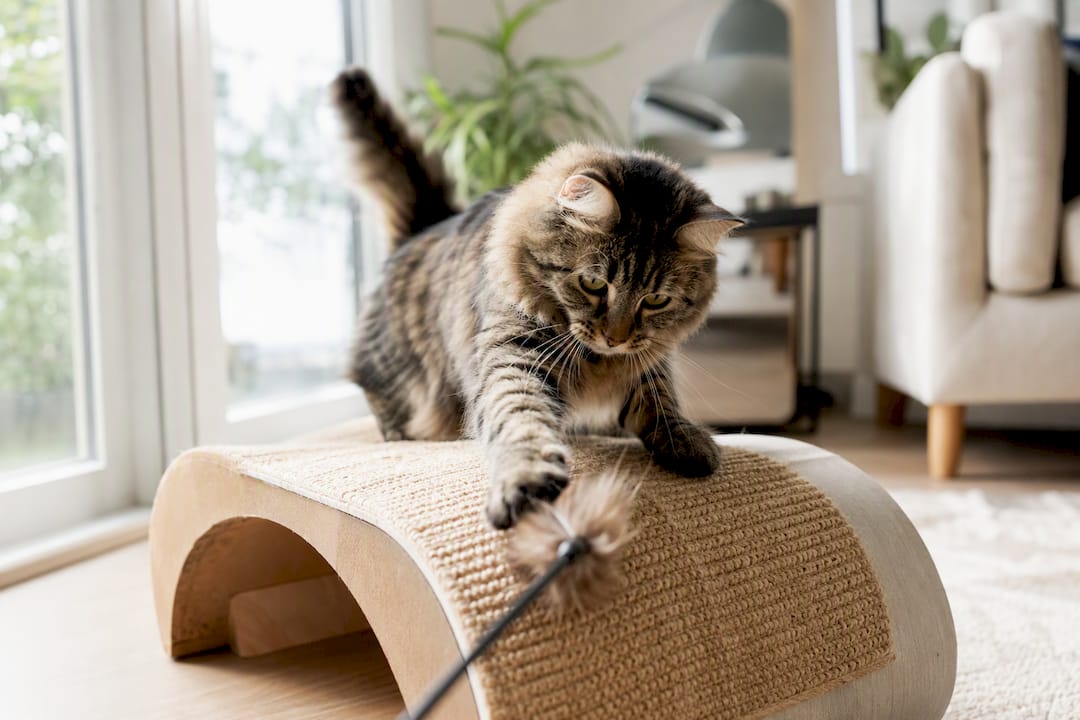
Pro Tip: Drag a wand toy across the new scratcher’s surface during play. The clawing motion during a game often transfers directly into independent scratching later.
Protecting Furniture While Retraining Happens
Training takes time, so your furniture needs a shield in the meantime. Combine an unattractive surface with an attractive alternative right next to it, and the redirection tends to happen faster than either tactic alone.
- Drape a blanket, towel, or fitted furniture cover over the damaged area.
- Apply cat-safe double-sided tape, sold under names like Sticky Paws, directly to the scratched spot.
- Try aluminum foil temporarily on flat surfaces cats tend to avoid the texture.
- Push the new scratcher tight against the covered area so it’s the first thing your cat’s paw meets.
- Block full access to a badly damaged piece with a chair or plant stand if covering isn’t practical.
Skip shock mats, spike mats, and squirt bottles. The ASPCA and most veterinary sources agree that fear-based deterrents create anxiety without teaching the cat what to do instead, which means you’re left with a scared cat and the same scratching problem. For a deeper walkthrough on protecting a specific piece like a sofa, see how to stop your cat scratching the sofa without a battle.
Nail Caps, Trimming, and Pheromones: What They Actually Fix
These tools manage damage, they don’t replace training. Soft nail caps blunt the claws but need reapplication every few weeks as nails grow, a maintenance cycle ASPCA flags clearly.
- Nail caps: management only, glued on and needing regular replacement as claws grow out.
- Trimming: safe when done carefully with cat-specific clippers; ask a groomer or vet to show you the first time.
- Pheromone diffusers or sprays: supportive, not standalone, and results vary cat to cat.
- Training: the only category here that changes the underlying behavior long term.
How Long Redirection Actually Takes
Most owners notice a shift within a few weeks of consistent redirection, though a fully settled new habit often takes a couple of months. Multi-cat households, recent moves, or the wrong scratcher material can all slow that timeline down.
Watch for red flags along the way. Sudden marking-style scratching, aggression, or damage that continues despite correct placement and consistent training can point to stress or an underlying medical issue, and VCA Animal Hospitals recommends a vet visit when that happens rather than waiting it out.
Why We Design Around the Scratch, Not Against It
Most scratcher posts fail for one boring reason: they’re ugly, so owners hide them in a closet where the cat never finds them. The Meow Picks curates pieces built on the same fundamentals veterinary sources recommend, a stable base, real height, honest materials, but designed to sit in the middle of your living room instead of apologizing for existing there. A scratcher your cat can’t find doesn’t redirect anything.
— TheMeowPicks Team
Shop Scratchers Built for the Way Your Cat Actually Scratches
Once you know whether your cat scratches vertically, horizontally, or at an angle, matching the product gets simple. Cats who stretch tall against doorframes or sofa arms usually do best with a weighted vertical piece like the Torre Cat Tower, which gives enough height for a full stretch and enough base weight to stay put under real pressure. Cats who dig low and horizontal, often on rugs or low furniture edges, tend to switch over faster to a flat option like the wooden cat scratcher set.

If your cat splits time between resting and scratching in the same corner, a combined piece solves both at once. The Perla Cat Cave puts a scratching surface right next to a resting spot, which matters since cats tend to scratch immediately after waking up. Tight on floor space? The Cat Wall Maze mounts to a wall and still gives vertical scratching room without eating up square footage, and The Grotto offers a shorter, stable base for smaller homes where a full tower isn’t practical.
Measure the damaged spot, match the orientation your cat already prefers, and place the new piece exactly where the old scratching happened. Browse the full scratcher and cat tree lineup at The Meow Picks and get the replacement in place before your cat finds a new target.
Sources
- Destructive Scratching, ASPCA
- Scratching behavior in cats, VCA Animal Hospitals
- Scratching on furniture and carpets, International Cat Care
- Indoor cat needs: scratching, Ohio State University Indoor Pet Initiative
- Why cats scratch and how to protect your furniture, PreventiveVet
FAQ
How do I stop my cat from excessive scratching?
Provide a scratcher that matches your cat’s preferred orientation and material, place it at the damaged spot, and reward every use. Excessive or sudden scratching can also signal stress, so rule that out if the behavior spikes suddenly.
What is the 3-3-3 rule for cats?
The 3-3-3 rule is general advice for newly adopted cats settling into a home (3 days to decompress, 3 weeks to learn routines, 3 months to feel fully secure). It isn’t a scratching-specific rule, but a cat still adjusting under that timeline may scratch more from stress until they settle.
What is “Tarzan syndrome” in cats?
This isn’t a recognized veterinary term with a fixed definition, but it’s sometimes used informally to describe cats who climb and claw at curtains or tall furniture the way they would a scratching post. If your cat does this, redirect that vertical climbing energy toward a tall, stable post like the Torre Cat Tower.
Do cats apologize for scratching?
Cats don’t display remorse the way people do. What can look like an apology, head bumps or sitting close after a scratching incident, is more likely normal affectionate behavior unrelated to the scratching itself.
How long does it take to redirect cat scratching successfully?
Most owners see noticeable improvement within a few weeks of consistent redirection, with the habit fully settling over a couple of months. Stress, multiple cats, or a mismatched scratcher material can slow that timeline considerably.