A well-chosen automatic feeder is a genuine help for most healthy adult cats. It supports portion control and steady meal timing in ways a busy household can’t always manage by hand. The catch: it never replaces your eyes on your cat. AAHA feeding guidance backs scheduled, measured meals, but a feeder can’t tell you your cat skipped breakfast, and mechanical failures, multi-cat squabbles, and spoiled wet food are real risks worth planning around.
TL;DR:
- Automatic feeders are best for maintaining portion control and consistent meal times, especially in households with irregular schedules or multiple cats.
- Mechanical failures such as jams, power outages, or Wi-Fi issues can cause missed meals, posing a risk for reliant cats and highlighting the need for regular testing.
- They cannot detect health issues or appetite loss, so owners must still monitor their cats’ eating behaviors and overall health regularly.
- Wet food compatibility is limited, requiring special features like refrigeration or ice packs to prevent spoilage in most models.
- Proper setup includes training cats, using microchip access, and clean, durable materials, as well as daily checks for leftovers, other health indicators, and battery or Wi-Fi connectivity.
Table of Contents
- Automatic Feeder Pros and Cons for Portion Control and Schedules
- Automatic Feeder Pros and Cons: The Failure Modes Owners Miss
- Which Cats and Households Should Actually Use One
- Automatic Feeder Comparison: Features That Actually Matter
- Daily Habits That Keep a Feeder Safe to Rely On
- Where The Meow Picks Fits Into the Decision
- Build a Feeding Setup Your Cat Won’t Outsmart
- Sources
- FAQ
Automatic Feeder Pros and Cons for Portion Control and Schedules
The strongest case for an automatic feeder comes down to two things: measured food and consistent timing. Both matter more than most owners realize.
AAHA’s nutrition and weight management guidelines support splitting a cat’s daily ration into smaller, scheduled meals instead of one or two large ones, as detailed in this helpful Dog Feeding Schedule Planner. Most feeders let you program anywhere from a couple of meals up to a dozen small ones a day, which mirrors how cats naturally graze rather than gorge.
Here’s what that translates to in a real household:
- Weight management gets easier. Pre-measured portions stop the “just a little extra” habit that adds up over months.
- Small, frequent meals match natural grazing behavior, which can reduce overeating and the vomiting that sometimes follows a too-fast meal.
- Early-morning begging drops off when a cat learns food shows up on a schedule instead of by yowling at 5 a.m.
- Shift workers and irregular schedules stop being a feeding problem, since most units offer app-based scheduling you can adjust remotely.
- Microchip or RFID-locked feeders help in multi-cat homes by letting only the registered cat trigger the dispenser, though this needs supervised training to work reliably.
None of this makes a feeder a luxury gadget. Used correctly, it’s closer to a feeding tool your vet would recognize and approve of.
Automatic Feeder Pros and Cons: The Failure Modes Owners Miss
The drawbacks aren’t hypothetical. They show up in specific, predictable ways, and most trace back to the same root problem: a feeder is a machine, and machines fail.
VCA’s guidance on automatic feeders flags drained batteries, motor jams, and power or Wi-Fi outages as common causes of missed meals. If your feeder loses power overnight and you’re traveling, your cat goes hungry until you find out. That’s the core tension: convenience during normal weeks, real risk during the exact weeks you’re relying on it most.
A subtler problem is what feeders hide. Vet-reviewed sources note that a feeder can’t tell you a cat stopped eating, and appetite loss is often the first visible sign of illness in cats. If nobody’s checking the bowl daily, a health problem can go unnoticed for days.
Other issues worth knowing before you buy:
- Multi-cat homes see competition and tailgating, where a bolder cat blocks a shyer one from the dispenser or follows through a microchip-locked door meant for someone else.
- Open-bowl hopper feeders fail fast in multi-cat households since there’s no way to stop one cat from eating another’s portion.
- Wet food spoils quickly without refrigeration, and most feeders are built for dry kibble; wet-compatible models need ice packs or built-in cooling, which means more parts to clean.
- Cats can tip lightweight units, fish kibble out with a paw, or startle at the dispensing noise, especially in the first week of use.
Which Cats and Households Should Actually Use One
Not every cat is a good candidate, and not every household setup makes a feeder safe to rely on. Run through this before you buy:
- Confirm your cat is a healthy adult with no medical condition requiring close monitoring of food intake. Diabetic cats, cats recovering from illness, and cats on prescription diets need a human tracking every bite, not a machine.
- Rule out kittens. They need frequent, monitored feeding and shouldn’t be left to a programmed schedule alone.
- Check your feeder’s compatibility if you feed wet food. If your cat doesn’t eat dry kibble, most standard feeders won’t solve your scheduling problem.
- Flag any history of food guarding or resource aggression in multi-cat homes, since a feeder won’t referee a fight over the dispenser.
- Set up separate feeding stations for each cat, and use microchip or RFID access if you’re worried about one cat eating another’s portion. Training takes about one to two weeks of supervised sessions before it works reliably.
- Talk to your vet first if your cat has any ongoing health issue, since appetite tracking matters more for those cats than for a healthy adult.
- Trial the feeder for a full week while you’re home before trusting it during travel or a long workday.
Automatic Feeder Comparison: Features That Actually Matter
Once you’ve decided a feeder fits your household, the real question becomes which features matter and which are just marketing. Independent testing coverage makes a strong case that dispensing reliability and battery backup should outrank cameras and app extras every time.
- Dispensing accuracy and portion granularity, meaning the unit can split a daily ration into several small, precisely measured meals rather than rough estimates.
- Power resilience, ideally a model that runs on both mains power and battery backup, with a low-battery alert built in.
- Food compatibility, since dry-only units are simpler and more reliable, while wet-compatible models need refrigeration or ice packs to prevent spoilage.
- Access control for multi-cat homes, weighing the tradeoffs between collar tags, microchip readers, and app-only scheduling. None of these are foolproof against a determined tailgating cat.
- Materials that clean easily, like stainless or powder-coated porcelain bowls that go in the dishwasher rather than plastic components that trap odor.
Pro Tip: Before you compare app features or camera add-ons, run a two-day dress rehearsal: cut the power, drain the battery on purpose, and check whether your cat actually approaches and uses the feeder. If it fails that test, no smart feature makes up for it.
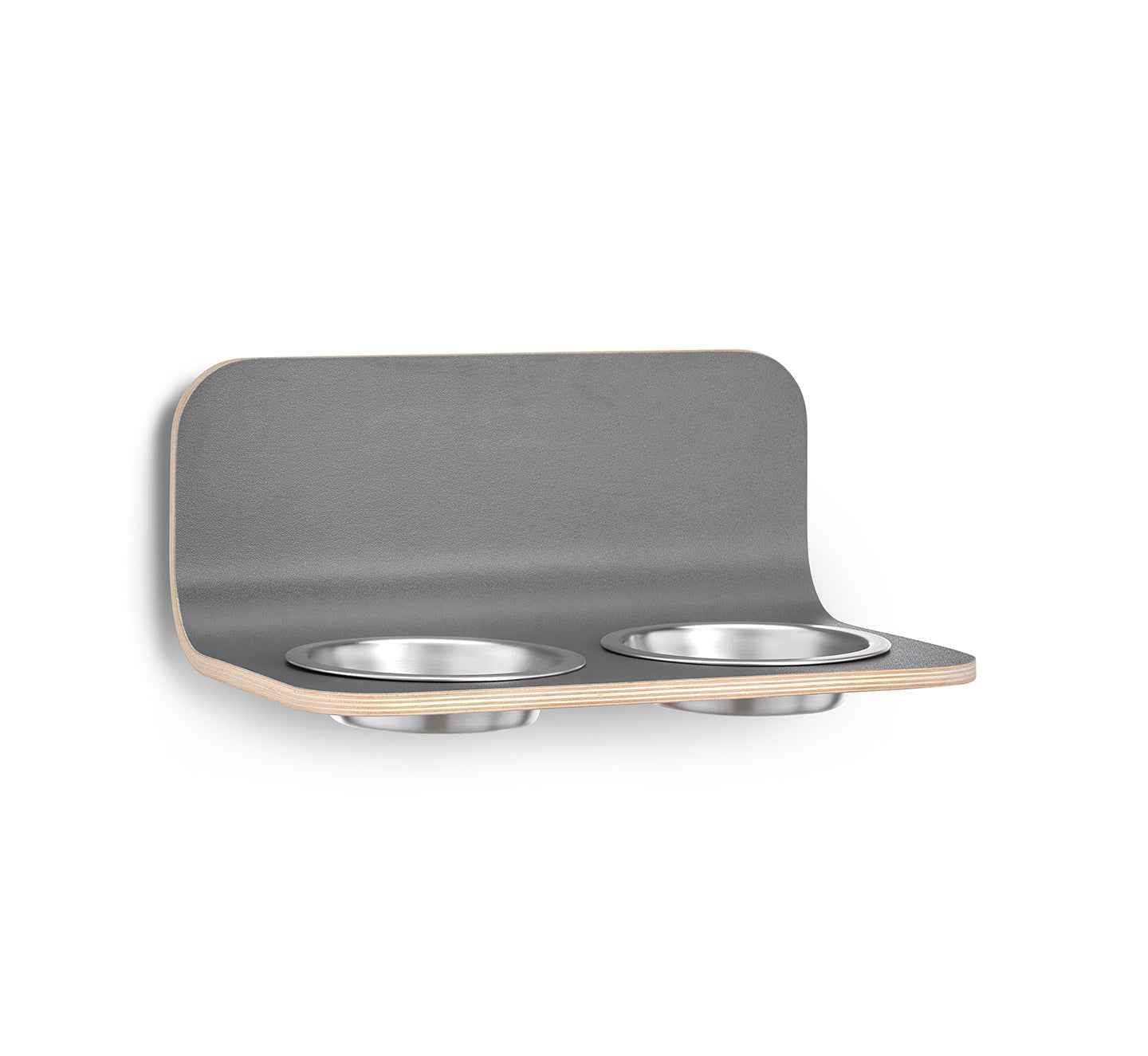
Pairing a feeder with a stable, well-designed elevated feeding station also solves a problem feeders don’t: cats knocking bowls around or straining their necks to eat from a low unit.
Daily Habits That Keep a Feeder Safe to Rely On
A feeder earns its keep through the boring parts: checking it, cleaning it, and testing it before you actually need it.
- Check daily that your cat ate, not just that the dispenser fired on schedule. Leftover food in the bowl is information.
- Inspect water and litter box use alongside feeding, since appetite, thirst, and litter habits often shift together when something’s wrong.
- Disassemble and wash the hopper and bowl regularly to prevent mold buildup and discourage pests drawn to food residue.
- Test batteries and Wi-Fi connectivity before you travel, not after you’ve already left. A two-day trial run with the power cut on purpose tells you more than any product spec sheet.
- Introduce microchip-access units gradually, letting the registered cat feed while others are distracted, building up to full independence over about a week.
The hard limit here matters: vets generally advise against leaving a cat alone for more than 24 to 48 hours with only a feeder for company. Past that window, book a sitter or arrange a check-in.
Where The Meow Picks Fits Into the Decision
We curate feeders and feeding accessories for reliability and material quality first, because a feeder that jams or a bowl that harbors bacteria defeats the purpose. Our catalog favors easy-clean finishes like powder-coated steel and porcelain over flimsy plastic. If you’re building a feeding setup you can actually trust while you’re at work or away for a weekend, our catalog is a solid place to start looking.
— TheMeowPicks Team
Build a Feeding Setup Your Cat Won’t Outsmart
A feeder solves scheduling and portioning. It doesn’t solve tipping, spills, or a bowl that’s a pain to scrub every night. That’s where the right accessories close the gap.
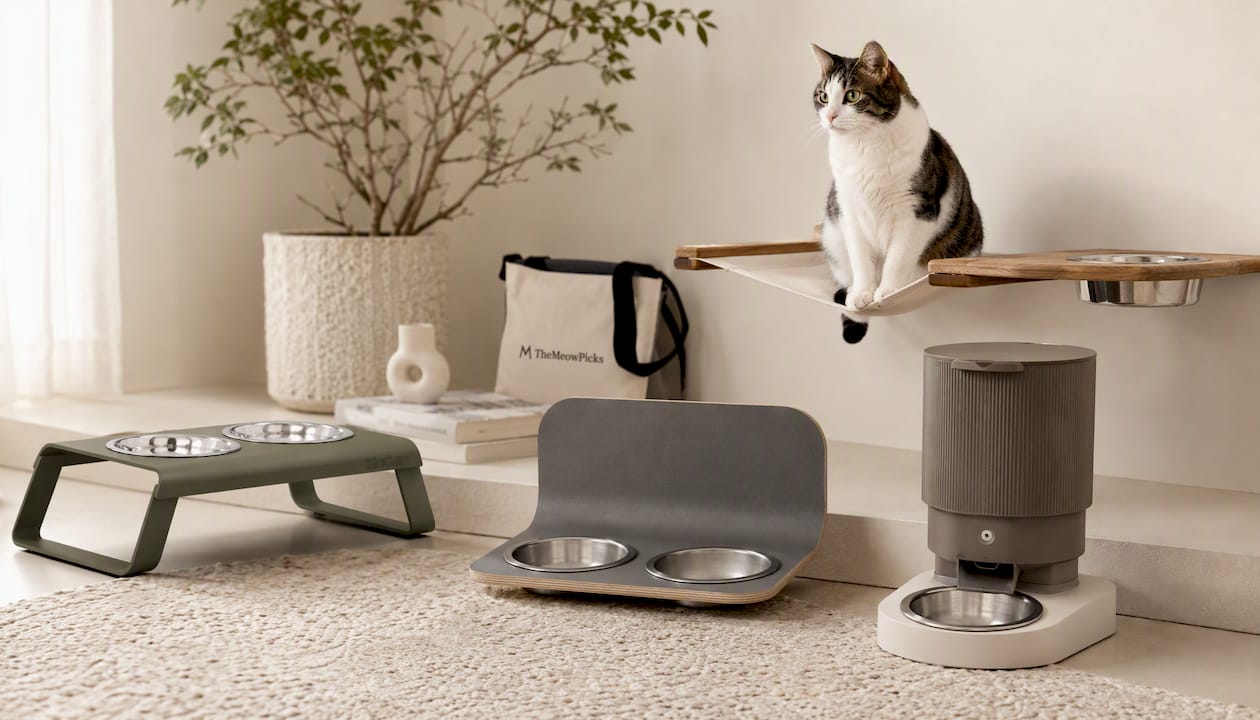
Our Dog Proof Cat Feeder mounts to the wall, which solves the tipping and pest-access problems that come with floor-level units. If easy cleaning is your priority, the Desco Cat Feeder pairs a powder-coated frame with porcelain bowls that wipe clean in seconds instead of trapping oil and odor like plastic does. Either one pairs naturally with an elevated water station to keep your cat’s water fresh and separate from food, cutting down on the bacterial buildup that happens when bowls sit side by side.
Browse the feeder and feeding station collection at The Meow Picks, and remember that a portion of every order goes toward supporting cat rescue work.
Sources
- 2021 AAHA nutrition and weight management guidelines
- Are Automatic Feeders Good for Cats? A Vet-Reviewed Answer
- The pros and cons of automatic feeders (VCA)
- No, You Shouldn’t Just Get an Automatic Pet Feeder and Skip Town | Wirecutter
FAQ
Do vets recommend automatic feeders?
Yes, for most healthy adult cats, vets generally support automatic feeders as a tool for portion control and consistent scheduling, but they stress the feeder is not a substitute for daily observation of appetite and behavior.
What are the downsides of auto feeders?
The main downsides are mechanical failures like jams or dead batteries, hidden illness because feeders can’t track whether a cat actually ate, competition in multi-cat homes, and spoilage risk with wet food.
Can I leave my cat alone for two days with an automatic feeder?
Most veterinary guidance treats 24 to 48 hours as the outer limit for leaving a cat alone with only a feeder, and anything longer needs a sitter or a daily check-in.
How many times a day should you feed your cat with an automatic feeder?
Most programmable feeders let you split a daily ration into anywhere from two to a dozen small meals, and AAHA guidance supports frequent, measured meals over one or two large portions.