Cat Window Perch
Cat Window Perch
For most homes, a heavy-duty suction-cup hammock is the easiest, lowest-damage way to give your cat a window seat, especially if you rent. If you want more style and stability than a suction mount offers, The Meow Picks carries wall-mounted and freestanding pieces like the Torre Cat Tower, the Apawtment Cat House, and The Gardens, each built with removable covers and a sturdy frame so your cat gets a real perch, not a wobble.
TL;DR:
- Wall-mounted shelves or freestanding towers offer more stability and surface area than suction-cup hammocks, which depend on window cleanliness and suction maintenance.
- For renters, avoid drilling or damage-prone mounts by choosing freestanding towers or damage-free suction mounts confirmed safe on painted trim.
- Proper installation involves cleaning surfaces, verifying weight limits, and conducting a wiggle test before letting your cat use the perch regularly.
- Materials like metal frames and removable, washable covers enhance durability and ease of cleaning, especially for larger or heavy cats.
- Regular safety checks, including reseating suction cups and inspecting frame joints, are essential to maintain long-term security of the perch.
Table of Contents
- What Kind of Window Perch Fits Your Cat’s Space?
- How Do You Pick the Right Perch for Your Window?
- How Do You Install a Window Perch Safely?
- Do Materials and Size Actually Matter?
- How Do You Keep a Window Perch Safe Over Time?
- What Independent Makers Bring to a Window Perch
- Shop the Window Perch Picks
- Sources
- FAQ
What Kind of Window Perch Fits Your Cat’s Space?
The catalog tends toward furniture-grade pieces designed to place near a window rather than glass-mounted suction hammocks, and that distinction matters when shopping. A wall-mounted shelf or a freestanding tower gives you more surface area, a sturdier base, and a look that matches your living room, while a suction hammock is cheaper and faster to install but depends entirely on your window glass staying clean and your suction cups staying fresh. Cats value a stable, secure vantage point near a window more than any particular product style, according to certified cat behavior consultant Mikel Delgado, so the mounting method matters less than whether the perch actually holds still once your cat jumps on it.
Here’s a quick look at pieces that work well positioned by a sunny window, wall, or nook.
- Apawtment Cat House: A compact, house-shaped perch suited to a small sunny corner or a wide windowsill area where your cat wants an enclosed lookout rather than an open shelf.
- Torre Cat Tower: A tall freestanding tower for placing beside a window when you want multiple resting levels instead of a single perch.
- Perla Cat Cave: A rounded, cave-style bed for cats who like to tuck in and watch the outside world from a partially hidden spot.
- The Grotto: A short cat tree built for small spaces, a good fit for apartment windows where floor space is tight.
- The Gardens: A modern cat tree styled with plant accents, meant for owners who want the perch to double as living room decor near a bright window.
- Cat Wall Maze: A three-tier wall-mounted maze that works as an alternative to a single window shelf, giving your cat a climbing path toward the light.
Two feeder pieces round out the window-adjacent setup for owners who like to keep food and water near their cat’s favorite lookout without inviting the family dog to steal a bite. The Dog Proof Cat Feeder is wall-mounted and raised, so it stays out of reach of a curious dog while sitting close to a window perch setup. The Desco Cat Feeder, Powder-Coated, Porcelain Bowls pairs powder-coated metal with porcelain bowls, an easy-to-wipe option if you’re placing food near a sill where crumbs and fur tend to collect.
Pro Tip: If your cat is food-motivated, put a feeder within eyesight of the new perch for the first week. Watching a familiar routine happen nearby makes an unfamiliar piece of furniture feel safe faster.
Review roundups covering the broader window-perch category consistently recommend strong suction mounts and removable, machine-washable covers as the two features that separate a good perch from a frustrating one. That’s useful context even when you’re shopping furniture-style options like the ones above: check every listing for whether the cover is removable before you buy, and never assume washability if the product page doesn’t say so.
How Do You Pick the Right Perch for Your Window?
Start with the mount, not the cushion. There are four common approaches, and each one solves a different problem.
- Suction-cup hammock. Mounts directly to clean, smooth glass with heavy-duty cups. Cheapest and fastest to install, but it depends on regular suction maintenance and won’t work on textured or leaded glass.
- Windowsill clamp or latch. Clamps onto the sill itself rather than the glass. More stable than suction on a good sill, but it needs enough sill depth and won’t fit sloped or very narrow ledges.
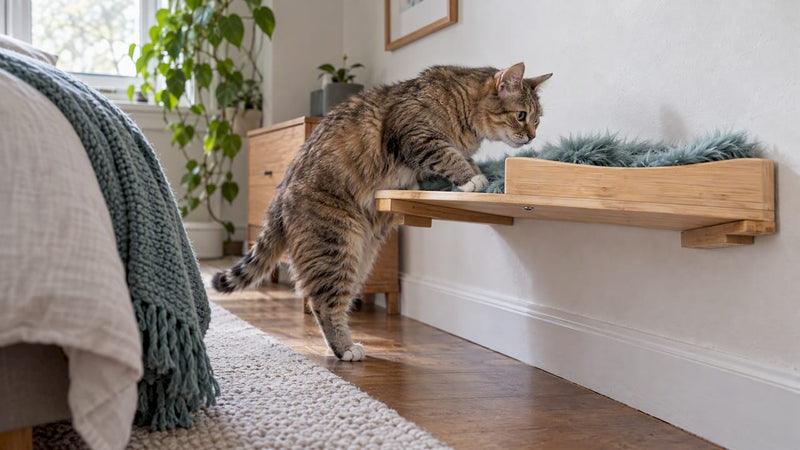
- Wall-mounted shelf. Screwed into wall studs near the window rather than onto the glass or frame. The sturdiest option for heavier cats since it doesn’t rely on suction or clamp tension at all.
- Freestanding tower or cat tree placed beside a window. No mounting required at all, which makes it the easiest for renters who can’t drill or clamp anything. The tradeoff is floor space and a slightly lower vantage point than a wall or glass mount.
Before you buy anything, take a few measurements. Measure the width of clear glass area, because textured, frosted, or divided-pane windows can prevent a secure suction seal, according to product testing on window-mounted sills. Measure sill depth if you’re considering a clamp style, and check whether your window has muntins (the thin dividers that break glass into panes) since most suction and clamp mounts need one continuous flat surface. If you have a screen, note its condition now. A damaged or loose screen isn’t a safety feature, it’s a warning sign.
When comparing specific listings, look at five things side by side: mounting style, bed footprint (how much surface area your cat actually gets), cover material, whether the cover is removable and machine-washable, and any stated suitability for larger cats. Skip anything that doesn’t list a mounting method clearly.
Renters have their own checklist. Favor wall-free options like a freestanding tower, or a suction mount that leaves no marks if the manufacturer confirms it’s damage-free on painted trim. Avoid anything that requires drilling into a leased wall without checking your lease first. And walk away from listings with vague weight guidance. If a product page doesn’t state a weight limit or size range for your cat, don’t guess. A guide focused on large-cat sizing is worth a look before you commit to anything for a cat over 12 pounds.
How Do You Install a Window Perch Safely?
Installation quality matters more than brand name for long-term stability, and Wirecutter’s testing of suction-mounted perches backs that up: multi-cup, industrial-strength suction performed better for bigger cats specifically because owners prepped the glass properly and kept checking the mount over time.
For suction mounts:
- Clean the glass and the suction cups themselves with a damp cloth before mounting; any dust or oil weakens the seal.
- Warm the cups slightly if the manufacturer suggests it, since warmth makes rubber more pliable and improves the seal.
- Recheck suction monthly. Cups lose grip gradually, and a slow leak is invisible until the perch slides.
For wall-mounted shelves:
- Locate a stud rather than relying on drywall anchors alone if your cat is on the heavier side.
- Confirm the bracket is level before adding the cushion or bed insert.
For every mounting style, screens are not part of the plan. A window screen is not built to bear a cat’s weight, and veterinary safety guidance recommends never treating a screen as load-bearing. Cats can push out a screen that isn’t reinforced, so if your perch sits near a screened window, make sure the perch itself, not the screen, is what’s actually holding your cat.
Once anything is mounted, run a simple wiggle test: press down and side to side with your own hand before your cat ever steps on it. If the manufacturer lists a weight limit, treat it as a hard ceiling, not a suggestion. Watch the mount over its first week of real use, since a suction cup or clamp that seemed solid on day one can shift once it’s carrying weight daily.
Pro Tip: Place the perch at a height your cat can reach in one confident jump. If you have a senior cat, add a small step or shelf below it. A guide to shelf spacing for kittens and seniors has specific height suggestions worth checking before you mount anything.
Do Materials and Size Actually Matter?
Frame material sets the ceiling on how much weight and daily use a perch can handle. Metal frames tend to hold up best under repeated jumping, hardwood frames add visual warmth and work well in furniture-style pieces, and molded plastic keeps cost down but can flex under a heavier cat over time. None of these is automatically “the best,” since the right choice depends on your cat’s size and how often the perch gets used.
Cover material affects comfort and cleaning more than durability. Fleece and microsuede are the two most common covers on window perches and cat beds, and review roundups specifically call out removable, machine-washable covers as a top feature to look for. That said, only trust the word “washable” when the product listing itself states so. Don’t assume.
- Check listed bed dimensions against your cat’s stretched-out length, not just their curled-up size.
- For cats over roughly 12 pounds, look specifically for a stated weight guidance on the product page rather than assuming a standard perch will hold them.
- If a listing doesn’t mention weight capacity at all, treat that as a gap to ask about, not a detail to guess at.
- Compare bed footprint (the actual usable surface) rather than the overall product dimensions, since some of that footprint is frame, not resting space.
If you have a large or heavy cat, it’s worth reading a dedicated guide to sizing perches for bigger cats before you buy, since generic sizing advice tends to undersell what a 15 pound cat actually needs.
How Do You Keep a Window Perch Safe Over Time?
A perch that was safe on installation day doesn’t stay that way automatically. Build a short monthly habit around it.
- Check suction cups for firmness and reseat any that feel loose, and wipe down the glass they’re mounted to.
- Inspect frame joints and screws on wall-mounted or freestanding pieces for any give.
- Look over the cover for thinning fabric, exposed seams, or claw damage that could snag.
- Follow the washing instructions printed on the product listing for removable covers; if none are listed, spot-clean only.
- Replace hardware, or the whole perch, if you notice a persistent wobble, a torn cover that won’t hold a repair, or a cracked frame piece.
If your cat is hesitant about a new perch, don’t force it. Place a few treats on the surface, or set it near a window ledge or chair your cat already trusts, and let curiosity do the rest over a few days.
What Independent Makers Bring to a Window Perch
Curation at The Meow Picks starts with the maker, not just the finished product. We look for solid frame materials, thoughtful details like removable covers, and independent designers who put real craft into a category that’s often an afterthought in bigger pet stores. A portion of every order supports cat rescue organizations, which shapes which makers we choose to carry in the first place.

— TheMeowPicks Team
Shop the Window Perch Picks
If you’ve landed on a wall-mounted or freestanding piece as your best fit, the Apawtment Cat House is a strong starting point for a compact, sunny corner setup, and it’s in stock now on The Meow Picks.

Browsing a few more options side by side helps most owners decide faster than reading spec after spec in isolation. The Meow Picks carries designer wall-mounted perches alongside towers, feeders, and cave beds, all from independent makers rather than mass manufacturers, and every listing states its own materials and care notes so you’re never guessing at a spec that isn’t there. A portion of every order also goes to cat rescue organizations, so picking a perch for your own cat helps a cat still waiting for a home. Check the Apawtment Cat House listing now for current stock and sizing details, or browse the full perch collection to compare a few styles before you commit.
Sources
The safety guidance in this article draws on a small set of trusted review and veterinary sources.
- Cats
- The 11 Best Cat Window Perches, The Spruce Pets, 2026-03-13
- Is the Purrgola Cat Window Perch Worth the Hassle? | Wirecutter
- PetMD (safety and behavior guidance)
For a broader look at feature tradeoffs across the category, this roundup of alternative cat tower styles offers additional context on climbing furniture beyond window-specific mounts.
FAQ
Are Window Perches Good for Cats?
Yes. Cats consistently seek out stable, secure spots near windows to watch the outside world, and a properly mounted perch gives them that vantage point without risking a fall from an unstable sill or ledge.
Can a Cat Window Perch Break a Window?
A correctly installed suction or clamp mount on clean, intact glass is designed not to damage the window, but a cracked pane, aging glass, or a mount that exceeds its rated weight can put stress on the glass. Avoid mounting directly to any window with existing cracks or chips.
What Is the Best Cat Perch for a Window?
The best option depends on your window and your cat’s size. Renters without drilling options often do well with a freestanding tower like the Torre Cat Tower placed beside the window, while homeowners with stud access can go with a wall-mounted shelf for maximum stability.
How Do I Make a DIY Window Perch for My Cat?
Most DIY window perches use a wooden shelf bracket mounted into wall studs beside the window, paired with a cushion. If you’d rather skip the building process, a ready-made piece like The Grotto gives you a similar result in a small footprint without any carpentry.
Do Window Perches Work With Screens?
Not by themselves. A screen isn’t built to hold a cat’s weight, so any perch near a screened window needs its own mounting to a wall, sill, or glass, never the screen itself.