Scratching Post Replacement
Scratching Post Replacement
You have three real options for a worn scratching post: buy a ready-fit replacement part, refurbish the existing post by rewrapping it, or replace the whole unit. Pick based on the damage. Surface wear (frayed sisal, thinning carpet) usually means a rewrap. Exposed staples, a wobbly base, or grimy padding means it’s time to replace. If you just want your cat scratching again tonight, buying a ready-fit part is the fastest fix.
- Fastest: buying a ready-fit replacement post or refill pack
- Cheapest: DIY rewrap with sisal rope you already have tools for
- Most durable: replacing the whole unit with a solid sisal or wood design
Key Takeaways
Matching the repair to the actual damage, cosmetic wear versus structural failure versus hygiene risk, determines whether you rewrap, buy a part, or replace the whole unit.
| Point | Details |
|---|---|
| Diagnose before you shop | Check for exposed staples, base wobble, and lingering odor before deciding to repair or replace. |
| Measure twice, order once | Record diameter, length, and rod/insert type, and photograph the fastener end before buying a part. |
| Sisal lasts longest | Woven sisal posts can run 1 to 3+ years, far outlasting cardboard’s typical 3 to 6 month cycle. |
| Refill packs cut waste | Cardboard slide-on refill systems let you replace only the worn layer instead of the full base. |
| When to go new | The Meow Picks offers curated replacement pieces like the Torre Cat Tower for units past a safe repair. |
Table of Contents
- When to Replace vs. Refurbish Your Cat Scratching Post
- Where to Buy Replacement Cat Scratching Posts and Parts
- Materials and Tools for a DIY Scratching Post Repair
- How to Rewrap a Sisal Scratching Post Yourself
- How to Measure Your Post for a Compatible Replacement
- Cost and Time: DIY vs. Buying Parts vs. Full Replacement
- Quick Temporary Fixes While You Wait for a Repair
- How to Decide Between Repair, Parts, or Full Replacement
- Getting Your Cat to Use the Refreshed Post
- Our Take: When We Recommend Repair vs. a New Piece
- Ready for a Full Upgrade Instead of Another Patch?
- Sources
- FAQ
When to Replace vs. Refurbish Your Cat Scratching Post
Run this checklist before you decide. If staples or the internal rod are visible, if the platform wobbles when nudged, or if the padding smells sour or feels damp, the post needs to go, not get patched.
- Structural exposure: staples poking through, cracked wood core, or a rod showing through worn sisal
- Instability: any wobble at the base or a platform that shifts under light pressure
- Hygiene: embedded grime, soaked padding, or a smell that doesn’t lift after cleaning
Lifespan varies a lot by material. Cardboard scratchers typically need replacing every 3 to 6 months, carpeted posts last 6 to 12 months, and woven sisal can go 1 to 3 years or longer with normal use.
Pro Tip: Grab the top of the post and give it a firm side-to-side push. Any give at the base means the mounting hardware has loosened, and that’s a safety issue, not a cosmetic one.
Where to Buy Replacement Cat Scratching Posts and Parts
You’ve got four realistic sources: the original manufacturer’s parts page, dedicated replacement-part sellers, major online marketplaces, and refill-pack makers for cardboard systems.
- Manufacturer parts pages (best for exact fit, sometimes covered under warranty)
- Specialty replacement vendors like Cattreeparts, which stocks sisal-wrapped columns in multiple diameters and custom lengths
- Marketplace listings such as Amazon replacement post pages, which usually specify screw type and diameter
- Refill-pack producers for corrugated cardboard towers, where you swap only the worn cardboard layer
Before you buy, confirm diameter, length, end type (threaded rod versus threaded insert), screw size, and whether hardware is included. Check the return policy too. If your existing tower uses a cardboard slide-on system, a refill pack is the lowest-waste path and skips buying a whole new base.
Materials and Tools for a DIY Scratching Post Repair
A basic rewrap kit doesn’t require much. Sisal rope or sisal fabric is the standard choice because it holds up under repeated clawing, though jute rope works as a natural alternative. You’ll also want replacement carpet if your post is carpet-wrapped, corrugated cardboard refills for cardboard towers, and wood plugs if the column core itself is damaged.
- Sisal rope or sisal fabric (the main renewable material per Purina’s scratching post guidance)
- Drill or screwdriver, staple gun with staples, wood glue, clamps, utility knife, measuring tape
- Spare threaded rod or M8/M10 bolts if the original hardware is stripped
Before you start, measure the post’s diameter, note the exposed rod length, and check whether the ends are male (a protruding rod) or female (a threaded insert waiting for a bolt).
How to Rewrap a Sisal Scratching Post Yourself
The goal here is simple: strip the old material, wrap the core tightly with new sisal, and reattach it so the tower is as sturdy as it was new.
- Disassemble the tower carefully, setting hardware aside in order so reassembly is easy.
- Remove the old sisal or carpet, pulling out any embedded staples as you go.
- Clean the bare wood core with a pet-safe enzyme cleaner or a mild vinegar-water solution.
- Measure and cut your new sisal rope or fabric to the post’s length, adding a few extra inches for wrapping ends.
- Wrap from the bottom up with even, snug tension, so there’s no slack for claws to catch and tear loose.
- Secure both ends with staples driven flush, then reinforce with a small amount of wood glue.
- Reattach the post to the base, tighten all hardware, and test for wobble before letting your cat near it.
A post that still wobbles after reassembly, or one where the core itself is cracked or splintered, isn’t a rewrap candidate anymore. At that point you’re better off replacing the column or the whole unit than risking a tip-over.
Watch for exposed staple ends as you strip old material. They’re sharp enough to nick a hand or a paw pad if left proud of the wood.
How to Measure Your Post for a Compatible Replacement
Getting the fit right the first time saves a return shipment. You need three numbers and one clear photo before you order anything.
- Outer diameter of the post (measure at the widest point)
- Length between the top and bottom attachment points
- Exposed rod or insert length at whichever end connects to the base or platform
Check what fastener your unit actually uses. Many replacement posts are built around M8 or M10 threaded rods, and some come with a permanent male rod while others expect a female threaded insert paired with your own bolt. Original hardware is often reusable, so don’t toss those screws until you’ve confirmed the new part doesn’t need different ones. Snap a clear photo of the connecting end and any stamped size markings. It’s the fastest way to match a part in a store aisle or an online listing without guessing.
Cost and Time: DIY vs. Buying Parts vs. Full Replacement
A DIY rewrap runs cheap: sisal rope and basic hardware typically cost less than a fast-food dinner, and the job takes an hour or two per post once you’ve done it once. Ready-fit replacement posts and columns cost more but arrive finished, with shipping usually adding a few days of wait. A full new tower costs the most upfront but resets everything at once, including hygiene and stability.
- DIY rewrap: lowest material cost, roughly 1 to 2 hours of hands-on time per post
- Replacement part or column: mid-range cost, plus shipping and assembly time
- New unit: highest upfront cost, but no patchwork and often a warranty
Watch for hidden costs. Specialty hardware, shipping fees on heavy parts, and multi-cat households needing more than one post replaced at once can push the DIY route closer to the price of buying new.
Quick Temporary Fixes While You Wait for a Repair
Sometimes you need a stopgap tonight, not next week. Wrap a spare rug remnant or scrap sisal matting around the worst section, or tape a flat cardboard scratcher to the base as a substitute surface. An adhesive-backed scratch strip stuck to a platform edge also buys time.
- Temporary sisal or rug wrap over the worst section
- Flat cardboard scratcher propped against the base
- Adhesive scratch strip on a flat platform edge
Skip anything loose or fraying that a cat could chew off and swallow, and never leave a makeshift fix unsupervised for more than a day or two before doing the real repair.
How to Decide Between Repair, Parts, or Full Replacement
Match the fix to the damage. A wobbly frame or cracked core points to replacing the unit or its structural parts. Exposed staples or a fabric that won’t come clean means replace, full stop. Cosmetic wear like flattened sisal or a dull carpet patch is a straightforward refurbish job.
- Structural or wobbly base: replace the unit or critical hardware
- Exposed staples, rod, or unsanitary fabric: replace, don’t refurbish
- Cosmetic surface wear only: rewrap or recover
Before you act, ask yourself how many cats use the post, how large or heavy they are, how long you want the fix to last, and whether matching parts are even available for your model. Once you’ve answered those, measure the post, order the part or materials, and clear a workspace before you start.
Getting Your Cat to Use the Refreshed Post
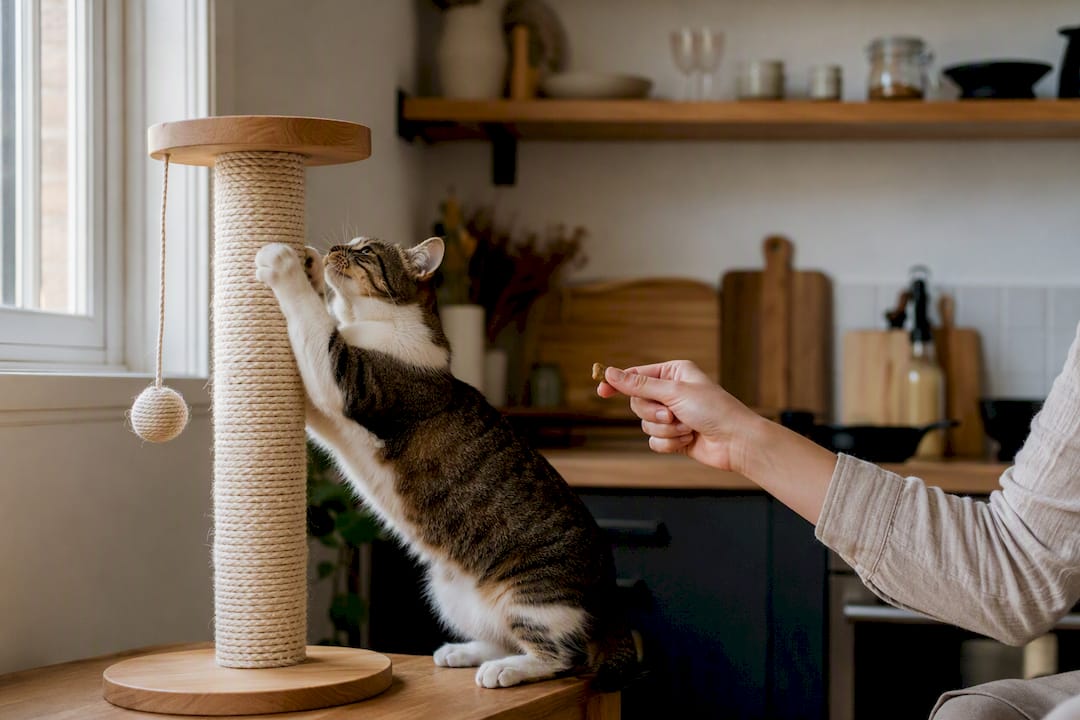
A freshly rewrapped or brand-new post can sit ignored for days if you introduce it wrong. Cats build scent associations with their scratching spots, and a completely new surface smells and feels unfamiliar.
Place the new or repaired post in the exact same spot as the old one, at least for the first week or two. Location matters more than most owners expect since cats scratch to mark territory near sleeping and eating areas, not randomly around the house.
A gradual transition helps too. If you’re replacing rather than repairing, keep the old post nearby for a few days so your cat can move between both surfaces instead of losing a familiar scratching spot overnight. ArkPet’s guidance on transitioning cats to new scratchers notes that scent transfer, rubbing a cloth from the old post onto the new one, can speed acceptance and cut down on rejection.
Reward early use with a treat or a scratch behind the ears the moment your cat tries the new surface. Catnip rubbed into fresh sisal also works well since the material hasn’t absorbed any scent yet the way an old, well-used post has. If your cat keeps drifting back to the couch instead, a few behavioral adjustments around placement and texture usually solve it faster than scolding ever does.
Our Take: When We Recommend Repair vs. a New Piece
We tell readers to rewrap when the core is sound and the damage is purely cosmetic. Once staples show, the base wobbles, or padding stays damp no matter how much you clean it, repair stops being the safe answer. That’s when we point people toward a new, well-built piece instead of another patch job. A portion of every order at The Meow Picks supports cat rescue, and we carry curated replacement options built to outlast a quick fix.
Ready for a Full Upgrade Instead of Another Patch?
If your post has crossed the line from “needs a rewrap” to “needs to go,” a new piece often works out better than sinking more hours into hardware that’s already failing. The Meow Picks curates designer cat furniture built with sturdier cores and thicker sisal wraps than most mass-market towers, so you’re not back here rewrapping again in six months.

The Torre Cat Tower is a solid full-replacement option if your current unit has structural issues beyond a simple rewrap, and the Apawtment Cat House suits owners who want a compact swap without hunting for matching hardware. For tight spaces, The Grotto fits where a tall tower won’t. Every listing on the site states its materials and dimensions plainly, and our orders and shipping page covers returns if a piece doesn’t fit your space the way you expected. Browse the current lineup and measure your space before you order, so the new piece slots in without a second round of guesswork.
Sources
FAQ
Can You Replace a Cat Scratching Post?
Yes. You can buy a ready-fit replacement post, rewrap the existing column with new sisal or carpet, or replace the entire unit, depending on how worn or damaged it is.
What Are the Replacement Parts for a Cat Scratching Post?
Common replacement parts include sisal-wrapped columns, carpet covers, cardboard refill packs, and threaded rods or bolts (often M8 or M10) that attach the post to its base.
Where Can I Find a Replacement Post for My Carpeted Cat Tower?
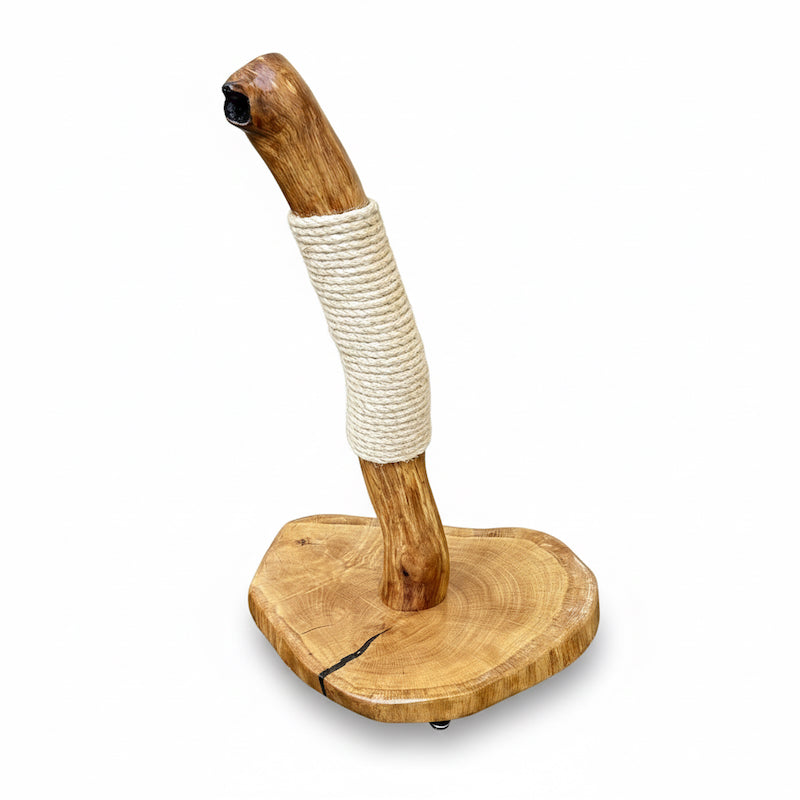
Manufacturer parts pages and specialty vendors like Cattreeparts sell carpeted or sisal-wrapped replacement columns in various diameters and lengths.
What Type of Rope Is Best for Replacing a Cat Scratcher Post?
Sisal rope is the standard choice because it holds up to repeated clawing better than jute or cotton alternatives, and it’s the material most manufacturers use on original posts.
When Should I Replace Instead of Rewrap?
Replace the post when staples or the internal rod are exposed, the base wobbles, or the padding stays soiled or damp after cleaning. Cosmetic wear alone usually just needs a rewrap.