Cost of Designer Cat Furniture
Cost of Designer Cat Furniture
Designer cat furniture in the U.S. varies widely in price, ranging from affordable entry-level pieces through midrange towers and beds to high-end, sculptural designs with significantly higher prices. Entry pieces cover small perches and simple scratchers. Midrange buys you real craftsmanship and size. High-end pricing reflects solid wood, custom finishes, and limited production runs, and shipping or customization can push any band higher.
TL;DR:
- Higher-end designer cat furniture made from solid wood or custom finishes can cost significantly more due to material quality and intricate design features.
- Shipping, import duties, and assembly fees can add up to 50% or more to the initial purchase price, especially for large or custom pieces.
- Materials like solid wood, powder-coated metal, or upholstered fabrics increase costs directly and may require ongoing maintenance or replacement over time.
- Buying online typically offers better prices and a wider selection, but tracking total landed cost—including shipping and taxes—is crucial for accurate budgeting.
- Well-made designer pieces tend to retain resale value better than trend-driven designs or cheaper alternatives with shorter lifespans.
Table of Contents
- How Much Does Designer Cat Furniture Cost at Each Level?
- What Actually Drives the Price Up?
- Where Should You Buy, and How Do You Compare Offers?
- What Do Materials and Maintenance Really Cost Over Time?
- How The Meow Picks Prices Its Curated Collection
- Are There Good Budget and Midrange Options?
- Is It Cheaper to Buy Online or In-Store?
- Is Designer Furniture Worth It Compared to DIY or Generic Options?
- What Do Warranties and Service Actually Cover?
- Editor Perspective: Form vs. Function
- Shop Designer Cat Furniture by Budget
- Sources
- FAQ
How Much Does Designer Cat Furniture Cost at Each Level?
Price bands for designer cat furniture map fairly closely to size, material, and how much hand labor went into the piece. Knowing where your budget lands helps you shop with realistic expectations instead of guessing.
Here’s what typically shows up at each price point:
- Lower-priced options include small perches, simple wall shelves, basic scratchers, and compact accessories, often made from lightweight wood composites or sisal wrapped over a basic frame.
- Mid-range options encompass stylish modern cat trees and mid-sized designer beds, featuring better joinery, natural wood tones, and designs intended to complement living spaces.
- Higher-priced selections consist of larger towers, multi-level climbing structures, and sculptural pieces with premium materials such as solid wood, powder-coated metal, or upholstered fabric. Limited-run or artisan-made pieces can carry higher prices, especially with custom sizing.
Lead times vary by piece. Ready-to-ship items from a marketplace typically arrive within a week or two, while custom or made-to-order furniture from an independent designer can take four to eight weeks. Wired’s coverage of the category notes that not every piece needs to cost hundreds of dollars, though some designer trees do reach well into that range. That spread is the whole point: “designer” doesn’t mean one fixed price tier, it means a range of design-forward choices at different budgets.
What Actually Drives the Price Up?
Materials are the biggest lever. Solid wood costs more than plywood, and powder-coated metal costs more than painted particleboard. A cat tower built from birch plywood with a laminate finish will always run cheaper than one built from solid oak with hand-sanded edges.
Design complexity matters just as much. A tree with curved branches, hidden storage, or an asymmetrical silhouette takes more skilled labor to produce than a straight post-and-platform design. Limited production runs and custom commissions add cost because the maker isn’t spreading tooling and setup time across thousands of identical units.
A few other factors shape the final price tag:
- Shipping and assembly: Large furniture ships freight, not parcel, which adds real cost for bulky items.
- Import costs: Pieces made by independent makers abroad may carry duties or longer customs handling.
- Warranty and replacement parts: Brands that stock replacement sisal or fabric covers charge a premium for that ongoing support.
- Brand and curation premium: A marketplace that vets makers and stands behind the piece typically prices a bit above an unverified marketplace listing.
Pro Tip: Compare the price per cubic foot of usable cat space, not just the sticker price. A tall, narrow tower can cost more than a wider one with less actual climbing surface.
Resale value also plays into the equation. Well-made designer pieces in neutral finishes tend to hold value better than trend-driven colors, which matters if you ever plan to sell or pass along the piece. For more on how design choices affect long-term pricing, see our guide to high-end cat tree architecture.
Where Should You Buy, and How Do You Compare Offers?
Three channels dominate the designer cat furniture market: curated marketplaces, direct-from-designer shops, and design-forward home retailers. Each has trade-offs worth knowing before you check out.
- Curated marketplaces vet independent makers and typically offer clearer return policies and consistent photos of real dimensions.
- Direct-from-designer shops sometimes offer custom sizing or finishes but often have longer lead times and stricter no-return policies.
- Design-forward retailers carry a narrower selection but may have floor models available at a discount.
Before comparing prices side by side, calculate the total landed cost: item price plus shipping, sales tax, and any assembly fee. A $300 tower with $80 freight shipping and a $50 assembly charge is really a $430 purchase, not a $300 one.
A few tactics can lower that total. Sign up for restock alerts on pieces you want, since designer items sell out and get discounted less often than mass-market goods. Floor models and seasonal sales can shave 15% to 30% off list price. Gently used designer pieces also show up on resale marketplaces at meaningful discounts.
Watch for red flags: no listed weight limit, no return policy, or vague material descriptions (“wood” without specifying type). Those gaps usually mean the seller is hiding something about durability or origin.
What Do Materials and Maintenance Really Cost Over Time?
The sticker price is only part of the story. Materials determine how much you’ll spend keeping the piece in good shape for years, not just how it looks on day one.
Sisal rope scratching posts need periodic replacement as cats wear them down, and upholstered surfaces may need reupholstering after heavy use. Solid wood holds up longer than engineered wood but costs more upfront and may need occasional oiling or spot cleaning to keep its finish.

Composite wood and formaldehyde standards: The EPA maintains formaldehyde emission standards for composite wood products, which affects which engineered materials manufacturers can use and how they’re labeled. That regulation is part of why many designer makers lean toward solid wood or certified composites, even though those materials cost more.
To estimate real ownership cost, divide the purchase price by the number of years you expect to use the piece, then add likely replacement costs (a new sisal wrap, a reupholstered cushion) across that period.
- To estimate real ownership cost, divide the purchase price by the number of years you expect to use the piece, then add likely replacement costs (a new sisal wrap, a reupholstered cushion) across that period. Cheaper materials often mean more frequent replacement, which can close the cost gap between budget and designer pieces faster than buyers expect.
Cheaper materials often mean more frequent replacement, which can close the cost gap between budget and designer pieces faster than buyers expect.
How The Meow Picks Prices Its Curated Collection
The Meow Picks curates designer cat furniture, gadgets, and lifestyle pieces from independent makers, and pricing across the catalog generally mirrors the bands described above. Compact pieces sit closer to entry and midrange pricing, while sculptural towers and multi-cat setups land in the higher bands.
A few examples show the spread: the Apawtment Cat House fits a compact, entry-to-midrange budget, while the Torre Cat Tower represents a larger, mid-to-high investment piece. The Perla Cat Cave and The Grotto both suit apartment-sized spaces at midrange pricing, and The Gardens leans into the high-end aesthetic tier with its plant-inspired design. Practical pieces like the Dog Proof Cat Feeder and the Desco Cat Feeder with porcelain bowls round out the accessory side of the catalog at accessible prices.
A portion of every order supports cat rescue organizations, which is worth factoring in if two comparable pieces are priced closely elsewhere.
Are There Good Budget and Midrange Options?
You don’t have to spend $500 to get a piece that looks intentional in your home. Plenty of midrange designer furniture delivers real craftsmanship without high-end pricing, especially if you’re flexible on size or finish color.
Wall-mounted solutions tend to be some of the best value in the category. A Cat Wall Maze or wall scratcher takes up no floor space and often costs less than a freestanding tower of similar climbing area, since it uses less material overall. Smaller-footprint trees, like The Grotto, also land in accessible territory while still fitting a design-forward home.
To find deals, watch for seasonal sales around major shopping weekends, when marketplaces discount slower-moving inventory. Sign up for restock or price-drop alerts on specific pieces you’re eyeing, since designer items don’t go on sale often but do get marked down when a new color or model is coming in. Floor models and display units from brick-and-mortar design shops sometimes sell at a discount simply because they’ve been touched by shoppers.
Buying simpler finishes over premium wood tones is another lever. A birch or light oak finish often costs less than a hand-stained walnut version of the exact same design, with no difference in durability.
Is It Cheaper to Buy Online or In-Store?
Online marketplaces usually beat in-store pricing for designer cat furniture, mainly because independent makers and curated marketplaces skip the overhead of physical retail space. You’ll also see a wider selection online, since a store’s floor space limits how many large pieces it can display at once.
In-store shopping has one clear advantage: you can check real dimensions and weight limits against your space before buying, and you skip the freight shipping cost that comes with large furniture. That said, most curated online sellers list detailed measurements and photos specifically to close that gap.
Total cost comparison matters more than sticker price alone. An in-store piece might list for the same price as an online one, but the online version often adds $40 to $100 in freight shipping for large towers. Meanwhile, some in-store retailers mark up designer pieces to cover square footage costs, even before shipping enters the picture.
The smartest approach is to compare the full landed cost both ways: online price plus shipping and tax, versus in-store price plus any delivery fee if the store doesn’t offer pickup. For apartment dwellers specifically, checking a piece’s exact footprint against room measurements before buying either way avoids a costly return. Our guide on choosing a cat tree that fits your home walks through that measuring step in detail.
Is Designer Furniture Worth It Compared to DIY or Generic Options?
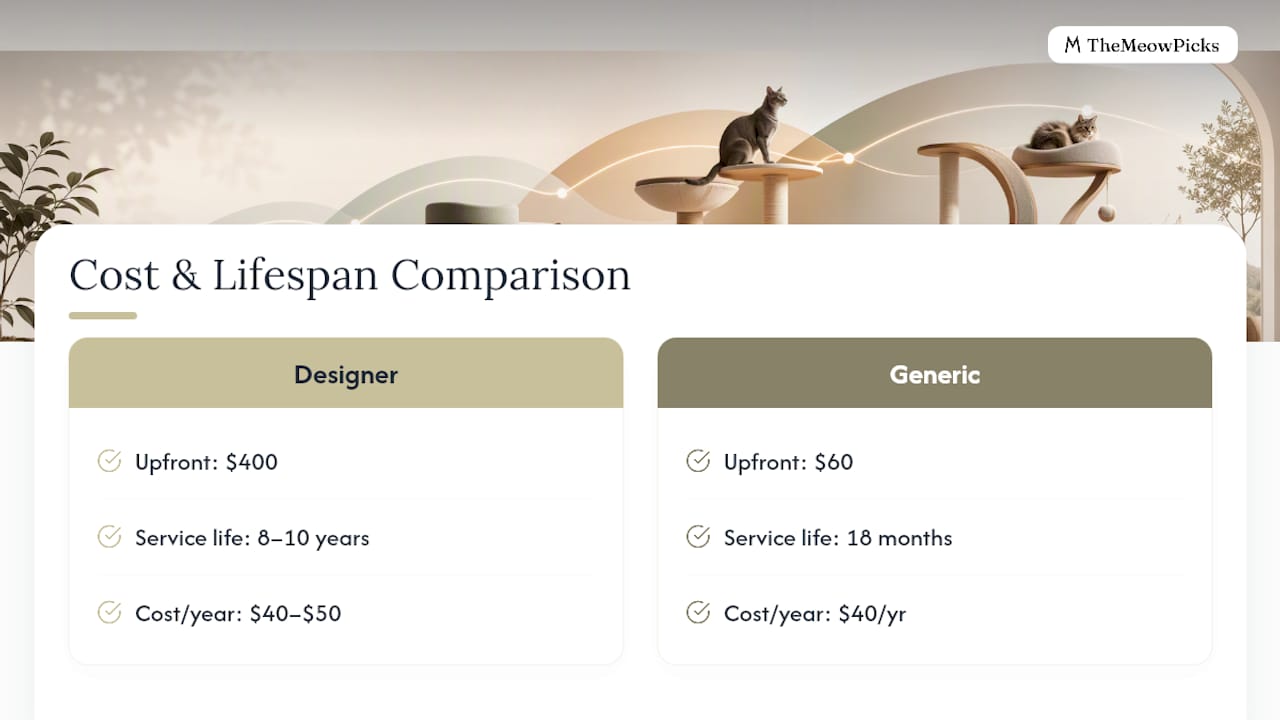
Generic big-box cat trees cost less upfront, often $40 to $80 for a basic model, but they tend to use thinner particleboard and shorter-lasting carpet wrapping. That lower price often means a shorter lifespan and less structural stability for larger cats.
DIY builds can save money on materials, but they cost real time, and the results vary widely depending on your woodworking skill. A DIY tree also won’t carry a manufacturer’s weight limit or safety documentation, which matters if you have a large or particularly active cat.
Designer furniture costs more upfront, but the value case rests on three things: materials that last longer, styling that fits a real living room, and documented weight limits from the maker. A well-built designer tower that lasts 8 to 10 years at $400 works out cheaper per year than replacing a $60 generic tree every 18 months.
The right choice depends on your priorities. If you’re renting short-term or just want basic scratching access, a generic option might make sense. If the piece will live in your main living space for years, the designer investment usually pencils out favorably once you account for replacement frequency and how it looks in your home. For safety documentation and material transparency, check a maker’s product safety and compliance page before buying either type.
What Do Warranties and Service Actually Cover?
Warranty coverage on designer cat furniture varies a lot more than on mass-market pieces, so it’s worth reading the fine print before you buy. Some makers offer a straightforward one-year structural warranty; others offer none beyond a short return window.
Independent makers on curated marketplaces typically cover manufacturing defects (a loose joint, a broken bracket) but not normal wear like frayed sisal or a stained cushion cover. That distinction matters because sisal wear is inevitable with regular use, not a defect.
Replacement parts are where ongoing service costs show up. Some brands sell individual sisal wraps, cushion covers, or scratcher modules separately, letting you refresh a piece instead of replacing the whole structure. That’s typically far cheaper than buying new. A replacement parts listing for a specific model is a good sign the maker plans for long-term ownership rather than treating the piece as disposable.
Before buying, check whether the listing mentions a warranty period, what it covers, and whether replacement parts exist for that specific model. A piece with no stated warranty and no replacement parts available isn’t necessarily bad, but it does mean any future repair is on you.
Editor Perspective: Form vs. Function
Sculptural design and long-term durability aren’t always the same purchase. A striking silhouette can sacrifice structural depth, while the sturdiest build isn’t always the prettiest.
Space-first buyers should measure their room and pick footprint before finish. Budget-first buyers get the most value from wall-mounted pieces. Cat-behavior-first buyers, especially with climbers or scratchers, should prioritize stability over style.
Measure your space and total landed cost before you buy. That single habit prevents most of the buyer’s remorse we see in this category.
— TheMeowPicks Team
Shop Designer Cat Furniture by Budget
The Meow Picks gives you a curated shortcut past the guesswork of comparing dozens of independent maker sites. Every piece is vetted for real material and dimension details, and a portion of your order supports cat rescue organizations, something a big-box retailer simply doesn’t offer.
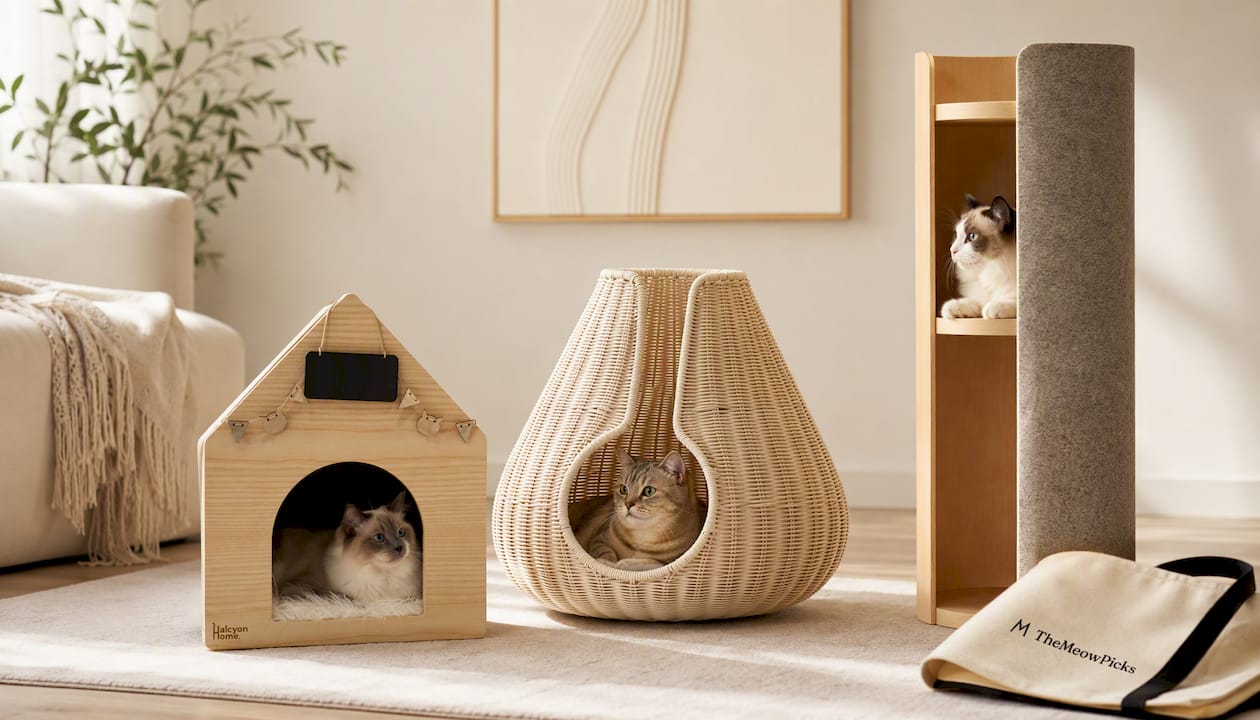
If you’re shopping entry-to-midrange, the Apawtment Cat House delivers compact, apartment-friendly design without a steep price. For midrange comfort, the Perla Cat Cave offers cave-style coziness with a modern shape. Buyers ready to invest in a statement piece should look at the Torre Cat Tower, a larger structure built for multi-level climbing, or The Gardens for a high-end, plant-inspired centerpiece.
Browse the full designer cat tree collection to compare pieces side by side, check listed dimensions against your space, and find the budget band that fits before you check out.
Sources
- Formaldehyde emission standards for composite wood products, EPA
- Our Favorite Fancy Cat Furniture, Wired
FAQ
Why Is Designer Cat Furniture So Expensive?
Price reflects material quality (solid wood versus particleboard), design complexity, small production runs, and shipping costs for large items. Limited-run or custom pieces also carry higher labor costs than mass-produced trees.
What Are the Best Brands of Cat Furniture?
There’s no single “best” brand, since quality depends on materials and construction rather than name alone. Curated marketplaces like The Meow Picks vet independent makers so you can compare vetted options by price band and material instead of guessing.
What Is the Most Expensive Cat Toy?
Pricing on cat toys varies enormously by material and complexity, but most designer toys stay well under $50 even at the premium end. Larger furniture pieces, not toys, tend to carry the highest price tags in the designer cat category.
What Cat Costs $100,000?
Extremely rare and high-demand cat breeds occasionally reach five- or six-figure prices at auction or through specialty breeders, but this reflects the animal itself, not furniture or accessories. Designer cat furniture, even at its highest end, generally stays in the hundreds to low thousands of dollars.
How Much Should I Budget for a Designer Cat Tree?
Most designer cat trees fall within a broad mid-priced range for mid-sized, well-made pieces, with larger or custom towers generally costing more. Be sure to add shipping and possible assembly fees to get your true total cost.