Your home is a reflection of your taste, but your cat’s furniture is likely the one thing you want to hide when guests arrive. You value craftsmanship and clean lines. Yet, the search for a high end cat tree often ends in frustration. Most traditional towers are wobbly eyesores wrapped in cheap carpet. They don't belong in a mid-century modern or minimalist space. We agree that your cat deserves a stable, vertical territory that respects your architectural standards. You shouldn't have to choose between your aesthetic and your pet's happiness.
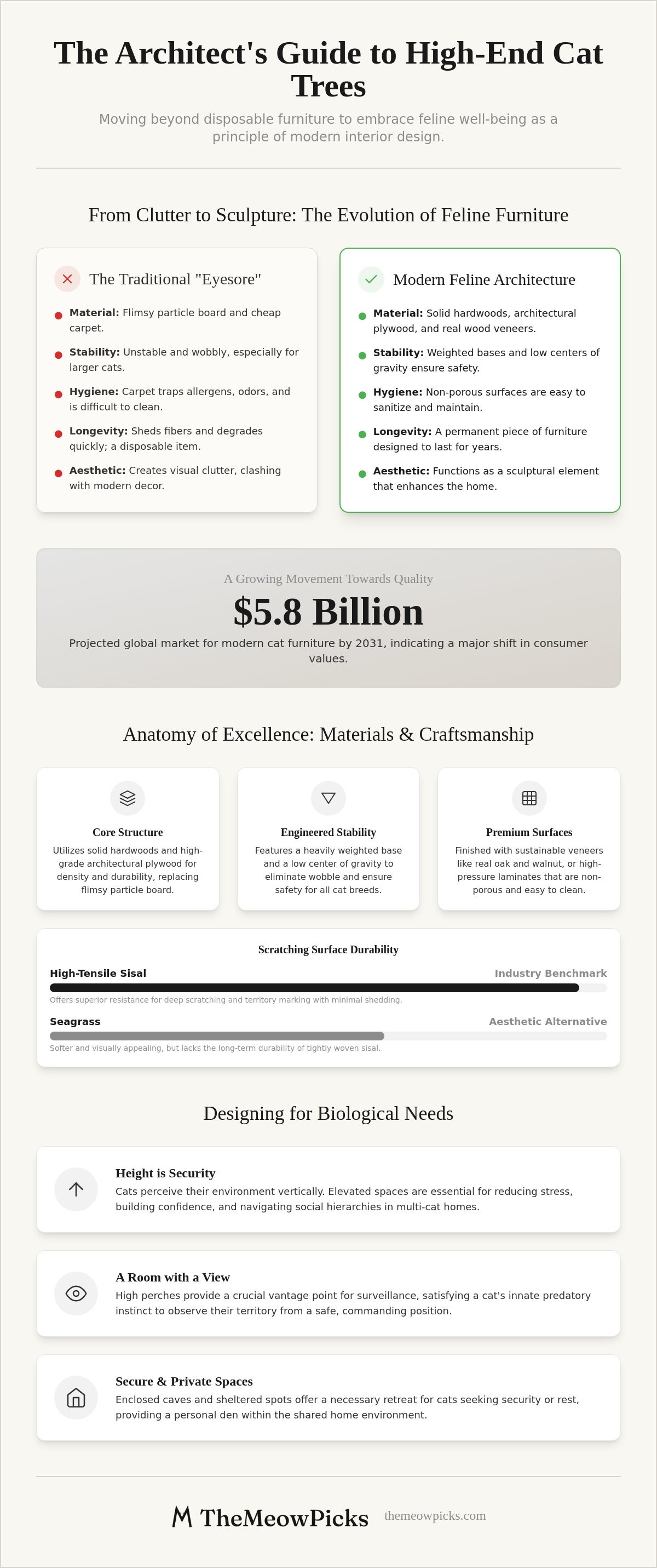
This guide explores the intersection of feline biology and sophisticated design. You'll discover how to select pieces that offer both structural integrity and effortless maintenance. We show you how to elevate your cat's well-being with furniture that functions as sculpture. The global market for modern cat furniture is projected to reach $5.8 billion by 2031. This indicates a significant shift toward quality and longevity. We examine the evolution of these architectural interventions, focusing on premium materials and innovative designs that redefine feline furniture.
Key Takeaways
- Move beyond disposable carpeted towers. Embrace furniture that treats feline biological needs as an architectural priority within the home.
- Recognize the importance of structural integrity. A high end cat tree requires weighted bases and premium hardwoods to ensure both safety and longevity.
- Tailor your selection to your cat's specific habits. Contrast open perches for active climbers with enclosed caves for those seeking security.
- Integrate pet furniture seamlessly into your decor. Learn how to match veneers and silhouettes with your existing mid-century or minimalist interiors.
- Prioritize curation over volume. Understand why vetted pieces like the MiaCara Torre represent a superior investment in craftsmanship and style.
The Evolution of Feline Architecture: Why Design Matters
The traditional pet industry often overlooks the home's visual harmony. For years, owners accepted the "carpeted eyesore" as an inevitable compromise. This era is ending. A high end cat tree is no longer just a utility. It is a piece of furniture designed with the same intentionality as a custom cabinet or a designer chair. It represents a fusion of structural stability and aesthetic purpose. Modern homeowners are increasingly rejecting disposable towers that wobble after six months. They seek longevity. They value physical integrity.
When considering what is a cat tree, the definition has evolved from a simple scratching post to a complex architectural intervention. This shift addresses two specific needs. First, it provides the cat with a secure, elevated territory that reduces cortisol levels and builds confidence. Second, it removes the "visual noise" that plagues shared living spaces. A well-designed piece of feline architecture functions as a sculpture. It enhances the room. It does not clutter it. It transforms a pet accessory into a focal point of modern living.
Beyond the Carpet: The Shift to Minimalist Materials
Traditional carpeted towers are problematic. They harbor allergens. They trap odors. They shed fibers over time. These items are difficult to clean and even harder to repair. High-end design favors materials like bentwood, premium plywood, and high-pressure laminates. These surfaces are non-porous and easy to sanitize. Feline architecture is the intentional intersection of animal behavior and structural design. It prioritizes the health of the home environment as much as the comfort of the occupant. By choosing sustainable veneers over synthetic fabrics, owners invest in a piece that lasts for years rather than months.
Verticality and the Feline Perspective
Cats view their world in three dimensions. For them, a living room is a series of vertical pathways. Height is a non-negotiable requirement. This is especially true in multi-cat households where elevation serves as a social hierarchy tool. A high end cat tree provides this necessary altitude without the bulk of mass-market models. It respects the "cat-eye view" of the room while preserving the human aesthetic.
- Perches offer a vantage point for surveillance, satisfying a cat's natural predatory instincts.
- Stable, weighted bases prevent the unsettling wobble that discourages large breeds from climbing.
- Slim silhouettes integrate into corners or alongside windows without blocking natural light or foot traffic.
Designer towers offer security. They give cats a safe retreat. They do this while maintaining the sophisticated lines of a modern interior. The result is a more confident pet and a more serene home. This balance is the hallmark of true feline architecture.
Anatomy of Excellence: Materials and Craftsmanship
Excellence in pet furniture begins with the skeleton. While mass-market towers rely on flimsy particle board and staples, a true high end cat tree utilizes solid hardwoods or high-grade architectural plywood. These materials provide the density required for a stable vertical territory. Sustainable veneers, such as real oak or walnut, ensure the piece matures gracefully. It becomes part of your home's permanent collection. It is an investment in physical integrity.
Stability is a fundamental safety requirement. For large breeds like Maine Coons, a top-heavy tower is a liability. Premium designs feature weighted bases and low centers of gravity. This precision engineering eliminates the unsettling wobble that discourages cats from exploring higher perches. A cat that feels secure is a cat that will actually use the furniture you provide.
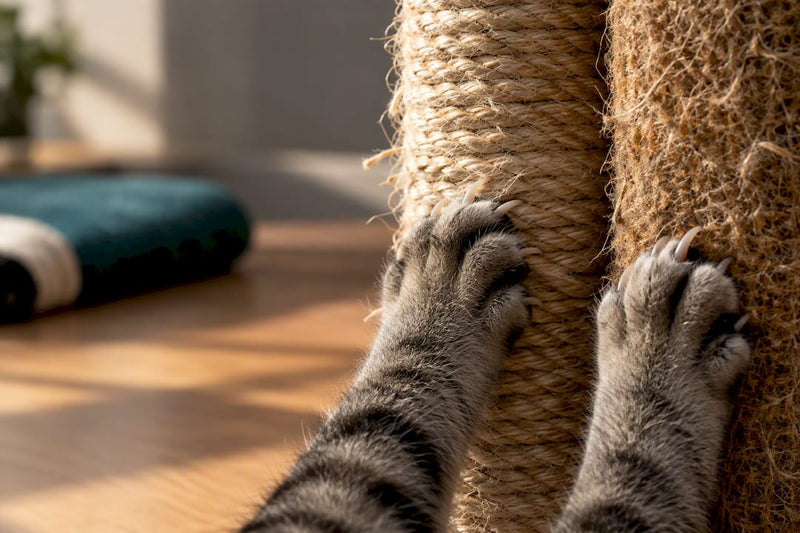
Texture dictates the success of a scratching surface. Sisal remains the industry benchmark for durability. It offers the resistance cats crave for deep scratching and territory marking. Seagrass is a softer, more aesthetic alternative, but it lacks the longevity of high-tensile sisal. We prioritize tightly woven sisal for its ability to withstand daily use without shedding or fraying prematurely. If you appreciate this level of intentionality, explore the curated collection at The Meow Picks, where every piece is vetted for both form and function.
Structural Integrity and Weight Distribution
Luxury is often found in the details you cannot see. Heavy-duty hardware and hidden fasteners replace the glue and plastic found in cheaper models. This ensures the tower remains rigid over years of active use. Modular construction is also becoming a standard in the luxury market. It allows owners to replace individual components, such as a worn scratching post, rather than the entire unit. This approach aligns with a philosophy of sustainability and long-term value. A high end cat tree should be the last one you ever need to buy.
Textiles and Finishing Touches
Comfort should not compromise cleanliness. High-end towers feature removable, washable cushions made from premium textiles. Look for fabrics with a high Martindale count to resist snagging from claws. Oeko-Tex certified materials are preferred. They ensure no harmful chemicals are present in your cat’s resting place. Finishing the wood with matte natural oils or water-based lacquers prevents toxic off-gassing. This preserves the air quality of your home while highlighting the natural grain of the timber.
- Removable Cushions: Essential for hygiene and ease of maintenance.
- Snag-Resistant Weaves: Prevents the "shabby" look of pulled threads.
- Natural Finishes: Protects the wood without compromising feline health.
Selecting Your Tower: Form Meets Function
Choosing a high end cat tree requires more than an appreciation for modern lines. It requires an understanding of your cat’s unique temperament. Cats generally fall into two categories: "tree dwellers" and "bush dwellers." Tree dwellers seek the highest possible vantage point to survey their kingdom. Bush dwellers prefer the security of mid-level hides and enclosed sanctuaries. Observe your cat's current habits. If they favor the top of the refrigerator, prioritize height. If they hide behind the sofa, look for integrated caves like the MiaCara Perla.
Balance height requirements with your home’s specific architecture. Ensure there is at least two feet of clearance between the top perch and the ceiling. This prevents injury during a vertical leap and ensures adequate airflow. Safety is a quiet priority. Avoid placing tall towers near fragile decor or ceiling fans. The goal is to create a secure zone that feels like a natural extension of the room. A confident cat is a quiet cat. When their biological needs are met, their stress levels drop.
The "Torre" Silhouette: A Masterclass in Space Efficiency
The MiaCara Torre represents a benchmark in the "Torre" aesthetic. It is a masterclass in space efficiency. Its cylindrical form provides significant vertical territory while occupying a minimal footprint. This makes it an ideal choice for modern, narrow apartments where floor space is a premium. The integrated scratching surface covers the entire exterior. It serves a functional purpose without looking like a traditional post. It is a singular, cohesive object that satisfies a cat's need to climb and mark territory.
Stability for Large and Active Breeds
Stability is non-negotiable for active breeds. A high-end piece is often over-engineered to handle the kinetic energy of a full-speed descent. This prevents the unsettling wobble common in mass-market towers. For a cat weighing 15lb, a base weight of at least 20lb provides the necessary counter-balance to prevent tipping during high-energy play. High-quality towers use a footprint-to-height ratio that ensures the center of gravity remains low and immovable. This structural confidence allows your cat to leap without hesitation.
- Tree Dwellers: Prioritize open platforms and heights above five feet.
- Bush Dwellers: Focus on enclosed caves and lower, wider perches.
- Multi-Cat Households: Ensure multiple exit points on every level to prevent "trapping" behaviors.
- Senior Cats: Look for staggered platforms that don't require massive leaps.
The Interior Designer’s Approach to Feline Decor
A home is a curated environment. Every object must earn its place. Integrating a high end cat tree into a Mid-Century Modern interior requires a shift in perspective. Stop viewing it as a pet accessory. View it as an architectural element. Traditional pet furniture often disrupts the visual narrative of a room. This is avoidable. By applying professional interior design principles, you can create a space that serves both feline and human occupants with equal grace.
The "Invisible Pet Furniture" trend is a sophisticated solution. It relies on matching the wood species of your tower to your existing cabinetry or flooring. If your living room features walnut sideboards, select a cat tower with walnut veneers. This continuity allows the structure to blend into the room's background. It becomes a permanent fixture. It feels like a custom built-in rather than a temporary addition. This approach prioritizes long-term value over temporary trends.
Style Matching: Minimalism and Beyond
Scandinavian aesthetics prioritize light, airy spaces and functional simplicity. To complement this style, select towers crafted from pale woods like ash or birch. Use neutral tones for all soft components. Creams, soft grays, and taupes help large structures "disappear" into a room by mimicking the wall color. Texture also plays a role in successful integration. Pairing a sleek bentwood tower with a high-pile luxury rug or velvet upholstery creates a tactile dialogue. It makes the pet furniture feel like a natural extension of your decor. You can shop the full designer collection to find pieces that align with these specific aesthetic requirements.
Strategic Placement for Feline Enrichment
Placement is as important as the object itself. The "window-adjacent" rule is a priority for a high end cat tree. Cats are instinctual observers. A tower placed near a window provides a "cat TV" experience; it keeps them engaged with the outside world. Avoid placing furniture in "dead zones." If a corner is dark and isolated, your cat will likely ignore the tree. They want to be where the activity is, but safely elevated above it.
Think of your living space in terms of vertical flow. In small urban apartments, a well-placed tower acts as a vertical bridge. It allows cats to navigate the room without crossing the floor. This "cat highway" should be strategic. Place the tower at the end of a sofa or between two windows. This maintains a clear path for human residents while giving the cat a dedicated lane. The goal is a seamless environment where every occupant feels at home.
Investing in Longevity: The Meow Picks Curation
Investing in a high end cat tree is a decision rooted in the philosophy of "fewer, better things." Traditional e-commerce platforms offer a vast, unvetted marketplace. This often leads to a paradox of choice and, eventually, a low-quality purchase that fails within a year. A curated approach eliminates this noise. It prioritizes objects that have been tested for structural integrity and aesthetic longevity. When you choose furniture that doubles as art, you aren't just buying a pet accessory. You're enhancing your living environment with an item that holds its value.
Consider the cost-per-year breakdown. A typical $120 mass-market tower often loses its structural rigidity or visual appeal within twelve months. Replacing these disposable units every year is a cycle of waste. A $500 investment in a premium piece today can save you $1000 over five years. This calculation accounts for the cost of repeated replacements and the secondary value of maintaining a cohesive interior design. Quality is the most sustainable choice. It prevents the environmental impact of the "disposable" pet industry while providing your cat with a permanent, stable territory.
The MiaCara Torre: Form, Function, and Feline Bliss
The MiaCara Torre remains a definitive design icon. Its construction utilizes bentwood, a material prized for its strength and fluid, architectural lines. Large felt panels provide a continuous scratching surface that satisfies a cat's instinctual need to mark territory. This design recognizes that cats aren't just climbers; they are also hiders. The Torre’s internal levels offer secluded sanctuaries without the bulk of traditional condos. Its aesthetic versatility allows it to transition seamlessly between different room styles. It is a benchmark for what a high end cat tree should be. It is functional, durable, and visually quiet.
The Value of a Trusted Curator
The Meow Picks operates on a simple principle. We only feature pieces we would place in our own homes. We act as a discerning filter for professionals who value their time and their interior design. By selecting only the most resilient and beautiful objects, we ensure your investment remains secure. Maintenance is simplified through replaceable components. Many of our featured towers allow for the individual replacement of cushions or scratching panels. This ensures the piece remains in pristine condition for years to come. It is time to move beyond the unvetted marketplace. Explore the Curated Collection at The Meow Picks and discover furniture that respects both your home and your cat.
Elevating the Modern Home
Choosing a high end cat tree is a commitment to the quality of your shared environment. We have moved beyond the era of disposable towers. Today, feline furniture is an architectural choice. It is about selecting pieces that respect your home's design while satisfying your cat's instinctual need for height and security. By prioritizing structural integrity and material craftsmanship, you create a space where form and function exist in perfect harmony. You don't have to settle for anything less than excellence.
The Meow Picks serves as a trusted curator for this new standard of pet ownership. We filter the marketplace to present only the most intentional designs. Our focus remains on architectural integrity and pet well-being. We value the relationship between the user and their environment. This means every item we feature has been vetted for its ability to enhance both your cat's life and your living room's aesthetic. It is an investment in longevity and sophisticated style.
It is time to view pet furniture as a permanent addition to your home's narrative. Discover the intersection of design and feline comfort at The Meow Picks. Your cat's well-being and your home's beauty don't have to be at odds. We invite you to explore a more refined way of living together.
Frequently Asked Questions
Is a high-end cat tree really worth the investment?
A high end cat tree is worth the investment because it prioritizes structural longevity over the disposable cycle of mass-market models. High-quality materials like bentwood and solid oak ensure the structure remains stable for years. You avoid the recurring frustration of wobbly, carpeted towers that shed fibers. It functions as a permanent architectural element in your home, maintaining your aesthetic standards while providing your cat with a secure, long-term territory.
What are the best materials for a luxury cat tower?
The best materials include solid hardwoods, high-grade architectural plywood, and tightly woven sisal. These choices offer superior physical integrity and wear resistance. Look for Oeko-Tex certified fabrics for cushions and natural oil finishes for wood surfaces. These premium materials ensure the tower is non-toxic and easy to maintain. They provide a tactile experience that satisfies feline instincts without compromising the visual appeal of a modern living space.
How do I clean a designer cat tree without damaging the wood?
Clean wood surfaces with a soft, slightly damp cloth and a drop of pH-neutral soap. Avoid saturating the timber or using harsh chemical cleaners that can strip natural oils or water-based lacquers. For textile components, most designer towers feature removable, machine-washable covers. Regular vacuuming of scratching surfaces with a brush attachment prevents the buildup of dander and dust. This methodical approach preserves the finish and ensures a hygienic environment.
Are high-end cat trees stable enough for large breeds like Maine Coons?
Premium towers are specifically engineered for stability, making them ideal for large breeds like Maine Coons. They feature wide, weighted bases and a low center of gravity to prevent tipping during high-energy play. Precision hardware and hidden fasteners replace the flimsy staples found in cheaper models. This structural confidence allows heavy cats to leap and climb without the unsettling wobble that often discourages them from using vertical territory.
Can I replace the scratching surfaces on a designer cat tree?
Many designer models feature modular components that allow you to replace scratching surfaces once they become worn. This sustainability-focused design means you don't need to replace the entire unit. High-tensile sisal panels or felt wraps are often attached with hidden fasteners or recessed channels. This intentionality extends the life of your high end cat tree indefinitely. It ensures the piece remains a pristine focal point in your interior for years.
How do I introduce my cat to a new, minimalist cat tower?
Introduce your cat by placing a familiar blanket or toy on one of the perches to transfer their scent. Position the tower in a high-traffic area where they already enjoy spending time. Use organic catnip or a feather wand to encourage initial exploration of the vertical levels. Patience is key. Allow them to discover the new territory at their own pace. This creates a positive association with the structure without forcing the interaction.
What makes the MiaCara Torre different from standard cat towers?
The MiaCara Torre distinguishes itself through its seamless bentwood construction and integrated felt scratching panels. Unlike standard towers, it lacks the visual clutter of multiple exposed posts and platforms. Its cylindrical silhouette provides a continuous climbing surface while its internal levels offer secluded sanctuaries. This design prioritizes feline ergonomics and human aesthetics equally, making it a benchmark in modern pet furniture.
Where is the best place to put a cat tree in a small apartment?
The best placement is adjacent to a window or at the end of a sofa to act as a vertical bridge. In small apartments, utilize corners that offer a clear view of the room's main activity. This satisfies a cat's need for surveillance without obstructing human foot traffic. Avoid dark or isolated areas where the cat might feel disconnected from the household. Proper positioning ensures the tower becomes a functional part of the home's flow.