Kitten Litter Box Size
The right kitten litter box size is a box at least 1.5 times your kitten’s body length, measured from nose to base of tail. For most kittens under 12 weeks, that means a tray sized to accommodate their length with a front entry low enough for easy access. Measure your kitten today, then pick a low-entry litter box that clears that minimum.
Quick rules to keep handy:
- 1.5× body length: measure nose to base of tail, multiply by 1.5, and that’s your minimum box length. Cats and veterinary sources consistently back this rule.
- Minimum width: at least equal to the kitten’s body length, or roughly 9–12 inches for very young kittens.
- Entry height: 2–3 inches for kittens under 12 weeks; no more than 4 inches until they can reliably clear a 5-inch barrier.
- Number of boxes: one more than the number of cats in the home (the n + 1 rule).
Key Takeaways
The single most important rule for kitten litter box size is the 1.5× body-length measurement: get that right, keep the entry low, and most training problems take care of themselves.
| Point | Details |
|---|---|
| Use the 1.5× rule | Measure nose to tail base, multiply by 1.5 for minimum box length at every growth stage. |
| Keep entry height low | 2–3 inches for kittens under 12 weeks; no higher than 4 inches until they clear a 5-inch barrier reliably. |
| Litter depth stays shallow | 1–1.5 inches of litter for young kittens prevents instability and discourages ingestion. |
| Follow the n + 1 rule | One box per cat plus one extra reduces territorial disputes and access problems. |
| The Meow Picks curated options | The Apawtment Cat House, Torre Cat Tower, and Perla Cat Cave meet accessibility and sizing rules for kittens from about 4 months onward. |
Table of Contents
- What kitten litter box size do you actually need?
- When should you upgrade to a bigger litter box?
- Which litter box types work best for kittens?
- Five features to look for in a kitten litter box
- What litter is safe for kittens, and how often should you clean?
- How many litter boxes do you need, and where should they go?
- How to introduce your kitten to the litter box
- Common litter box problems and how to fix them
- Kitten-friendly litter box options from The Meow Picks
- What the right box really comes down to
- The Meow Picks has kitten-ready litter boxes worth browsing
- Sources
What kitten litter box size do you actually need?
The 1.5× body-length rule sounds simple, but it’s worth knowing how to apply it correctly. Measure your kitten from the tip of the nose to the base of the tail, not including the tail itself. A 10-week-old kitten is typically 7–9 inches long, which puts the minimum box length at roughly 10.5–13.5 inches. Round up, not down.
Width matters just as much as length. Veterinarians recommend a box at least 15 inches wide for adult cats, but for a small kitten, the box should be at least as wide as the kitten is long so they can turn a full circle without stepping on the rim.
The table below shows how kitten litter box dimensions should shift as your kitten grows, based on age-by-size guidance from kitten care specialists:
One planning note worth making: large-breed kittens like Maine Coons and Ragdolls grow noticeably faster than average. If you have one of these, bump each size recommendation up by one age bracket. A smart approach for any kitten is to buy a low-entry adult-sized pan with a lowered front cutout. That single box can carry a kitten from about 3 months all the way to adulthood without a mid-year swap.
When should you upgrade to a bigger litter box?
Knowing when to size up is just as useful as knowing the starting dimensions. The clearest signal is physical: your kitten can no longer turn a full circle inside the box without stepping on the rim or the edge. When that happens, it’s time to move up, regardless of age.
A few other reliable upgrade triggers:
- Your kitten steps out of the box mid-squat or consistently misses the edge when urinating.
- They can easily clear a 3–4 inch entry without hesitation, which means a higher-sided box is now appropriate.
- They’ve reached roughly 75% of their expected adult body length.
The age-based timeline gives you a planning framework even before problems appear. At around 8 weeks, a small litter tray sized to their growth stage is appropriate. By 3 months, a larger tray suitable to their increased size is recommended. By 6 months, kittens are generally ready for an adult-sized box, with full adult sizing being appropriate by one year of age. Veterinary guidance notes that kittens under 4 weeks are not typically litter trained at all, so the timeline really begins around that 4–8 week mark.
Quick upgrade checklist:
- [ ] Kitten can’t turn without touching the walls
- [ ] Stepping out mid-use or missing the box edge
- [ ] Clears a 3–4 inch entry with ease
- [ ] Reached 75% of expected adult length
- [ ] Behavioral avoidance with no other obvious cause
If you check two or more of these boxes, it’s time to shop for the next size up.
Which litter box types work best for kittens?
The shape and style of the box matters as much as the dimensions. Each type has a different accessibility profile, and getting this wrong early can set back training by weeks.
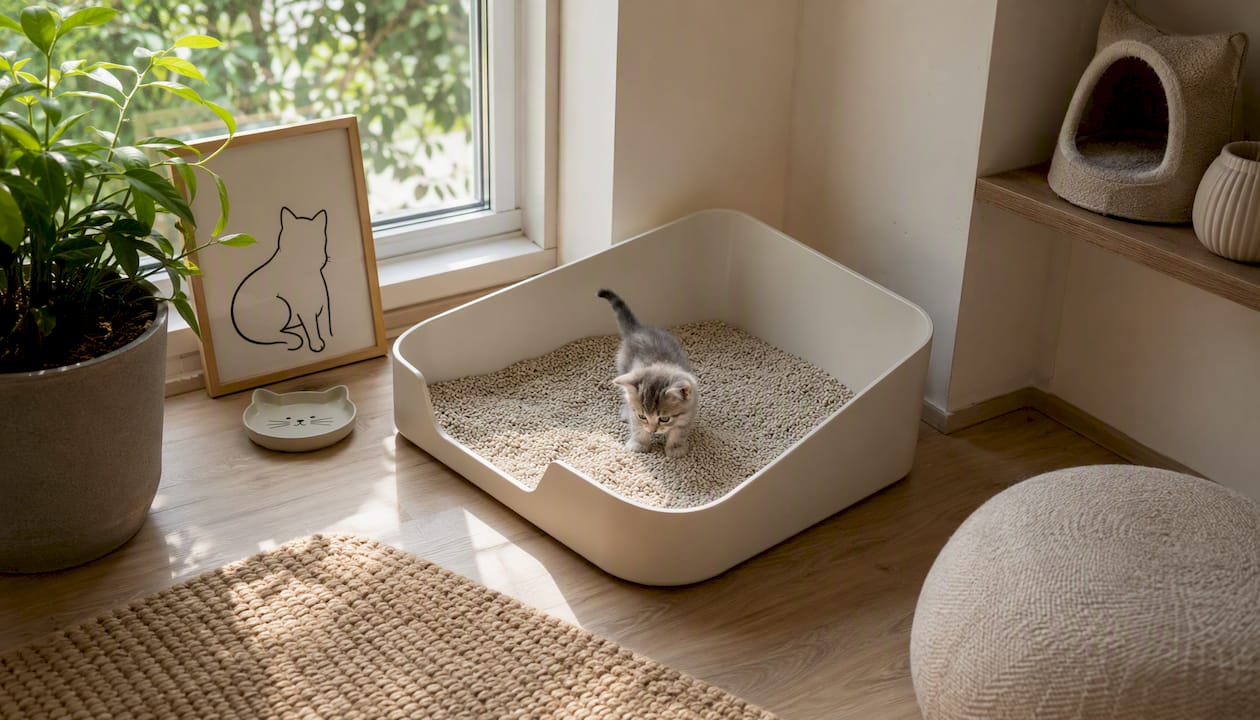
Open low-entry trays are the gold standard for young kittens. They’re easy to step into, easy to see into (which reduces the “scary box” effect), and easy for you to clean. The trade-off is scatter: an open tray with low sides will send litter onto your floor. A tray with a low front entry and higher rear and side walls gives you the best of both worlds, keeping the kitten accessible while containing most of the mess.
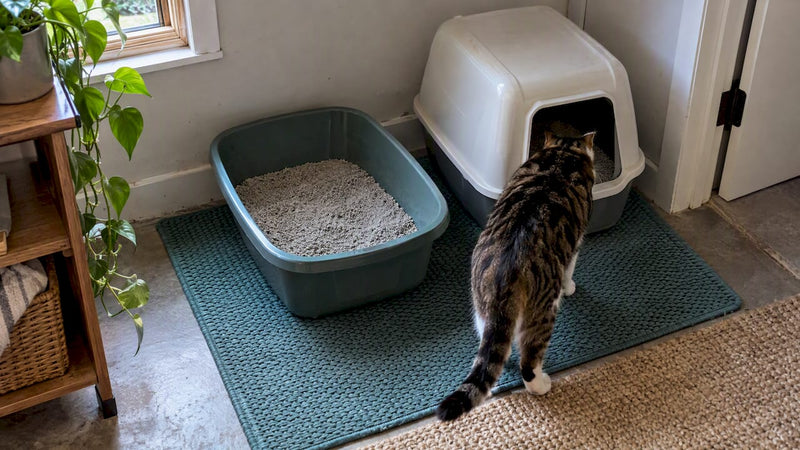
High-sided and covered boxes become appropriate later, usually around 4–6 months when a kitten can reliably clear a 5-inch barrier. Cats.com cautions that high sides can discourage use in young kittens who find the entry intimidating or physically difficult to manage. A covered box adds privacy and odor control, but the enclosed space can feel threatening to a kitten who isn’t yet confident in the litter box routine. Introduce covered options gradually, and watch for avoidance as your signal to go back to open.
Top-entry boxes are genuinely not suitable for kittens under 6 months. Climbing in from above requires both agility and confidence that most young kittens don’t have. These boxes also tend to have a single, fixed opening that can’t be modified. Save them for adult cats who are strong jumpers.
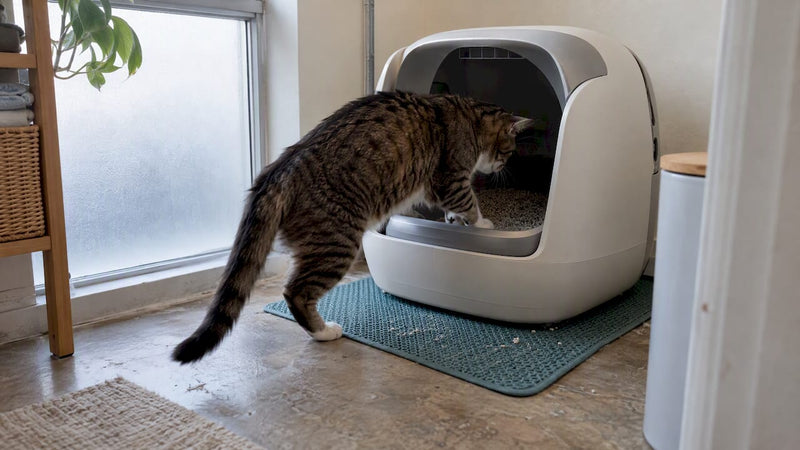
Self-cleaning boxes come with weight and size minimums that most kittens don’t meet until 5–6 months. Beyond the physical requirements, the mechanical noise and movement can startle a kitten mid-use and create a lasting aversion. If you want a self-cleaner long-term, introduce it only after your kitten is fully trained and comfortable with the box routine.
The safety rule that applies across all types: avoid any entry height above 4 inches for kittens under 4 months. A 2–3 inch front entry is the target for very young kittens, and veterinary sources are consistent on this point.
Five features to look for in a kitten litter box
When you’re evaluating specific models, these are the features that actually matter:
- Low front entry (2–3 inches for young kittens): The single most important accessibility feature. PreventiveVet lists entry height as a top priority when choosing a kitten box. A cutout or sloped front is better than a flat low wall because it prevents litter from spilling out the front.
- Sufficient length and width: Apply the 1.5× rule. A box that’s too small creates accidents and discourages use.
- Higher rear and side walls: Aim for at least 5–6 inches at the back and sides to contain scatter as the kitten grows more active in the box.
- Easy-clean materials: Smooth, non-porous plastic cleans quickly and doesn’t hold odor. Avoid textured interiors that trap waste.
- Rounded edges and no sharp lip: Active kittens step on rims. A sharp or cracked edge can injure small paws.
Pro Tip: Buy a low-entry adult-sized pan from the start rather than a tiny kitten-specific tray. Cut or sand the front entry down to 2–3 inches if needed. You’ll skip the mid-growth replacement purchase and avoid the disruption of switching boxes during training.
Material safety is worth a brief mention. Look for BPA-free plastics and non-toxic finishes, especially since kittens sometimes chew on box edges during the early weeks. A structurally stable box that doesn’t flex or tip when a kitten jumps in is also worth prioritizing.
What litter is safe for kittens, and how often should you clean?
Litter depth for kittens should stay at about 1–1.5 inches, particularly in the first few months. Kitten care guides recommend this shallower depth because deep litter can feel unstable underfoot for a small kitten and may discourage digging. As they grow, you can increase depth to the standard 2–3 inches.
Litter type choices for kittens:
- Non-clumping clay: A safe starting point. Easy to find, inexpensive, and won’t clump around a kitten’s paws or be dangerous if ingested in small amounts.
- Paper-based litter: Soft, low-dust, and gentle on small paws. A good option for very young kittens or those recovering from illness.
- Clumping clay: Generally fine for kittens over 8 weeks, but avoid it for very young kittens who may ingest litter while grooming. The clumping agent can cause digestive issues.
- Silica/crystal litter: Not recommended for kittens. The crystals can be sharp on small paws, and ingestion is a real risk.
Cleaning schedule during training:
- Scoop at least once daily, ideally twice. A dirty box is the most common reason a kitten avoids it.
- Do a full litter change every 5–7 days for non-clumping litter, or every 2–3 weeks for clumping litter with daily scooping.
- Wash the box itself with mild, unscented soap during each full change.
Avoid strongly scented litters entirely for young kittens. Their sense of smell is acute, and heavy fragrance can make the box aversive. If you notice sneezing, watery eyes, or any respiratory symptoms after introducing a new litter, switch to a low-dust, unscented option and consult your vet.
How many litter boxes do you need, and where should they go?
The n + 1 rule from Catster is the standard: one box per cat, plus one extra. Two kittens means three boxes. This isn’t just about preference; it prevents territorial disputes over box access and gives each kitten a reliable option if one box is occupied or temporarily dirty.
Placement guidance:
- Choose quiet, low-traffic spots. Kittens won’t use a box placed next to a loud washing machine or in a busy hallway.
- Keep boxes in consistent locations. Moving a box mid-training is one of the fastest ways to cause accidents.
- In multi-level homes, put at least one box on each floor. A kitten in the middle of training may not make it up or down a full flight of stairs in time.
- In small apartments, a corner placement works well. The key is that the kitten can reach the box quickly from anywhere they spend time.
Hygiene around the box matters too. Keep the floor around it easy to wipe down, and leave enough space for a litter mat to catch scatter. Good ventilation in the room reduces odor without requiring you to use scented litter. If you’re crate-training during the first week, place a small box inside the crate within easy reach.
How to introduce your kitten to the litter box
The first few days set the pattern for months. A clear, consistent routine makes training much faster than any product or trick.
- Show the box immediately on arrival. Place your kitten in the box as soon as they come home, before exploring the rest of the space. Let them sniff and step around in it.
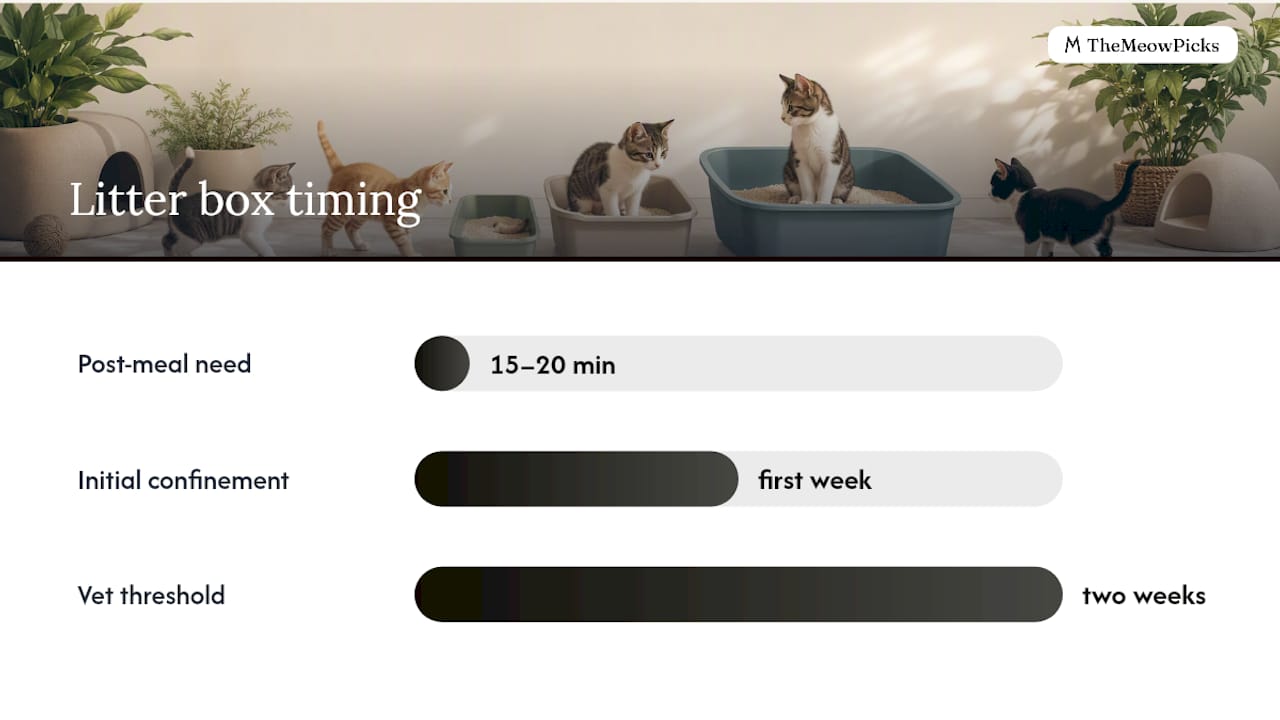
- Return them to the box after every nap and every meal. Kittens typically need to eliminate within 15–20 minutes of eating. Timing these placements removes most of the guesswork.
- Use calm praise, not treats. A quiet “good job” when they use the box correctly is enough. Treats can distract from the task.
- Confine to a small area for the first week. A single room with the box, food, and water keeps the box close and reduces accidents. Expand their space gradually as they demonstrate consistent use.
- Watch for pre-elimination signals. Sniffing the floor, crouching, or circling are signs a kitten is about to go. Gently pick them up and place them in the box.
- Never punish accidents. Clean the spot thoroughly with an enzymatic cleaner to remove the scent marker, and move on.
- Check progress at the end of each week. If accidents are decreasing, expand their space a little. If accidents are increasing, go back to confinement and check box cleanliness and placement.
For multiple kittens, run the same routine with each one individually at first. Placing two kittens in the box at the same time can cause competition and stress. Once both are using the box reliably on their own, they’ll naturally share without issue.
If a kitten shows no progress after two weeks of consistent training, or if they seem to strain, cry, or produce blood in their urine, that’s a vet visit, not a training problem.
Common litter box problems and how to fix them
Most kitten litter box issues have a simple fix once you identify the cause.
- Kitten avoids the box entirely: Check cleanliness first. A box that hasn’t been scooped in 24 hours is often enough to put a kitten off. If the box is clean, check the location (too noisy, too exposed) and the entry height (too high for their current size).
- Kitten steps out mid-use or misses the edge: The box is too small. Move up to the next size immediately.
- Litter scattering everywhere: Add a litter mat outside the box, reduce litter depth slightly, or switch to a box with higher rear walls. A covered box can also help once the kitten is old enough to use one comfortably.
- Kitten uses one spot in the box but not others: Normal behavior. Don’t rearrange the litter or the box location in response.
- Box works for a while, then kitten stops using it: Common causes include a dirty box, a new stressor in the home (a new pet, a move, a change in routine), or the box becoming too small as the kitten grows.
- Kitten uses the box but frequently steps on the rim: The box is too small. This is the clearest physical signal that it’s time to upgrade.
Vet-flag checklist: Take your kitten to the vet if you notice straining without producing waste, crying during elimination, blood in the urine or stool, or a sudden complete stop in litter box use after a period of reliable training. These are medical signals, not behavioral ones.
Kitten-friendly litter box options from The Meow Picks
Finding a box that meets the sizing and accessibility rules while also looking good in your home is genuinely possible. The Meow Picks curates designer options from independent makers that balance function with aesthetics, and a few stand out for kitten owners specifically.
-
Apawtment Cat House: A space-aware, enclosed cat house design that works well in small studio apartments where you want the litter area contained and visually tidy. Best suited for kittens from about 4 months onward, when they’re comfortable with enclosed spaces and can clear a standard entry height. The enclosed format also helps with scatter control.
-
Torre Cat Tower: A multi-use tower that integrates vertical space with a lower living area, making it practical for multi-kitten homes where vertical territory matters. Pair it with a separate low-entry litter tray nearby during the kitten phase, then transition to integrated options as they grow.
-
Perla Cat Cave: A contained, den-like design that suits small-home setups where a discreet litter area is preferred. The cave format provides privacy without the intimidation of a fully enclosed box, making it a reasonable option for kittens who are past the very early training stage (roughly 3–4 months and older).
All three options align with the accessibility and ease-of-cleaning priorities that veterinary sources recommend. None of them are the right fit for a kitten under 8–10 weeks who needs the most basic, open low-entry tray. Think of them as the next step once your kitten has the basics down.

For very young kittens, the Sito Cat Litter Box from The Meow Picks is worth a look as a starter option that meets the low-entry and sizing requirements for the early weeks.
What the right box really comes down to
The litter box conversation in cat care tends to focus on odor control and aesthetics, which are real concerns, but they’re secondary to one thing: whether the kitten can actually get in and out of the box easily and comfortably. A beautifully designed box that a 10-week-old kitten can’t climb into is just a decorative object.
What we’ve seen, looking at the products that come through The Meow Picks, is that the best long-term choices are the ones that were designed with the cat’s body in mind first. Low front entries, smooth interiors, stable bases, and appropriate dimensions aren’t afterthoughts in good design; they’re the starting point. The 1.5× body-length rule isn’t a technicality. It’s the difference between a kitten who uses the box reliably and one who finds a corner of your rug more appealing.
The Meow Picks also supports cat rescue with every order, which means your purchase does a little more than just solve a litter problem. That matters to us, and we think it matters to most people who are reading a guide like this one.
The Meow Picks has kitten-ready litter boxes worth browsing
Getting the size right is step one. Finding a box that fits your kitten’s current stage AND your home’s aesthetic is step two, and that’s where The Meow Picks comes in. The collection includes designer litter boxes and accessories from independent makers, curated specifically for cat owners who don’t want to choose between function and a home they’re proud of.
The Apawtment Cat House suits kittens from about 4 months onward in compact spaces. The Perla Cat Cave works well for small-home setups where a discreet, contained litter area is the priority. And for multi-kitten homes where vertical territory matters, the Torre Cat Tower pairs well with a separate low-entry starter tray during the early weeks.
Every purchase at The Meow Picks supports cat rescue organizations. Browse the full litter box collection to find the right fit for your kitten’s current size and your next stage.
Sources
- Cats
- The Best Litter Box For Kittens - 5 Things to Look For
- How Big Should A Litter Box Be? A Vet-Approved Guide - Catster
- Kitten Litter Box Size Guide: From 8 Weeks to Adult
- Preventivevet