Soft Vs Hard Cat Carrier
For most vet visits and car trips, a hard-sided carrier is the safer pick. For airline cabin travel and quick errands, a soft-sided carrier wins on weight and comfort. Many owners end up owning both, and that’s not overkill, it’s just matching the carrier to the trip.
- Vet visits: hard-sided, top-loading. Vets can examine your cat without wrestling them out a front door.
- Car travel: hard-sided. Molded shells hold their shape and clean up faster after an accident.
- Airline cabin travel: soft-sided. Most airlines require a carrier that compresses to fit under the seat.
- Short errands or an anxious cat: soft-sided. Lightweight, and it can double as a familiar bed at home.
If your cat travels by car regularly and occasionally flies, buy one of each rather than forcing one carrier to do both jobs.
Key Takeaways
Matching carrier type to trip type, not brand or looks, is what actually keeps a cat safe and calm during travel.
| Point | Details |
|---|---|
| Vet visits and car trips | Choose a hard-sided, top-loading carrier for structural protection and easy cleanup. |
| Flights and errands | Choose a soft-sided, compressible carrier since most airlines require it for cabin travel. |
| Measure before buying | Use interior dimensions and your cat’s stand-turn-lie size, not just the weight rating. |
| Secure it either way | Belt the carrier to the seat since an unsecured carrier is unsafe regardless of material. |
| Owning both is common | Many owners keep a hard carrier for cars and a soft one for flights, and The Meow Picks lists exact dimensions on every carrier product page to help you choose. |
Table of Contents
- Soft vs Hard Cat Carrier: Main Differences at a Glance
- Hard-Sided Carriers: Advantages, Limitations, and Best Uses
- Soft-Sided Carriers: Advantages, Limitations, and Best Uses
- How Do You Choose the Right Cat Carrier?
- Is a Hard or Soft Carrier Safer in a Crash?
- Simple Steps to Get Your Cat Used to a Carrier
- The Meow Picks Team Perspective on Balancing Safety, Comfort, and Design
- Curated Carrier Picks Worth a Look
- Sources
- FAQ
Soft vs Hard Cat Carrier: Main Differences at a Glance
A hard-sided carrier is molded plastic with a rigid frame, wire or grated door, and vents built into the shell. A soft-sided carrier is fabric over a flexible frame, with mesh panels for airflow and a zippered opening. That single material difference drives almost everything else: weight, cleaning, visibility, and how each handles a crash or a spill.
Hard carriers weigh more and don’t collapse for storage, but their shells resist crushing and wipe clean in seconds. Soft carriers fold flat, weigh a fraction as much, and often show your cat more of the world through mesh windows, though a fabric interior with a soiled liner is harder to fully sanitize unless the liner unzips out. Closures matter too: hard carriers usually latch with metal or reinforced plastic clips at multiple points, while soft carriers rely on zippers, which can fail if a nervous cat claws at the seam.
| Dimension | Hard-sided | Soft-sided |
|---|---|---|
| Protection / crash safety | Rigid shell resists collapse | Flexible, fewer crash-tested models |
| Weight / portability | Heavier, bulkier | Lightweight, compressible |
| Ventilation / visibility | Molded vents, grated door | Mesh panels, wider visibility |
| Cleaning | Wipes clean easily | Needs a removable liner |
| Airline compliance | Rarely cabin-approved | Usually required for cabin travel |
Hard-Sided Carriers: Advantages, Limitations, and Best Uses
Hard-sided carriers are commonly recommended for car travel because the molded shell holds its shape under stress, and that rigidity is exactly what keeps a frightened or injured cat contained during a rough stop. Many models also open from the top, which lets a vet examine your cat while it stays inside the carrier, instead of dragging a stressed cat out a front door.
Advantages:
- Structural protection that resists collapse in a fall or impact
- Wipes clean fast after motion sickness or an accident, since plastic doesn’t absorb liquid the way fabric does
- Hard for a determined cat to claw or chew through
- Top-loading designs reduce handling stress during exams
Limitations: hard carriers are heavier, bulkier to store, and rarely meet airline cabin dimensions once you account for the rigid frame.
These carriers make the most sense for multi-pet households, cats prone to chewing at fabric, regular car commuters, and anyone whose cat gets carsick often enough that easy cleanup matters.
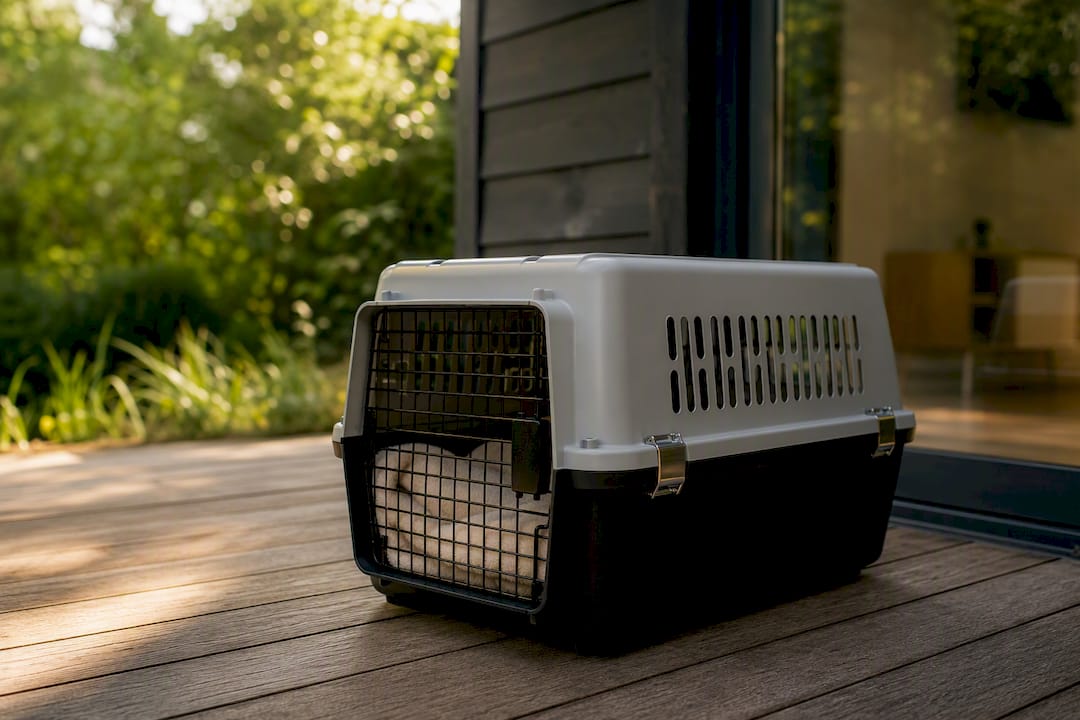
Pro Tip: Choose a top-loading model with metal latches over plastic snap clips. Plastic clips crack with age and cold, and a top opening means you’re not fighting a panicked cat through a narrow front door.
Soft-Sided Carriers: Advantages, Limitations, and Best Uses
Soft-sided carriers exist for one main reason: airlines need something that compresses. Most carriers must fit under the seat in front of you, and a rigid shell simply can’t shrink to do that. A soft carrier folds flat for storage between trips and often works as a familiar resting spot at home, which helps an anxious cat see the carrier as safe territory rather than a trap that only appears before the vet.
Advantages:
- Lightweight enough to sling over a shoulder for a full day of travel
- Collapsible for storage in a closet or under a bed
- Doubles as a cozy home bed, building positive associations before travel day
Limitations: soft carriers offer less structural protection in a hard impact, and only a small number of soft models are crash-tested, so most fabric carriers trade some safety margin for flexibility.
Zippers and mesh are the weak points to watch. Cats can learn to work a zipper slider loose or claw through mesh near the teeth, so look for locking zipper toggles, reinforced stitching, and ripstop fabric before you buy.
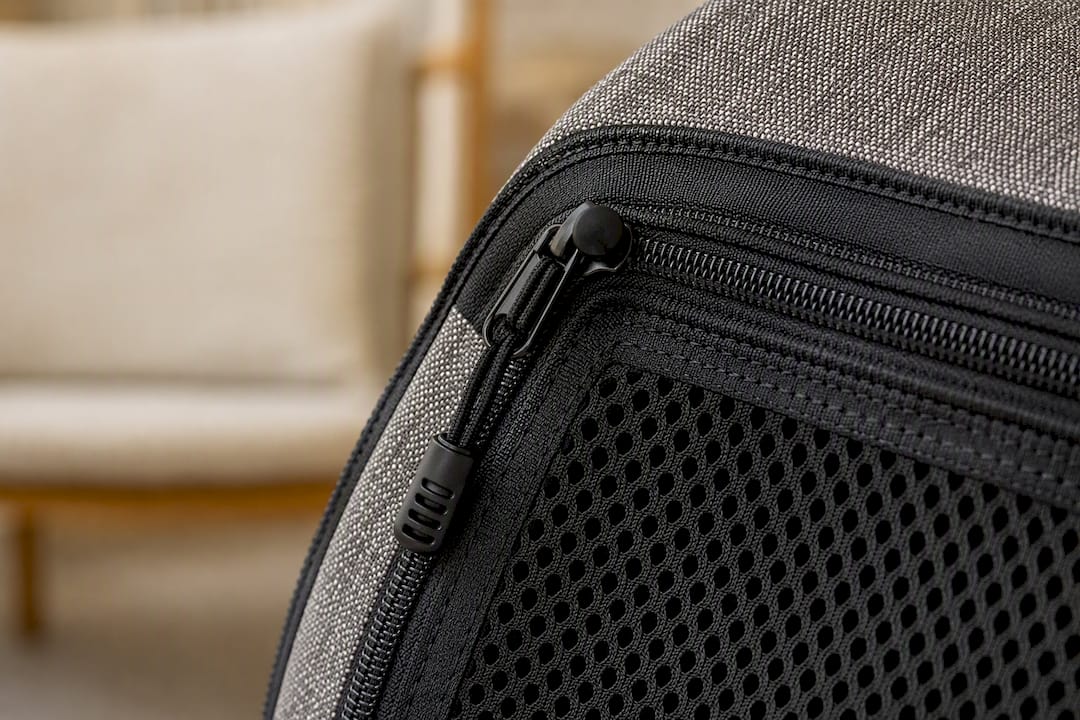
Pro Tip: If your cat has ever escaped a carrier before, treat that as a warning sign, not bad luck. Demand a second layer of security, like a locking zipper pull, not just a single sliding tab.
How Do You Choose the Right Cat Carrier?
Start by measuring your cat, not by guessing a size off a photo. Have your cat stand naturally, then measure nose to tail base for length and shoulder to floor for height, adding a few inches so they can turn around and lie flat inside. Skip carriers sized only by weight limit. A carrier rated for a 15-pound cat can still be too short for a long-bodied breed.
- Check the interior dimensions, not just the advertised weight capacity.
- Decide top-loading or front-loading. Top-loading suits vet visits and easily-frightened cats.
- Confirm secondary security features, like locking zippers or reinforced latches.
- Look for a removable, washable liner for easy cleanup.
- If you fly, check your airline’s exact under-seat dimensions before buying, since most airlines require a soft, compressible carrier for the cabin rather than allowing rigid shells.
Beyond size, prioritize:
- Seatbelt loops or straps to secure the carrier in the car
- Ventilation panels on at least two sides
- Reinforced stitching at stress points around zippers and handles
Match the carrier to how often you travel and how your cat reacts to stress. A calm cat who only visits the vet once a year can get by with one hard carrier. Many experienced owners keep two carriers, a hard top-loader for car trips and vet visits, and a soft airline-compliant carrier for flights and quick errands.
| Situation | Best carrier type |
|---|---|
| Annual vet checkup, calm cat | Hard-sided only |
| Frequent car travel or carsick cat | Hard-sided |
| Occasional flights | Soft-sided, airline-compliant |
| Frequent flyer and frequent driver | Own both types |
Is a Hard or Soft Carrier Safer in a Crash?
Hard-sided carriers resist collapse better in an impact than most soft carriers, and that structural gap is the honest answer to “which is safer.” A handful of soft-sided models have been crash-tested, but the majority of fabric carriers weren’t built with that standard in mind, so the protection gap between shell types is real.
That said, structure is only half the safety equation. An unsecured carrier becomes a projectile in a sudden stop, whether it’s plastic or fabric. A carrier belted to the seat matters as much as what it’s made from.
Pro Tip: If crash protection is your top priority, look for a carrier with built-in seatbelt loops and, where available, one with published crash-test results. A secured soft carrier can outperform an unsecured hard one.
Simple Steps to Get Your Cat Used to a Carrier
Cats resist carriers because the carrier only shows up right before something stressful happens. Break that pattern early.
- Leave the carrier out in a room your cat already likes, door open, for a week or two before any trip.
- Add familiar bedding inside, something that already smells like your cat, to make it feel like part of the house rather than a trap.
- Run short trial closures. Close the door for thirty seconds while your cat is calm inside, then open it and reward them.
- Use the 3-3-3 rule as a mental model: expect roughly three days to adjust to a new environment, three weeks to settle into a routine, and three months to feel fully at ease. Apply the same patience to carrier training instead of expecting comfort overnight.
- Reward every voluntary step in, treats, praise, whatever motivates your cat, so entering the carrier becomes their idea.
For motion sickness, skip a big meal right before travel and keep the ride as smooth and quiet as possible.
Pro Tip: Spray a light mist of a calming pheromone product inside the carrier ten minutes before you leave. It’s a small step that softens a lot of the panic that builds up in the car.
The Meow Picks Team Perspective on Balancing Safety, Comfort, and Design
We spend a lot of time helping cat owners match carrier features to real situations, not just specs on a box. A carrier that looks great in a product photo isn’t worth much if the zipper fails or your cat refuses to go near it. That’s why we curate options with clear dimensions and materials listed on every product page, so you can compare against your own cat’s measurements before buying. A portion of every order also supports cat rescue work, which matters to us as much as getting the fit right.
Curated Carrier Picks Worth a Look
If you’re ready to shop rather than keep comparing specs, The Meow Picks carries airline-friendly soft carriers with dimensions and materials listed right on the product page, so you’re not guessing whether it’ll clear your airline’s under-seat limit. For cats who need a familiar, calming space before and after travel, pairing a carrier with a comfort item like the Catnap Cat Bed helps build positive associations at home.

Every order also puts a portion of the sale toward cat rescue organizations, so a practical purchase does a little extra good on the side. Browse the lifestyle and travel accessories collection to compare a few curated options side by side, check the listed dimensions against your own cat’s measurements, and pick the one that fits your next trip.
Sources
- Cat Carrier Buyer’s Guide: Soft, Hard-Sided & Airline-Approved – Petmate
- 10 Best Cat Carriers of 2026, Tested and Reviewed by Editors — NBC News
- Soft vs Hard Cat Carrier: Which Is Safer? (2026) | GearForPet
- Hard-Sided vs. Soft-Sided Carriers — Travel With Kitties
FAQ
What Is the 3-3-3 Rule for Cats?
It’s a rough timeline for adjustment: about three days to start settling into a new environment, three weeks to build a routine, and three months to feel fully at home. Apply the same patience when training your cat to accept a carrier.
What Type of Carrier Do Cats Prefer?
Cats generally prefer whichever carrier feels familiar and smells like home, which is why leaving a soft carrier out as a resting spot ahead of travel works well. Neither shell type wins outright on comfort. Familiarity matters more than material.
Are Soft Cat Carriers Safe to Use?
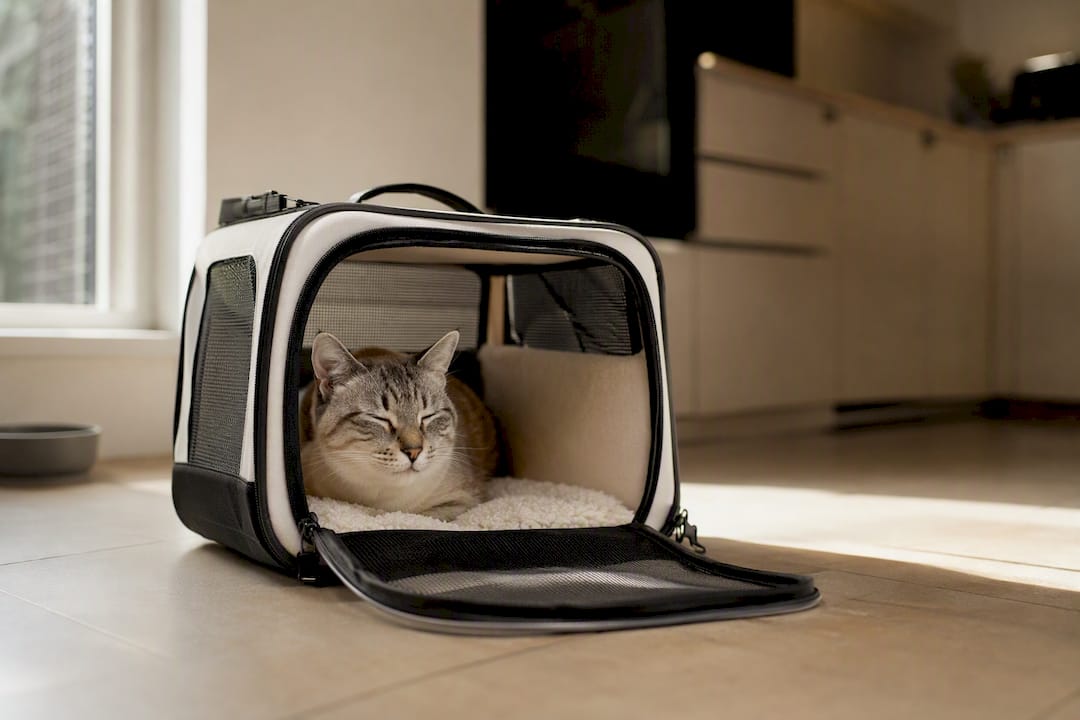
Yes, with caveats. Soft carriers work well for airline cabin travel and short trips, but most models offer less crash protection than a rigid shell, so secure them properly and choose one with reinforced zippers and stitching.
What Cat Carriers Do Vets Recommend?
Vets commonly favor top-loading, hard-sided carriers for exams because they allow a cat to be examined without being pulled out through a front door. For flights, a soft, airline-compliant carrier is the practical choice since cargo-style hard shells rarely meet cabin size limits.
Should I Buy a Soft or Hard Carrier First?
Buy based on your most frequent trip. If vet visits and car travel dominate your routine, start with a hard-sided carrier. If you fly regularly or your cat is easily stressed, start with a soft, airline-compliant model from a resource like The Meow Picks.