The moment you walk into a hotel room with your cat, confine them to the bathroom or one small corner before you unpack anything else. Check the space for gaps, open windows, and loose cords first, then set up a litter box, water, and a hiding spot. Only after that should you open the carrier and let your cat decide when to come out.
TL;DR:
- Ensuring the room is secure with locked windows, blocking gaps, and confirming the door latches properly prevents escape during a hotel stay.
- Acclimating the cat to the carrier beforehand reduces stress, and packing essential items like a portable litter box, familiar toy, and safe hideout streamlines setup.
- Placing the litter box away from food and sleep spaces, and setting up a designated hiding spot, minimizes stress and prevents accidents.
- Opening the carrier only after the room is verified safe and stable avoids overwhelming the cat with sudden changes.
- Limiting initial alone time and avoiding major changes during the stay help reduce stress caused by multiple simultaneous adjustments.
Table of Contents
- Your step-by-step checklist for securing the room
- What to pack and how to prep the carrier before you leave home
- Arranging litter, food, and hiding spots the right way
- Letting your cat come out and explore in their own time
- Hazards worth a two-minute check before you relax
- How long you can safely leave a cat alone in a hotel room
- Why minimizing changes at once matters more than any single product
- Practical layout picks that match this checklist
- What most hotel travel advice gets backwards
- Shop the gear that makes this checklist easier
- Sources
- FAQ
Your step-by-step checklist for securing the room
A bathroom works well as a first stop because it is small, tiled, and easy to inspect in under a minute. There are fewer places for a frightened cat to squeeze into, and the hard floor makes cleanup simple if anyone has an accident from nerves.
Once you have your base camp, work through the room in order:
- Close the bathroom door and check it latches fully, since a door that drifts open defeats the whole plan.
- Inspect windows, balcony doors, and screens. Lock what you can and keep balcony access closed the entire stay, a point echoed by the Cat Fanciers’ Association’s advice on hotel rooms.
- Look under the bed, behind the dresser, and around the vanity for gaps. The same CFA guidance warns that small openings can trap a cat and make getting them out difficult, so block anything suspicious with a suitcase or folded towel.
- Check the HVAC vent cover is secure, since a loose one is an easy escape route.
- Call the front desk to confirm your cat is on file, ask about pet fees, and hang the Do Not Disturb sign so housekeeping does not walk in unannounced.
Only after these five steps should you set the carrier down and open its door.
What to pack and how to prep the carrier before you leave home
A little prep at home saves a lot of stress at check-in. Start acclimating your cat to the carrier weeks before travel by leaving it open in a regular room with a familiar blanket inside, a practice supported by veterinary guidance on cat transport, which links carrier acclimation and hiding opportunities to lower transport stress.
Pack a compact kit that covers the basics without turning your trunk into a cat store:
- A foldable or portable litter box that sets up in seconds, like the ones in our travel collection.
- Absorbent pads or a small litter mat to catch scatter.
- A few days of your cat’s regular food, plus collapsible bowls.
- A scoop, waste bags, and any medication with written dosing instructions.
- A favorite toy and a blanket that already smells like home.
- An updated collar tag and your microchip registration number, just in case.
If your current carrier feels more like a crate than a den, it might be worth comparing a soft vs hard cat carrier before your next trip, or checking airline carrier size rules if you are flying. The Nooee Finn Cat Carrier and Nooee Ash Cat Carrier both work well as a familiar den you carry from home straight into the room.
Arranging litter, food, and hiding spots the right way
Where you put things matters almost as much as what you bring. Cats are particular about keeping their bathroom habits separate from where they eat and sleep, and a hotel room’s small footprint makes that easy to get wrong.
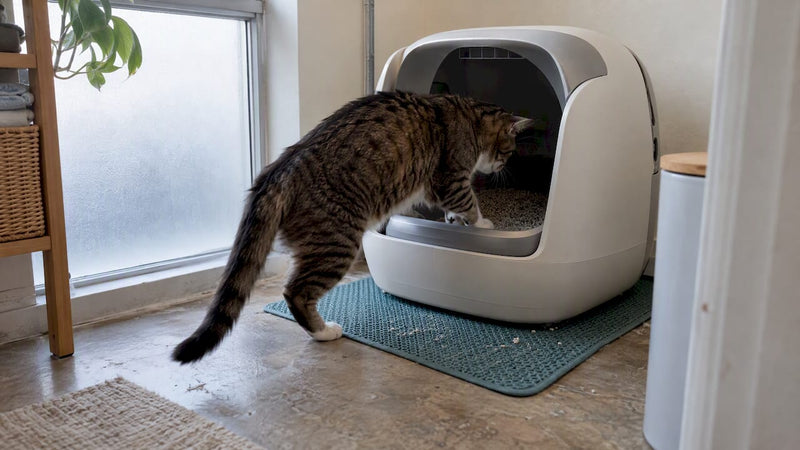
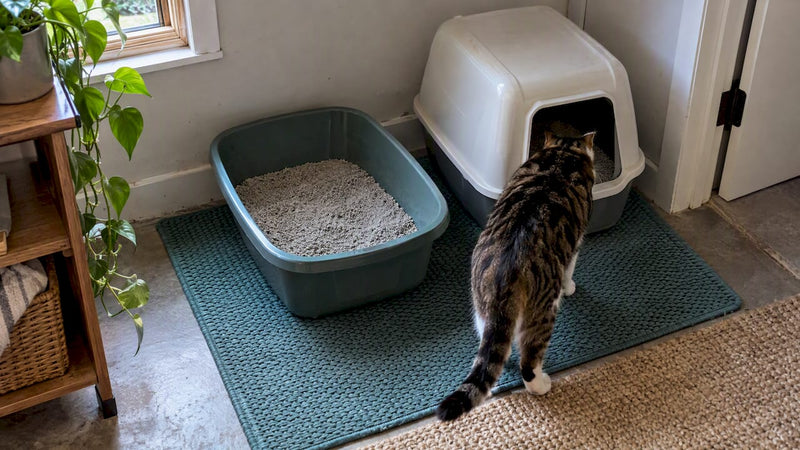
- Place the litter box in a low-traffic corner, as far from the food and sleeping area as the room allows.
- Set food and water in their own spot, using bowls heavy enough that a curious paw cannot tip them.
- Keep the carrier in the room as the primary den, door open, with a soft bed like The Cat Nest Bed placed right beside it.
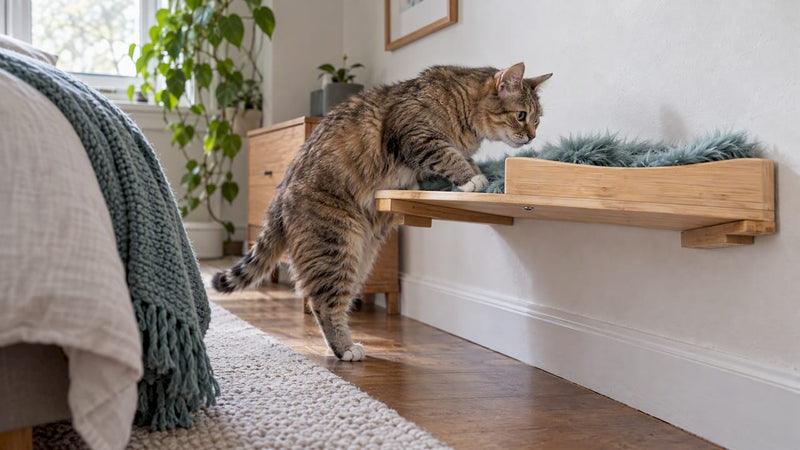
- Add one enclosed or elevated hideaway if you have room in your bag, since cats tend to use a single reliable hideout far more than several half-used ones, a point we cover in one hideaway per cat.
- Tuck a lightweight option like the Apawtment Cat House in a corner for a cat who wants height and privacy at once, choosing cat and dog safe indoor houseplants to decorate without risk.
This layout mirrors the behavior-first thinking in our piece on cat room setup, where separating zones by function cuts down on stress-related accidents.
Letting your cat come out and explore in their own time
Once the room is secure, open the carrier door and step back. Resist the urge to lift your cat out, since forcing the moment tends to backfire.
- Sit quietly nearby, speak in a low voice, and avoid direct eye contact if your cat seems hesitant.
- Let them sniff the doorway, retreat, and try again as many times as they need.
- Watch for ordinary stress signs like a tucked tail or a slow approach, which usually settle within an hour or two.
- Treat heavy panting, repeated vomiting, or sudden aggression as reasons to call a veterinarian, not just quirks to wait out.
- Give seniors and kittens extra time, and introduce multiple cats to the room one at a time if possible.
Pro Tip: Keep the bathroom fan off during the first settling period. The noise adds one more unfamiliar sound on top of everything else your cat is processing.
Hazards worth a two-minute check before you relax
A hotel room hides more risk than it looks like at first glance. A few minutes of cat-proofing heads off most of it.
- Tuck lamp and charger cords out of reach or behind furniture.
- Move glassware, candles, and toiletries off low tables and nightstands.
- Keep the balcony door closed at all times, and if staff permit, slide a piece of furniture against any gap as a backup barrier.
- Block the space under the bed and vanity with a suitcase, pillow, or rolled towel.
- Leave a note for housekeeping about your cat and confirm at the desk that staff know not to let anyone in unannounced.
How long you can safely leave a cat alone in a hotel room
Give your cat time in the room to settle before leaving them alone for the first time, especially if their reaction to new places is unknown.
- On arrival day, stay with your cat through the whole settling-in period described above.
- If you must step out later, confirm the base camp is secure, refresh water, scoop the litter, and double-check your cat’s ID tag.
- Set a check-in plan: a text to yourself with a return time, or a call to the front desk if you will be gone past a couple of hours.
- For longer outings, consider a trusted sitter, a short trip with someone your cat already knows, or leaving your cat home with a sitter instead of bringing them on a long itinerary.
Why minimizing changes at once matters more than any single product
Veterinary behavior resources describe stressor stacking as the buildup of several changes at once, transport, new sounds, handling, that can overwhelm a cat’s ability to cope, according to FelineVMA research on stressor stacking.
One finding worth building your trip around: carrier acclimation and the chance to hide reduce travel-related distress, per veterinary transport guidance. Keeping feeding and play times close to your cat’s normal schedule, as the Cornell Feline Health Center advises, helps offset the new sights and smells a hotel room throws at them.

If your cat seems unusually anxious, talk to a veterinarian before the trip about pheromone products or medication, and never share or repurpose a prescription without their guidance. For some cats, especially those with health conditions or extreme carrier aversion, staying home with a sitter is the better call.
Practical layout picks that match this checklist
Matching gear to each checklist step makes setup faster, not fussier. A compact hideaway gives your cat the enclosed feeling they are seeking the moment they step out of the carrier.
- The Apawtment Cat House and The Cat Nest Bed both work as grab-and-go dens that pack flat and set up in a corner within a minute.
- A portable litter box and a travel-rated carrier from our travel collection cover the two non-negotiables: somewhere to go, and somewhere to hide.
- For a cat who likes to climb and survey a room, a compact option like the Cat Wall Maze at home keeps that instinct satisfied between trips.
- Deeper reading on layout logic lives in our posts on room setup and backpack carriers for cats who travel often.
This guide comes from our team, and every order placed through our marketplace supports cat rescue organizations alongside the gear itself.
What most hotel travel advice gets backwards
Most guides treat the carrier as a problem to solve the moment you check in, something to be emptied out and stashed in a closet. That gets the order wrong. The carrier is the one object your cat already trusts, and taking it away right when everything else is unfamiliar removes the one steady point they have.

The checklist-first approach works because it respects how stress actually builds: not from one big scary thing, but from several small ones arriving at once. A room that has already been inspected and simplified before your cat ever sees it is doing more for their comfort than any amount of fussing over toys or treats afterward.
If you take one thing from this, let it be sequencing. Secure the space, then open the door. Most problems on a cat’s first hotel stay come from skipping that order, not from the room itself.
Shop the gear that makes this checklist easier
A smoother setup starts with the right carrier and a den your cat already recognizes as safe. Our travel collection is built around exactly the steps above: a carrier that doubles as a den, a portable litter box that sets up in a corner, and a soft bed like The Cat Nest Bed for the first few hours of settling in.

Browse Furniture, Technology, and Lifestyle picks curated for cats who travel, and know that part of every order goes toward cat rescue groups. Start with the travel collection and build your kit around whichever trip you have coming up next.
Sources
- FelineVMA resource on stressor stacking and cat-friendly at-home guidance
- 2025 Transportation of Cats in Motor Vehicles position statement, Catvets
- Cornell Feline Health Center guidance on cat wellbeing and predictable routines
- Introducing cats to hotel rooms safely, Cat Fanciers’ Association
FAQ
What is the 3-3-3 rule for cats?
Definitions vary across sources, but it generally refers to a rough timeline for adjustment: a few days to decompress, a few weeks to settle into a routine, and a few months to feel fully at home. For a hotel stay, treat the first few hours as the most important part of that timeline and stick close to your cat during them.
Can you leave a cat unattended in a hotel room?
Yes, but only after your cat has had time to settle and the room has been fully secured with litter, water, and a hiding spot in place. Avoid leaving a cat alone during the first stretch after arrival, since that is when stress runs highest.
How do you say no in cat language?
Cats respond better to a calm, low, firm tone paired with redirecting their attention than to shouting or chasing. Consistency matters more than volume, since repeating the same short sound every time helps a cat connect it to the behavior you want to stop.
What is the highest form of affection from a cat?
Behaviors like slow blinking, kneading, or choosing to sleep near you are widely considered signs of trust and comfort. Context matters too: a cat who settles into a hiding spot you set up for them, rather than staying tense in the carrier, is showing that same trust in a new environment.