Flea combs reliably detect and remove adult fleas and flea dirt, but they do not by themselves break a household infestation. The most useful thing you can do right now: grab a fine-toothed comb, fill a small bowl with warm soapy water, and check your cat’s neck and the base of the tail.
That single check tells you more than almost anything else. Flea comb effectiveness on cats comes down to this: combing catches what is already on your cat’s body, but roughly 95% of a flea population lives off the cat, in carpets, bedding, and cracks in the floor. A comb can’t touch that part of the problem.
Here’s when combing alone is likely enough:
- Mild or early infestations, especially in a single-cat household
- Kittens too young for most flea medications
- Ongoing monitoring after treatment, to confirm fleas are gone
Here’s when you need to escalate beyond the comb:
- Multi-pet homes, where fleas move between animals faster than you can comb
- Heavy infestations with visible flea dirt after multiple sessions
- Any sign of pale gums, lethargy, or anemia in a kitten
Key Takeaways
Flea combs remove adult fleas and flea dirt on contact but cannot reach the 95% of the flea population living as eggs, larvae, and pupae in the home.
| Point | Details |
|---|---|
| Combing catches adults only | The comb’s tight teeth trap adult fleas and flea dirt, not eggs or larvae hiding in the environment. |
| Use soapy water every pass | Dunk the comb in warm soapy water after each stroke to drown trapped fleas immediately. |
| Expect a three-month timeline | Breaking the full life cycle takes roughly three months of combined combing, cleaning, and treatment. |
| Escalate for heavy infestations | Multi-pet homes or persistent flea dirt after two weeks mean it’s time for a vet-recommended product. |
| Choose washable gear | The Meow Picks offers washable beds and grooming-friendly perches like The Grotto that support a flea-clean routine. |
Table of Contents
- How Flea Combs Work (and Why They Miss Most of the Problem)
- A Step-by-Step Flea-Combing Routine You Can Start Today
- What Results Should You Actually Expect?
- Choosing a Flea Comb That Actually Fits Your Cat’s Coat
- Pairing Combing With Environmental Cleaning and Vet-Recommended Products
- How The Meow Picks Fits Into a Flea-Aware Home Routine
- Effectiveness on Adult Fleas Versus Eggs, Larvae, and Pupae
- A Practical Note on Chemical-Free First Steps
- Give Your Cat a Cleaner, More Comfortable Home Base
- Sources
- FAQ
How Flea Combs Work (and Why They Miss Most of the Problem)
A flea comb’s teeth sit close together, usually less than a millimeter apart, tight enough to trap an adult flea’s body but loose enough to glide through fur without pulling. As you drag the comb through the coat, adult fleas and flea dirt (the black, gritty specks that are actually digested blood) get caught between the teeth. Wipe the comb on a paper towel or dunk it in water, and you’ll see exactly what came off your cat.
That part works well. The problem is what the comb never touches.
Only about 5% of a flea infestation exists as adult fleas living on your cat at any given time. The other 95% is eggs, larvae, and pupae scattered through your carpet, furniture, and bedding. A female flea can lay dozens of eggs a day, and those eggs fall off the cat constantly as she moves through the house. The comb catches the flea. It does nothing for the eggs already sitting in your couch cushions.
This is why flea comb benefits for cats are real but narrow. The comb is a detection and removal tool for what’s visible and physically present on the animal. It’s not designed to interrupt a life cycle that spends most of its time somewhere else entirely. Veterinary sources consistently frame combing as one part of an active-infestation response, paired with cleaning the environment and, in most cases, a product that targets the eggs and larvae too.
Understanding this distinction changes how you use the comb. It’s not a failure if fleas keep showing up on it after a few days. That’s actually useful information: it tells you the environmental side of the problem hasn’t been solved yet, even if the cat’s flea count is dropping.
A Step-by-Step Flea-Combing Routine You Can Start Today
Set up before you touch your cat. Lay a light-colored towel or mat on your lap or a table so you can spot fleas and flea dirt against a plain background. Fill a small bowl with warm water and a few drops of dish soap. Keep a couple of treats nearby, and if your cat has mats or tangles, run a regular grooming brush through the coat first. A tangled coat hides fleas and makes the fine teeth of a flea comb snag painfully.
Here’s the routine:
- Start calm. Pet your cat for a minute before picking up the comb. If your cat gets anxious during grooming, a calming spray applied to a nearby blanket can take the edge off.
- Comb with the grain. Work in the direction the hair grows, using short, gentle strokes rather than long drags.
- Focus on flea hotspots. Fleas cluster at the neck, the base of the tail, the belly, and the armpits, warm, protected spots where they’re harder to dislodge by scratching.
- Dunk after every pass. Drown captured fleas immediately in the soapy water. Soap breaks the surface tension that lets fleas float and escape; without it, a flea can climb right back onto the towel.
- Wipe and check. Wipe the comb on a paper towel between dunks so you can see exactly how much flea dirt is coming off.
- Keep sessions short. Two to five minutes is plenty for a stressed cat. You can always come back later in the day.
Do this daily during an active infestation. Once you’re consistently pulling up an empty comb for several days in a row, drop to a weekly check to catch any resurgence early. Judge progress by comparing counts from the same spot on the same towel each time, not by a single day’s total, since how thoroughly you comb naturally varies session to session.
Pro Tip: Keep a small notebook or phone note logging how many fleas and how much flea dirt you find each session. A downward trend over five to seven days is the clearest sign your combined approach, comb plus environmental cleanup, is actually working.
What Results Should You Actually Expect?
A comb removes visible adult fleas in a single sitting, sometimes clearing dozens off a heavily infested cat in one session, but the number varies enormously by coat length, cat cooperation, and how bad the infestation is to begin with. A short-haired, calm cat with a mild flea problem might be flea-free on the comb within days. A long-haired cat in a multi-pet household with an established infestation is a different story entirely.
The timeline matters more than the daily count. Combined with a fast-kill oral treatment, most adult fleas on a cat can be cleared within about a day, but breaking the entire life cycle typically takes several weeks to a few months of repeated treatment and environmental cleaning. That three-month window exists because pupae can lie dormant in carpet fibers for weeks before hatching, and every new hatch restarts the clock on your cat’s exposure.
Owner surveys back up the mixed picture: many report that combing alone resolved mild infestations, but most agree it rarely eliminates a heavier one without help.
Combing works well as the main tool when:
- The infestation is caught early, before eggs have spread widely through the home
- You have one cat and a small, easily cleaned living space
- The cat is a kitten too young for most flea medications
Combing is only supplemental when:
- Multiple pets share the home and keep reinfecting each other
- Flea dirt keeps appearing after a week of daily combing
- You’ve already tried combing alone for two weeks with no real improvement
Choosing a Flea Comb That Actually Fits Your Cat’s Coat
Metal-toothed combs hold up better than plastic ones and tend to catch fleas more reliably because the teeth stay rigid and evenly spaced even after repeated use. Plastic combs flex, and that flex is exactly what lets a flea squeeze through instead of getting trapped.
Tooth spacing matters more than most owners realize. A comb built for short-haired cats often has teeth spaced too tightly for a long-haired cat’s dense undercoat, where it snags and stalls before reaching the skin. For long fur, detangle first with a regular grooming brush, then switch to the fine-toothed flea comb and work in small two to three inch sections. That two-step method reaches the skin without turning grooming into a wrestling match.
Two-sided combs, fine teeth on one edge and wider teeth on the other, give you flexibility without buying two tools. Beyond the comb itself, a few inexpensive extras make the whole process smoother:
- A washable bed or mat you can toss in the wash after each session, cutting down on flea dirt hiding in fabric
- A light-colored towel dedicated to combing sessions, so nothing gets missed against a busy pattern
- A small bowl reserved just for the soapy water dunk
- A soft grooming brush for pre-combing detangling
The Meow Picks carries washable bedding and grooming-friendly perches designed with exactly this kind of routine in mind, pieces that hold up to frequent washing without looking like a piece of medical equipment in your living room.
Pairing Combing With Environmental Cleaning and Vet-Recommended Products
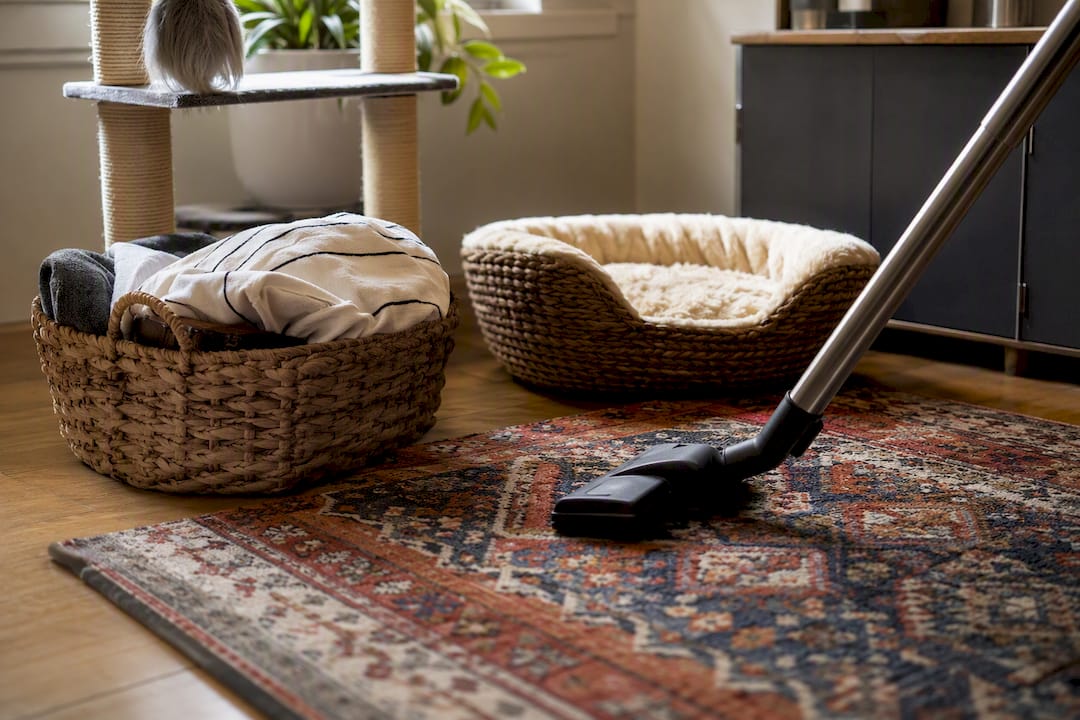
Combing manages the cat. It does nothing for the eggs already in your carpet, so environmental cleaning has to happen alongside it. Vacuum daily during an active infestation, paying extra attention to baseboards, under furniture, and anywhere your cat naps. Wash all pet bedding in hot water weekly, and treat any fabric-covered furniture the cat frequents the same way.
For most infestations beyond the mild or early stage, prescription veterinary products like oral isoxazolines and vet-specific topical treatments outperform over-the-counter options for breaking the cycle long term. These products target the reproductive stages that combing can’t reach. Think of combing as your monitoring and immediate-relief tool, and the vet-recommended product as the piece that actually stops new fleas from hatching.
A few safety rules are non-negotiable:
- Never use a dog flea product on a cat. Many contain permethrin, which is toxic to cats even in small amounts.
- Skip essential oils, garlic, citrus concentrates, and other homemade remedies. Many are toxic to cats and don’t reliably kill fleas anyway.
- For kittens under 8 weeks, combing is often the only safe option since most medicated products aren’t approved for that age.
- Watch for pale gums, unusual tiredness, or weakness, all signs of flea-related anemia that need a vet visit, especially in kittens.
How The Meow Picks Fits Into a Flea-Aware Home Routine
The Meow Picks Team curates designer cat furniture and lifestyle pieces with everyday routines like this one in mind, not just aesthetics. Grooming and cleanup work better when the gear around your cat supports it instead of fighting it.
A few catalog categories pair naturally with a flea-combing routine:
- Washable beds and mats that go straight into a hot wash cycle
- Grooming-friendly perches with removable, machine-washable cushions
- Easy-to-wash toys that don’t trap flea dirt in fabric seams
If your cat scratches or naps on upholstered furniture, reducing flea-harboring textiles around the home is a small change that adds up. Browse the accessories collection for washable, grooming-friendly pieces built for exactly this kind of maintenance.
Effectiveness on Adult Fleas Versus Eggs, Larvae, and Pupae
The clearest way to understand flea comb effectiveness on cats is to separate the four life stages a flea moves through: egg, larva, pupa, and adult. A comb only ever interacts with the adult stage, and only the adults currently on your cat’s body at the moment you comb.

Eggs fall off the cat within hours of being laid and scatter through carpet fibers, cushions, and cracks in flooring. Larvae hatch from those eggs and burrow deeper into fabric and soil, feeding on organic debris, including the flea dirt that combing removes. Pupae are the toughest stage: they form a protective cocoon that can resist vacuuming and even some pesticides, sometimes lying dormant for weeks until conditions (warmth, vibration, carbon dioxide from a nearby host) trigger the adult to emerge.
None of those three stages exist on your cat’s coat. A comb, no matter how fine the teeth or how thorough the technique, cannot reach eggs already in the carpet or larvae feeding in a rug. This is the single biggest misunderstanding owners have about combing. It’s not that the comb doesn’t work. It’s that it only ever works on one quarter of the life cycle, and that quarter represents a small fraction of the total flea population at any given time.
That’s exactly why every credible source on flea control pairs combing with vacuuming, hot-washing bedding, and often a veterinary product that targets eggs and larvae directly. Skip that pairing, and you’re combing off adults while a fresh batch keeps hatching behind you.
A Practical Note on Chemical-Free First Steps
Flea combing is one of the few genuinely safe, chemical-free things you can do the moment you spot a flea, no waiting for a vet appointment, no risk of a bad reaction. Pair it with washing bedding and vacuuming often, and you’re covering both the cat and the environment without reaching for anything harsh. Check our catalog categories and the brand journal for more grooming and home routines that work alongside this one.
— TheMeowPicks Team
Give Your Cat a Cleaner, More Comfortable Home Base
Flea control gets a lot easier when the furniture around your cat can keep up with frequent washing and cleaning. That’s the gap The Meow Picks fills: designer cat furniture built with washable, grooming-friendly materials instead of fabric that traps flea dirt and hair for weeks.

The Apawtment Cat House and The Grotto both come with cushions you can pull off and wash, which matters a lot more once you’re doing hot-water bedding washes weekly during an active flea season. If your cat prefers height and climbing, the Torre Cat Tower and Cat Wall Maze give her elevated spots that are easy to wipe down and keep clear of hiding fleas. A portion of every order supports cat rescue organizations, so outfitting your home also helps cats still waiting for one.
Browse The Grotto or explore the full lifestyle collection to find a piece that fits your cat’s routine and your cleaning schedule.
Sources
- Fleas | CDC
- How to Use a Flea Comb on a Cat | PetMD
- How to Get Rid of Fleas on Cats: A Vet’s Guide | WebVet
- Controlling Fleas | AgriLife Extension
FAQ
How effective are flea combs on cats?
Flea combs reliably remove adult fleas and flea dirt from a cat’s coat, but they only address the small fraction of the flea population that’s actually on the animal at any given time.
Will combing my cat get rid of fleas?
Combing alone can resolve mild or early infestations, but most active infestations need environmental cleaning and often a vet-recommended product to fully break the cycle.
What is the most effective way to get rid of fleas on my cat?
The most reliable approach combines daily flea combing, hot-washing bedding and vacuuming the home, and a veterinary product like an oral isoxazoline that targets the life stages a comb can’t reach.
Can I get rid of fleas with just a flea comb?
Only in mild, early, or kitten-specific cases where the infestation hasn’t spread into the environment yet. For anything beyond that, combing needs to be paired with cleaning and often medication.
Is it safe to use a flea comb on kittens?
Yes, flea combing is safe at any age and is often the only recommended immediate option for kittens under 8 weeks, though heavy infestations in kittens need veterinary supervision due to the risk of anemia.