Cat backpacks are safe for short, supervised outings when the bag has real ventilation, closures your cat cannot bump open, a stable base, and a fit that lets your cat sit and turn around. Skip the guesswork and check five things before you zip your cat in:
- Airflow: mesh panels on at least two sides, not one small vent
- Closures: sturdy zippers plus a secondary clip or fastener
- Tether point: a harness attachment inside the bag, never a collar clip
- Base: rigid or reinforced, so it does not sag under your cat’s weight
- Your cat’s body language: relaxed posture, not flattened ears or frantic pawing
If any of these fails, reach for a different carrier. A hard-sided crate beats a stylish bag every time your cat’s comfort is in question.
Key Takeaways
Cat backpack safety comes down to ventilation, a secure closure and tether point, a stable base, gradual training, and never leaving your cat unattended.
| Point | Details |
|---|---|
| Check ventilation first | Choose mesh panels on multiple sides over a single small vent, especially in warm weather. |
| Train before you travel | Let your cat explore the open backpack at home for a week or more before your first outing. |
| Keep sessions short | Take breaks for water and bathroom access, and skip hot or humid days entirely. |
| Inspect gear every time | Check zippers, seams, tether points, and base rigidity before each outing. |
| Shop the safety checklist | The Meow Picks curates carriers like the Petkit Breezy 2 that match this guide’s ventilation and base standards. |
Table of Contents
- What Are Cat Backpacks and Which Style Fits Your Outing?
- Do the Benefits of a Cat Backpack Outweigh the Risks?
- How Do You Choose a Safe Cat Backpack?
- How Do You Train a Cat to Accept a Backpack?
- How Long Can a Cat Safely Stay in a Backpack?
- How Do You Clean and Maintain a Cat Backpack?
- Why Trust This Cat Backpack Safety Guidance?
- What Do You Do if Your Cat Panics in the Backpack?
- Are the Materials in Your Cat’s Backpack Safe?
- Sources
- FAQ
What Are Cat Backpacks and Which Style Fits Your Outing?
A cat backpack is a wearable, structured carrier that lets you keep both hands free while your cat rides at chest or back height. Four styles dominate the market, and each solves a different problem.
- Bubble/clear-window backpacks give your cat a wide view but often skimp on airflow around that acrylic dome, which traps heat fast.
- Mesh backpacks breathe well and suit warm weather, though the open sides offer little privacy for a nervous cat.
- Soft-sided backpacks are lightweight and packable but can sag without an internal frame.
- Hard-hybrid backpacks combine a molded base with mesh or fabric panels, balancing structure and airflow.
For a quick vet visit, a covered soft or hybrid bag calms an anxious cat. For a sunny hike, mesh wins on ventilation. Save clear-window bubble bags for cool, calm environments only.
Do the Benefits of a Cat Backpack Outweigh the Risks?
Used correctly, a backpack gives you real advantages a traditional box carrier does not. Your hands stay free on stairs, through subway turnstiles, or juggling a leash and a coffee. The elevated position keeps your cat off cold pavement and away from strange dogs at nose level. Many cats also calm down simply from being close to your body heat and voice, since proximity works as a reassurance cue rather than a gimmick.
The risks are just as real, and they cluster around a handful of failure points. Overheating tops the list, especially in bubble-style bags with a single small vent that traps warm air against the dome. A professional cat trainer notes that many bubble backpacks run too small and too poorly ventilated for comfortable use, and that bouncing motion during walking can add physical stress on top of heat stress, according to reporting on cat backpack safety. Visual overstimulation is another concern: a cat that can see fast-moving traffic, strangers, or dogs through a clear panel may spiral into panic rather than calm.
Other risks to watch for:
- Escapes through weak or single-point zipper closures
- A sagging, unsupported base that shifts your cat’s weight awkwardly
- Extended confinement without breaks, which raises stress even in a well-designed bag
Some cats simply are not backpack candidates. Very anxious cats, cats with respiratory or joint conditions, and kittens too small to meet the bag’s minimum size all need either more preparation time or a different transport method entirely. Design failure modes worth watching for include undersized vents, unreinforced bases, and zippers a determined paw can pop open from inside.
How Do You Choose a Safe Cat Backpack?
Run through this checklist before you buy, whether you are reading product photos online or standing in a store aisle.
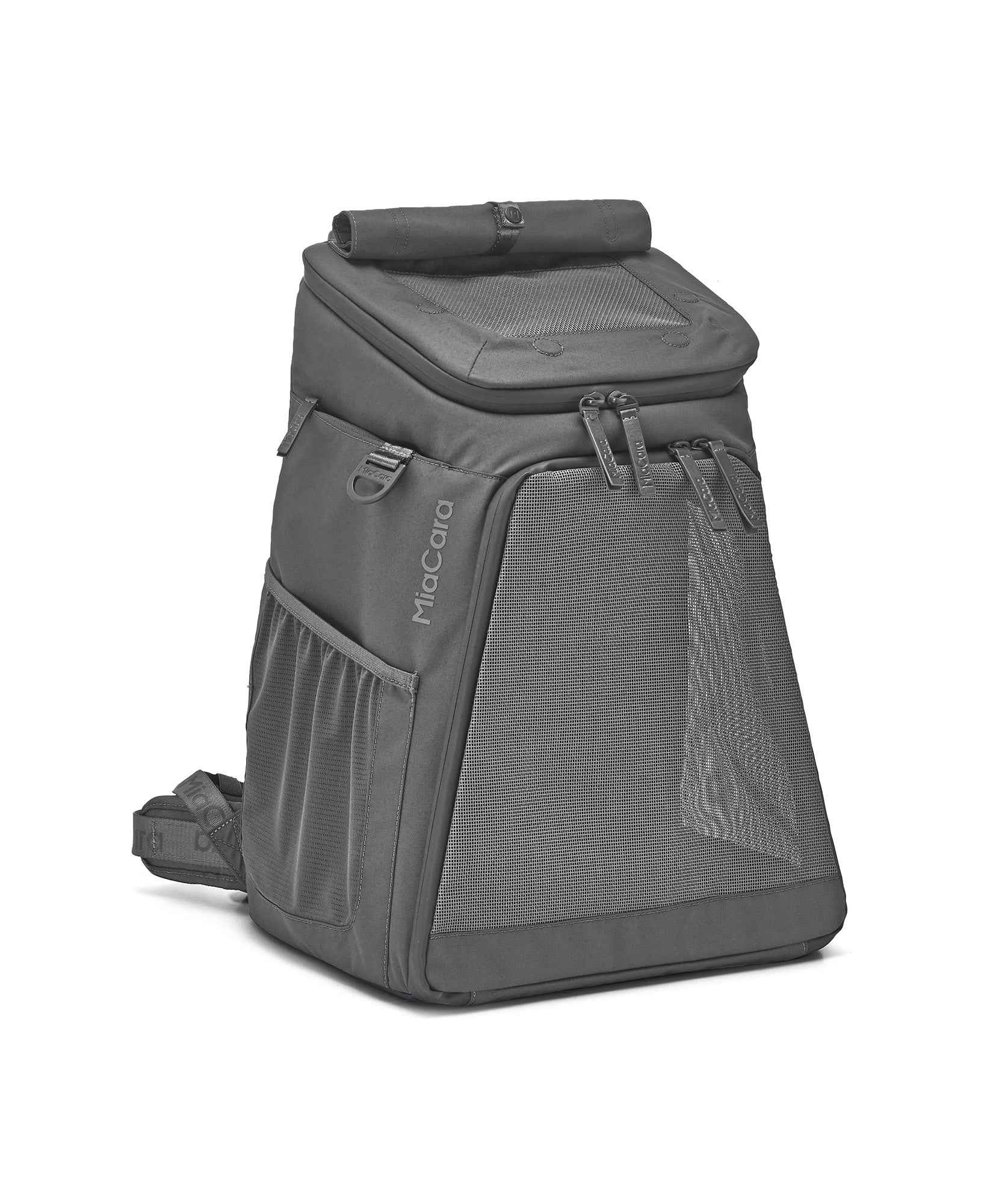
- Size: your cat should be able to sit upright and turn around without touching the sides. Check the manufacturer’s stated weight limit and match it to your cat’s actual weight, not their “usual” size.
- Ventilation: look for mesh panels on multiple sides, not one vent. Crossflow airflow (mesh in, mesh out) matters more in warm climates than in cool ones.
- Base structure: press on it in photos or in person. A rigid or reinforced base should not visibly flex under light pressure.
- Closures: quality zippers with pull tabs your cat cannot grip, plus a secondary fastener like a clip or magnetic seal.
- Tether or harness points: an interior D ring or strap that clips to a properly fitted harness, never to a collar.
- Privacy options: a cover flap or adjustable mesh panel that lets you dim the view when your cat gets overwhelmed.
- Cleaning: removable, washable padding. A bag you cannot easily clean becomes a hygiene problem fast.
The Meow Picks’s buyer’s guide to backpack carriers walks through these features side by side if you want to compare specific models before you commit.
Pro Tip: Bring your cat’s carrier weight limit with you when shopping. A bag rated for an 8 pound cat will sag fast under a 12 pound one, even if the interior looks roomy enough on the shelf.
How Do You Train a Cat to Accept a Backpack?
Rushing this step is the single biggest reason backpack outings go badly. Give your cat real time to build a positive association before you ever zip the bag closed outdoors.
- Home familiarization. Leave the backpack open on the floor for a week or more. Scatter treats inside, add a blanket that already smells like your cat, and let curiosity do the work.
- Short voluntary entries. Reward your cat for stepping in and out on their own. No lifting, no pushing, no rushing.
- Secure indoor sessions. Once your cat enters willingly, close the bag for a minute or two and carry them around the living room. Watch for flattened ears, tail flicking, or heavy panting, all signs to stop and reset.
- Outdoor practice near home. Start on your porch or driveway. Extend the distance and time gradually, always ending on a calm note rather than pushing until your cat is stressed.
Clip the tether only to a properly fitted harness, never a collar, since a startled cat can slip a collar or injure their neck pulling against it. Cat trainers and behaviorists consistently point to owner responsiveness to feline stress cues as the real determinant of safety, more than any single piece of gear, according to expert commentary on backpack use. Forcing a scared cat into a bag teaches them to dread it, which defeats the entire point of training.
How Long Can a Cat Safely Stay in a Backpack?
Keep sessions short and build in breaks for water, bathroom access, and a chance to stretch. A quick errand or a walk around the block is a reasonable ask. An all-day outing in a backpack is not, regardless of how calm your cat seemed at the start.
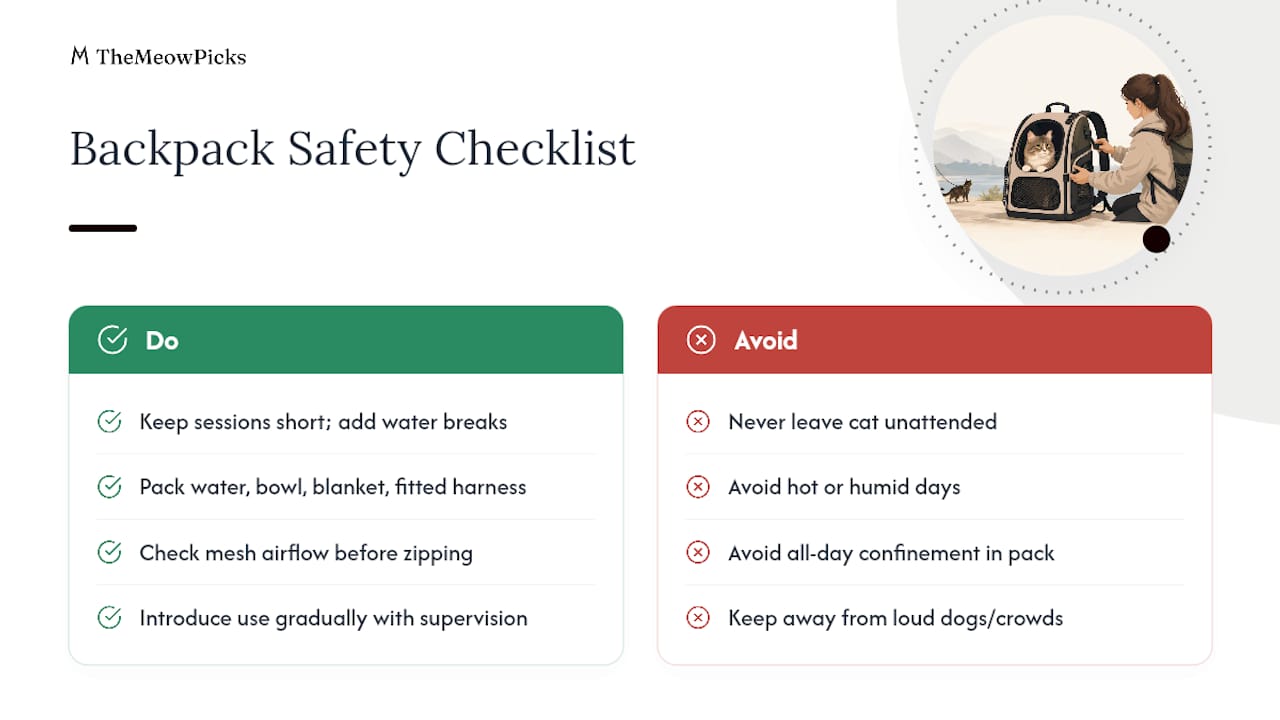
Skip hot or humid days entirely, and check airflow through the mesh panels before you zip your cat in, not after you notice them panting. Vet-reviewed guidance recommends introducing backpack use gradually and keeping confinement sessions limited, with supervision treated as essential rather than optional, per Catster’s safety review.
Never leave your cat unattended in a backpack, even for “just a minute” in a store or on a bench. Stay alert around loud noises, dogs, and crowded public transit, where a startled cat has nowhere to retreat. Pack the basics before you leave: water, a collapsible bowl, a familiar blanket, and the fitted harness your tether clips to.
How Do You Clean and Maintain a Cat Backpack?
A backpack that stays clean and mechanically sound is a backpack that stays safe. Build a quick check into your routine before it becomes an afterthought.
- Follow the product’s care label exactly, and wash removable mats and liners on a regular schedule.
- Wipe down interior surfaces with a pet-safe cleaner between uses, especially after any accidents.
- Inspect zippers, seams, tether points, and base rigidity before every outing, not just when something looks obviously worn.
- Store the backpack open at home between trips so it stays a familiar object rather than a signal that something stressful is about to happen.
- Replace worn zippers, frayed straps, or a base that has started to flex the moment you notice the change.
Why Trust This Cat Backpack Safety Guidance?
The Meow Picks is a curated marketplace built around designer cat furniture and travel gear from independent makers, and a portion of every order supports cat rescue. The safety checklist in this guide draws on vet-reviewed reporting and carrier safety testing rather than marketing copy.
- Compare backpack features side by side in The Meow Picks’s buyer’s guide before you shop.
- If your cat also travels by air, check airline carrier size requirements so you are not caught off guard at the gate.
- Author credentials and any proprietary testing data will appear here if and when they become available.
What Do You Do if Your Cat Panics in the Backpack?
Stop moving the moment you notice signs of distress: dilated pupils, frantic scratching at the mesh, yowling, or drooling. Find a quiet, shaded spot away from traffic, dogs, or crowds before you do anything else.
Unzip the main closure partially first, just enough to check your cat’s condition without giving them a full escape route, since a bolting cat in an unfamiliar outdoor area is its own emergency. If your cat is simply overwhelmed but physically fine, speak in a calm, low voice and offer a treat once the panting slows. Give them several minutes before deciding whether to continue the outing or head straight home.
If you see signs of heatstroke (heavy panting, bright red gums, weakness, or vomiting) get your cat into shade or air conditioning immediately, offer small amounts of water, and contact a veterinarian right away. Heatstroke in cats can escalate quickly, and home cooling measures are a bridge to veterinary care, not a substitute for it.
For a physical injury, such as a paw caught in a zipper or a scratch from panicked clawing, check for bleeding and apply gentle pressure with a clean cloth if needed. Keep the cat as still as possible and get to a veterinarian or emergency animal hospital promptly for anything beyond a minor scrape.
Carry a basic plan every time you use a backpack: know the nearest emergency vet along your route, keep a small first aid kit with gauze and a spare cloth, and never assume a “quick errand” means you can skip these precautions.
Are the Materials in Your Cat’s Backpack Safe?
What touches your cat’s skin and paws matters as much as ventilation or base structure. Look for backpacks made with non-toxic fabrics and dyes, since cats groom themselves constantly and will ingest trace amounts of whatever coats the interior lining.
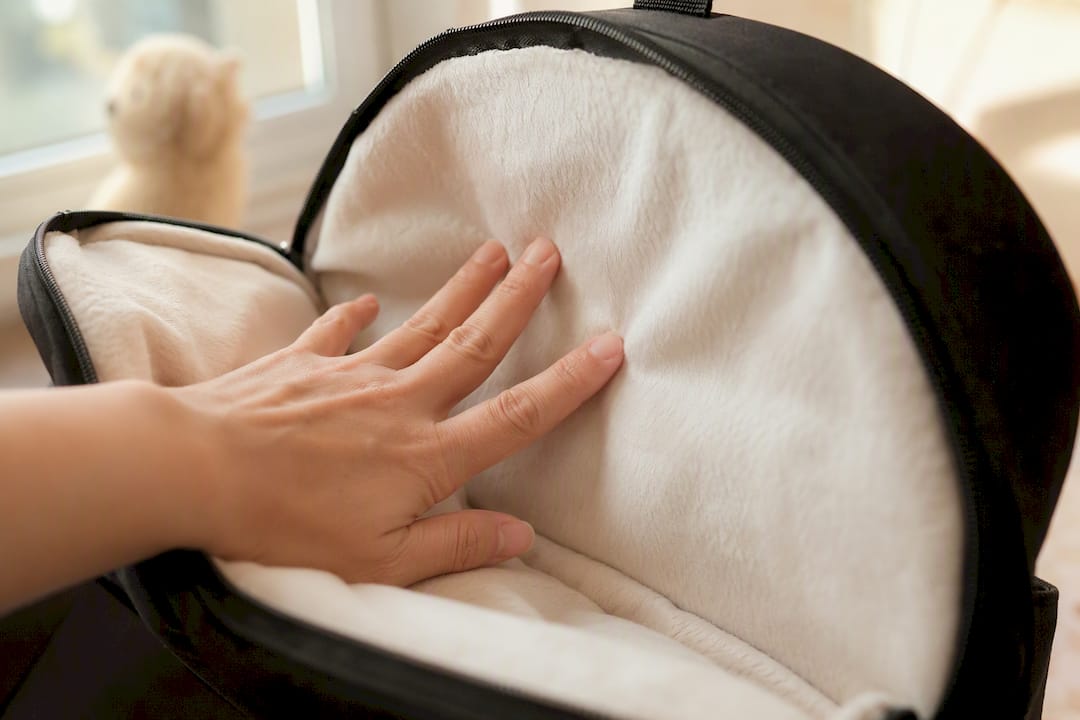
Hypoallergenic, washable padding reduces the odds of skin irritation, particularly for cats with sensitive skin or existing allergies. Avoid interiors with strong chemical odors straight out of the packaging. That smell often signals off-gassing from adhesives or synthetic coatings, and it is worth airing the bag out for a few days before first use.
Check hardware, too. Zippers, buckles, and D rings should be free of sharp edges or rough seams that could snag fur or scratch skin during entry and exit. A well-made backpack keeps stitching flat against the interior rather than exposed, where it could otherwise rub against your cat’s coat over a longer outing.
If your cat has known allergies, ask about specific fabric composition before buying rather than assuming “pet safe” labeling covers your cat’s particular sensitivities. Manufacturers vary widely in what they disclose, and a listing that omits fabric content is worth a follow up question before you purchase.
A Safety-First Take From The Meow Picks Team
The backpack itself is rarely the problem. Rushed training and ignored body language are what turn a good bag into a bad experience. Pair a solid checklist with patience, and pair patience with a calm home base, like a Perla Cat Cave, where the backpack can live between trips. Every purchase through The Meow Picks also supports cat rescue work.
Gear That Meets the Safety Checklist
Once you know what to look for, outfitting your cat for short outings gets a lot simpler. The Meow Picks curates carriers and travel accessories from independent makers, so you are not choosing between “stylish” and “structurally sound.”
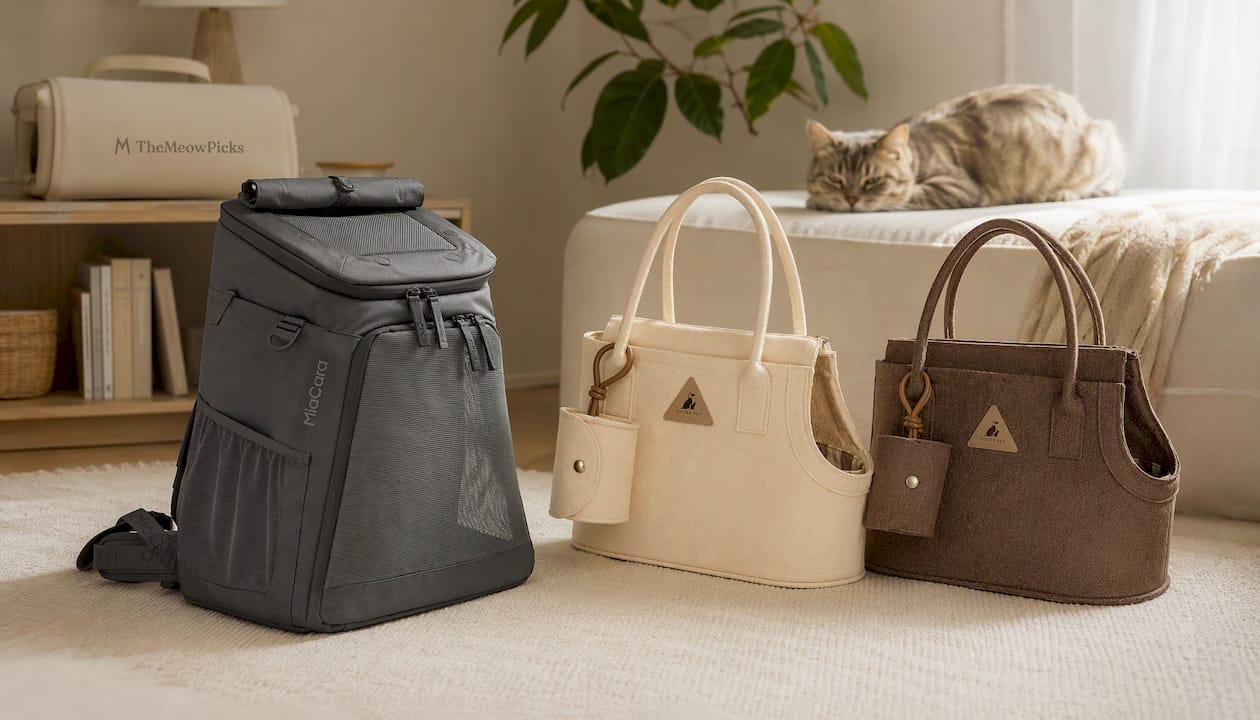
Start with the carrier itself. The Petkit Breezy 2 Cat Carrier and Nooee Ash Cat Carrier both feature the ventilation and structured base this guide flags as non-negotiable, with removable mats that make cleanup between outings quick. For the training phase, a cozy home base makes the whole process easier. The Perla Cat Cave gives your cat a familiar den scent to associate with calm, and The Gardens offers a vertical perch that reinforces the same sense of elevated safety a backpack provides outdoors.
Browse the full cat accessories collection to build out your travel kit before your next outing, and remember that every order supports cat rescue organizations alongside your purchase.
Sources
- Is It Cruel to Use a Cat Backpack? Vet Reviewed Safety Tips & Risks
- Is Traveling With A Cat Backpack Cruel? Here’s What A Professional Cat Trainer Says
- Are cat backpacks safe? Learn how to travel with your cat
FAQ
Do Vets Recommend Cat Backpacks?
Veterinary guidance generally supports backpacks when they have proper ventilation, a stable structure, and harness attachment points, used for short, supervised sessions rather than extended confinement.
Is a Cat Backpack Safe for Cats?
Yes, for most cats, when the bag passes the ventilation, closure, base, and tether checks in this guide and your cat has been gradually trained to accept it.
What Is the 3-3-3 Rule for Cats?
The 3-3-3 rule usually refers to helping a newly adopted cat adjust over 3 days, 3 weeks, and 3 months, not a backpack-specific guideline, so treat backpack training as its own separate, gradual process.
Do Cats Prefer Backpacks or Carriers?
Individual preference varies, but many cats do better in covered, low-visibility carriers or backpacks that limit overstimulation, rather than clear bubble-window designs that expose them to constant outside movement.