Cat Lick Mat
Yes, a cat lick mat is worth buying. It’s a low-cost tool that slows down fast eaters, gives bored cats something to do, and calms many cats during stressful moments like vet visits or fireworks. Main uses:
- Slow feeding to reduce gulping
- Enrichment for bored or anxious cats
- Calming support during stressful events
This guide covers safe spreads, cleaning rules, and picks from The Meow Picks that pair well with lick-mat routines.
Key Takeaways
A cat lick mat slows eating, reduces boredom, and calms many cats, but only when the pattern matches the treat and the surface is cleaned and inspected regularly.
| Point | Details |
|---|---|
| Match pattern to treat | Use Soother-style mats for runny food and Buddy or Playdate patterns for thicker spreads. |
| Freeze for longer sessions | Freezing wet spreads for one to two hours extends licking time and helps anxious cats settle. |
| Clean and inspect often | Dry mats completely between uses and replace any mat showing tears or worn ridges. |
| Supervise chewers | Cats that chew rather than lick need a tuff or polypropylene-base mat and direct supervision. |
| Pair with a stable feeding spot | The Meow Picks’ Desco Cat Feeder and Dog Proof Cat Feeder give lick-mat sessions a tidy, contained base. |
Table of Contents
- What Is a Cat Lick Mat and How Does It Work?
- What Are the Real Benefits of a Lick Mat for Cats?
- Which Lick Mat Pattern and Material Should You Choose?
- What Can You Put on a Lick Mat and How Do You Freeze It?
- How Do You Clean and Care for a Cat Lick Mat Safely?
- How The Meow Picks’ Curated Pieces Pair With Lick-Mat Routines
- How Do You Choose the Right Lick Mat?
- Why We Curate Lick-Mat-Friendly Pieces
- Shop the Picks: Feeding Stations and Enrichment Pieces
- Links for Specs and Recipes
- Sources
- FAQ
What Is a Cat Lick Mat and How Does It Work?
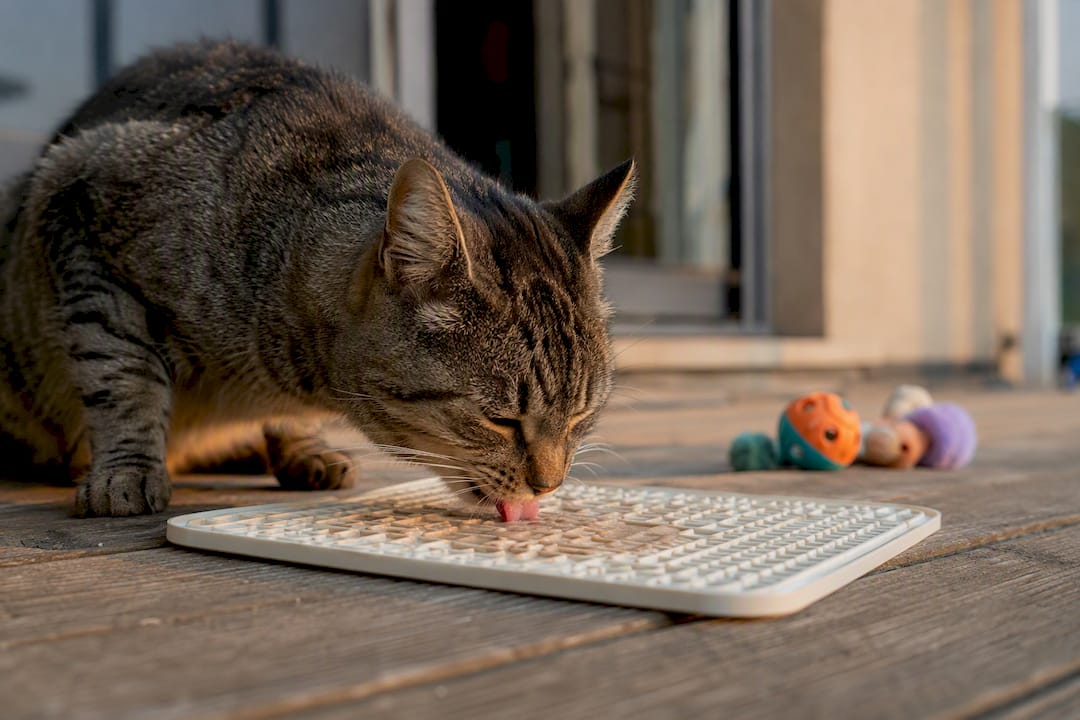
A cat lick mat is a textured silicone or rubber pad with raised ridges, nubs, or grooves designed to hold food so a cat has to lick it off instead of gulping it down. The friction and repetition are the whole point.
Repetitive licking is a naturally calming, self-soothing behavior for cats, and it’s part of why a lick mat for cats works so differently than a standard bowl. A bowl lets a cat eat in seconds. A lick mat stretches that same meal into a slower, more deliberate session.
Compared to puzzle feeders or slow-feed bowls, a lick mat needs no batteries, no moving parts, and almost no learning curve. Most cats figure it out on the first try.
What Are the Real Benefits of a Lick Mat for Cats?
A lick mat gives your cat three things a regular bowl can’t: mental engagement, a slower pace, and a bit of built-in dental care.
Mental stimulation matters more than most owners realize. A bored indoor cat with nothing to do all day is prone to overeating, overgrooming, or picking fights with the cat down the hall. A textured surface that takes effort to clean off breaks up that boredom in five or ten minutes flat.
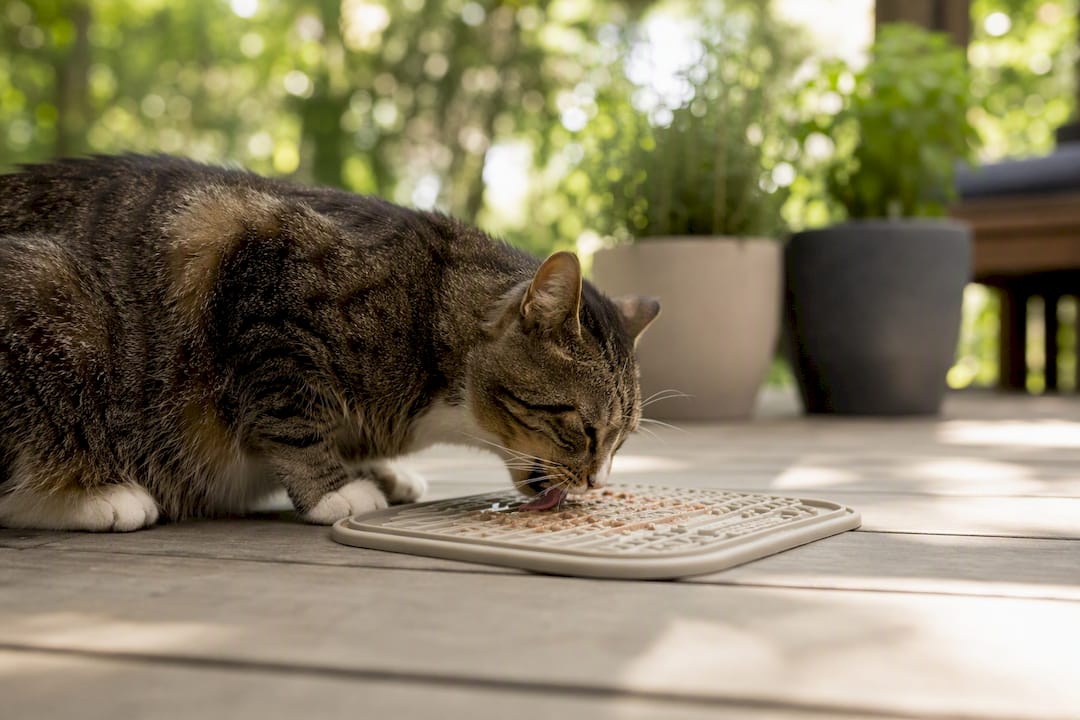
Slower eating also has a practical payoff. Cats that gulp food are more prone to regurgitating it right back up, and a lick mat physically prevents that speed by forcing small, repeated licks instead of big mouthfuls.
There’s an oral hygiene angle too. Textured surfaces increase saliva production and can help scrape food particles off the tongue, giving a mild cleaning effect you don’t get from a smooth bowl. It’s not a substitute for dental care, but it’s a nice side benefit of a tool you’re already using for feeding.
Which Lick Mat Pattern and Material Should You Choose?
Not every lick mat surface works the same way, and picking the wrong one for your treat is the most common reason cats lose interest fast.
Different surface patterns suit different treat consistencies. A Soother-style pattern, with its shallow ridges, is built for runny or liquid treats like broth or thin purees. A Buddy or Playdate pattern has deeper wells and works better for thicker, chunkier spreads like wet food or shredded meat that would just slide off a flatter surface.
Materials matter just as much:
- Food-grade TPR (thermoplastic rubber) is the standard for most lick mats and is generally freezer and dishwasher safe.
- A polypropylene base adds rigidity and holds up better if your cat is a determined chewer.
- Always check the product listing for BPA-free labeling and specific dishwasher guidance, since this varies by model.
Pro Tip: If your cat ignores a new lick mat, don’t assume they hate the concept. Try switching pattern styles before giving up. A cat that’s bored by a Soother might light up over a Playdate with the same exact treat.
What Can You Put on a Lick Mat and How Do You Freeze It?
Keep it simple and skip anything with xylitol, onion, garlic, or excess salt. Safe options include plain wet food, canned fish, cooked shredded chicken, plain yogurt, unsalted bone broth, and pet-safe purees.
- Spread a thin, even layer across the textured surface so the ridges do their job.
- Layer flavors for variety. A base of pureed pumpkin with a drizzle of broth on top keeps things interesting.
- Freeze the loaded mat flat for one to two hours if you want a longer session; this is especially useful for runny spreads that would otherwise disappear in under a minute.
- Thaw briefly at room temperature if the mat comes out of the freezer rock solid, since a cat can’t get much traction on frozen ice.
Freezing wet spreads reliably increases session length, which makes it a smart move for anxious cats who benefit from a longer, more predictable distraction.
How Do You Clean and Care for a Cat Lick Mat Safely?
Cleaning routine matters more with lick mats than with a bowl, since the textured grooves trap food residue that plain rinsing won’t reach.
- Check the product listing for handwash versus dishwasher-safe guidance. Not every mat tolerates high heat the same way.
- Dry the mat completely before storing it, since damp grooves are a breeding ground for bacteria.
- Inspect the surface regularly for tears, chunks missing, or worn ridges, and replace it if you spot damage.
- If your cat is a chewer rather than a licker, supervise every session. A lick mat is not a chew toy, and a determined chewer can tear off small pieces.
As for frequency, lick mats can be used daily as a slow-feeding tool, or reserved for specific stressful events like vet visits, moving day, or fireworks. If your cat starts avoiding the mat or seems anxious around it, scale back and reintroduce it slowly later.
How The Meow Picks’ Curated Pieces Pair With Lick-Mat Routines
A lick mat works best when it has a proper home, not just a random spot on the kitchen floor. The Meow Picks curates designer furniture and feeding pieces that give a lick-mat session structure and a bit of style.
- The Dog Proof Cat Feeder is wall-mounted and raised, which keeps a lick mat out of reach of a nosy dog and stops sessions from turning into a shared meal.
- The Desco Cat Feeder, Powder-Coated, Porcelain Bowls gives a lick mat a stable, contained base so spreads don’t slide around on a hard floor.
- The Apawtment Cat House and Perla Cat Cave create a quiet, enclosed spot for anxious cats who do better licking somewhere they feel hidden.
- The Torre Cat Tower, The Grotto, and The Gardens work well for cats who prefer enrichment up high, away from foot traffic.
- The Cat Wall Maze adds a vertical enrichment layer for cats who want to explore before and after a lick-mat session.
Pro Tip: Set up a fixed feeding spot using one of these pieces so your cat learns to associate that specific location with calm, low-stress licking time. Consistency helps nervous cats settle into the routine faster.
How Do You Choose the Right Lick Mat?
Run through this short checklist before you buy:
- Match the surface pattern to what you’ll actually spread on it. Runny treats need a Soother-style mat; chunky food needs deeper Playdate-style wells.
- Check the care label for freezer safety, dishwasher compatibility, and BPA-free confirmation.
- Consider size relative to your cat’s face and paws, and look for a mat with anti-slip backing or a suction base.
- If your cat is a known chewer, prioritize a polypropylene-base or tuff-style model, and plan to supervise regardless.
- Think about placement. Pair the mat with a stable feeder base or a quiet nook so the session stays contained and calm.
Why We Curate Lick-Mat-Friendly Pieces
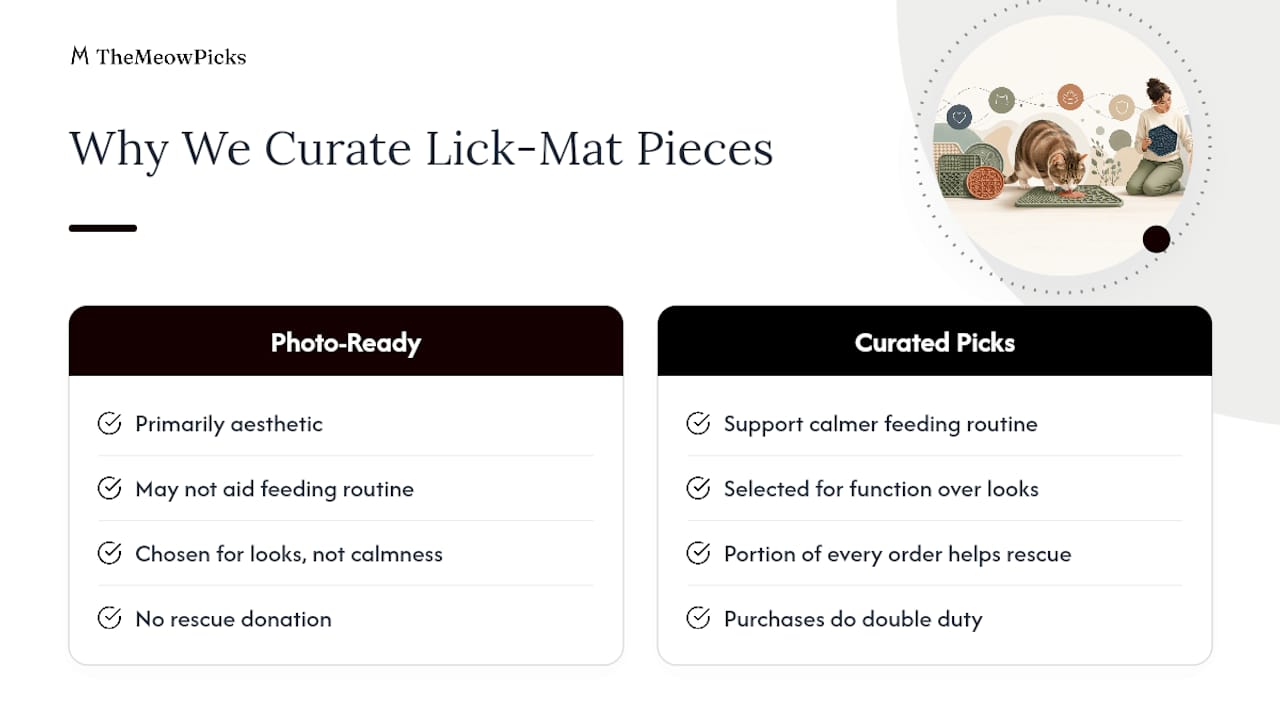
We look for pieces that actually support a calmer feeding routine, not just ones that look good in a photo. A portion of every order at The Meow Picks supports cat rescue, so a thoughtful feeder or hideaway purchase does double duty: better routine for your cat, real help for cats still waiting on one.
Shop the Picks: Feeding Stations and Enrichment Pieces
Once you’ve settled on a lick mat and a spread your cat actually likes, the next step is giving that routine a proper spot in your home. The Meow Picks curates feeding stations, towers, and hideaways from independent makers, so you’re not stuck choosing between something functional and something that fits your space.
The Dog Proof Cat Feeder and Desco Cat Feeder both give a lick mat a stable, tidy base, while the Perla Cat Cave offers a quiet retreat for cats who lick best when they feel tucked away. Every order supports cat rescue organizations, so upgrading your cat’s feeding setup helps a cat somewhere else find a home too. Browse the Dog Proof Cat Feeder page now to see sizing and material details before you decide.
Links for Specs and Recipes
Check manufacturer pages for pattern and material specs and safe spread ideas. See The Meow Picks’ guide on keeping indoor cats happy for more enrichment pairings.
Sources
FAQ
Are lick mats actually good for cats?
Yes, for most cats. They slow down fast eaters, give bored cats something to do, and the repetitive licking motion is naturally calming.
What can you put on a lick mat for cats?
Safe options include plain wet food, canned fish, cooked shredded chicken, plain yogurt, and unsalted bone broth. Avoid xylitol, onion, garlic, and heavily salted foods.
How often should I give my cat a lick mat?
You can use one daily as a slow-feeding tool or save it for specific stressful events like vet visits or fireworks, depending on what your cat needs.
Do you freeze lick mats for cats?
Yes. Freezing a loaded mat for one to two hours extends the session, which works especially well for runny spreads and anxious cats who benefit from a longer distraction.
Can lick mats help with dental health?
They offer a mild benefit. Textured surfaces increase saliva and can help scrape food off the tongue, though they don’t replace regular dental care.