There is a specific shade of beige that seems to exist only on cat furniture. You know the one. It shows up on a carpeted tower the size of a small wardrobe, and from the day it lands in the living room you spend a little energy every week angling the sofa so people notice it less.
For a long time, that was the arrangement. Give the cat somewhere to climb and scratch, and hand over a corner to something you would never have chosen. The cat was delighted. You coped.
That arrangement is finally off the table. A wave of independent makers has started treating cat furniture like furniture, designed around how it actually gets used, built from materials you would want in your hands, shaped to hold its own in a room full of grown-up things. Modern cat furniture you have no reason to hide.
Choosing it well comes down to knowing what your cat is really after, and spotting the difference between a piece that lasts and one you will be dragging to the curb by next summer.
What separates good cat furniture from the rest
Good cat furniture has to satisfy two critics who want opposite things. Your cat is judging on instinct. You are judging on whether the thing wrecks the room. Cheap furniture picks a side. The pieces worth owning quietly manage both.
Your cat's demands are older than any of this, and not up for negotiation. Height, because a cat feels safest looking down on its territory, which makes a tall perch worth more than any stretch of floor. Something that does not move, because a tower that sways when a cat lands gets written off in a single leap. And a real surface to scratch, because scratching is not a vice but a daily need, wrapped up in claw health, a good stretch, and leaving a mark.
Your demands are simpler. It has to look like it belongs, and it has to survive. Solid wood, wool felt, honest sisal, colors that keep their voice down, and construction that holds up to a cat using it hard for years rather than months. The gap between a cheap tower and a considered piece is not only the look. It is whether the thing is still standing when your cat is old.
How to choose a cat tree your cat will actually use
A beautiful piece your cat ignores is an expensive sculpture. Get the fundamentals right before you fall for the finish.
Go tall
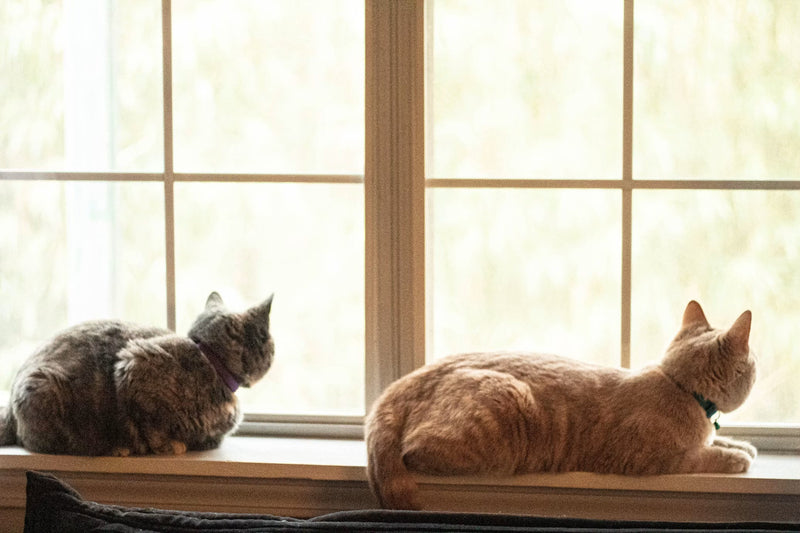
Height is the single feature most likely to make a cat fall for a piece. Something that reaches a windowsill, or lets your cat look down on the whole room, speaks straight to the urge to climb and keep watch. If your ceilings can take it, buy up.
Buy something that does not wobble
A wide, heavy base is what keeps a tall piece honest. For wall shelves or a climbing system, that means proper fixings into the wall, not adhesive strips and optimism. A cat reads stability in about two seconds, and will not trust its weight to anything that gives.
Match the scratch surface to your cat
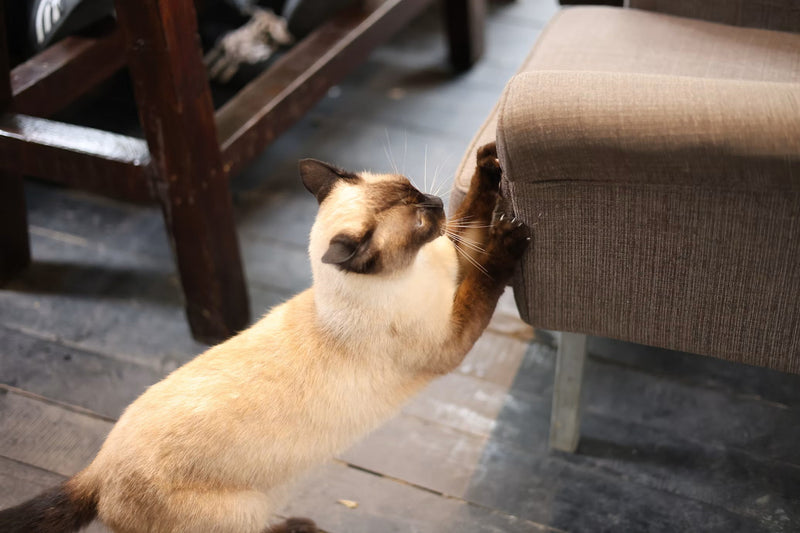
Cats have preferences. Some love the coarse drag of sisal, others want bare wood or a woven mat. A piece that builds a tall scratching surface into the structure itself earns its keep twice, letting your cat stretch up to full height, which is exactly the posture it is hunting for.
Offer a lookout and a hideaway
The best pieces give a cat both: somewhere high and open to survey from, and somewhere enclosed to disappear into. Cats move between swagger and caution all day, and a piece that serves both moods is one they keep coming back to.
Suit the cat you actually have
A young cat will fling itself between levels without a thought. An older one, or a heavier one, needs shallower steps and shorter jumps. Buy for the cat asleep on your bed tonight, not the kitten in your memory.
Making it fit the room
Once a piece meets your cat's needs, styling is what carries it from tolerated to genuinely wanted.
Lean on natural materials in quiet tones. Wood, wool, and undyed sisal age well and sit happily beside almost anything. Bright plastic and synthetic carpet are precisely what make cat furniture read as cat furniture.
Put it where your cat wants to be, not where it is least in the way. A tree shoved into a dead corner gets a fraction of the use of one by a window, or in the part of the room where everyone gathers. Placement does as much work as design.
And buy fewer, better things. One well-made tree and a couple of wall perches will do more for a cat, and far more for a room, than a scattering of cheap towers. Restraint is a design decision too.
How we think about it
We carry cat furniture on one test: would we keep it in our own home, and will it last a cat years rather than months. That rules out most of the category and leaves the pieces made from real materials, built properly, and designed so you never have to choose between your cat and your room. The full standard is on our How We Choose page, and the pieces are in the cat furniture collection.
Questions people ask
Do cats actually use cat trees?
Most take to them quickly, when the tree suits them. A snubbed tree is usually too short, too shaky, or parked somewhere the cat has no reason to be. Fix height, stability, and location, and the problem tends to vanish.
Where should I put a cat tree?
By a window is hard to beat, since it hands the cat both height and something to watch. Otherwise, put it where the household spends its time. Cats like their people close, on their own terms, from a good vantage point.
What is the best material for a cat tree?
For scratching, natural sisal and bare wood wear best and win over most cats. For the frame, solid wood lasts longest and looks the part. Synthetic carpet is the flimsiest and the worst to keep clean.
Cat furniture and good taste stopped being enemies a while ago. Choose for your cat first, the room a close second, buy the piece made to last, and you end up with something the cat adores and you are glad to keep in plain sight. See how the two come together in furniture.