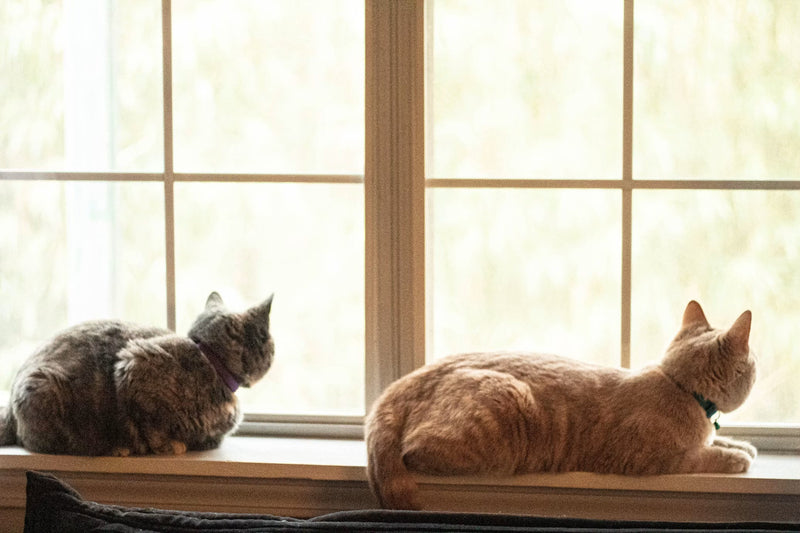
By the time most people go looking for a fix, the arm of the sofa is already unraveling, and it feels personal, like the cat is making a point.
It is not. Scratching is one of the most ordinary things a cat does, as automatic to it as a yawn, and no amount of scolding will talk it out of the habit. Which is the good news, honestly. Once you understand what your cat is getting out of the sofa, moving it onto something you do not mind turns out to be far easier than a war of attrition would suggest.
What your cat is getting out of scratching
Scratching looks like sabotage. It is three jobs at once, and knowing them is the whole game.
It keeps the claws in shape, peeling off the worn outer husk to reveal the sharp claw underneath. It is a full-body stretch, hauling on the muscles of the legs, shoulders, and back in a way any cat clearly relishes. And it is a signature, leaving both a visible scratch and a scent from glands in the paws. Your cat is not shredding the couch to spite you. It is doing the work it was built to do. You are not trying to end that. You are trying to move it.
Why the sofa, of all things
Your cat did not settle on the sofa at random. It is a near-perfect scratching post that also happens to be the most expensive thing in the room.
It is rock solid, and does not shift when a cat leans in. The texture is right, woven or tightly stretched, with real resistance to pull against. It sits dead center, which makes it prime territory for marking. And it usually stands next to where the cat sleeps, and cats love to scratch the moment they wake, as the opening move of a good stretch.
Keep that list close, because it is also your brief. Whatever you put up instead has to beat the sofa on the same terms: solid, right texture, well placed, near the bed.
Moving the habit somewhere better
Pick a post the cat will actually use
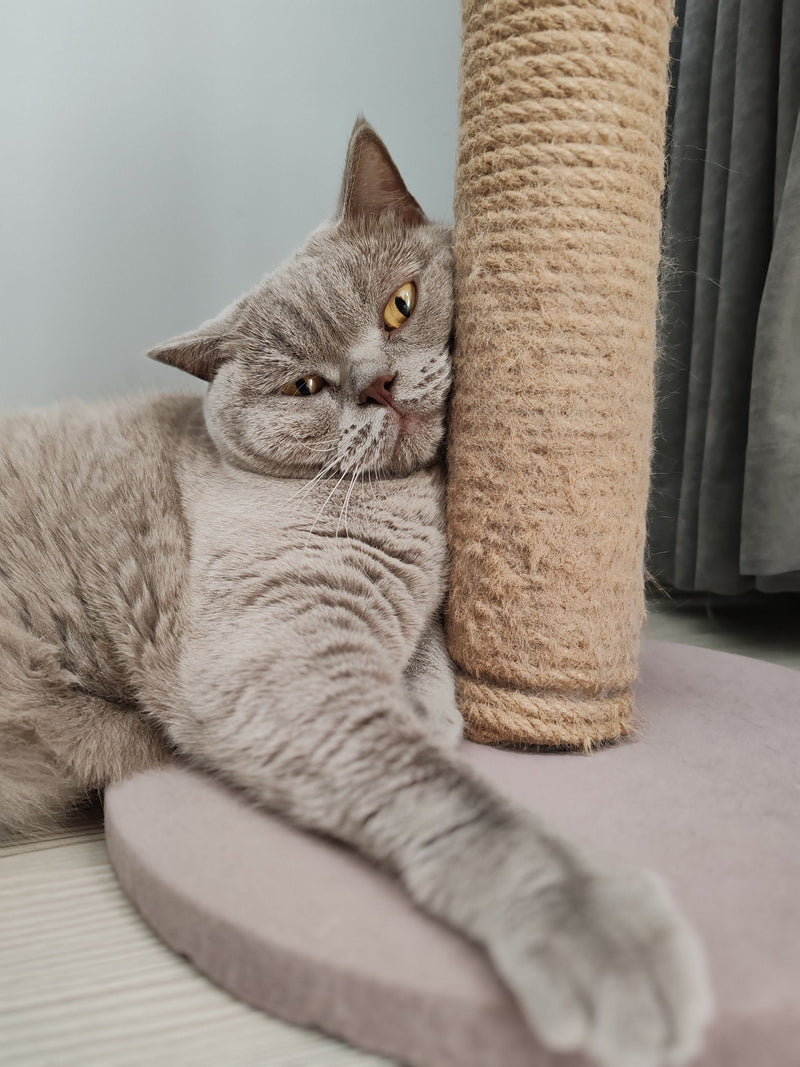
Most scratching posts fail for two dull reasons: too short, too flimsy. A cat wants to scratch at full reach, so the post has to be tall enough to stretch up into and heavy enough that it never tips or sways. Then match the surface to what your cat already goes for. If it works the woven side of the sofa, wrapped sisal will feel like home. If it is after the wooden legs, give it bare wood.
Put it at the scene, not in the spare room
This is where it usually goes wrong. Banish the new post to a back bedroom and it may as well not exist. Stand it right beside the stretch of sofa your cat has been working, and near where it sleeps. Once the cat adopts it, you can walk it a few inches at a time toward a spot you would prefer, slowly enough that the habit tags along.
Tip the odds
Work a little catnip into a fresh scratcher, or hang a toy off it, to pull the cat over. Catch it mid-scratch and hand out quiet praise or a treat. Cats do more of whatever pays off, and a handful of good outcomes early can set the habit for life.
Take the shine off the sofa, gently
While the post earns its place, make the sofa the duller option. Double-sided tape over the worked patch, or a temporary cover, kills the satisfying grip a cat is chasing. This is not punishment, it is a nudge toward the better choice. Once the habit has crossed over, it all comes off.
Two things to never do
A couple of approaches backfire, and one is serious.
Do not punish. Yelling, spraying water, ambushing the cat, all it learns is to fear you, and to scratch when you are out of the room. Redirection works. Intimidation does not.
And do not declaw. Declawing is not a fancy nail trim. It is amputating the last bone of every toe, and it can leave a cat in lasting pain, unsteady on its feet, and worse behaved than before. It is banned or tightly restricted across much of the world for a reason. There is always a better answer, and it nearly always starts with the right post in the right place.
Keep the claws in check
Regular, gentle nail trims cut down the damage and are worth teaching a cat to tolerate early. Trimming does not replace scratching, the cat still needs to scratch for every reason above, but it takes the edge off the sharpest tips. Pair a trimming routine with a scratcher your cat likes, and the sofa stops being the target.
Questions people ask
Why does my cat scratch the sofa and ignore the post I bought?
Usually the post loses on something that matters: too short, too wobbly, wrong spot, or a surface your cat could not care less about. Match it to what the sofa offers, stand it right next to the sofa to start, and the math shifts fast.
Will a scratching post really stop the damage?
The right post in the right place redirects most cats. Scratching is a need, not a habit you can delete, so you win by handing over a better target, not by trying to switch the urge off.
Is declawing ever okay?
No, outside the rare medical case a vet decides on for the cat's own health. As a fix for furniture it does lasting harm and is not necessary. A good post and regular trims solve it without hurting the cat.
A cat that scratches is a cat in good working order, and it does not have to cost you the furniture. Give it a surface worth choosing, in the spot it already wants, and the sofa is safe. The scratchers and climbing pieces we carry are in the cat furniture collection.