Keeping a cat indoors is the right call. It roughly doubles their lifespan and spares them traffic, coyotes, disease, and the neighbor two doors down with strong feelings about your flower beds. But those extra years come with a catch nobody mentions at the shelter. A cat is a hunter, wired for hours of stalking and pouncing a day, and an indoor life can hand it precisely none of that.
A bored cat is not just a sad cat. Boredom is where most of the behavior people complain about actually starts: the 3am sprint down the hallway, the shredded chair, the cat that yowls at nothing or eats until it is round. Keeping an indoor cat happy has less to do with square footage than with giving that hunter something to do.
Why indoor cats get bored
Picture what a cat is for. In the wild it spends its waking hours on a loop, stalk, chase, pounce, catch, eat, groom, sleep, then runs the loop again. That loop is not a pastime, it is the whole operating system, thousands of generations deep, and none of it switched off when cats moved indoors.
So you have a small predator running ancient software in a studio apartment. The instincts are all still firing. There is just nothing to point them at, no prey to stalk, no territory to patrol, no reason to problem-solve for the next meal, which turns up twice a day in a bowl whether the cat lifts a paw or not. That gap, between what a cat is built to do and what its day actually holds, is boredom. And a cat with nowhere to aim its instincts will aim them somewhere you would rather it did not.
How to tell your cat is bored
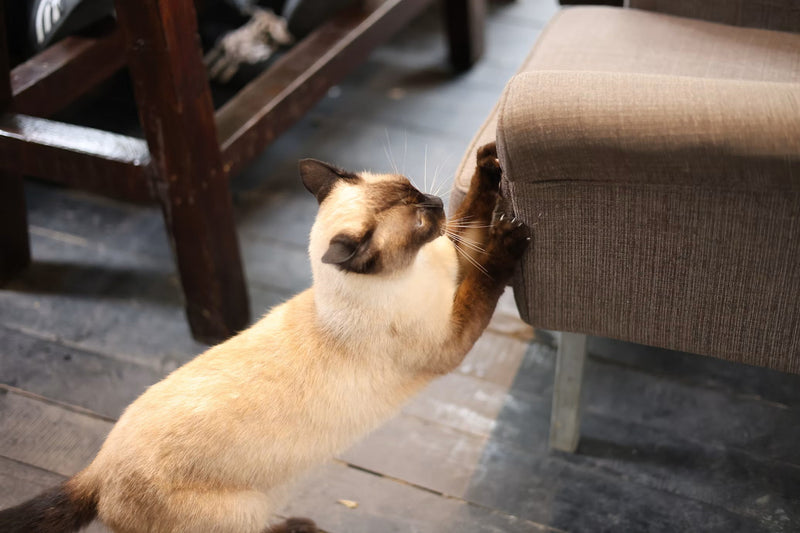
Cats do not sulk in any obvious way, so boredom tends to show up sideways. The cat sleeps even more than its famous sixteen hours, not out of contentment but because nothing else is worth being awake for. It overgrooms, licking a patch of fur thin the way a person bites their nails. It gets destructive, working the furniture or sweeping things off shelves for the small thrill of the crash. It eats to fill the time and starts to widen. It turns clingy, or the reverse, snappy and quick to swat. And then there is the classic, the burst of frantic energy at night, a cat blowing off a full day's worth of unspent fuel at the worst possible hour.
Any one of these can have another cause, and a sudden change always deserves a vet's eye. But stacked together, they usually point at a cat with too little going on.
Give it height
If you do one thing, do this. Cats live in three dimensions, and the single biggest upgrade to an indoor cat's world is vertical space, somewhere to climb, and somewhere high to sit and survey. Height is where a cat feels safe, in charge, and interested in the room below.
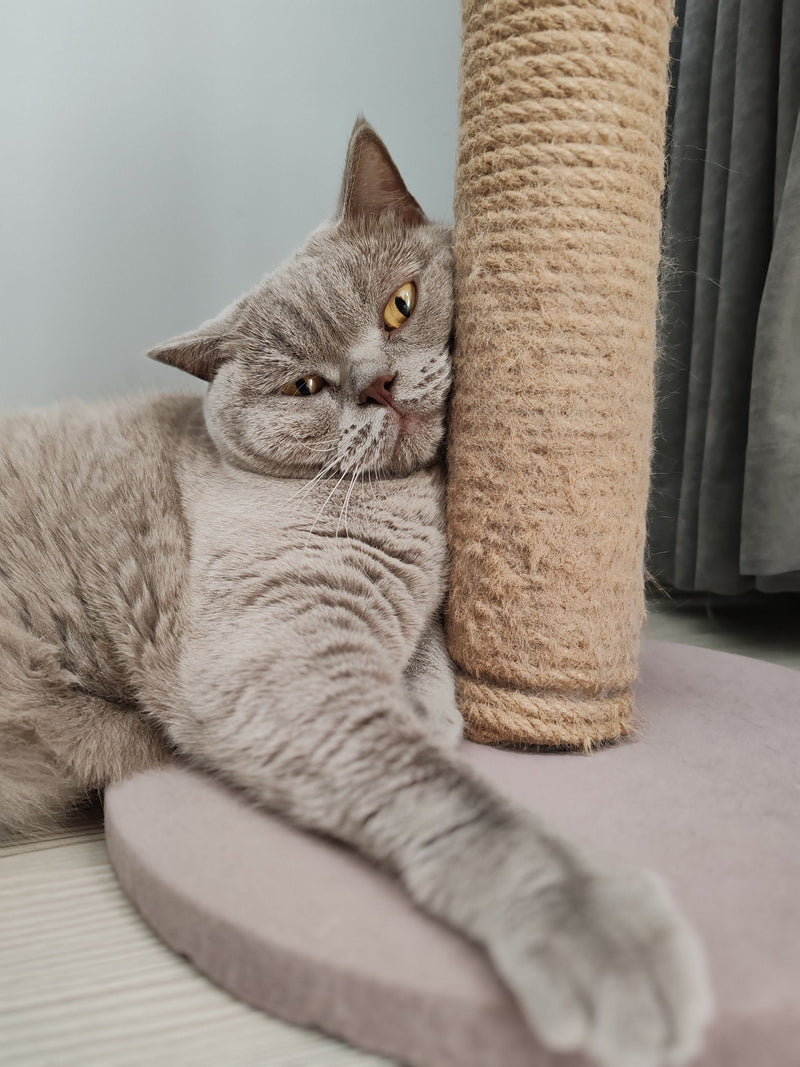
A tall cat tree, a run of wall-mounted shelves, a clear perch on top of a bookcase, all of it turns a flat apartment into terrain. A cat that can move up and around, and look down on its domain from a height, has a job again: watching. It is the cheapest enrichment going, and once it is up, it works all day, every day, without you lifting a finger. Most of what earns its keep here lives in our cat furniture collection.
Give it a window
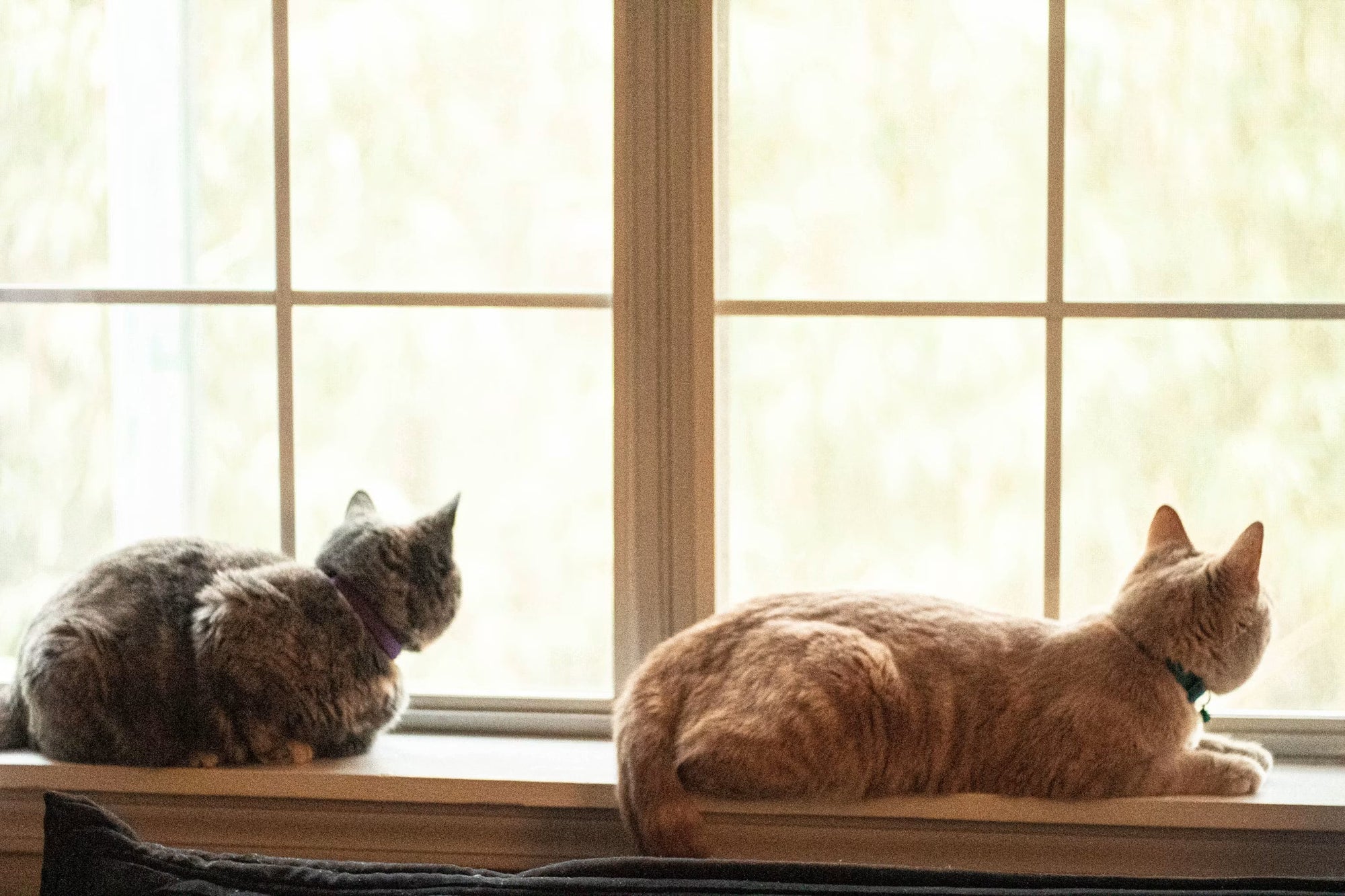
A window is the best television a cat will ever own. Birds, leaves, the mail carrier, next door's cat picking its way along the fence, all of it is live, unpredictable, and aimed straight at the hunting instinct.
Set a perch or a padded shelf where your cat can sit and watch in comfort, ideally at a window that gets some traffic. Hang a bird feeder outside it and you have programmed the channel. Whole stretches of a cat's day can disappear into a good window, and every minute of it is the low-key stimulation an indoor cat is starved for.
Play like you mean it
Here is the part most people get wrong: a basket of toys on the floor is not play. A cat hunts on a sequence, stalk, chase, pounce, catch, and a toy lying still sets off none of it. Real play means you, a wand toy, and ten focused minutes of making that toy behave like prey, darting, hiding, freezing, bolting, until your cat catches it. Let it win at the end. A hunt with no kill is a frustrating hunt.
Two short sessions a day will do more for a cat's mood than any gadget on the market. Rotate the toys while you are at it, so they stay novel, a toy that disappears for two weeks and comes back is new again. And for the hours you are not there to run the show, a motion-based or automated toy keeps the instinct ticking over. We keep the interactive pieces in our cat technology collection.
Make it work for dinner
Food that lands in a bowl asks nothing of a cat. Food it has to work for asks a great deal, in the best way. A puzzle feeder, or a foraging toy that releases a few pieces at a time, turns a thirty-second meal into a twenty-minute problem, and puts the hunt back into eating.
This is one of the simplest swaps with the largest return. It slows a greedy eater, it burns mental energy, and it hands a bored cat a real task several times a day. You are not feeding your cat any less. You are making it earn the same dinner, which is exactly what its brain has been asking for.
Keep it predictable, and think about company
Cats run on routine, and a good share of feline stress is simply a world that keeps changing on them. Feeding, play, and quiet time at roughly the same hours give a cat a shape to its day and something to expect.
Company helps too, on the cat's terms. Some cats are happier with a second cat to chase, wrestle, and sleep against, especially one left alone in an empty home all day, though a slow, careful introduction matters far more than the good intention behind it. And nothing replaces you. The few minutes you spend deliberately engaging with your cat, playing, brushing, just paying attention, are worth more than any amount of stuff.
Questions people ask
Do indoor cats get depressed?
They can land somewhere close to it. A cat with nothing to do may turn listless, sleep around the clock, overgroom, or lose interest in food and play, the feline version of low mood. It is rarely about being indoors as such, and nearly always about an indoor life with too little in it. Add height, play, and a window, and most of it lifts.
Is one cat enough, or should I get a second?
Plenty of cats are perfectly content as the only cat, particularly with an engaged owner and a home worth exploring. A second cat can be wonderful company, especially for a young, social cat alone all day, but it is not a cure-all, and a poor match makes things worse. Judge your own cat, and if you do add one, take the introduction slowly.
How much play does an indoor cat need each day?
Two sessions of ten to fifteen minutes of real, interactive play suits most cats, more for a young or high-energy one. Quality beats quantity every time: ten focused minutes with a wand toy, run like an actual hunt, does more than an hour of toys ignored on the rug.
An indoor cat is a safer cat, and with a little thought, a happier one than it would ever be outside. Give its instincts somewhere to go, up high, out the window, and into a proper hunt once or twice a day, and most of the trouble that sends people searching for answers never starts. The pieces we carry for exactly that are in furniture and technology.